
Green Maeng Da kratom is a fixture on vendor menus, usually described as balanced, energizing and good for focus. It combines two popular marketing ideas: “Maeng Da,” which implies premium potency, and “green vein,” which is associated with a middle ground between red and white strains.
This guide explains what Green Maeng Da means, how green vein kratom is processed, what lab testing shows about potency, how to spot enhanced products, safety considerations and what to check on a certificate of analysis.
Key takeaways
- “Maeng Da” is a trade name often linked to a Thai phrase loosely translated as “pimp grade,” implying top quality; it isn’t a specific region.
- “Green” refers to green-veined leaves and/or drying methods that vendors say produce balanced effects.
- Lab tests show potency varies more by batch and vendor than by strain name.
- “Super” or “enhanced” Green Maeng Da may contain extract or 7-OH.
- Green Maeng Da carries the same dependence, interaction and liver risks as other kratom.
What “Green Maeng Da” means
Maeng Da is the most recognized name in kratom marketing. Stories about its origin vary — some vendors describe grafted, high-alkaloid trees developed in Thailand, others simply use the name for their top-tier batches. Most Maeng Da sold today is grown in Indonesia, not Thailand. Read Maeng Da kratom for the full background.
“Green” indicates the leaf vein color and processing style. Combined, “Green Maeng Da” is best understood as a product category defined by each vendor, not a standardized botanical type.
How green vein kratom is processed
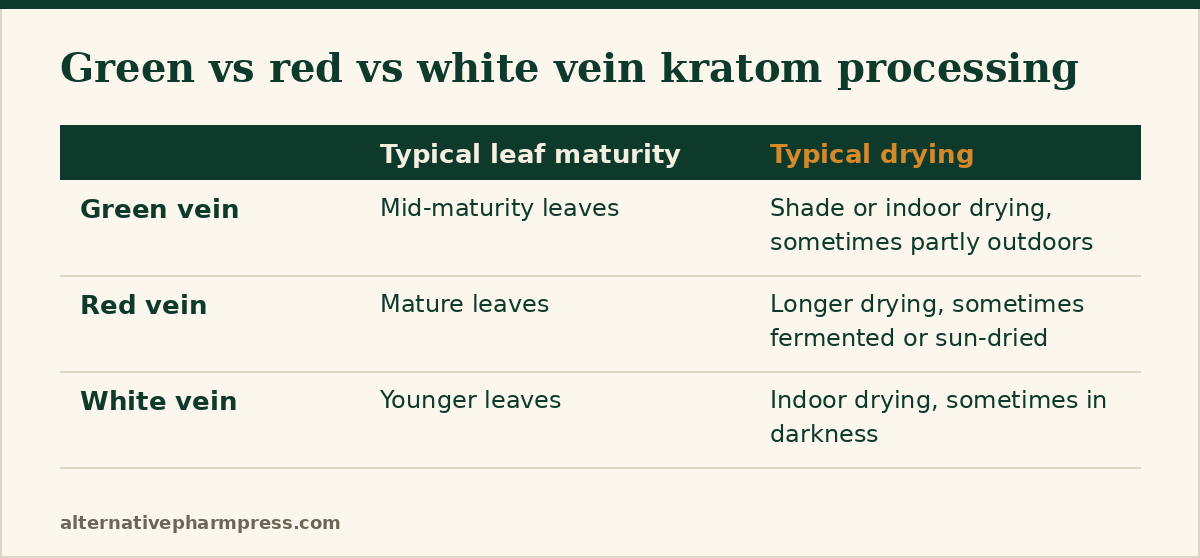
Processing can shift alkaloid ratios somewhat, but studies of commercial products suggest differences between vein colors are usually smaller than differences between batches. Compare in white vs green kratom and red vs green kratom.
Typical marketing claims
Vendors often describe Green Maeng Da as:
- Balanced — between energizing and relaxing.
- Focus-friendly — popular for daytime use.
- Long-lasting.
- Strong — reflecting the Maeng Da reputation.
These descriptions come from vendor marketing and user anecdotes. There are no controlled human studies comparing specific strain names.
What lab testing shows
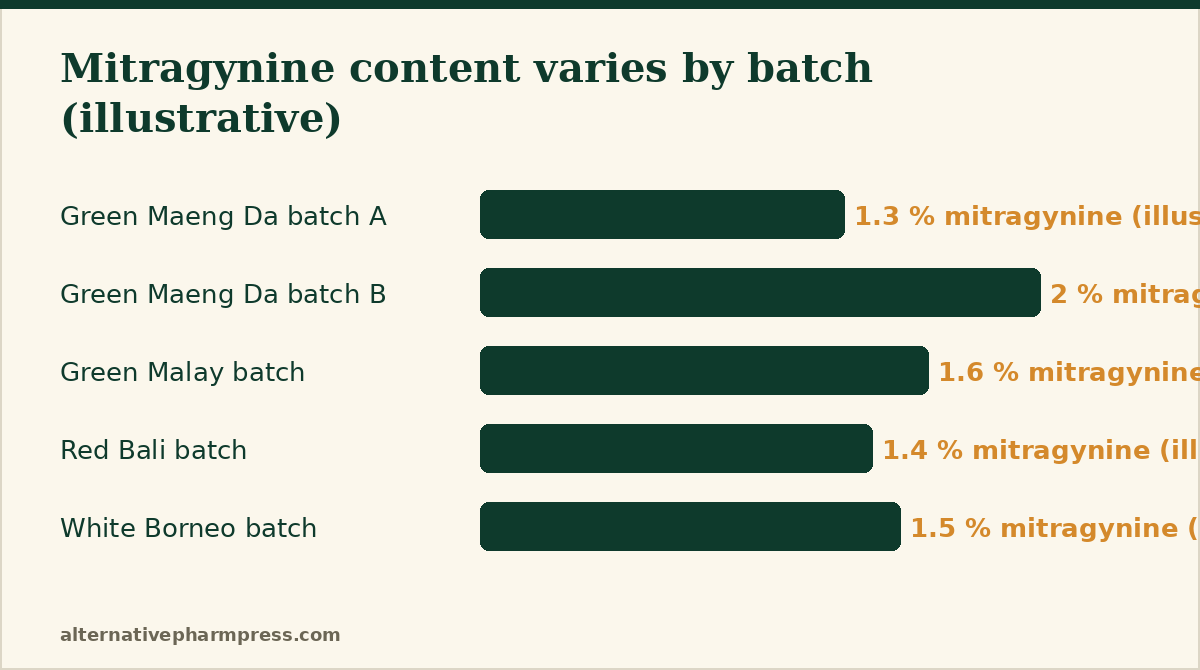
Values are illustrative. Independent testing typically finds mitragynine in plain kratom leaf around 1–2% of weight, with considerable overlap between strain names. Some Green Maeng Da batches test at the higher end; others are average. The only reliable way to compare is the batch COA. Read green Malay vs green Maeng Da and red Bali kratom.
Enhanced Green Maeng Da
Labels like “super,” “ultra,” “enhanced” or “plus” can indicate leaf blended with concentrated extract, which dramatically increases potency. Some products have contained 7-OH. If a “leaf” product’s COA shows unusually high mitragynine or elevated 7-OH, it may be enhanced. Read kratom extract vs leaf and what is 7-OH.
What to check on a COA
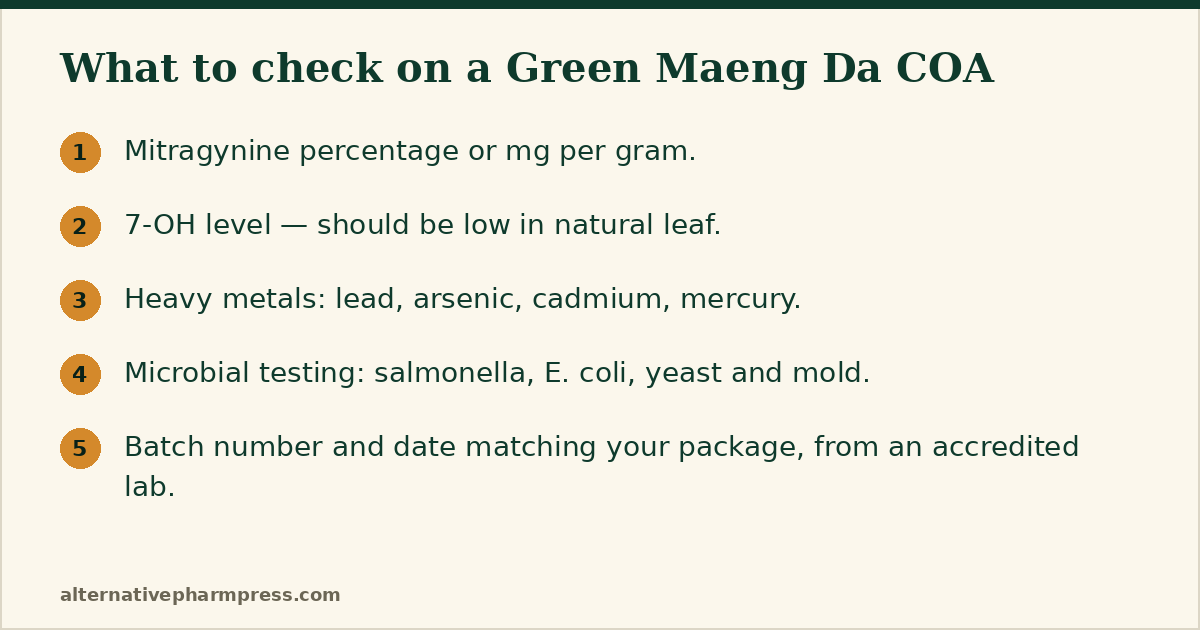
See how to read a kratom lab report and kratom COA red flags.
Effects and dose considerations
Kratom’s effects depend heavily on dose. Lower amounts are often described as stimulating; higher amounts as sedating and opioid-like. Because Green Maeng Da is marketed as both strong and energizing, people may underestimate how sedating a large amount can be. Weighing doses with a digital scale and knowing the batch’s mitragynine content are more reliable than strain descriptions. See kratom powder guide and what kratom is used for.
Green Maeng Da and caffeine
Because it’s marketed for energy, Green Maeng Da is often taken with coffee or energy drinks. Combining kratom with caffeine can increase heart rate, jitteriness and anxiety, and may disrupt sleep. Read kratom and caffeine.
Safety considerations
- Dependence and withdrawal with regular daily use. See kratom withdrawal and kratom tolerance.
- Interactions with alcohol, benzodiazepines, gabapentin, opioids and some medications. See kratom drug interactions.
- Rare liver injury. See kratom liver injury.
- Common side effects like nausea, constipation and dizziness. See kratom side effects.
- Pregnancy and breastfeeding — avoid.
Legal status
Kratom’s legal status varies by state and locality. Some states ban it; others regulate it through Kratom Consumer Protection Acts. See kratom laws by state and KCPA explained.
Choosing a vendor
Look for vendors that publish batch-specific COAs, list mitragynine content, clearly separate plain leaf from extract products, comply with KCPA standards where applicable and provide clear contact information. See best kratom brands 2026.
Why the Green Maeng Da name sells
Green Maeng Da combines a premium-sounding name with a “best of both worlds” effect description, which makes it appealing to new and experienced users alike. That marketing value is one reason vendors use the name widely — and why it can’t be relied on as a guarantee of potency or consistency.
Capsules, powder and tea
Green Maeng Da is sold as loose powder, capsules and sometimes pre-made tea or shots. Capsules make portions consistent but cost more per gram; powder is cheaper and flexible but must be weighed; shots and drinks may contain extracts and multiple servings. See kratom capsules vs powder, kratom tea and kratom drinks.
Storage
Store powder in an airtight, opaque container in a cool, dry place. Alkaloids slowly degrade over time, so freshness matters if you buy in bulk.
Value: cost per milligram
Green Maeng Da often costs more than other strains. To compare value, use the COA: multiply grams in the bag by mitragynine milligrams per gram to get total mitragynine, then divide the price by that number. A cheaper strain with a strong lab result may be better value than an expensive Green Maeng Da with average results.
Why strains feel different to some people
Users often insist that green, red and white strains feel distinct. Real differences in alkaloid ratios may contribute, but so do dose, expectation, time of day, food, sleep and tolerance. When people switch strains, they often change other variables at the same time. Without blinded comparisons at the same dose, it’s hard to separate strain effects from everything else. Keeping a simple log of grams, time and effects can help you see patterns more objectively.
Signs it’s time to cut back
Needing more Green Maeng Da to feel the same effect, taking it several times a day to avoid withdrawal, spending more than intended or feeling unwell when you miss a dose are signs that dependence may be developing. Tapering gradually with support is usually easier than stopping suddenly. See kratom detox.
Green Maeng Da for beginners: a caution
Because Green Maeng Da is often described as balanced, new users may assume it’s mild. In reality, a strong batch can produce nausea, dizziness or the “wobbles” in people without tolerance, and regular use can lead to dependence regardless of strain. Anyone new to kratom should research risks first, avoid combining it with other substances and be cautious with “premium” or enhanced versions. Our kratom guide for beginners explains common pitfalls.
How potency claims should be backed up
A vendor that markets its Green Maeng Da as especially strong should be able to show batch-specific lab results from an independent, accredited laboratory. Typical leaf tests at roughly 1–2% mitragynine. A batch at the higher end of that range might reasonably be called potent. Claims far above that range for a plain leaf product suggest added extract and should be explained clearly on the label.
Questions to ask a vendor
- What are this batch’s mitragynine and 7-OH results?
- Is this plain leaf or enhanced?
- Where and when was it harvested?
- Which lab did the testing?
FAQ
What is Green Maeng Da kratom?
It’s a kratom product combining the Maeng Da trade name with green vein leaves or processing, typically marketed as balanced and energizing.
Is Green Maeng Da stronger than other strains?
Not consistently. Lab tests show potency varies more by batch and vendor than by strain name.
Where does Green Maeng Da come from?
Despite the Thai-sounding name, most is grown in Indonesia.
How can I tell if Green Maeng Da is enhanced?
Look for words like “super” or “enhanced” and check the COA for unusually high alkaloid levels or elevated 7-OH.
Is Green Maeng Da safe?
It carries the same risks as other kratom, including dependence, interactions and rare liver injury.
Is Green Maeng Da good for focus?
It’s marketed for focus, but there’s no controlled research comparing strains for cognitive effects. Responses vary by dose and person.
How long does Green Maeng Da last?
Users typically report effects lasting a few hours, though duration varies with dose, tolerance and batch potency.
Can I take Green Maeng Da with coffee?
Many people do, but combining kratom with caffeine can increase heart rate, jitteriness and sleep problems.