
Red Bali kratom is one of the best-selling kratom strains in the U.S. Vendors commonly market it as smooth, relaxing and beginner-friendly, and it’s often one of the most affordable options. But what does “Red Bali” actually mean, and do the claims hold up?
This guide explains the name, how red vein kratom is processed, what lab testing shows about alkaloid content, typical marketing claims versus evidence, safety considerations and how to evaluate a Red Bali product.
Key takeaways
- “Bali” is a trade name; most Red Bali kratom is grown in Indonesia, often Borneo or Sumatra, and historically shipped via Bali.
- “Red” refers to red-veined leaves and/or drying and fermentation methods that may shift alkaloid ratios.
- Red Bali is marketed as relaxing, but lab tests show wide batch-to-batch variation in mitragynine.
- The COA, not the strain name, is the best guide to potency and contaminants.
- Red Bali carries the same dependence, interaction and liver risks as other kratom.
What does “Red Bali” mean?
The name suggests kratom from the Indonesian island of Bali, but Bali isn’t a major kratom-growing region. The name likely originated because early exports passed through Bali’s ports. Today, most “Bali” kratom comes from Borneo, Sumatra or other Indonesian regions. Some vendors use “Bali” to describe a blend or a style rather than a geographic origin. Read kratom strains explained for more on naming.
Red vein kratom and processing
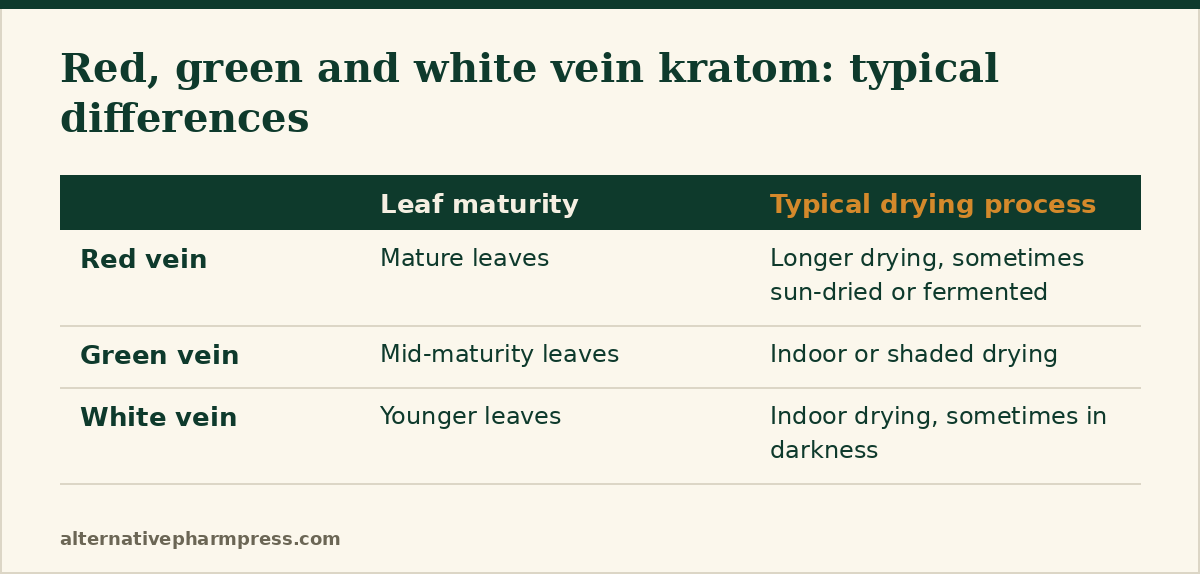
Red vein kratom is commonly associated with mature leaves and longer drying or fermentation. Some research suggests that processing can change alkaloid profiles, including small increases in certain oxidized alkaloids, but differences between vein colors are often smaller than differences between batches. Read red vs white kratom and red vs green kratom.
Typical marketing claims
Vendors often describe Red Bali as:
- Relaxing and calming.
- Smooth with mild effects.
- Good for evenings.
- Beginner-friendly.
These descriptions are mostly based on user anecdotes and vendor marketing. Controlled research comparing specific kratom strains in humans is essentially nonexistent.
What lab testing shows
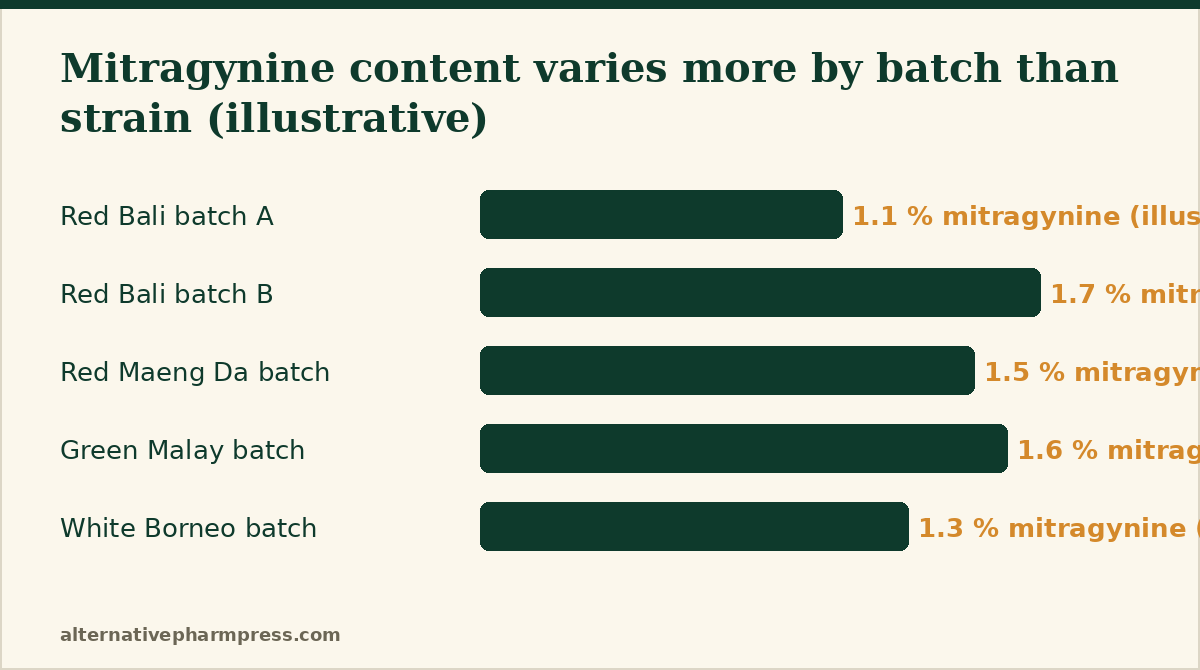
These values are illustrative. Independent testing of commercial kratom products has found mitragynine commonly ranges from roughly 1% to 2% of leaf weight, with substantial overlap among strain names. A Red Bali batch from one vendor might test stronger than a Maeng Da from another. Read Maeng Da vs Bali, Borneo vs Bali and Maeng Da kratom.
Reading a Red Bali COA
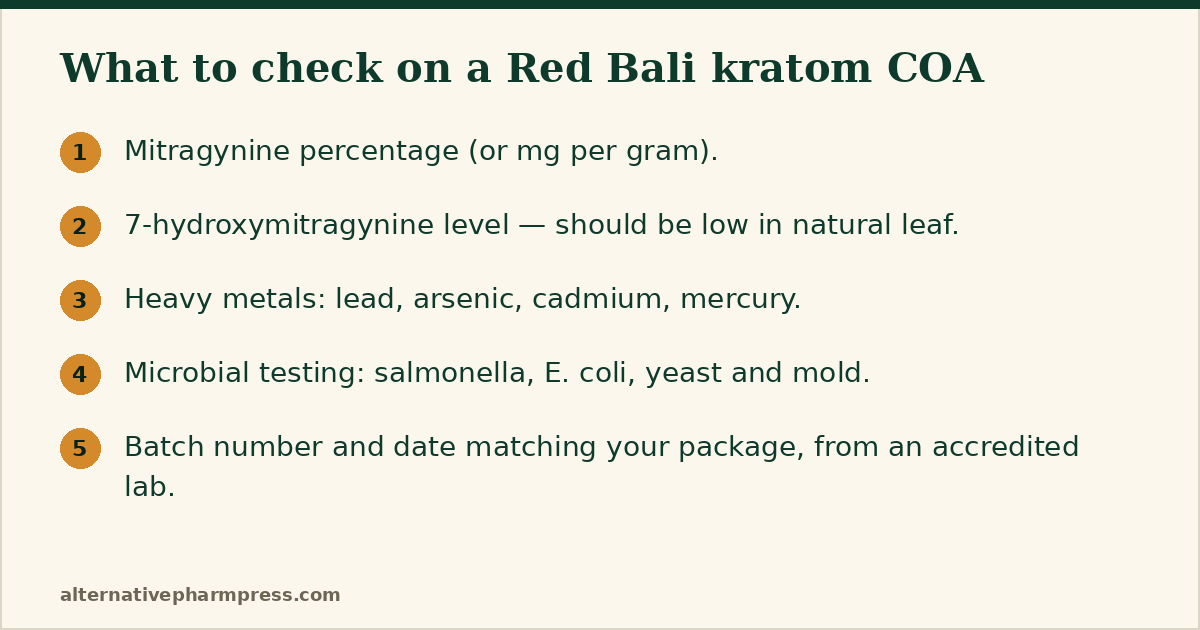
Elevated 7-OH levels in “leaf” products may suggest added extract or 7-OH. Read how to read a kratom lab report and kratom COA red flags.
Effects and dose considerations
Kratom effects generally depend on dose: lower amounts are often described as stimulating and higher amounts as sedating. Because Red Bali is marketed as relaxing, people may take larger amounts than they would of other strains. Weighing doses with a digital scale and knowing the batch’s mitragynine content are more reliable than relying on strain descriptions. See kratom powder guide and kratom capsules guide.
Safety considerations
- Dependence and withdrawal develop with regular daily use. See kratom withdrawal.
- Interactions — avoid combining with alcohol, benzodiazepines, gabapentin and opioids. See kratom and alcohol and kratom and gabapentin.
- Liver injury — rare but reported. See kratom liver injury.
- Side effects — nausea, constipation, dizziness. See kratom side effects.
- Pregnancy and breastfeeding — avoid.
Why Red Bali is so popular
Red Bali is often among the cheapest kratom strains, widely available and marketed with approachable descriptions. Its popularity may also reflect familiarity: many people’s first kratom experience is with a red strain. Popularity doesn’t indicate greater safety or effectiveness.
Red Bali vs other popular red strains
| Strain name | Typical marketing | Reality |
|---|---|---|
| Red Bali | Smooth, relaxing, affordable | Potency varies; often a general red blend |
| Red Maeng Da | Stronger, premium | Potency varies; may be higher-priced tier |
| Red Borneo | Calm, balanced | Region name used broadly |
| Red Thai | Energizing for a red | Often not from Thailand |
Enhanced or “super” Red Bali
Products labeled “super,” “enhanced” or “plus” may contain extract added to leaf, significantly increasing potency. Some may contain 7-OH. Check the label and COA carefully. Read kratom extract vs leaf and what is 7-OH.
Legal status
Kratom’s legal status varies by state and locality. Some states ban kratom; others regulate it through Kratom Consumer Protection Acts requiring labeling, testing and age limits. See kratom laws by state and KCPA explained.
Choosing a vendor
Look for vendors that publish batch-specific COAs, follow KCPA standards where applicable, list mitragynine content, sell plain leaf clearly separated from extracts and provide clear contact information. See best kratom brands 2026.
Storage and freshness
Store Red Bali powder in an airtight, opaque container in a cool, dry place. Alkaloids slowly degrade over time, so potency may decline after many months. Buying smaller amounts more frequently helps maintain freshness.
Fermented and “aged” red kratom
Some red kratom is marketed as fermented or aged. Fermentation involves keeping leaves in bags or containers for a period before drying, which vendors say deepens the red color and changes the effect profile. A few lab studies have shown that drying and fermentation can alter alkaloid levels, but whether these changes produce meaningfully different effects in people hasn’t been tested. As always, a COA tells you more than the processing story.
Why strain effects feel different
Many users insist that strains feel distinct, and their experiences are real. Several factors may explain this beyond strain chemistry: dose differences, expectations created by marketing, time of day, food, sleep, tolerance and natural batch variation in alkaloid ratios. When people switch strains, they often change dose or timing too. Controlled comparisons — same dose, same conditions, blinded to the strain name — would be needed to separate real differences from expectation.
Cost per milligram of mitragynine
Red Bali is often marketed as budget-friendly, but low price per kilogram doesn’t always mean good value. Calculate cost per milligram of mitragynine using the COA: multiply the bag’s weight in grams by the mitragynine percentage (as mg per gram) to get total mitragynine, then divide the price by that total. A slightly more expensive batch with a higher mitragynine percentage can work out cheaper per unit of alkaloid — and helps you take less powder for the same effect.
Red Bali for beginners: a cautionary note
Because Red Bali is often described as beginner-friendly, new users may assume it’s mild. Kratom affects people very differently, and even “gentle” strains can cause nausea, dizziness and dependence with regular use. Beginners should research risks first; read our kratom guide for beginners.
Questions to ask a vendor about Red Bali
Before buying, it’s reasonable to ask a vendor:
- Where was this batch grown, and when was it harvested?
- What are the mitragynine and 7-OH results for this specific batch?
- Was it tested for heavy metals and microbes, and by which lab?
- Is it plain leaf, or does it contain extract?
- How should it be stored, and how long does it stay fresh?
Vendors who answer clearly and publish their lab reports make it easier to make informed decisions. Vague answers, or reports that don’t match the batch on your bag, are warning signs.
Capsules vs powder for Red Bali
Red Bali is sold as loose powder and in capsules. Capsules avoid the bitter taste and make portions more consistent, but they cost more per gram and take longer to take effect. Powder is cheaper and more flexible but requires weighing. Whichever you choose, check the capsule fill weight or weigh powder with a digital scale. See kratom capsules vs powder.
FAQ
Is Red Bali kratom from Bali?
Usually not. Most is grown in other Indonesian regions; “Bali” is a trade name likely tied to historical export routes.
What is Red Bali kratom used for?
It’s marketed for relaxation and calm, but these claims are based on anecdotes rather than controlled research.
Is Red Bali weaker than Maeng Da?
Not necessarily. Lab tests show potency varies more by batch and vendor than by strain name.
How can I tell if Red Bali is enhanced?
Look for terms like “super” or “enhanced” and check the COA for unusually high alkaloid levels or elevated 7-OH.
Is Red Bali kratom safe?
It carries the same risks as other kratom, including dependence, interactions and rare liver injury.
How should I store Red Bali kratom?
Keep it in an airtight, opaque container in a cool, dry place, away from heat and humidity.
Is Red Bali good for beginners?
Kratom affects people differently and carries dependence risk. Beginners should research risks and use plain, lab-tested leaf if they choose to use kratom.