
Gabapentin (Neurontin) is a widely prescribed medication for nerve pain and seizures, and it’s increasingly misused for its calming effects. Kratom is a botanical with opioid-like properties. Some people combine them — to boost effects, manage withdrawal or because they’re prescribed gabapentin while also using kratom. This combination can be dangerous.
This guide explains how each substance works, why combining them raises risks, what overdose research shows, warning signs, why people combine them and safer alternatives.
Key takeaways
- Kratom acts on opioid receptors; gabapentin affects calcium channels in nerves, reducing nerve excitability.
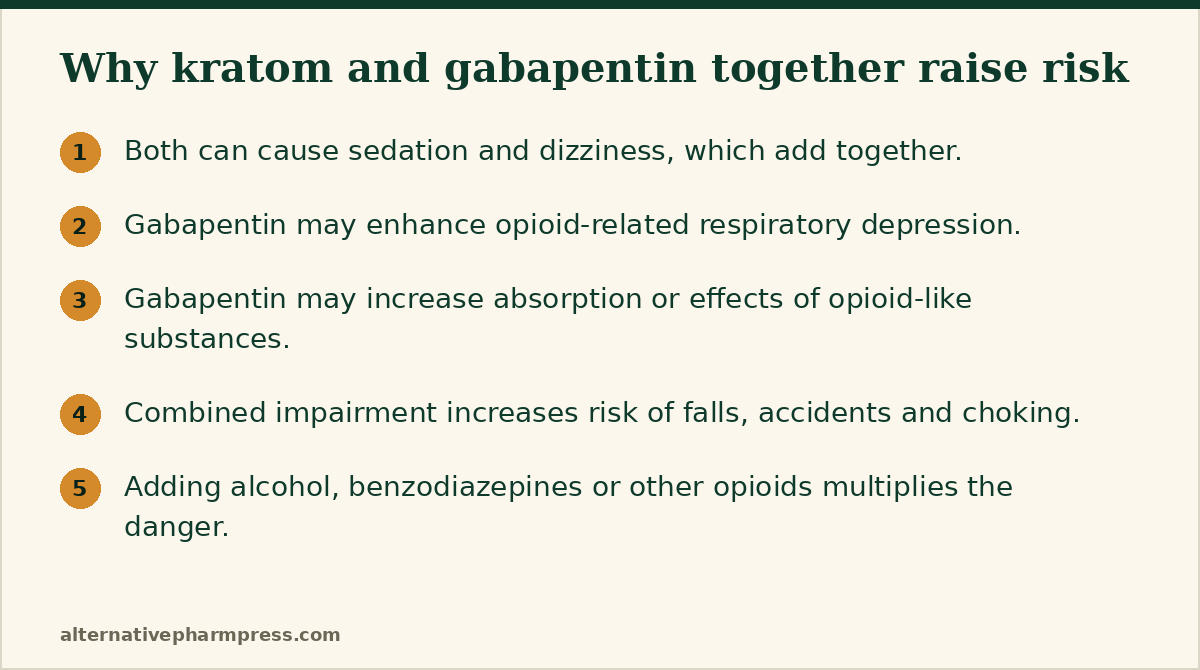
- Gabapentin combined with opioids has been linked to higher risk of respiratory depression and overdose death.
- Because kratom has opioid-like effects, combining it with gabapentin may carry similar additive risks.
- Kratom-associated deaths often involve multiple substances, sometimes including gabapentin.
- Talk to a prescriber before combining, and never mix kratom and gabapentin with alcohol or benzodiazepines.
Emergency signs: extreme sleepiness, slow or shallow breathing, blue lips, confusion or unresponsiveness. Call 911 and give naloxone if available. Naloxone reverses opioid effects but not gabapentin’s sedation, so emergency care is still needed.
How kratom works
Kratom’s alkaloids, mainly mitragynine and 7-hydroxymitragynine (7-OH), act on mu-opioid receptors and other targets. Lower doses tend to be stimulating; higher doses are sedating and opioid-like. Read kratom and the opioid receptor research and what kratom is used for.
How gabapentin works
Gabapentin binds the alpha-2-delta subunit of voltage-gated calcium channels, reducing release of excitatory neurotransmitters. It’s FDA-approved for postherpetic neuralgia (nerve pain after shingles) and certain seizures, and widely used off-label for other pain conditions, anxiety, insomnia and alcohol withdrawal. Gabapentin can cause drowsiness, dizziness and coordination problems, and at high doses, euphoria — which is why it’s misused.
Why the combination is risky
Evidence from opioid research
Large studies have found that people taking gabapentin along with opioids have a significantly higher risk of opioid-related death than those taking opioids alone. In 2019, the FDA warned about serious breathing problems when gabapentinoids (gabapentin and pregabalin) are used with opioids or other CNS depressants, or in people with respiratory risk factors.
Evidence specific to kratom
Research specifically on kratom and gabapentin is limited. Toxicology reviews of kratom-associated deaths have found that most involved multiple substances; gabapentin, benzodiazepines, opioids and alcohol have been among those detected. That doesn’t prove gabapentin caused those deaths, but it supports caution.
Risk factors that increase danger
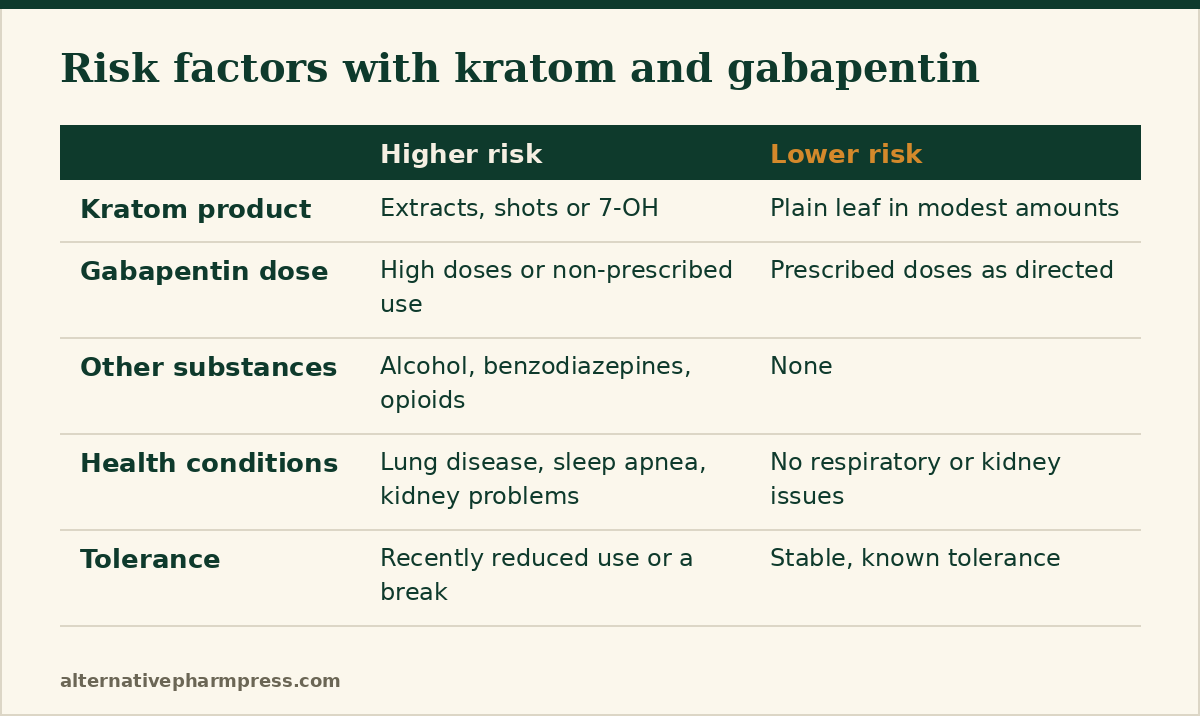
Gabapentin is cleared by the kidneys, so people with kidney problems may build up higher levels. Older adults are also more vulnerable to sedation and falls.
Why people combine kratom and gabapentin
- Managing withdrawal — some people use gabapentin to ease kratom or opioid withdrawal symptoms like restlessness and anxiety.
- Boosting effects — some report that gabapentin “potentiates” kratom, making it feel stronger.
- Prescribed gabapentin — people prescribed gabapentin for pain may also use kratom.
- Sleep — both can cause drowsiness.
Clinicians sometimes use gabapentin as part of supervised withdrawal management, but that’s different from self-medicating with combinations at home.
Signs of a dangerous reaction
- Extreme drowsiness or inability to stay awake.
- Slow, shallow or irregular breathing.
- Confusion, slurred speech or poor coordination.
- Blue or gray lips and fingertips.
- Unresponsiveness.
What to do in an emergency
- Call 911 immediately.
- Give naloxone if available — it can reverse kratom’s opioid effects.
- Support breathing with rescue breaths if trained.
- Place in recovery position if breathing.
- Stay with the person until help arrives.
Safer approaches
- Tell your prescriber if you use kratom and take gabapentin.
- Don’t take extra gabapentin to boost kratom effects.
- Avoid alcohol, benzodiazepines and other opioids entirely.
- Use plain leaf, not extracts or 7-OH, if you use kratom.
- Don’t use alone, and keep naloxone nearby.
- Seek medically supervised withdrawal rather than DIY combinations. See kratom detox and Suboxone for kratom withdrawal.
Other risky kratom combinations
Combining kratom with alcohol, benzodiazepines, opioids, pregabalin, sleep aids and stimulants also raises risks. Read kratom and alcohol, kratom and caffeine and can you overdose on kratom?.
Gabapentin misuse and dependence
Gabapentin can cause dependence, and stopping it abruptly after regular use can lead to withdrawal symptoms such as anxiety, insomnia, sweating, pain and, rarely, seizures. Some states classify gabapentin as a controlled substance or require prescription monitoring. If you take gabapentin regularly, don’t stop suddenly without medical guidance.
Pregabalin (Lyrica) and kratom
Pregabalin, a related medication, carries similar risks when combined with opioid-like substances. The FDA’s 2019 warning covered both gabapentin and pregabalin.
Talking with your doctor
Many people hesitate to tell clinicians about kratom use. Sharing it allows your doctor to assess interaction risks, adjust gabapentin doses, monitor for side effects and discuss safer pain or withdrawal management options. Clinicians are increasingly familiar with kratom and can offer nonjudgmental support.
Interactions on drug tests
Standard drug panels don’t usually detect gabapentin or kratom, though expanded panels can. If you’re in a treatment or monitoring program, ask which substances are tested. See does kratom show up on a drug test?.
Why “potentiating” is dangerous
Online forums sometimes describe gabapentin as a “potentiator” that makes kratom feel stronger or last longer. That stronger feeling reflects increased central nervous system depression. The same effect that intensifies the experience can also slow breathing and impair judgment, increasing the risk of overdose and accidents. There’s no safe way to predict how much “potentiation” will occur in a given person on a given day.
Older adults and people with chronic pain
Gabapentin is commonly prescribed to older adults for nerve pain. Older adults are more sensitive to sedation and more likely to fall, and they often take multiple medications. If an older adult also uses kratom — sometimes for arthritis or back pain — the combination may increase fall and fracture risk. Families and caregivers should be aware of all substances being used.
Withdrawal management under supervision
When clinicians manage kratom or opioid withdrawal, they may sometimes use gabapentin briefly at controlled doses, with monitoring and without other depressants. They also consider other medications, such as clonidine or buprenorphine. This supervised approach differs from self-directed combinations because doses are planned, other substances are avoided and someone is watching for warning signs. If you want help with withdrawal, ask about a supervised plan rather than mixing substances on your own.
If you’re prescribed gabapentin and use kratom
Some people are prescribed gabapentin for nerve pain, migraines or restless legs and also use kratom for pain or energy. If that’s you, a few steps can reduce risk:
- Share your kratom use with your prescriber and pharmacist so they can assess interactions.
- Don’t change gabapentin doses on your own.
- Avoid taking kratom and gabapentin at the same time of day unless your clinician advises otherwise.
- Watch for increased sleepiness, dizziness or confusion, and avoid driving if you notice them.
- Avoid alcohol and other sedatives completely.
- Let a family member or friend know what you’re taking, so they can recognize warning signs.
Talking to family and friends
If someone close to you uses kratom and gabapentin together, learning the warning signs of overdose and keeping naloxone at home can save a life. Approach conversations without judgment, focus on safety and offer to help them find medical support if they want to cut back.
Sleep apnea and breathing conditions
People with obstructive sleep apnea, COPD, asthma or obesity-related breathing problems face higher risks when combining sedating substances. Both kratom and gabapentin can affect breathing during sleep, and the combination may worsen nighttime oxygen levels. If you have a breathing condition, talk with your doctor before using either.
FAQ
Is it safe to take kratom with gabapentin?
The combination may increase sedation and breathing risks. Talk to your prescriber before combining, and avoid adding other depressants.
Does gabapentin make kratom stronger?
Some users report this, and gabapentin is known to enhance some opioid effects. That potentiation also increases risks.
Can I use gabapentin for kratom withdrawal?
Clinicians sometimes use gabapentin as part of supervised withdrawal management. Don’t self-medicate without medical guidance.
Will naloxone help if someone takes kratom and gabapentin?
Naloxone can reverse kratom’s opioid effects but not gabapentin’s sedation. Call 911 and give naloxone if available.
What other drugs should I avoid with kratom?
Avoid alcohol, benzodiazepines, opioids, pregabalin, sleep aids and high-dose stimulants.
How long should I wait between kratom and gabapentin?
There’s no established safe interval, because both have effects lasting several hours and gabapentin builds up with regular dosing. Ask your prescriber for advice specific to your situation.
Is gabapentin addictive?
Gabapentin can cause dependence and is misused for its euphoric effects at high doses. Stopping suddenly after regular use can cause withdrawal.