

Kratom (Mitragyna speciosa) is used by millions of people in the U.S. for energy, pain, mood or to manage opioid withdrawal. Its main alkaloids act on opioid and other receptors, which explains both its effects and its risks. Kratom side effects can range from mild stomach upset to dependence and, rarely, serious liver, heart or neurological problems.
This guide covers common short-term side effects, long-term risks, factors that increase danger, interactions and practical ways to reduce harm.
Key takeaways
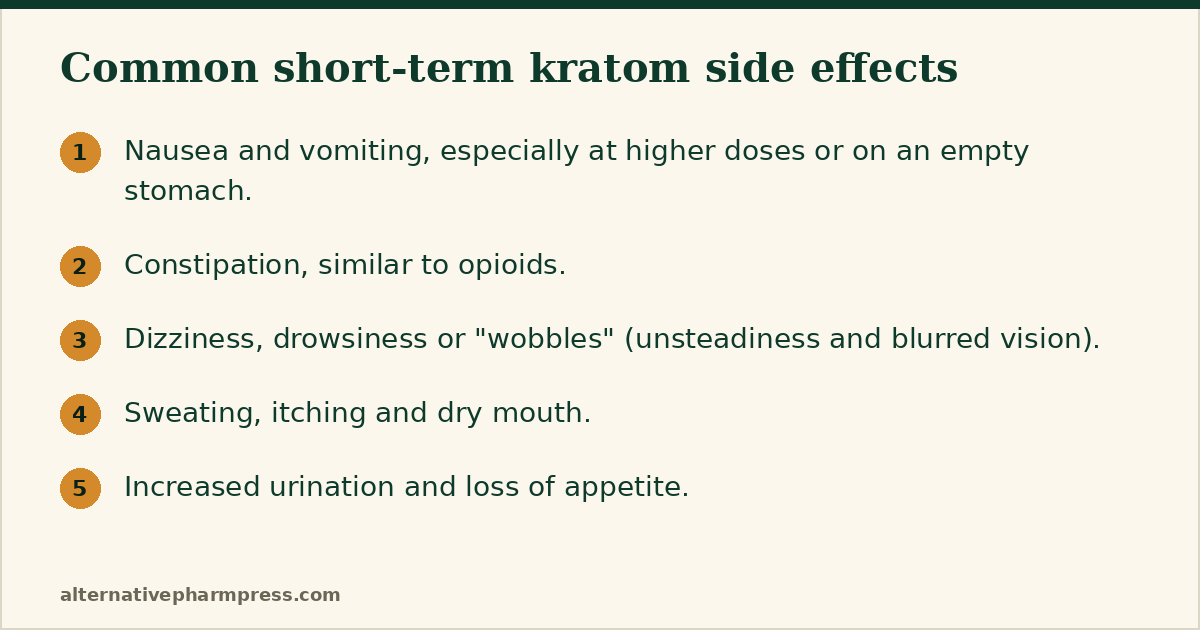
- Common short-term effects include nausea, constipation, dizziness, sweating, dry mouth and itching.
- Regular use can lead to tolerance, dependence and withdrawal.
- Rare but serious risks include liver injury, seizures, heart rhythm problems and, with other depressants, respiratory depression.
- Extracts and 7-OH products are much more potent and carry higher risk than plain leaf.
- Avoid combining kratom with alcohol, benzodiazepines, gabapentin or opioids.
How kratom works
Kratom’s main alkaloid, mitragynine, is a partial agonist at mu-opioid receptors and also interacts with adrenergic, serotonin and other receptors. Its metabolite 7-hydroxymitragynine (7-OH) is a more potent opioid agonist. At lower doses, kratom tends to feel stimulating; at higher doses, more sedating and opioid-like. Read kratom and the opioid receptor research and mitragynine vs 7-hydroxymitragynine.
Common short-term side effects
The “wobbles”
Many users describe “the wobbles” — dizziness, blurry vision, nausea and unsteadiness after taking too much. It’s a sign the dose was too high for that person or batch.
Stimulant-like effects
At lower doses, some people experience jitteriness, rapid heart rate or insomnia, especially when combining kratom with caffeine. See kratom and caffeine.
Long-term side effects
Dependence and withdrawal
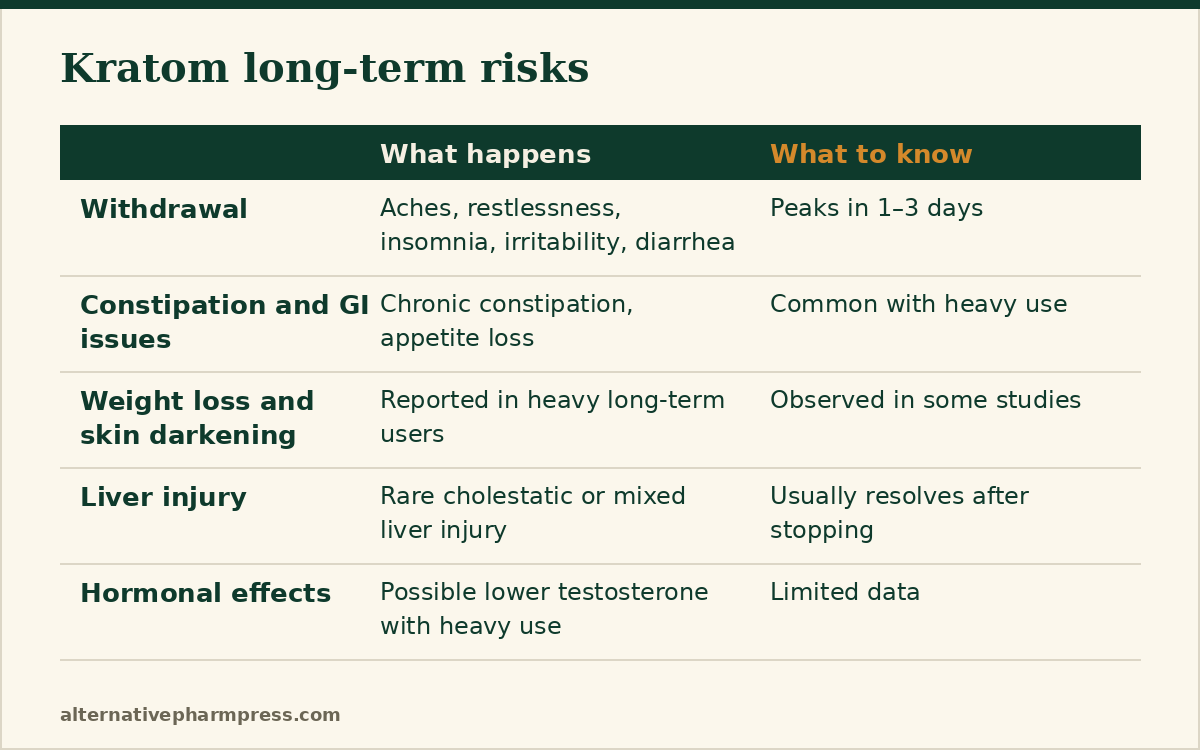
Daily kratom use can lead to physical dependence. Withdrawal symptoms resemble mild to moderate opioid withdrawal: muscle aches, runny nose, yawning, restless legs, irritability, insomnia, diarrhea and cravings. Read kratom withdrawal, kratom tolerance and kratom detox.
Liver injury
Case reports describe kratom-associated liver injury, typically appearing within weeks of starting or increasing use. Symptoms include fatigue, nausea, itching, dark urine and jaundice. Most cases resolve after stopping kratom, though some have been severe. Read kratom liver injury.
Hormonal and sexual effects
Some studies of heavy long-term users in Southeast Asia suggest possible effects on testosterone and sexual function, though data are limited.
Serious but rare risks
- Seizures — reported in some users, often at high doses or with other substances.
- Heart rhythm problems — case reports of rapid heart rate, high blood pressure and QT prolongation.
- Respiratory depression — more likely with 7-OH products or when combined with other depressants.
- Psychosis or severe agitation — rare reports, often with high doses or other substances.
- Kidney injury and rhabdomyolysis — rare case reports.
- Deaths — most kratom-associated deaths involve multiple substances. See can you overdose on kratom?.
Why extracts and 7-OH change the picture
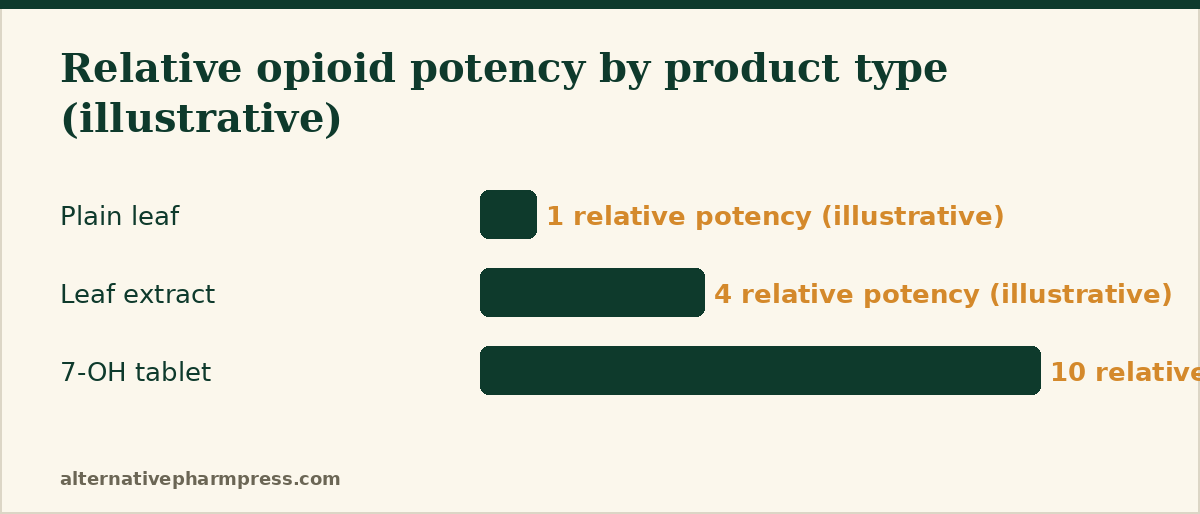
This chart is illustrative. Extracts concentrate alkaloids, and 7-OH products contain an alkaloid far more potent than mitragynine. These products are linked to stronger dependence, harsher withdrawal and greater overdose risk. Read kratom extract vs leaf, what is 7-OH and 7-OH dosage.
Drug interactions
Kratom can interact with other substances in two main ways: additive effects (for example, sedation) and liver enzyme effects. Mitragynine may inhibit CYP2D6 and CYP3A4, which metabolize many drugs.
Dangerous or concerning combinations include:
- Alcohol — see kratom and alcohol.
- Benzodiazepines, gabapentin and pregabalin.
- Opioids, including prescription painkillers.
- Stimulants — including high-dose caffeine and ADHD medications.
- Antidepressants and other serotonergic drugs.
- Medications metabolized by CYP2D6 or CYP3A4.
Who is at higher risk
- People with liver disease or heavy alcohol use.
- People with heart conditions or arrhythmias.
- Anyone with a seizure disorder.
- People with a history of substance use disorder.
- Pregnant or breastfeeding people — neonatal withdrawal has been reported.
- Anyone taking multiple medications.
- People under 21.
How to reduce harm
- Use plain, lab-tested leaf rather than extracts or 7-OH.
- Weigh doses with a digital scale.
- Avoid daily use to reduce tolerance and dependence.
- Don’t mix with alcohol, benzodiazepines, gabapentin or opioids.
- Stay hydrated and support digestion with fiber.
- Watch for warning signs like jaundice, chest pain, seizures or confusion.
- Check lab reports — see how to read a kratom lab report.
- Tell your doctor if you use kratom.
Contamination
Some kratom products have been contaminated with salmonella or heavy metals. In 2018, a multistate salmonella outbreak was linked to kratom products. Choose vendors that publish microbial and heavy metal testing. See kratom COA red flags and best kratom brands.
Kratom and drug tests
Standard drug panels don’t usually detect kratom, but specialized tests can. See does kratom show up on a drug test?.
Side effects by dose: what users commonly report
Experiences vary, but survey research and user reports suggest a general pattern. Lower amounts of plain leaf are often associated with mild stimulation, talkativeness and sometimes jitteriness or stomach upset. Moderate amounts may bring relaxation, pain relief and more noticeable side effects like constipation, sweating and itching. Higher amounts tend to cause sedation, nausea, the wobbles and, with very high doses or extracts, more serious problems. Because product strength varies so much, a “low” dose of one product may be a “high” dose of another.
Short-term side effects: how long they last
Most short-term effects, such as nausea, dizziness and sweating, fade within several hours as kratom wears off. Constipation can persist with regular use. If side effects are severe or don’t go away, stop using kratom and seek medical advice.
Mental health effects
Some people report improved mood or reduced anxiety with kratom, while others experience irritability, anxiety or low mood, especially during withdrawal or with heavy use. People with depression, anxiety or bipolar disorder should be cautious and involve a clinician. Using kratom to self-treat mental health conditions can mask symptoms and delay effective care.
Kratom and pregnancy
Kratom use during pregnancy has been associated with neonatal abstinence syndrome — withdrawal symptoms in newborns — in published case reports. Babies may need monitoring and treatment after birth. If you’re pregnant and using kratom, talk to a healthcare provider before stopping, since abrupt withdrawal during pregnancy may also carry risks. Medical support can help you plan safely.
Long-term users: what surveys show
Surveys of long-term kratom users in the U.S. and Southeast Asia show a range of experiences. Many report using kratom daily for years without serious health problems, while also reporting dependence and withdrawal. Some report weight loss, constipation, darkened skin on the cheeks and sleep problems. Surveys can’t establish cause and effect and may not capture people who stopped due to problems, but they help describe common experiences.
When to seek medical care
Contact a healthcare provider promptly if you notice yellowing of the skin or eyes, dark urine, persistent nausea or abdominal pain, unusual fatigue, a racing or irregular heartbeat, fainting, confusion, severe constipation with abdominal swelling or any seizure. Call emergency services for slowed or stopped breathing, unresponsiveness, chest pain or a seizure that lasts more than a few minutes. Bring the product packaging or lab report if you can, and be honest about how much and how often you used kratom and what else you took. Clinicians can only help effectively if they know the full picture.
Managing common side effects
- Nausea: take kratom with a small amount of food and avoid large doses; ginger tea may help some people.
- Constipation: increase fiber, fluids and physical activity; talk to a pharmacist about gentle laxatives if needed.
- Dizziness: sit or lie down, avoid driving and take less next time — or reconsider use.
- Itching and sweating: usually dose-related and fade as kratom wears off.
- Insomnia: avoid kratom in the afternoon or evening, especially with caffeine.
If side effects keep returning, they’re a signal to reduce or stop use rather than push through.
Reporting side effects
In the U.S., consumers and clinicians can report adverse events linked to kratom and other supplements through the FDA’s MedWatch program. These reports help regulators identify patterns and contaminated products.
FAQ
What are the most common kratom side effects?
Nausea, constipation, dizziness, sweating, dry mouth, itching and drowsiness are most commonly reported.
Can kratom damage your liver?
Rare cases of kratom-associated liver injury have been reported. Most resolve after stopping, but some have been severe.
Is kratom addictive?
Regular use can lead to dependence and withdrawal. Extracts and 7-OH products increase this risk.
What are the long-term effects of kratom?
Long-term effects can include dependence, chronic constipation, weight loss and, rarely, liver or heart problems. Research on long-term use is limited.
Can kratom cause seizures?
Seizures have been reported, usually at high doses or with other substances. People with seizure disorders should avoid kratom.
Is it safe to mix kratom with other drugs?
Combining kratom with alcohol, benzodiazepines, gabapentin or opioids increases serious risks. Check with a pharmacist about interactions.