
Short answer: yes. Most hemp-derived THC drinks on the market contain delta-9 THC in amounts that are designed to produce a noticeable high, typically somewhere between 2 and 10 milligrams per can. They are sold in convenience stores, liquor stores and online with branding that can look a lot like sparkling water, which is exactly why so many people underestimate them.
This guide explains how THC beverages work, why the effect can feel different from a gummy or a joint, how to read a label, and where the law stands heading into the federal hemp changes scheduled for December 2026.
Key takeaways
- Yes, they can get you high: most THC drinks contain intoxicating delta-9 THC, usually 2–10 mg per can.
- Onset is usually faster than gummies: many people notice effects in 15–45 minutes, but timing varies a lot.
- Dose is what matters: a 10 mg can is a strong dose for someone with low tolerance; 2–5 mg cans are milder.
- Don’t mix with alcohol or driving: combining THC with alcohol increases impairment, and THC impairs driving.
- The law is changing: federal rules limiting hemp products to 0.4 mg total THC per container are scheduled to take effect on December 11, 2026.
What’s actually in a THC drink
A THC beverage is usually carbonated water, juice or tea with a small amount of cannabinoid added. Because THC is an oil and doesn’t mix with water, manufacturers use emulsification, often called "nano" or "fast-acting" technology, to break the oil into tiny droplets that stay suspended in the liquid.
Most of the drinks sold outside licensed dispensaries use hemp-derived delta-9 THC. Under the 2018 Farm Bill, hemp products were legal if they contained no more than 0.3% delta-9 THC by dry weight. A 12-ounce drink weighs a lot, so a can could legally contain several milligrams of THC while staying under that percentage. That loophole is the reason the category exploded. For more background, see our guide to delta-9 THC drinks.
Some drinks also contain CBD, which may slightly change how the THC feels for some people, though the research on that interaction is mixed. A few products use delta-8 THC or other cannabinoids instead, and those come with their own testing and legal questions.
So, do THC drinks get you high?
If a drink contains a meaningful dose of delta-9 THC, it can produce the same kind of intoxication as any other cannabis edible: relaxation, euphoria, altered perception of time, increased appetite, impaired coordination and slower reaction time. At higher doses or in sensitive people, it can also cause anxiety, a racing heart, dizziness or paranoia.
Whether you feel it depends on three main factors:
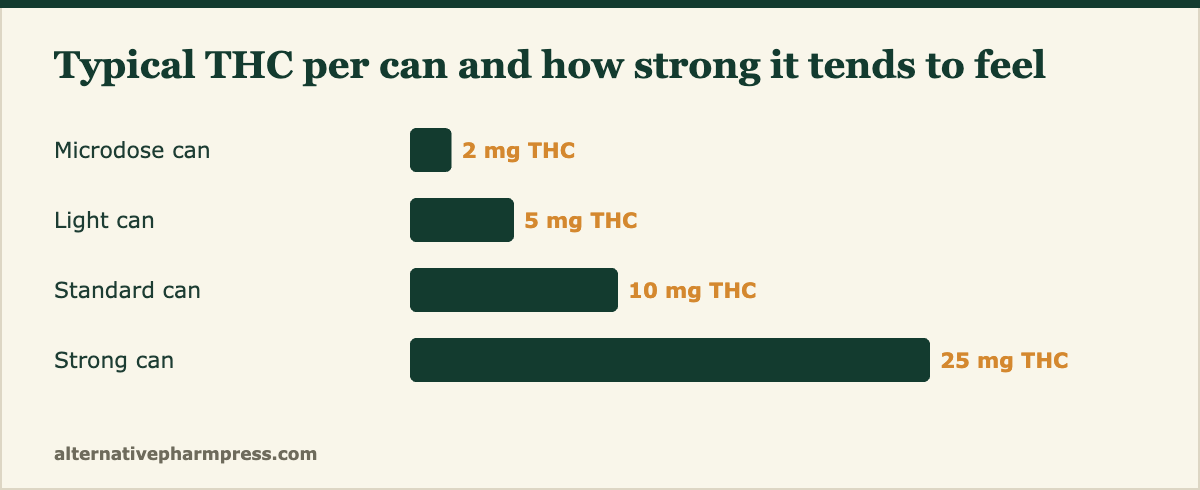
- The dose in the can. A 2 mg drink is a microdose for many adults. A 10 mg drink is the standard "one serving" of a regulated cannabis edible in many states and can be strong for a new user.
- Your tolerance. Regular cannabis users typically need more to feel the same effect. Someone who rarely uses cannabis may feel 2.5–5 mg clearly.
- Your body and context. Food in your stomach, body weight, metabolism, sleep and whether you’ve been drinking alcohol all change the experience.
How fast THC drinks kick in
One reason THC beverages became popular is that many people report a faster onset than with gummies. With a traditional edible, THC is absorbed through the gut and processed by the liver, where much of it is converted to 11-hydroxy-THC. That process often takes 30 minutes to two hours, sometimes longer.
Emulsified drinks are marketed as acting in 10–20 minutes. Early pharmacokinetic research on water-soluble cannabis formulations suggests absorption can be faster than with oil-based edibles, but the studies are small and the results vary between formulations. In practice, many people report noticing effects within 15 to 45 minutes, with a peak around one to two hours and effects lasting two to four hours or more.
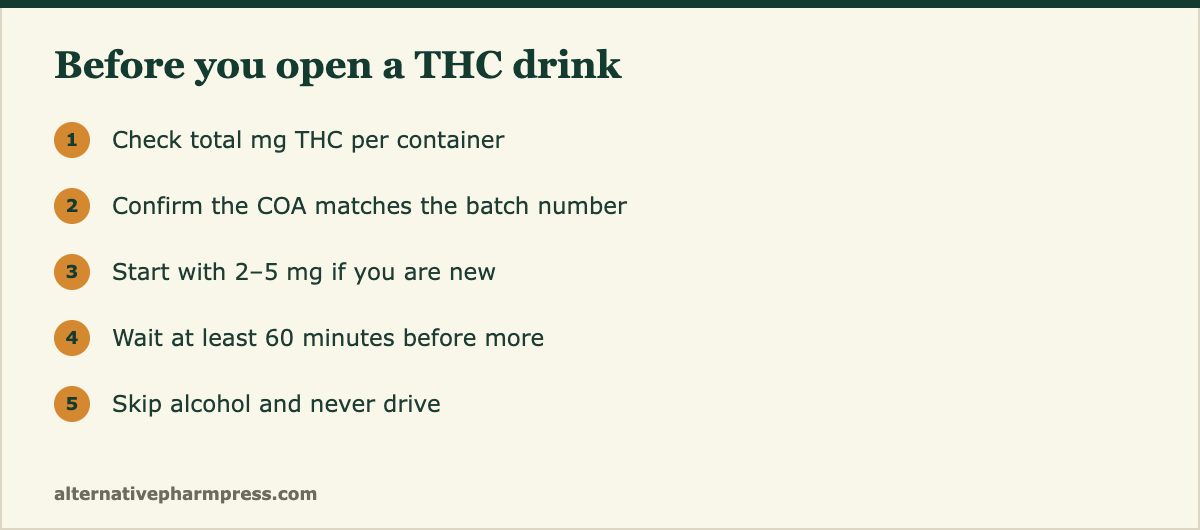
The practical lesson is the same as with any edible: wait at least an hour before drinking more. A common reason people have a bad experience is starting a second can because the first "isn’t working," then feeling both hit at once.
How strong is a THC drink compared with other products?
Milligrams are milligrams, but the format changes the experience. A 5 mg drink, a 5 mg gummy and a few puffs from a vape are not identical.
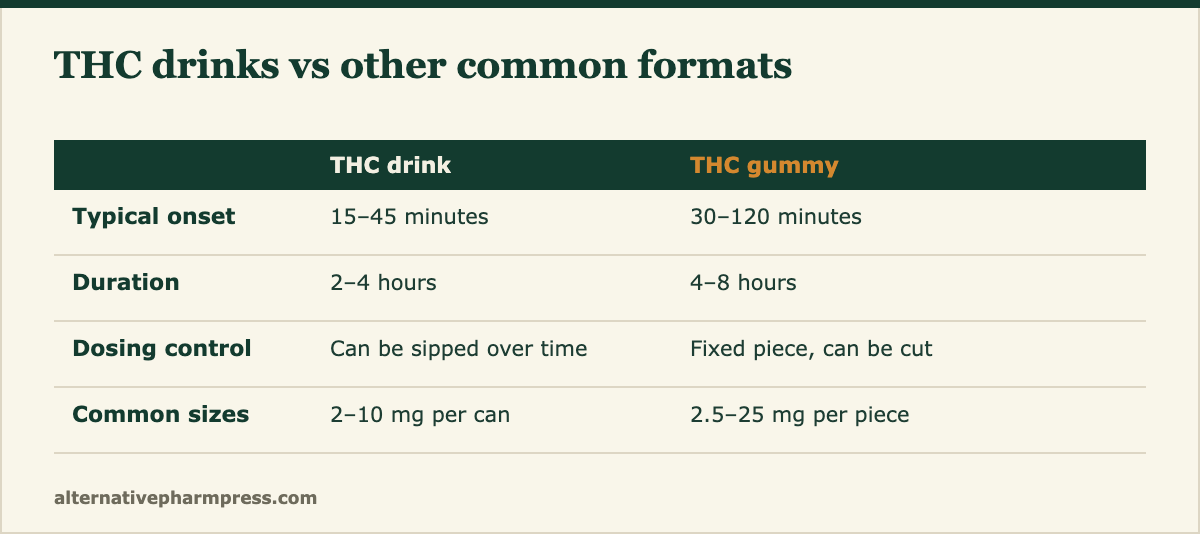
Drinks have one practical advantage: you can sip slowly and stop. You can drink a third of a can, wait, and decide whether you want more. The downside is social: drinks are often consumed in settings where people drink alcohol at a steady pace, and treating a THC seltzer like a beer is how people end up overdoing it.
If you’re new to edibles generally, our delta-8 gummies and THC and anxiety guides cover how to approach dosing cautiously.
Reading the label
A well-made THC beverage should tell you clearly what you’re drinking. Look for:
- Total THC per container, not just per serving. Some bottles contain multiple servings.
- Type of THC. Delta-9 is most common; delta-8 or blends should be labeled.
- CBD content, if any.
- A batch number and QR code that links to a certificate of analysis (COA) from an independent lab.
- Clear warnings about intoxication, driving, pregnancy and keeping it away from children.
Independent testing matters because surveys of hemp products have repeatedly found label claims that don’t match lab results. If the COA doesn’t match the batch number on your can, or the lab isn’t named, treat the product with caution.
THC drinks and alcohol
Many THC beverages are marketed as alternatives to alcohol, and for some people that is exactly how they use them. Combining the two is a different story. Research on simultaneous cannabis and alcohol use links it with greater impairment, higher blood THC levels in some studies, and higher rates of unsafe driving compared with either substance alone. Mixing also raises the chances of nausea, dizziness and vomiting.
If you choose a THC drink at a party, consider it your drink for the evening rather than something to add on top of alcohol.
Driving and work
THC impairs reaction time, attention and coordination. Driving after consuming any intoxicating THC product is dangerous and illegal in every state. Impairment can last longer than the obvious "high," so plan for a ride home if you’ve had a THC beverage.
THC drinks can also cause a positive drug test. Hemp-derived delta-9 is the same molecule as marijuana-derived delta-9, and standard urine tests look for THC metabolites, not the source. See our guide on how long THCA stays in your system for more on detection windows, which apply similarly to delta-9.
Who should avoid THC drinks
THC drinks are not a good choice for:
- People who are pregnant or breastfeeding.
- Anyone under 21, and anywhere state law restricts sales by age.
- People with a personal or family history of psychosis or serious mental illness.
- People taking sedatives, certain antidepressants, blood thinners or other medications that may interact with cannabinoids. Ask a pharmacist.
- Anyone with heart conditions who could be affected by an increased heart rate.
Keep drinks out of reach of children. Because they look like soda or sparkling water, accidental consumption is a real risk, and poison control centers have reported rising numbers of pediatric exposures to cannabis edibles in recent years.
What if you drink too much?
Taking too much THC is rarely life-threatening for healthy adults, but it can be very unpleasant: intense anxiety, a racing heart, nausea, confusion and feeling unable to move. If that happens, move to a calm place, sip water, eat something, and remind yourself the effect will pass, often within a few hours.
Seek medical help if someone has chest pain, trouble breathing, a seizure, severe confusion, or if a child or pet has consumed THC. In the U.S., Poison Control is available at 1-800-222-1222.
Where THC drinks stand legally in late 2026
The legal landscape is shifting quickly. In November 2025, Congress narrowed the federal definition of hemp. The new definition counts total THC, including THCA, and excludes finished hemp-derived products with more than 0.4 mg of total THC per container. A later appropriations law delayed most of those changes to December 11, 2026, while an exclusion for cannabinoids that cannot be naturally produced by the cannabis plant took effect on November 12, 2026.
Because most THC drinks contain 2–10 mg per can, the per-container cap would put the vast majority of current hemp beverages outside the federal hemp definition once it takes effect, unless Congress acts again. Some states already regulate or ban hemp THC beverages, while others license and tax them. Rules are changing on a state-by-state basis, so check your state’s current law. Our 2026 hemp ban explainer and THCA legality after December 11 guide track the details.
Bottom line
THC drinks are not a novelty soda. Most of them contain enough delta-9 THC to get you high, and some contain more than a typical edible serving. They can be a more controllable way to use cannabis than gummies, because you can sip slowly and stop, but only if you read the label, start low and wait. With federal rules set to change in December 2026, expect the products on shelves to change too.
FAQ
Can a 2 mg THC drink get you high?
Some people, especially those with little or no tolerance, notice mild effects from 2 mg. Many others feel very little. It’s considered a microdose.
How long does a THC drink high last?
Effects often last two to four hours, sometimes longer at higher doses or for new users. Lingering grogginess can last into the next morning.
Are THC seltzers stronger than beer?
They’re not comparable. Beer contains alcohol, while THC seltzers contain cannabinoids. A 10 mg THC drink can be quite intoxicating for a new user.
Will a THC drink show up on a drug test?
Yes, it can. Hemp-derived delta-9 THC produces the same metabolites that standard drug tests detect.
Can you drink a THC beverage and drive?
No. THC impairs driving, and driving under the influence of THC is illegal in every state.
Are THC drinks legal everywhere?
No. State laws vary widely, and new federal hemp limits are scheduled to take effect on December 11, 2026.