
Across the U.S., especially in Florida, Colorado, Hawaii, Texas and big cities, kava bars have become popular gathering spots. They offer a social atmosphere similar to a pub or café, but instead of beer and cocktails, the main drink is kava — a traditional Pacific Island beverage made from the root of Piper methysticum.
If you’re curious about trying one, this guide explains what kava bars are, how kava is served, what it feels like, what else is often on the menu (including kratom), safety considerations and tips for your first visit.
Key takeaways
- Kava bars serve kava, a root-based drink traditionally used for relaxation and socializing in the Pacific Islands.
- Kava is usually served in shells or cups; it tastes earthy and peppery and often numbs the mouth.
- Effects commonly include relaxation, calm mood and sociability, usually without heavy intoxication.
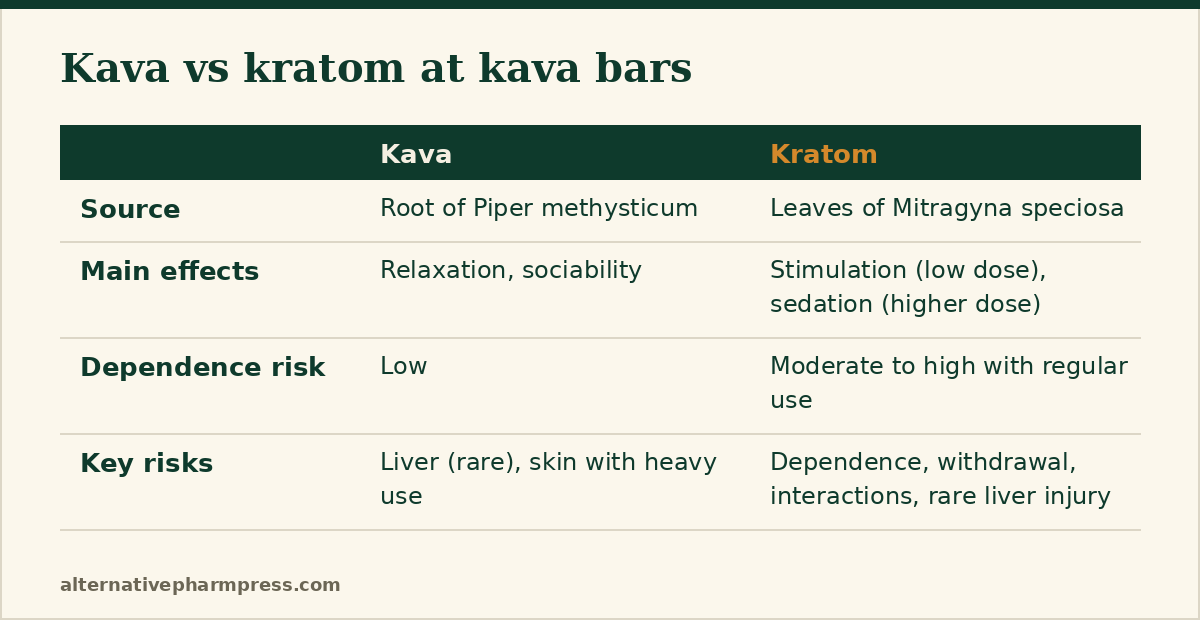
- Many kava bars also serve kratom, which has very different effects and risks.
- Don’t drive after drinking kava or mix it with alcohol; ask staff what’s in each drink.
Where kava comes from
In Fiji, Vanuatu, Tonga, Samoa and Hawaii, kava has been central to community life for centuries. It’s shared in ceremonies to welcome guests, mark important events and settle disputes, as well as in everyday social gatherings. The drink is traditionally prepared by kneading ground kava root in water and served in coconut shells. For an introduction, see what is kava? and kava drinks.
What a kava bar is like
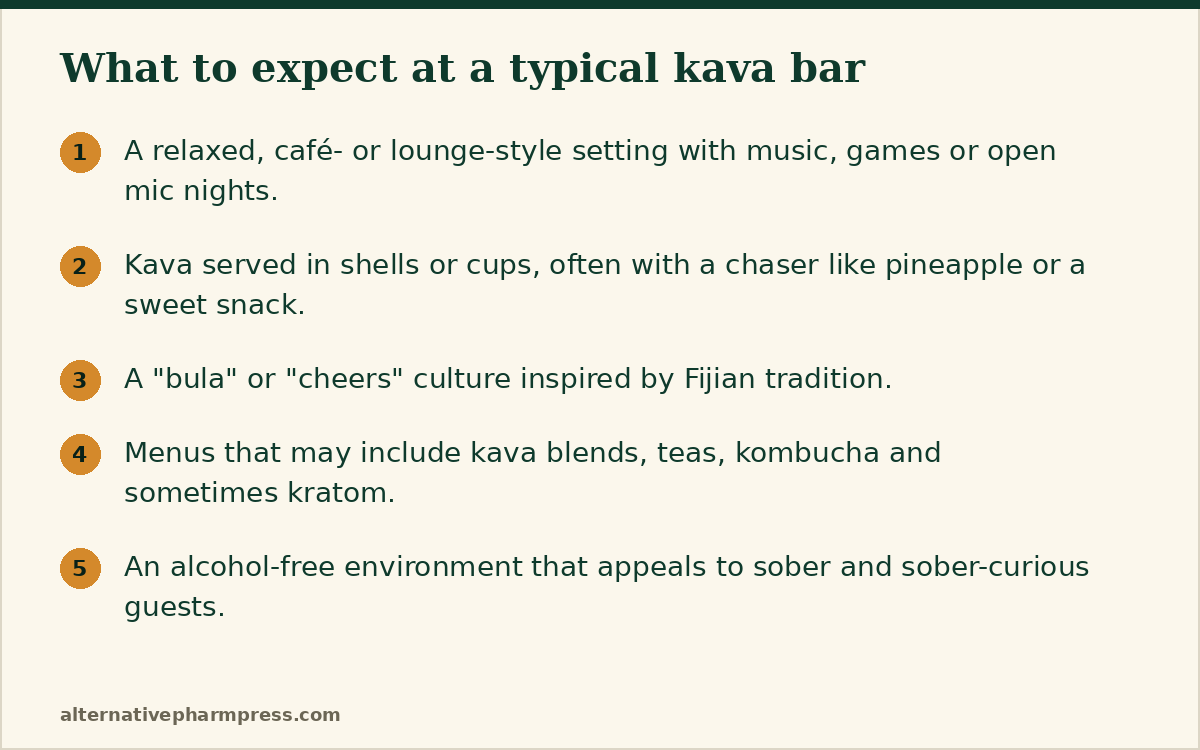
Many kava bars are open late and attract a mix of regulars, students, professionals and people looking for alternatives to drinking alcohol. The atmosphere is often friendly and community-oriented.
How kava is served
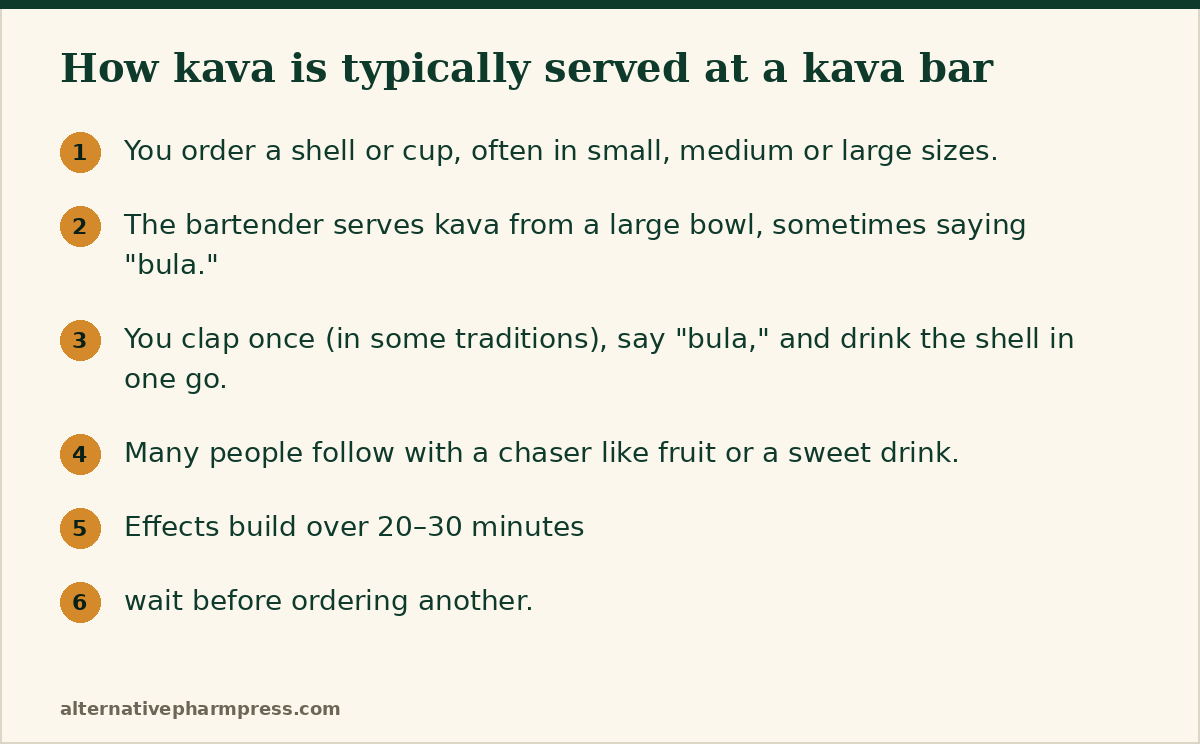
Bars may also offer flavored kava, kava mixed with coconut milk, or “kava cocktails” (non-alcoholic). Some serve instant or micronized kava instead of traditionally prepared kava.
What kava tastes like
Most people describe traditional kava as earthy, muddy and peppery. It’s not sweet, and the texture can be slightly gritty. The tongue and lips often go numb briefly — a normal effect of kavalactones. Chasers help many first-timers.
What kava feels like
Kava’s effects usually begin within 20–30 minutes. Common reports include:
- Physical relaxation and muscle ease.
- Calm, sociable mood.
- Mild euphoria for some people.
- Clear-headedness at moderate amounts, depending on kava variety.
- Sleepiness at larger amounts.
Unlike alcohol, kava usually doesn’t impair speech or cause hangovers at typical amounts, but heavy use can cause next-day grogginess.
Kratom at kava bars
Many kava bars also serve kratom, often brewed as tea. Kratom acts on opioid receptors and carries risks of dependence, withdrawal and interactions. Some bars serve kratom-kava blends, which can make it hard to know what you’re drinking. Kratom bans exist in some states and localities. Always ask staff what’s in each drink. Read kava vs kratom, kratom tea and kratom drinks.
Safety tips
- Don’t drive after drinking kava. Kava can impair reaction time, and drivers have been charged with DUI after heavy kava use.
- Don’t mix with alcohol — combining increases sedation and may stress the liver.
- Start small — one shell, then wait 20–30 minutes.
- Eat something if you’re prone to nausea.
- Ask what you’re drinking — especially whether a drink contains kratom.
- Know your health conditions — avoid kava with liver disease, pregnancy or certain medications.
For more on risks, see kava side effects and is kava addictive?.
Who should avoid kava bars (or kava)
- People with liver disease.
- Anyone pregnant or breastfeeding.
- People taking sedatives, anxiety medications, antidepressants or Parkinson’s drugs without medical advice.
- People who need to drive afterward.
- Anyone under 18 (many bars have age policies).
Etiquette and culture
Kava bars often honor Pacific traditions. Saying “bula” (a Fijian greeting meaning “life”) before drinking is common. Some bars ask guests to clap once before receiving a shell. Respecting the culture — and the farmers who grow kava — is part of the experience. Many bars source kava directly from Pacific Island growers.
Cost
Prices vary by location and size. Small shells may cost a few dollars, with discounts for larger cups or multiple shells. Specialty drinks and kava blends may cost more.
Kava bars and the sober-curious movement
Kava bars have grown alongside interest in reducing alcohol. They provide a social space with a ritual of ordering and sharing drinks, without the effects of alcohol. Some people find them helpful when cutting back on drinking. Others caution that swapping alcohol for kratom, which is common at some bars, introduces different risks.
How to choose a good kava bar
- Noble kava — ask whether they serve noble varieties.
- Transparency — staff should explain what’s in each drink.
- Clean, welcoming environment.
- Responsible service — staff who discourage driving after heavy use and don’t push excessive servings.
- Separate kava and kratom options clearly labeled.
Hosting kava at home
Some people discover kava at a bar and then prepare it at home. If you do, buy noble kava root from reputable vendors, use a strainer bag and room-temperature water, knead for 5–10 minutes and serve in small portions. Avoid preparing kava with alcohol or mixing it with kratom. Starting with a smaller amount than you’d have at a bar helps you gauge strength.
Regulation of kava bars
Kava is legal and sold as a food or dietary supplement in most U.S. states. Kava bars typically operate under food service licenses, though rules vary by city. Some localities regulate or ban kratom, which affects menus. Health departments may inspect kava bars like other food establishments. Unlike alcohol, kava doesn’t have standardized serving sizes or blood-level limits for driving, although impairment laws still apply.
Kava strength at bars vs canned drinks
Traditionally prepared kava at a bar is often stronger than many canned kava beverages sold in stores. Bars may use concentrated preparations or larger shells. If you’ve only tried canned kava before, expect a bar shell to feel more noticeable. Ask staff how strong their kava is and start with a small serving.
What a first visit might look like
Imagine arriving at a kava bar on a weeknight. The space is dim and relaxed, with music, couches and a board-game shelf. You approach the bar and tell the bartender it’s your first time. They recommend a small shell of their mildest noble kava and offer a pineapple chaser. You say “bula,” drink it in one go, take a bite of fruit and sit down with friends. Your tongue tingles. Twenty minutes later, you feel more relaxed and chatty. You decide to have one more small shell, then switch to tea for the rest of the evening. You leave with a friend who drives — or you take a ride-share home.
Kava and mental health
Some people find kava helpful for relaxing after stressful days. Research on kava for anxiety has produced mixed results, and kava isn’t a substitute for treatment of anxiety disorders. If you find yourself relying on kava every day to cope, consider talking with a mental health professional about other approaches. See best supplements for anxiety.
Questions to ask the bartender
- Which kava varieties do you serve, and are they noble?
- Where is your kava from?
- Which drinks contain kratom, and which are kava only?
- How strong is a standard shell?
- What do you recommend for a first-timer?
Good bartenders are usually happy to explain their menu and help newcomers pace themselves.
FAQ
What is a kava bar?
It’s a social venue serving kava, a traditional Pacific Island root drink, in a relaxed, alcohol-free setting.
Does kava get you drunk?
Kava doesn’t cause the same intoxication as alcohol. It typically produces relaxation and calm, though large amounts can cause sedation and impaired coordination.
What does kava taste like?
Earthy, peppery and slightly bitter, often with a numbing effect on the mouth.
Is it safe to drive after kava?
No. Kava can impair reaction time and coordination, and drivers have been charged with DUI after heavy kava use.
Do kava bars serve kratom?
Many do. Kratom has different effects and risks than kava. Always ask what’s in each drink.
Can I bring kids to a kava bar?
Policies vary. Many kava bars are adults-only or 18+, especially if they serve kratom. Check with the venue before visiting.
Is kava legal?
Kava is legal in most of the U.S. and sold as a food or supplement. Kratom, which some bars also serve, is banned in some states and cities.
How many shells of kava should I drink?
Start with one small shell and wait 20–30 minutes before deciding on another.