
Delta-8 tinctures are liquid extracts, usually delta-8 THC distillate mixed with a carrier oil like MCT, sold in dropper bottles. They’re marketed as a flexible alternative to gummies and vapes: you can adjust your dose drop by drop and take it under the tongue or mixed into food and drinks.
This guide covers how delta-8 tinctures work, onset and duration, how to calculate doses, side effects and interactions, drug-test considerations, product quality and the changing legal landscape.
Key takeaways
- Delta-8 tinctures combine delta-8 THC with a carrier oil; potency is listed as total mg per bottle.
- Held under the tongue, some delta-8 may absorb sublingually, but much is swallowed and processed like an edible.
- Effects typically start in 15–60 minutes and can last 4–8 hours.
- Calculate mg per mL to dose accurately; start with a low amount and wait before taking more.
- Delta-8 is intoxicating, causes positive drug tests and faces tightening federal and state rules.
What is delta-8 THC?
Delta-8 THC is a cannabinoid similar to delta-9 THC, the main intoxicant in marijuana. It binds CB1 receptors less strongly, so many people find it somewhat milder. Almost all commercial delta-8 is made by chemically converting hemp-derived CBD. For background, read delta-8 vs delta-9 THC and delta-8 vs CBD.
How tinctures work
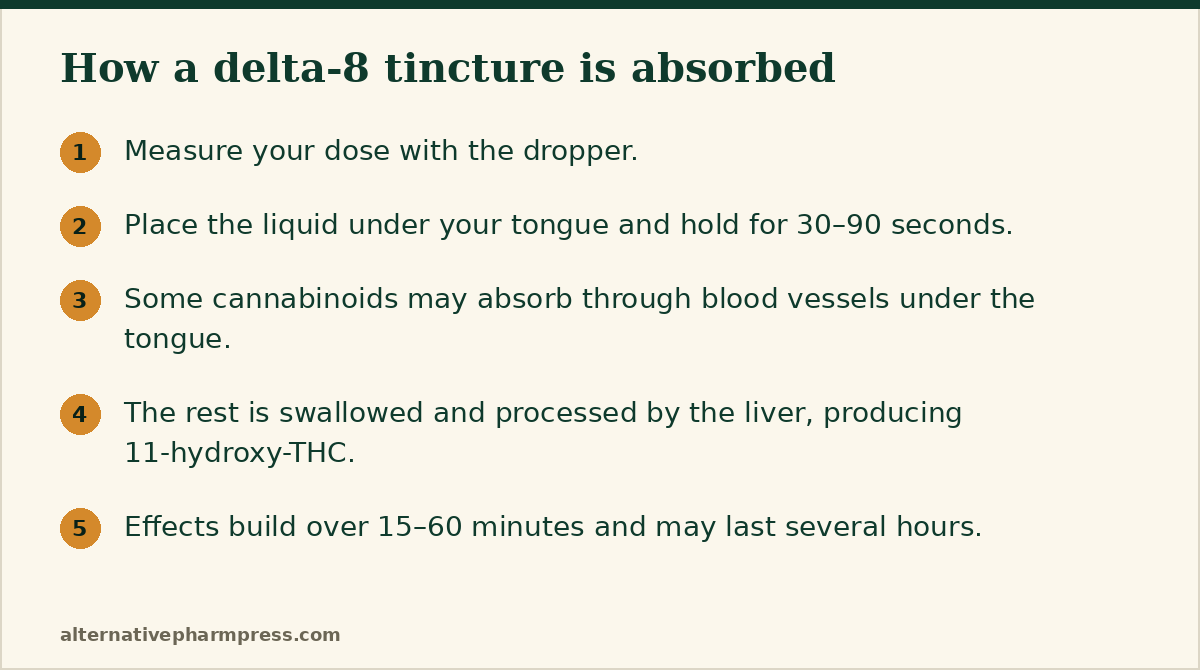
Research on sublingual absorption of cannabinoids in oil suggests much of the dose is swallowed rather than absorbed under the tongue. That means tinctures often behave like a fast-onset edible. Read CBD tincture vs CBD oil for a related explanation.
Onset and duration compared
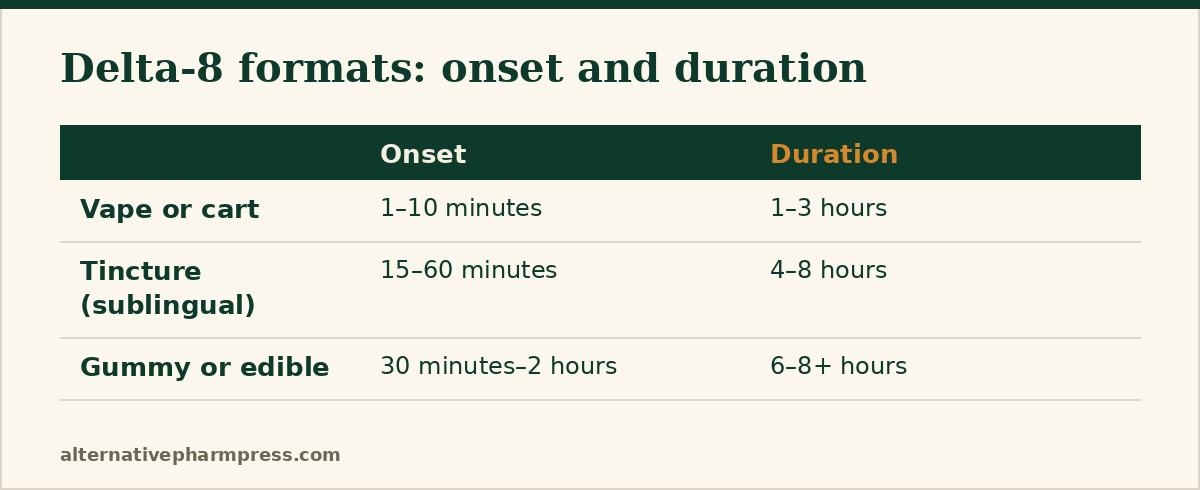
Compare formats in delta-8 gummies guide and delta-8 carts safety.
How to calculate your dose
Tincture potency is listed as total mg of delta-8 per bottle. To find the amount per dropper:
- Divide total mg by bottle volume in mL to get mg per mL.
- Check the dropper size — most hold 1 mL when full.
- Calculate mg per drop if needed (about 20 drops per mL is a common estimate, but droppers vary).
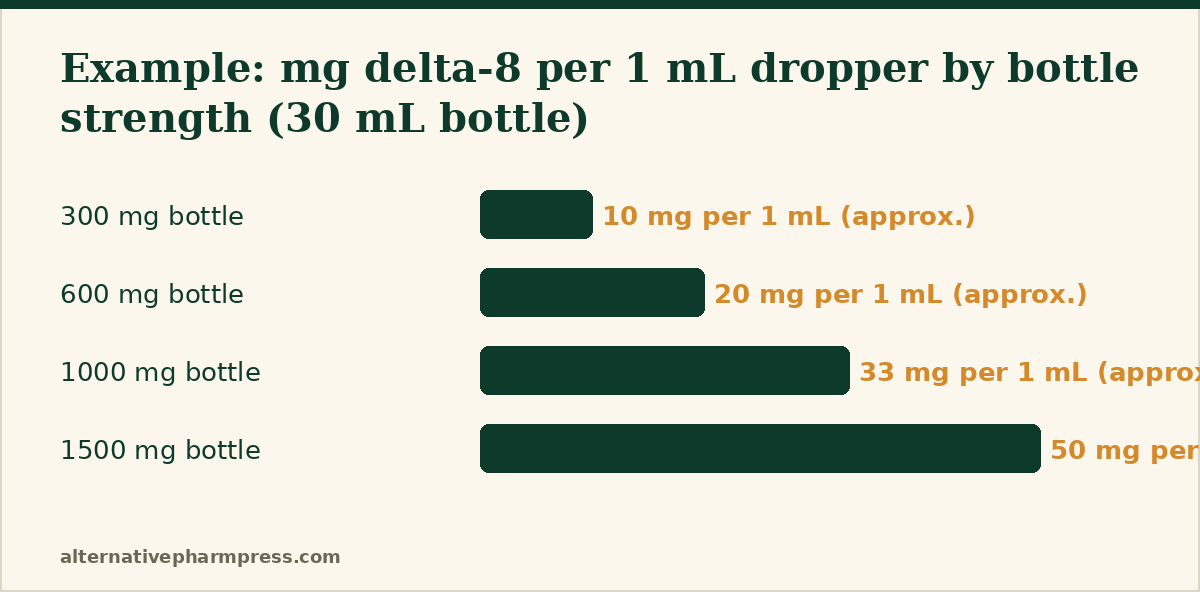
For example, a 30 mL bottle with 1,000 mg delta-8 contains about 33 mg per full dropper — a large amount for someone new to THC. Many guides suggest that newcomers start with a small amount, such as 2.5–5 mg, and wait at least two hours before taking more. This isn’t medical advice; individual sensitivity varies widely.
Side effects
- Dry mouth and red eyes.
- Increased heart rate and dizziness.
- Anxiety or paranoia, especially at higher doses. See THC and anxiety.
- Drowsiness and impaired coordination.
- Memory and concentration problems while under the influence.
- Nausea or vomiting if too much is taken.
Too much delta-8 can cause intense, prolonged discomfort. Poison centers have reported many delta-8 exposures, including children who accidentally ingested products.
Interactions
Delta-8 may interact with medications that cause sedation (benzodiazepines, sleep aids, opioids), alcohol and drugs metabolized by liver enzymes. Combining with CBD may also affect metabolism. Talk to a pharmacist if you take medications.
Drug tests
Delta-8 is metabolized into THC-COOH, which standard drug tests detect. Most tests can’t distinguish delta-8 from delta-9. Read how long delta-8 stays in your system and does delta-8 show up on drug tests?.
Product quality
Because delta-8 is made through chemical conversion, quality depends on purification and testing. Concerns include:
- Reaction byproducts and unidentified compounds.
- Residual solvents and acids used in conversion.
- Heavy metals from catalysts or equipment.
- Mislabeled potency, including delta-9 levels above legal limits.
Choose tinctures with batch-specific COAs showing a full cannabinoid panel, residual solvents, heavy metals and pesticides. For brand comparisons, see best delta-8 brands 2026.
Legal status
Delta-8’s legal status varies widely. Many states have banned or restricted it, and federal legislation passed in late 2025 restricts intoxicating hemp-derived and synthesized cannabinoids, with implementation into 2026. See delta-8 legal states 2026, legal status of delta-8 and federal hemp law explained.
Safety tips
- Start low and go slow — wait at least two hours before redosing.
- Measure carefully with the dropper markings.
- Don’t drive or operate machinery after use.
- Avoid mixing with alcohol or other sedatives.
- Store securely away from children and pets — tinctures can be mistaken for flavored drops.
- Avoid if pregnant, breastfeeding, under 21 or with a history of psychosis.
Tinctures vs gummies: which is better?
Tinctures allow more precise, adjustable dosing and may act somewhat faster than gummies. Gummies offer convenience and consistent pre-measured doses. Tinctures can taste earthy or oily, while gummies taste like candy — which also makes them more appealing to children, a reason to store both securely.
Mixing tinctures into food and drinks
Some people add delta-8 tinctures to coffee, smoothies or food. This turns the tincture into an edible, with slower onset and effects similar to gummies. Because the oil may not mix evenly in water-based drinks, stir well or blend with something fatty like milk. Label any infused food clearly so others don’t consume it accidentally.
What happens if you take too much
Taking too much delta-8 can cause anxiety, panic, rapid heartbeat, confusion, nausea, extreme drowsiness and loss of coordination. These effects usually pass within several hours. Stay in a calm, safe place, drink water and rest. Seek medical help for chest pain, fainting, seizures, severe vomiting, or if a child or pet has ingested delta-8.
Delta-8 tinctures and sleep
Some people use delta-8 tinctures at night, hoping to fall asleep more easily. THC can shorten the time to fall asleep in some people, but it also tends to suppress REM sleep, and regular use can lead to tolerance and sleep disruption when stopping. Next-day grogginess is common with larger evening doses. If sleep is a persistent problem, a clinician can help identify causes and evidence-based treatments such as cognitive behavioral therapy for insomnia. Compare with non-intoxicating options in CBN vs melatonin.
Carrier oils and ingredients
Most delta-8 tinctures use MCT oil (from coconut) as a carrier. Others use hemp seed oil, olive oil or grapeseed oil. Some add flavors, sweeteners or terpenes. People with allergies — for example, to coconut — should check the ingredient list. Avoid tinctures with vague “proprietary blend” listings or added cannabinoids not shown on the COA.
Keeping a dosing log
Because tinctures are flexible, a simple log helps you stay consistent and spot problems early. Record the date, time, amount in milligrams, whether you took it with food, when you first noticed effects, how strong they felt and any side effects. Over a few sessions, you’ll learn how your body responds — and you’ll notice if your tolerance is creeping up, which is a signal to take a break. If you find yourself needing larger amounts regularly, consider whether use is becoming a habit you want to change.
Storage and shelf life
Store tinctures upright in a cool, dark place with the cap tightly closed. Heat and light can degrade cannabinoids over time. Most tinctures remain stable for about a year or more when stored properly; check the label for expiration dates. Keep them in a locked location if children, teens or pets live in your home, and never store them next to flavored drops or medicines that could be confused with them.
Tolerance breaks
Regular delta-8 use leads to tolerance, so the same dose produces weaker effects. Taking a break of a few days to a few weeks can restore sensitivity. When returning after a break, start with a lower dose than before, since tolerance may have dropped significantly.
FAQ
How long does a delta-8 tincture take to kick in?
Usually 15–60 minutes, though it can take longer if much of the dose is swallowed.
How long does a delta-8 tincture last?
Effects often last four to eight hours.
How much delta-8 tincture should I take?
There’s no standard dose. Many guides suggest newcomers start with 2.5–5 mg and wait at least two hours before taking more.
Are delta-8 tinctures stronger than gummies?
Not necessarily. Strength depends on mg per dose. Tinctures allow more flexible dosing.
Will a delta-8 tincture show up on a drug test?
Yes. Delta-8 produces THC metabolites that standard drug tests detect.
Should I hold a delta-8 tincture under my tongue?
Many labels suggest holding it under the tongue for 30–90 seconds. Some may absorb there, but much is usually swallowed, so effects often resemble a faster-acting edible.
Can I mix delta-8 tincture with CBD?
Some products combine them. CBD may change how some people experience THC, but evidence is mixed, and combining adds potential medication interactions.
Are delta-8 tinctures legal?
They’re restricted or banned in many states, and federal rules are tightening. Check current local laws.