
Walk into any convenience store and you’ll find a new kind of beverage: sleek cans promising “clean focus,” “calm energy” or “brain fuel.” These nootropic drinks combine caffeine with ingredients like L-theanine, lion’s mane, ashwagandha, citicoline and B vitamins. They’re marketed as smarter alternatives to energy drinks and coffee.
Do they work? Some ingredients have reasonable evidence; many appear at doses too small to matter. This guide breaks down what’s inside, how to judge a label and how to stay safe.
Key takeaways
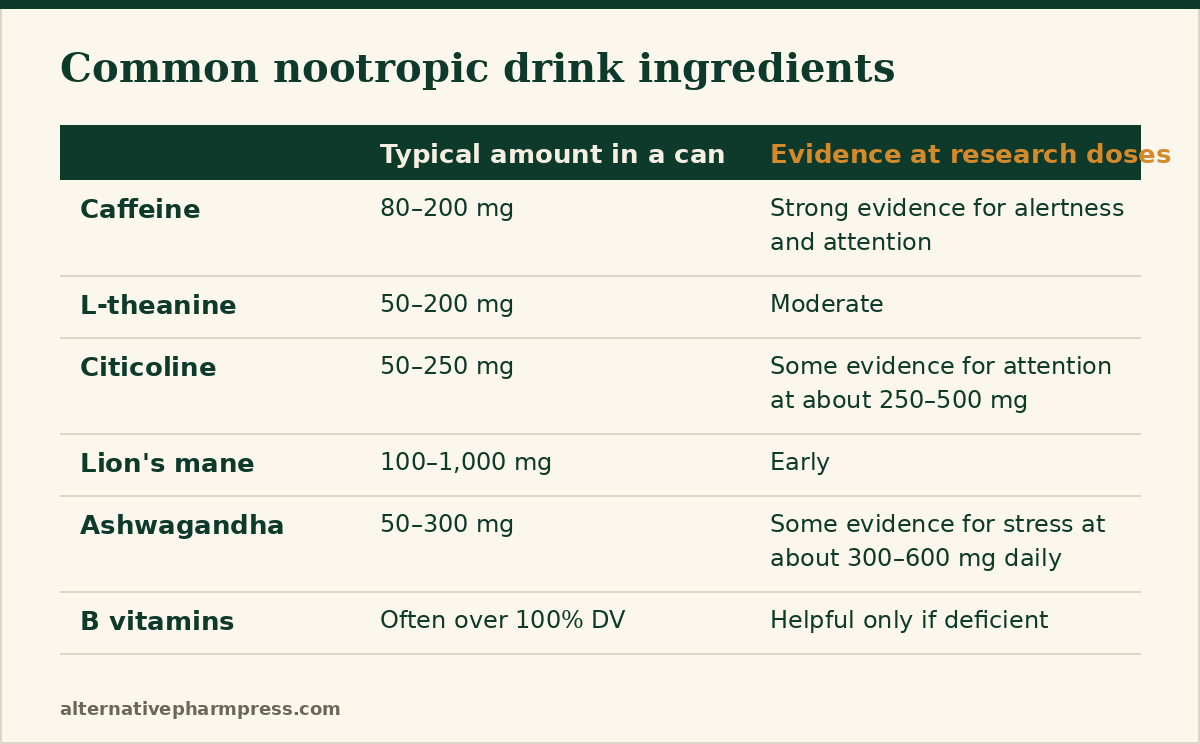
- Most nootropic drinks get their main effect from caffeine — often 80–200 mg per can.
- L-theanine with caffeine is the best-supported combination for smoother focus.
- Many cans include trendy ingredients at tiny “label dressing” doses that are unlikely to have effects.
- Watch total caffeine, added sugar or sweeteners, and ingredients that interact with medications.
- Nootropic drinks aren’t a substitute for sleep, food and hydration.
What makes a drink “nootropic”?
There’s no legal definition. Brands use “nootropic” for any drink containing ingredients claimed to support cognition. The category overlaps with energy drinks, functional sodas, mushroom coffees and adaptogen beverages. For the broader picture, read our nootropics beginner’s guide.
Common ingredients and what the evidence says
Caffeine
The workhorse. Caffeine improves alertness, reaction time and attention, especially when you’re tired. Sources include synthetic caffeine, green tea extract, guarana, yerba mate and coffee. Many drinks hide extra caffeine in botanical extracts, so the total may be higher than you think.
L-theanine
An amino acid from tea. When paired with caffeine — commonly in about a 1:2 ratio — small studies show improved focus and fewer jitters compared with caffeine alone.
Choline sources (citicoline, alpha-GPC)
Precursors to acetylcholine, a neurotransmitter involved in attention and memory. Citicoline has some evidence for attention at doses of 250–500 mg; many drinks use less. See alpha-GPC vs citicoline.
Adaptogens (ashwagandha, rhodiola)
Better studied for stress and fatigue than for immediate cognitive effects, and they typically need daily use over weeks. A single can is unlikely to do much. See ashwagandha vs rhodiola.
Functional mushrooms
Lion’s mane, cordyceps and reishi are common. Research doses are usually grams per day; many drinks contain a few hundred milligrams. See what lion’s mane is good for and lion’s mane vs cordyceps.
Other additions
Tyrosine, taurine, ginseng, ginkgo, bacopa, electrolytes and vitamins appear frequently. Most are present below the doses used in studies.
The “label dressing” problem
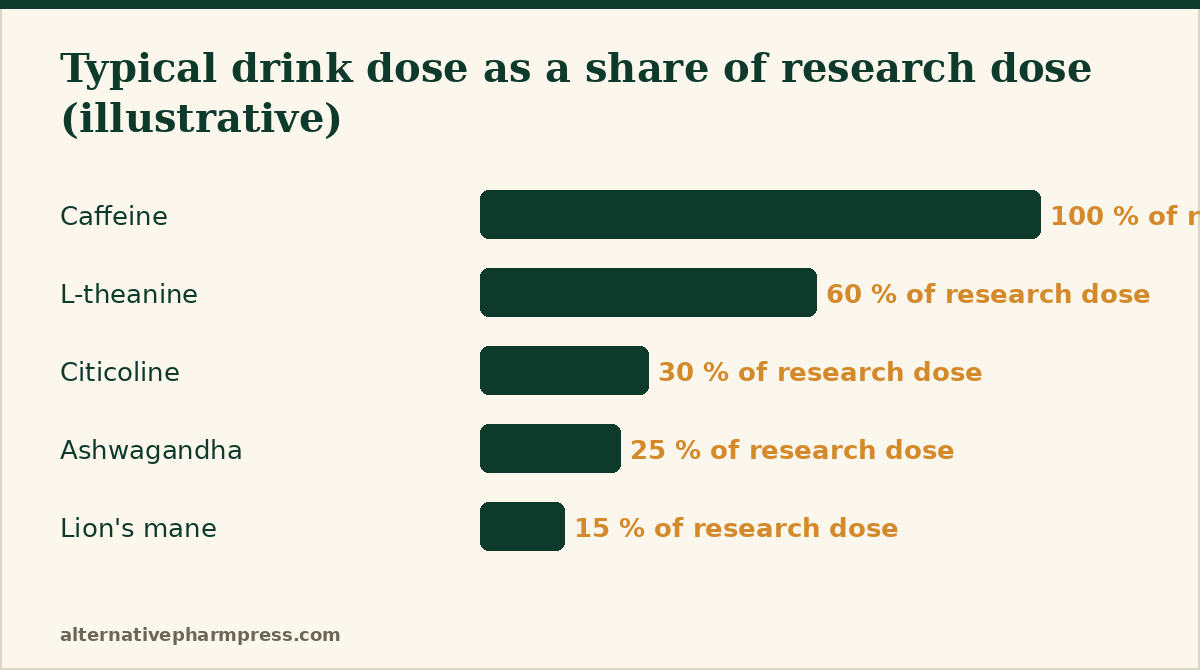
The chart is an illustration of a common pattern, not data from a specific product. Brands often list impressive-sounding ingredients in small amounts — a practice sometimes called “label dressing” or “fairy dusting.” The practical result: many nootropic drinks feel like a caffeine drink with extra marketing.
How much caffeine is too much?
For healthy adults, up to about 400 mg of caffeine per day is generally considered safe by the FDA. Some nootropic drinks contain half of that in one can. Consider:
- Coffee, tea, pre-workouts and chocolate all count toward your total.
- Caffeine sensitivity varies; some people get anxiety, palpitations or insomnia at low doses.
- Caffeine in the afternoon can disrupt sleep many hours later.
- Pregnant people are usually advised to stay under about 200 mg per day.
- Teens and children should avoid high-caffeine drinks.
Safety and interactions
- Medications: ginkgo can interact with blood thinners; ashwagandha may affect thyroid hormones and sedatives; St John’s wort (occasionally included) interacts with many drugs.
- Health conditions: heart rhythm problems, anxiety disorders and high blood pressure warrant caution with stimulant drinks.
- Sugar and sweeteners: some drinks contain significant sugar; others use sugar alcohols that upset digestion.
- Kratom and kava drinks: some “functional” beverages contain kratom or kava, which are very different substances. See kratom drinks explained and what is kava.
How to read a nootropic drink label
- Total caffeine in mg per can — including from botanicals.
- Each active ingredient’s dose, not a “proprietary blend.”
- Standardized extracts where relevant (for example, ashwagandha withanolides).
- Sugar and sweetener content.
- Third-party testing or certifications.
- Warnings for pregnancy, children and caffeine sensitivity.
DIY alternative: a simple evidence-based combo
If you mainly want smoother focus, a cup of coffee or tea plus an L-theanine supplement (around 100–200 mg) can replicate the best-supported part of many nootropic drinks for a fraction of the cost. Green tea naturally contains both caffeine and L-theanine in smaller amounts.
Do nootropic drinks work? Our verdict
For most products, the noticeable effect comes from caffeine, sometimes smoothed by L-theanine. That can genuinely help with alertness and focus. The extra ingredients are usually underdosed for meaningful effects in a single serving. If you enjoy them and tolerate the caffeine, they’re a reasonable choice — just don’t expect transformative cognitive benefits. For brands we trust, see best nootropic brands.
Nootropic drinks vs energy drinks vs coffee
| Drink | Typical caffeine | Extras | Best for |
|---|---|---|---|
| Brewed coffee (12 oz) | About 120–180 mg | Antioxidants | Simple, inexpensive energy |
| Energy drink (16 oz) | About 150–300 mg | Sugar or sweeteners, taurine, B vitamins | Strong stimulation |
| Nootropic drink | About 80–200 mg | L-theanine, adaptogens, mushrooms | Smoother focus (mostly from caffeine plus theanine) |
| Green tea (8 oz) | About 30–50 mg | Natural L-theanine | Gentle alertness |
Timing and habits
- Morning or early afternoon use avoids sleep disruption; caffeine’s half-life is around five hours.
- Pair with food if caffeine upsets your stomach.
- Hydrate — caffeine has a mild diuretic effect.
- Cycle — taking regular breaks from caffeine reduces tolerance, so you get more benefit when you do use it.
- Track sleep — if your sleep worsens, cut back before adding more stimulants.
Who should be careful
People who are pregnant or breastfeeding, have heart conditions, anxiety or panic disorders, high blood pressure, or take medications such as antidepressants, blood thinners or thyroid medication should check with a clinician before using nootropic drinks regularly. Adolescents should avoid high-caffeine beverages.
Nootropic shots and powders
Beyond cans, the category includes small “brain shots” and powdered sticks you mix into water. Shots tend to pack high caffeine into a tiny volume, which can make it easy to consume a lot quickly. Powders give you flexibility to use half a serving. The same label-reading rules apply: check caffeine first, then each ingredient’s dose.
Are nootropic drinks worth the price?
Many nootropic drinks cost several dollars per can — far more than coffee or tea. If the main active ingredient is caffeine with some L-theanine, you can get similar effects much more cheaply. You’re often paying for flavor, branding and convenience. That’s fine if you value those things; just know what you’re buying.
A closer look at “calm focus” claims
Many nootropic drinks promise “calm focus” — alertness without anxiety. This idea mostly comes from research on L-theanine. In small laboratory studies, L-theanine increased alpha brain-wave activity (associated with relaxed alertness) and, combined with caffeine, improved performance on attention-switching tasks and reduced self-reported tiredness. The effects are real but modest, and studies are small and often short.
Adaptogens like ashwagandha are sometimes added for the “calm” part of the claim. However, ashwagandha’s stress-reducing effects in trials appeared after weeks of daily use, not within an hour of a single dose. So in a single can, the “calm” is most likely to come from L-theanine (if present at a meaningful dose) and from caffeine being lower than in a typical energy drink.
Questions to ask before your next purchase
- Do I actually need more caffeine, or more sleep? If you’re relying on stimulants to get through every afternoon, sleep debt may be the real issue.
- Is the “special” ingredient present at a meaningful dose? Compare the label with research amounts.
- How does this fit into my total daily caffeine? Add up coffee, tea, soda and supplements.
- Do any ingredients interact with my medications? Ask a pharmacist if unsure.
FAQ
What are nootropic drinks?
They’re beverages containing ingredients marketed to support focus or mental energy, usually caffeine plus L-theanine, adaptogens, mushrooms, choline sources or vitamins.
Do nootropic drinks actually work?
Most of their noticeable effect comes from caffeine, sometimes smoothed by L-theanine. Other ingredients are often too low in dose to have meaningful effects.
How much caffeine is in a nootropic drink?
Commonly 80–200 mg per can, sometimes more. Check labels, including caffeine from botanicals like guarana or green tea.
Are nootropic drinks safe?
For most healthy adults in moderation, yes. People sensitive to caffeine, pregnant people and those on certain medications should be careful.
Are nootropic drinks better than coffee?
Not necessarily. Coffee or tea with L-theanine can provide similar effects for less money.
Can nootropic drinks help with ADHD?
They’re not a treatment for ADHD. Anyone with ADHD should work with a clinician on evidence-based treatment.