
“Nootropics” — often called smart drugs or cognitive enhancers — are substances that claim to improve memory, focus, motivation or mental energy. The category has exploded: there are nootropic coffees, pouches, gummies, energy drinks and complex capsule “stacks” with 20 ingredients. Some ingredients have decent human research behind them. Many don’t.
This beginner’s guide explains what nootropics are, which ones have the strongest evidence, where the hype outruns the science and how to use them safely.
Key takeaways
- “Nootropic” is a marketing umbrella, not a regulated category. It covers caffeine, amino acids, herbs, vitamins and prescription drugs.
- The best-studied options for healthy adults are caffeine + L-theanine, creatine, bacopa (memory, long-term), rhodiola (fatigue) and adequate sleep, exercise and nutrition.
- Effects in healthy people are usually modest — think small improvements, not “limitless.”
- Prescription stimulants and racetams carry real risks and legal issues and are not casual supplements.
- Quality varies; look for third-party testing and transparent doses rather than proprietary blends.
Where the word “nootropic” comes from
The term was coined in 1972 by Romanian chemist Corneliu Giurgea, who developed piracetam. He defined nootropics as substances that enhance learning and memory, protect the brain, and have very few side effects. By that strict definition, almost nothing on the market qualifies. Today the word is used loosely for anything sold to help you think better.
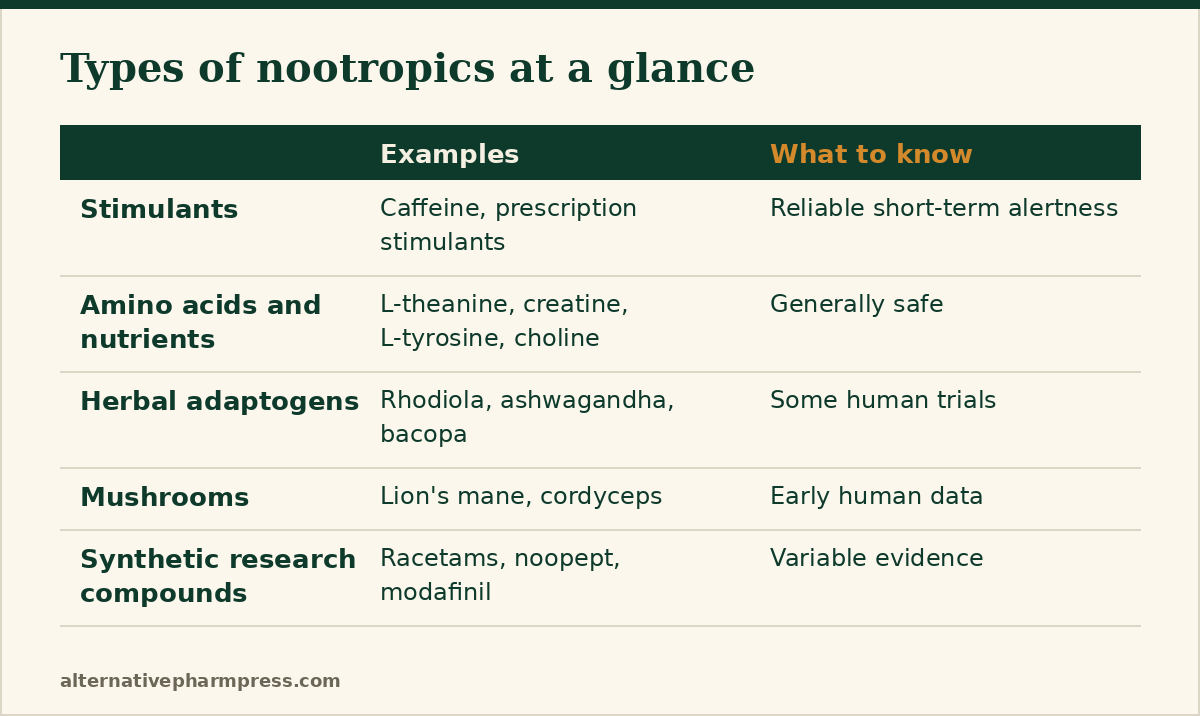
The main types of nootropics
1. Stimulants
Caffeine is the world’s most used nootropic. It reliably improves alertness, reaction time and attention, especially when you’re tired. Prescription stimulants such as methylphenidate and amphetamines treat ADHD but are controlled substances with abuse potential; in healthy people their cognitive benefits are smaller than many assume. Modafinil is a prescription wakefulness drug; see modafinil vs adrafinil.
2. Amino acids and nutrients
- L-theanine, found in tea, promotes calm focus and smooths out caffeine’s jitters.
- Creatine supports brain energy metabolism; some studies suggest benefits under sleep deprivation or in people with low dietary intake (such as vegetarians).
- L-tyrosine is a precursor to dopamine and noradrenaline and may help performance under acute stress.
- Choline sources such as alpha-GPC and citicoline are popular; see alpha-GPC vs citicoline.
3. Herbal adaptogens
- Bacopa monnieri has several randomized trials showing modest improvements in memory after 8–12 weeks of daily use.
- Rhodiola rosea may reduce fatigue and improve mental performance under stress.
- Ashwagandha is better studied for stress and sleep than for cognition directly. Compare them in ashwagandha vs rhodiola and bacopa vs lion’s mane.
4. Functional mushrooms
Lion’s mane stimulates nerve growth factor in lab studies, and a few small human trials suggest modest cognitive benefits. See lion’s mane in 2026: trials and market and lion’s mane vs cordyceps.
5. Synthetic and research compounds
Racetams (piracetam and relatives), noopept and peptides like semax and selank are popular in online communities. Evidence in healthy adults is limited, quality is inconsistent, and legal status varies by country. See noopept vs piracetam and selank vs semax.
Which nootropics have the strongest evidence?
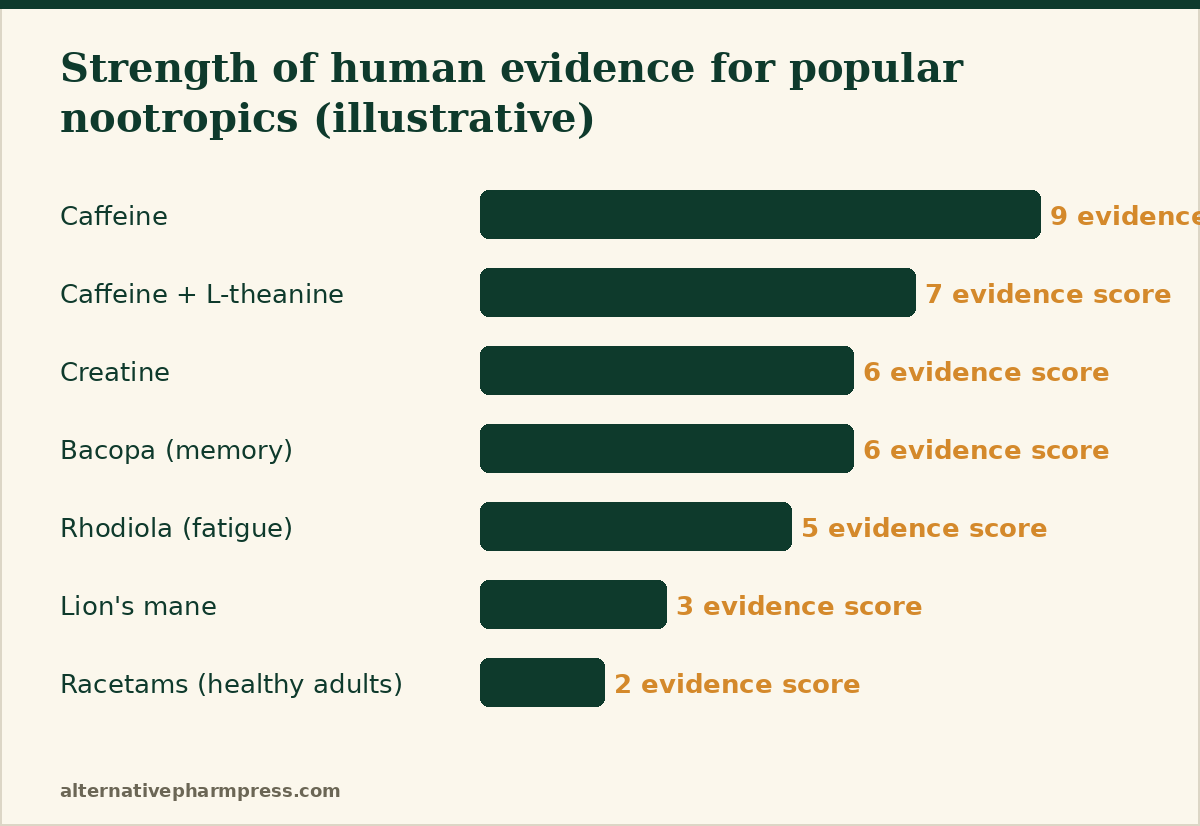
The chart is an illustrative ranking of the overall quality and consistency of human studies, not a precise score. Even the best-supported options produce modest effects in healthy, well-rested people.
Caffeine + L-theanine
The classic stack: roughly 100 mg caffeine with 200 mg L-theanine. Several small trials show improved attention and task switching compared with caffeine alone, with fewer jitters.
Creatine
Best known for muscle, creatine also fuels the brain’s energy system. Benefits appear clearest in sleep-deprived people, older adults and vegetarians. It’s one of the safest, cheapest supplements available.
Bacopa
Bacopa works slowly; trials show memory benefits after about three months of daily use. Side effects include stomach upset.
Where the hype outruns the evidence
- “Limitless” claims. No legal supplement dramatically boosts IQ.
- Proprietary blends. Twenty ingredients at undisclosed doses usually means most are underdosed.
- Celebrity and influencer stacks. Personal testimony isn’t evidence, especially when the endorser sells the product.
- Microdosing claims. Psychedelic microdosing studies with placebo controls have largely found effects similar to placebo. See our overview of microdosing psilocybin.
Safety: what beginners should know
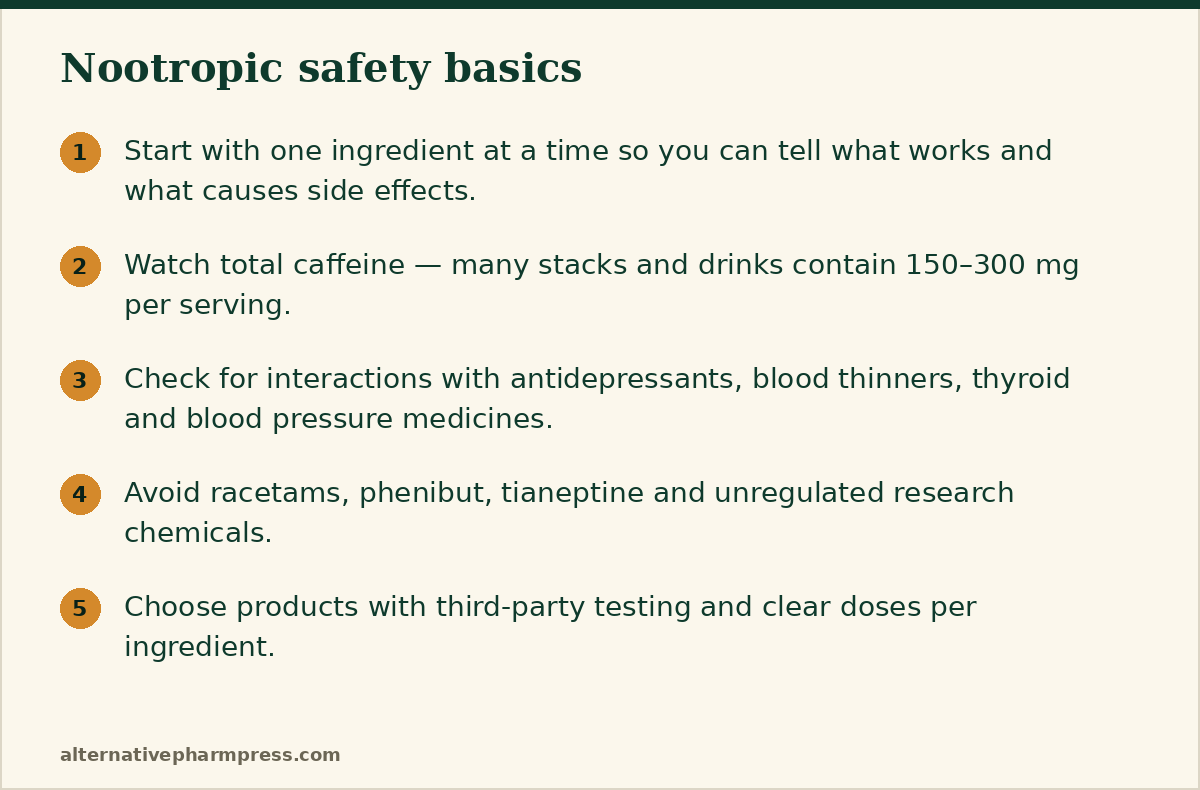
Some substances sold as nootropics are genuinely dangerous. Phenibut can cause dependence and severe withdrawal. Tianeptine — sold as “gas station heroin” — has led to FDA warnings and deaths; read about tianeptine withdrawal. Avoid both.
People who are pregnant, breastfeeding, have heart conditions, anxiety disorders or take psychiatric medications should talk to a clinician before using any nootropic.
How to build a simple, evidence-based routine
- Fix the basics first. Sleep, exercise, hydration and nutrition have bigger effects on cognition than any supplement.
- Add one well-studied option. For daytime focus, caffeine with L-theanine is a sensible starting point.
- Track results. Note sleep, focus and side effects for two to four weeks.
- Add slowly. If you add something like bacopa, give it eight to twelve weeks before judging.
- Cycle stimulants. Taking regular caffeine breaks reduces tolerance.
How to choose a quality nootropic product
- Clear milligrams per ingredient, not proprietary blends
- Third-party testing for identity, potency and contaminants (NSF, USP, Informed Choice or batch COAs)
- Doses that match those used in human research
- No disease claims or “drug-like” promises
Our best nootropic brands guide only includes brands with verifiable testing.
Nootropics and lifestyle: the boring stuff that works best
It’s worth repeating because it’s true: nothing in a capsule matches the cognitive impact of the fundamentals.
- Sleep. A single night of poor sleep impairs attention and memory more than most supplements improve them. Seven to nine hours is the single most effective “nootropic.”
- Exercise. Aerobic exercise improves mood, attention and executive function, and supports long-term brain health.
- Nutrition. Diets rich in vegetables, fish, whole grains and healthy fats are linked with better cognitive aging. Deficiencies in iron, B12, vitamin D or omega-3s can impair cognition and are worth checking.
- Stress management. Chronic stress impairs memory and focus; practices like breathing exercises, time outdoors and social connection help.
- Focused work habits. Single-tasking, breaks and limiting notifications often help more than another pill.
Think of supplements as the last 5%, not the foundation.
Nootropics for students and shift workers
Two groups are especially drawn to nootropics: students facing exams and people working night shifts. For both, the evidence points the same way. Caffeine (in moderate doses, timed to avoid disrupting sleep) helps alertness. Strategic naps help shift workers. Creatine may soften some of the cognitive effects of sleep deprivation. Prescription stimulants used without a prescription carry legal risks and can worsen sleep, anxiety and heart rate — and studies suggest they improve confidence more than actual performance in healthy students.
Popular nootropic stacks, explained
“Stacks” combine ingredients that are meant to complement each other. Here’s how some common ones hold up:
Caffeine + L-theanine. The most researched stack. L-theanine appears to soften caffeine’s jittery edge while preserving alertness. A typical ratio is 1:2 (for example, 100 mg caffeine with 200 mg L-theanine).
Creatine + caffeine. Popular with people who train and study. Each has its own evidence; whether they add up for cognition hasn’t been well tested, but both are safe for most healthy adults at standard doses.
Bacopa + lion’s mane. Marketed as a “memory stack.” Bacopa has stronger human evidence; lion’s mane data is earlier-stage. Expect any benefit to take weeks.
Racetam + choline. Common in online forums, based on the idea that racetams increase demand for acetylcholine. Evidence in healthy adults is weak, and racetams aren’t approved supplements in the US.
“All-in-one” brain formulas. These usually contain 10–20 ingredients. Check the label: if each ingredient is present at a fraction of the dose used in studies, the product is unlikely to do much beyond its caffeine content.
How to read a nootropic label
When you pick up a nootropic product, look for:
- The actual dose of each ingredient. Compare it with doses used in research — for example, about 300 mg of standardized bacopa extract or 200 mg of L-theanine.
- Standardization. Herbal extracts should state the active marker, such as bacosides for bacopa or rosavins and salidroside for rhodiola.
- Total caffeine per serving, including hidden sources like guarana, green coffee or yerba mate.
- Third-party certification such as NSF Certified for Sport or USP Verified.
- Allergen and additive information if you’re sensitive.
If a label lists “proprietary blend 750 mg” with ten ingredients and no individual doses, you can’t know what you’re getting.
FAQ
What are nootropics?
Nootropics are substances marketed to improve cognitive functions such as memory, focus and mental energy. They range from caffeine and amino acids to herbs and prescription drugs.
Do nootropics actually work?
Some do, modestly. Caffeine, caffeine with L-theanine, creatine and bacopa have the best human evidence. Many products make claims that go far beyond the research.
Are nootropics safe?
Most well-studied supplements are safe at normal doses for healthy adults, but some substances sold as nootropics — such as phenibut and tianeptine — are dangerous. Check interactions with any medications.
What is the best nootropic for beginners?
A common, well-supported starting point is caffeine combined with L-theanine, alongside good sleep and exercise habits.
Are nootropics legal?
Most supplement ingredients are legal. Prescription drugs used as nootropics, and some research chemicals, are regulated or illegal to sell for human use.
Sources
Next step: see how 22 popular nootropics compare on human evidence, legal status and safety in our evidence-rated nootropics list and tier list.