
Tirzepatide — sold as Mounjaro for type 2 diabetes and Zepbound for weight management and obstructive sleep apnea — has become one of the most talked-about medicines in the world. It has also become one of the most searched “research peptides,” with gray-market vials sold online at a fraction of pharmacy prices.
That raises a basic question many people ask: is tirzepatide a peptide? Yes — and understanding what that means helps explain how it works, why it’s injected, and why unregulated versions carry real risks.
Key takeaways
- Tirzepatide is a peptide: a chain of 39 amino acids with a fatty-acid side chain that extends its action.
- It is a dual agonist, activating both GIP and GLP-1 receptors — two gut hormone pathways that regulate blood sugar and appetite.
- It’s given as a once-weekly injection because peptides are broken down in the digestive tract.
- It is FDA-approved as Mounjaro (type 2 diabetes) and Zepbound (chronic weight management and obstructive sleep apnea in adults with obesity).
- “Research peptide” tirzepatide is unapproved and unregulated, with documented quality problems.
What makes tirzepatide a peptide?
A peptide is a short chain of amino acids — the same building blocks as proteins, but smaller. Many hormones are peptides, including insulin, glucagon and the gut hormones GLP-1 and GIP.
Tirzepatide is a synthetic peptide of 39 amino acids. Its sequence is based on the natural hormone GIP (glucose-dependent insulinotropic polypeptide), engineered so that it also activates the GLP-1 receptor. A C20 fatty diacid chain is attached through a linker, allowing tirzepatide to bind albumin in the blood. That binding slows its clearance and gives it a half-life of about five days — long enough for once-weekly dosing.
Because it’s a peptide, tirzepatide would be digested if swallowed, which is why it’s injected under the skin. (Researchers are working on oral incretin drugs, including non-peptide molecules; see orforglipron vs oral semaglutide.)
How tirzepatide works: two hormones, one molecule
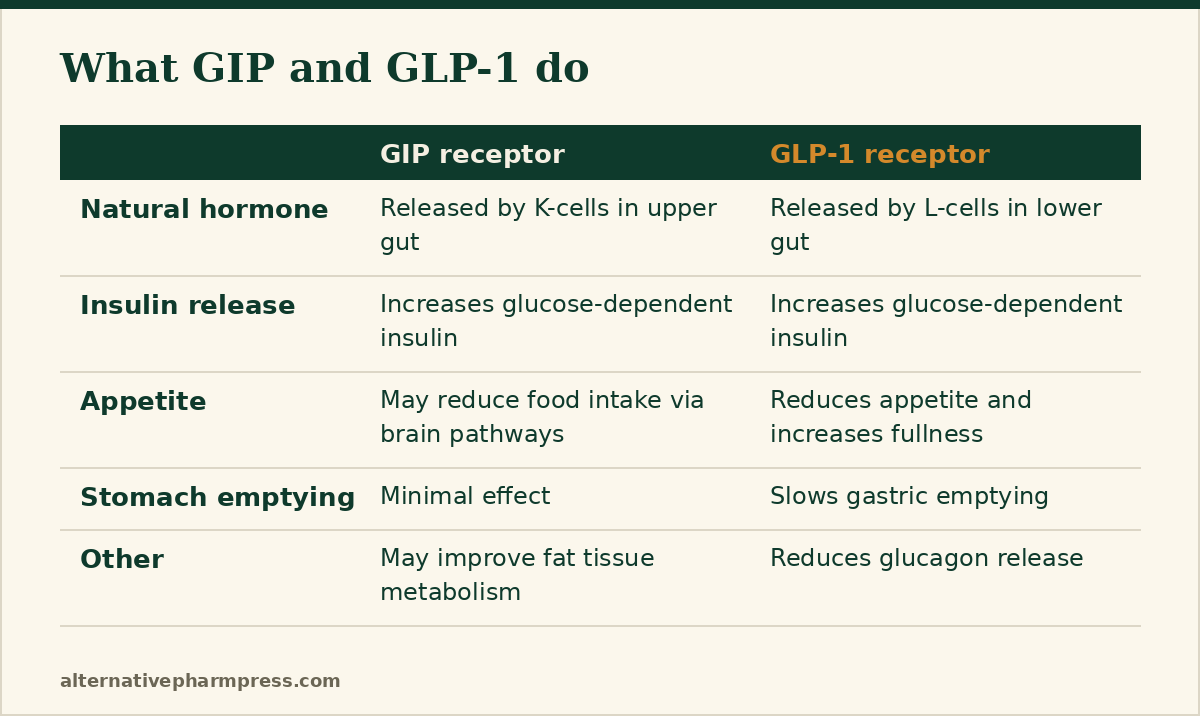
After a meal, the gut releases incretin hormones — GIP and GLP-1 — that tell the pancreas to release insulin when blood sugar rises. GLP-1 also slows stomach emptying and acts on the brain to reduce appetite.
Earlier drugs such as semaglutide activate only the GLP-1 receptor. Tirzepatide activates both GIP and GLP-1 receptors, which appears to produce greater effects on blood sugar and body weight in clinical trials. Scientists are still working out exactly how GIP agonism contributes, but the combined effect is clear in outcomes.
For a broader overview of these hormone classes, see GLP-1 vs GLP-2 vs GLP-3.
What the clinical trials showed
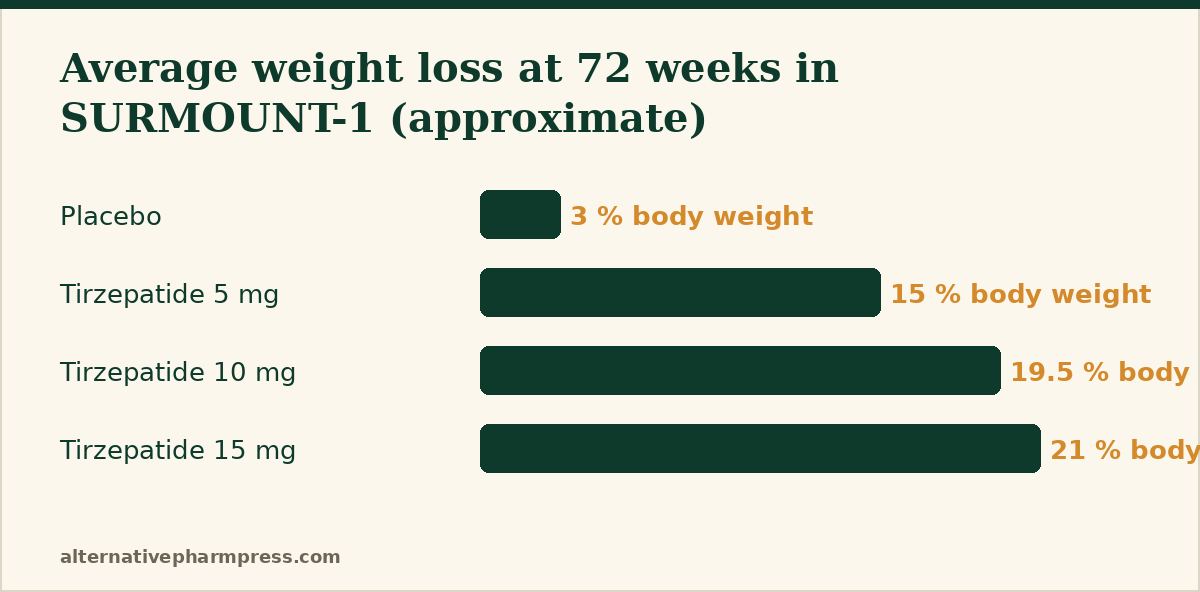
Figures are approximate averages from the published SURMOUNT-1 trial in adults with obesity without diabetes.
Tirzepatide was tested in large randomized controlled trials:
- SURPASS program (type 2 diabetes): significant reductions in HbA1c and body weight compared with placebo, insulin and semaglutide 1 mg.
- SURMOUNT program (obesity): in SURMOUNT-1, adults lost about 15–21% of body weight on average at 72 weeks depending on dose, compared with about 3% on placebo.
- Subsequent trials led to an approval for obstructive sleep apnea in adults with obesity.
Head-to-head comparisons suggest tirzepatide produces somewhat greater average weight loss than semaglutide. See our comparisons of semaglutide vs tirzepatide and retatrutide vs tirzepatide, the triple agonist in development.
Approved dosing (as prescribed)
Tirzepatide is prescribed with a gradual titration to reduce side effects: it typically starts at 2.5 mg once weekly for four weeks, then increases in 2.5 mg steps every four weeks as tolerated, up to a maximum of 15 mg weekly. Dosing decisions are made by prescribers based on response and side effects — this summary is not a substitute for medical advice.
Side effects and risks
Common side effects are gastrointestinal: nausea, diarrhoea, vomiting, constipation, decreased appetite and indigestion, usually worst during dose increases. Other important risks include:
- Pancreatitis and gallbladder problems
- Low blood sugar when combined with insulin or sulfonylureas
- Dehydration and kidney injury from GI losses
- A boxed warning about thyroid C-cell tumors based on rodent studies; it’s contraindicated in people with a personal or family history of medullary thyroid carcinoma or MEN2
- Potential effects on oral contraceptive absorption — see Zepbound and birth control
- Muscle loss along with fat loss, which makes protein intake and resistance training important
Stopping tirzepatide often leads to weight regain; read what happens when you stop Zepbound or Wegovy.
“Research peptide” tirzepatide: why it’s risky
Because of cost and supply shortages, a gray market emerged selling tirzepatide powder labeled “for research use only.” The FDA has warned about these products and about compounded versions after shortages ended:
- Identity and purity aren’t verified. Testing has found wrong compounds, incorrect amounts and impurities.
- Sterility isn’t guaranteed. Injectable products made outside regulated facilities can carry bacterial contamination.
- Dosing errors are common. Reconstituting powder and measuring tiny doses with insulin syringes leads to mistakes; poison centers have reported overdoses involving compounded GLP-1 drugs.
- Legal status. Products labeled “not for human consumption” are not legal to market for human use.
Our reporting on the GLP-1 peptide crackdown and weight-loss peptides in 2026 covers the regulatory picture, and what research-use-only means explains the label.
If you’re considering tirzepatide, talk to a licensed prescriber. FDA-approved Mounjaro and Zepbound are manufactured under strict quality controls, and manufacturer savings programs or vial options may reduce costs.
Tirzepatide vs other weight-management peptides
| Tirzepatide | Semaglutide | Retatrutide | |
|---|---|---|---|
| Receptors | GIP + GLP-1 | GLP-1 | GIP + GLP-1 + glucagon |
| Approval status | Approved (Mounjaro, Zepbound) | Approved (Ozempic, Wegovy, Rybelsus) | Investigational |
| Dosing | Weekly injection | Weekly injection or daily tablet | Weekly injection (in trials) |
| Peptide length | 39 amino acids | 31 amino acids | 39 amino acids |
See also retatrutide vs semaglutide and semaglutide vs liraglutide.
A short history of incretin peptides
Tirzepatide is the product of decades of incretin research. The story helps explain why it works the way it does:
- 1980s–1990s: Scientists characterised GLP-1 and GIP and showed they boost insulin after meals. Natural GLP-1 lasts only minutes in the blood, which made it impractical as a drug.
- 2005: Exenatide, a peptide originally discovered in Gila monster venom, became the first approved GLP-1 receptor agonist, given by twice-daily injection.
- 2010: Liraglutide added a fatty-acid chain to extend its action, enabling once-daily injection.
- 2017: Semaglutide’s further modifications allowed once-weekly dosing, and later an oral tablet.
- 2022: Tirzepatide became the first approved dual GIP/GLP-1 agonist, followed by its approval for weight management in 2023.
- Now: Triple agonists such as retatrutide and oral small-molecule GLP-1 agonists are in late-stage development.
Each step relied on peptide engineering — changing amino acids to resist enzymes and adding fatty chains to extend half-life. Tirzepatide’s design reflects all of those lessons.
How tirzepatide is supplied
Approved tirzepatide comes in single-dose prefilled pens and, more recently, single-dose vials for some doses, each containing a fixed dose (2.5, 5, 7.5, 10, 12.5 or 15 mg). The pens are designed so the patient doesn’t need to measure or mix anything, which removes a major source of dosing error. That is a key practical difference from research-peptide powders, which must be reconstituted and measured in microliters.
Tirzepatide and lifestyle: what trials actually included
It’s easy to forget that the headline weight-loss numbers from tirzepatide trials came with support. In the SURMOUNT trials, participants also received counseling on a reduced-calorie diet and increased physical activity. That matters for anyone interpreting the results:
- Protein and strength training help preserve muscle while losing weight, which is a growing focus of obesity medicine.
- Gradual dose increases were part of the protocol to limit gastrointestinal side effects.
- Regular monitoring by clinicians caught side effects and adjusted treatment.
- Long-term use appears necessary for many people to maintain weight loss; trials where participants stopped showed substantial regain.
These elements are missing entirely from gray-market use, which is one more reason outcomes outside supervised care may look very different from published results.
FAQ
Is tirzepatide a peptide?
Yes. Tirzepatide is a synthetic 39-amino-acid peptide with an attached fatty-acid chain that extends its action to allow once-weekly dosing.
How does tirzepatide work?
It activates both the GIP and GLP-1 receptors, increasing glucose-dependent insulin release, reducing appetite and slowing stomach emptying.
Is tirzepatide the same as semaglutide?
No. Semaglutide activates only the GLP-1 receptor, while tirzepatide activates both GLP-1 and GIP receptors.
Why is tirzepatide injected instead of taken as a pill?
As a peptide, it would be broken down by digestive enzymes if swallowed, so it’s given as a subcutaneous injection.
Is “research peptide” tirzepatide safe?
It’s unapproved and unregulated, with documented problems including wrong contents, contamination and dosing errors. Approved products from a prescriber are the safe route.
How long does tirzepatide stay in the body?
Tirzepatide has a half-life of about five days, so it takes roughly a month after the last dose for most of it to clear. That’s why side effects can persist for days after an injection.
Can tirzepatide be used for type 1 diabetes?
No. Tirzepatide is not approved for type 1 diabetes or diabetic ketoacidosis. It is approved for type 2 diabetes (Mounjaro) and for weight management and obstructive sleep apnea in adults with obesity (Zepbound).
Is tirzepatide a GLP-1?
Partly. Tirzepatide activates both the GLP-1 receptor and the GIP receptor, so it’s usually called a dual GIP/GLP-1 receptor agonist rather than a pure GLP-1 drug like semaglutide.
Does tirzepatide cause hair loss?
Hair loss was reported more often with tirzepatide than placebo in obesity trials. It’s thought to be linked mainly to rapid weight loss and usually improves over time; talk to your prescriber if it’s significant.
Does tirzepatide need to be refrigerated?
Yes, Zepbound and Mounjaro should be stored in the refrigerator. The labels allow storage unrefrigerated, below 86°F, for a limited time (up to 21 days). Check your product’s label.