

As concentrated 7-hydroxymitragynine (7-OH) products face warnings, bans and scheduling recommendations, many people are asking what they can use instead. Some started 7-OH for pain, some for energy or mood, and some to manage withdrawal from other opioids. Others simply want to step away before dependence deepens.
There’s no single “replacement” for 7-OH, and swapping it for another unregulated substance can create new problems. This guide focuses on lower-risk paths based on why you use 7-OH, medical options, practical strategies and substitutes to avoid. It isn’t medical advice; a clinician can help you choose what’s right for you.
Key takeaways
- The best alternative depends on why you use 7-OH: pain, energy, mood, sleep or managing opioid withdrawal.
- For dependence, medications for opioid use disorder (buprenorphine, methadone) are far better studied and safer than self-managing with 7-OH.
- Plain kratom leaf is less potent than 7-OH but still carries dependence risk; it’s not a risk-free substitute.
- Avoid swapping into tianeptine, phenibut, illicit opioids or high-dose loperamide, which carry serious risks.
- Tapering with support and treating underlying issues give the best long-term outcomes.
If you’re struggling right now: In the U.S., the SAMHSA National Helpline (1-800-662-4357) offers free, confidential treatment referrals 24/7. If you’re in crisis or thinking about harming yourself, call or text 988.
Start with “why”
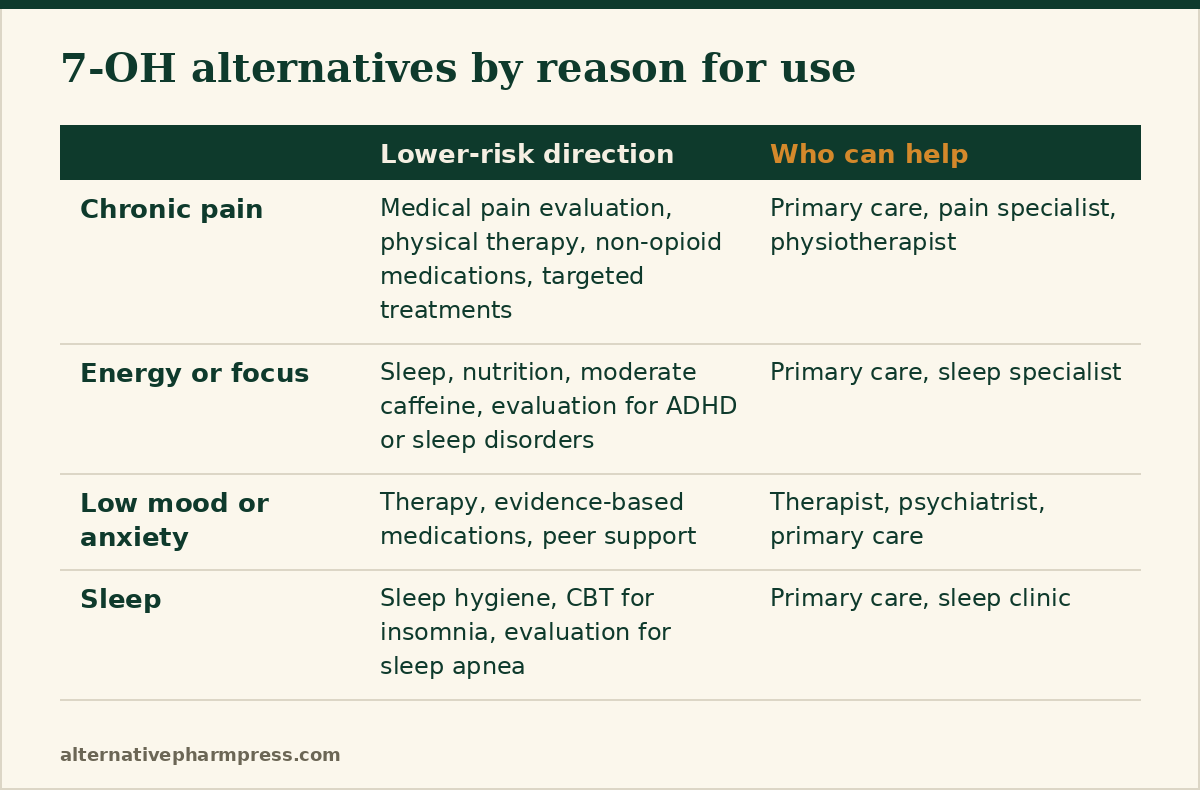
If 7-OH dependence is the issue
Many people who use 7-OH daily develop physical dependence. Stopping can cause intense withdrawal: aches, sweating, diarrhea, insomnia, anxiety and cravings. See 7-OH withdrawal.
Buprenorphine (Suboxone and others)
Buprenorphine is a partial opioid agonist approved for opioid use disorder. Clinicians have used it successfully for kratom and 7-OH dependence in published case reports and clinical practice. It reduces withdrawal and cravings with a ceiling effect on respiratory depression, making it safer than full opioids. Read Suboxone for kratom withdrawal.
Methadone
Methadone is another proven medication for opioid use disorder, provided through licensed opioid treatment programs. It may be considered for people with severe dependence.
Supervised tapering
Some people can taper gradually with medical support and symptom-relief medications such as clonidine or lofexidine. See kratom detox for tapering principles that also apply to 7-OH.
Is plain kratom leaf a safer alternative?
Plain kratom leaf contains only trace 7-OH and is less potent than concentrated 7-OH products. Some people step down from 7-OH to leaf as part of a taper. However, leaf still carries dependence, withdrawal and interaction risks, and it’s banned in some states. It’s better viewed as a possible step in a taper plan than a long-term solution. Read 7-OH vs traditional kratom and kratom side effects.
If pain is the reason
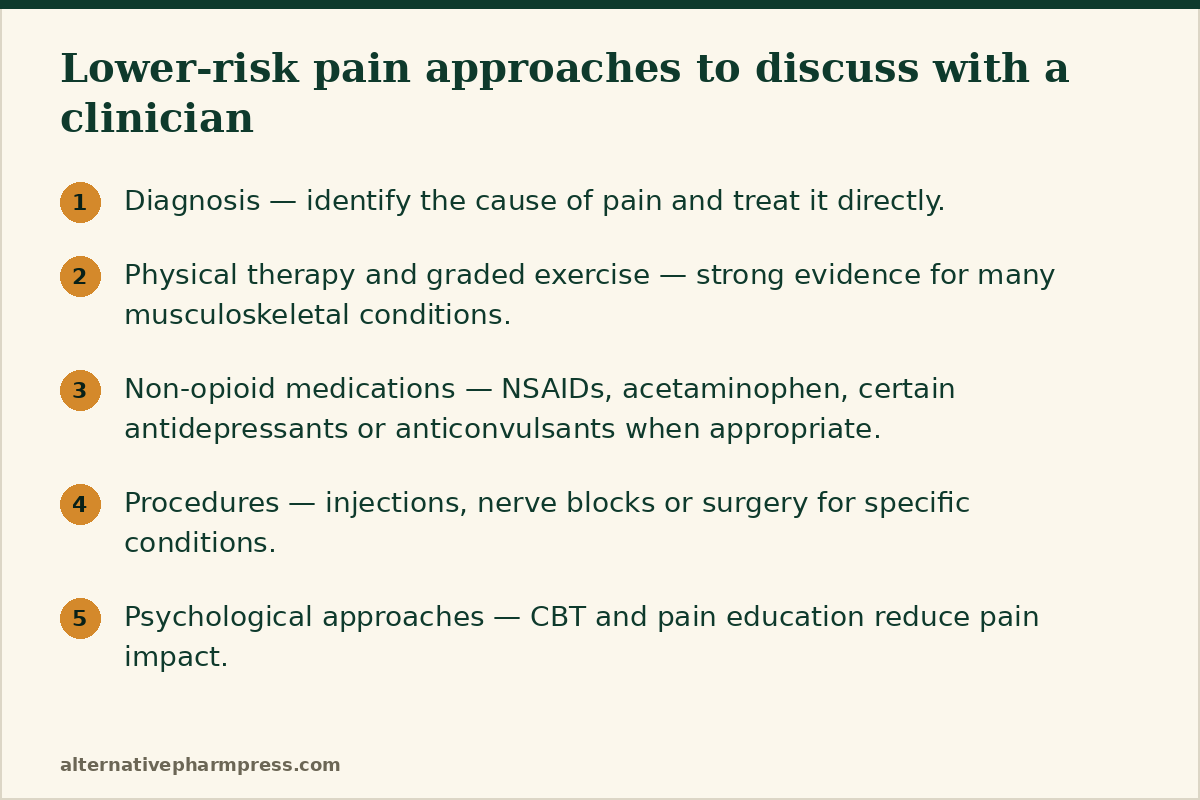
Chronic pain is complex. A multidisciplinary approach — combining physical, psychological and medical treatments — often works better than any single substance. If you’re avoiding doctors because of stigma or cost, community health centers and telehealth services may help.
If energy or focus is the reason
At low doses, kratom and 7-OH can feel stimulating. Lower-risk alternatives include:
- Prioritizing sleep — consistent sleep schedules and treating sleep apnea if present.
- Moderate caffeine — such as coffee or tea, possibly with L-theanine. See L-theanine and caffeine.
- Regular exercise and daylight exposure.
- Evaluation for ADHD, depression or thyroid issues, which can cause fatigue and poor focus.
If mood or anxiety is the reason
Some people use 7-OH to cope with anxiety, depression or trauma. Over time, dependence and withdrawal often worsen these problems. Evidence-based options include therapy (such as CBT), medications prescribed by a clinician, peer support and lifestyle changes. See best supplements for anxiety for a look at supplement evidence, but don’t rely on supplements alone for significant mental health conditions.
Substitutes to avoid
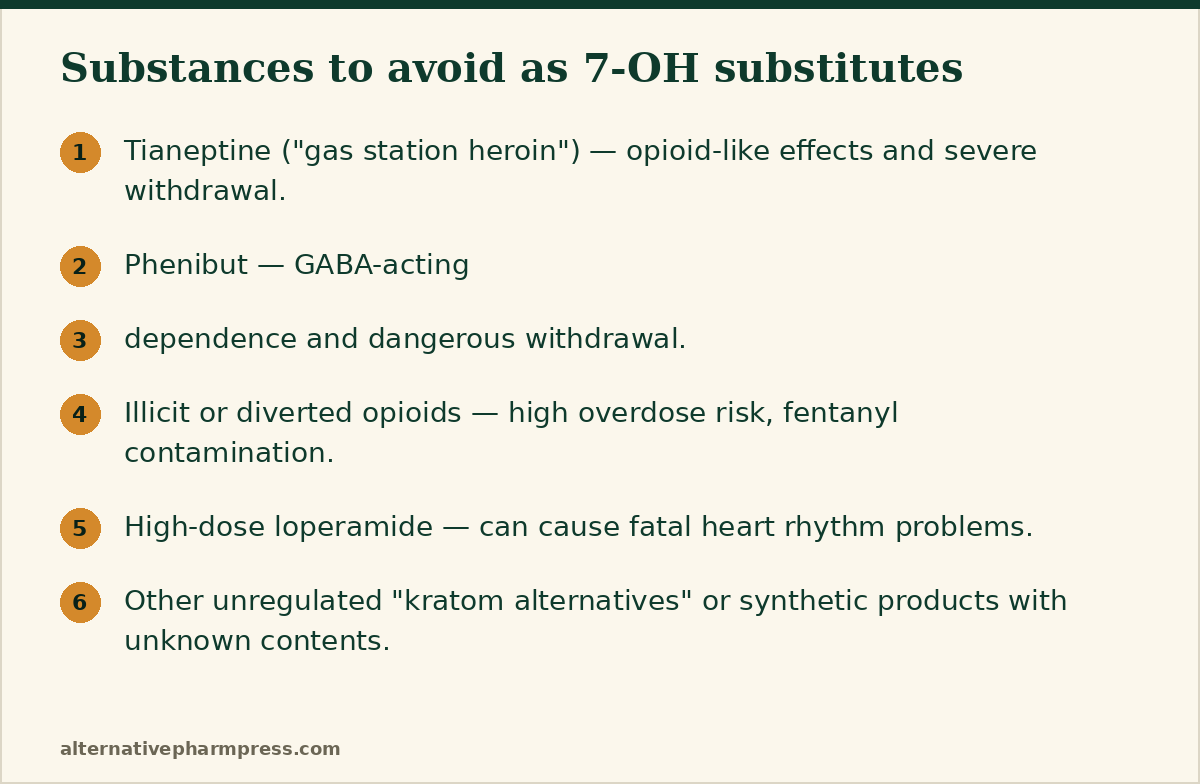
Read tianeptine withdrawal for why tianeptine is particularly risky. Products marketed as “legal kratom alternatives” may contain undisclosed compounds.
What about kava or kanna?
Kava and kanna have very different effects from 7-OH and won’t prevent opioid withdrawal. Some people use them for relaxation, but they have their own risks and interactions. They’re not treatments for dependence. See kava vs kratom and kratom vs kanna.
Building a support plan
- Talk to a clinician — addiction medicine specialists, primary care or telehealth providers.
- Be honest about how much 7-OH you use and for how long.
- Consider medication — buprenorphine or methadone may be the safest path for significant dependence.
- Address underlying issues like pain, mental health or sleep.
- Find support — peer groups, counseling, trusted friends or family.
- Carry naloxone during any transition period.
- Plan for setbacks — relapse is common and doesn’t mean failure.
Harm reduction while you’re still using
If you’re not ready to stop, harm-reduction steps can lower risk: avoid mixing with alcohol, benzodiazepines or gabapentin; don’t use alone; keep naloxone nearby; be cautious with new products or after breaks; and store products safely away from children. See 7-OH dosage and 7-OH side effects.
The regulatory landscape
The FDA has recommended scheduling 7-OH, and many states have banned or restricted it. As products disappear from shelves, some people may experience sudden withdrawal. Planning ahead with a clinician can prevent crisis. See where DEA scheduling stands and FDA 7-OH scheduling news.
Why medication-assisted treatment works
Medications like buprenorphine and methadone stabilize opioid receptors, reducing withdrawal and cravings without the highs and lows of short-acting substances. Decades of research show they reduce overdose deaths, improve retention in treatment and help people rebuild stability. Some people worry that taking medication is “trading one drug for another,” but there’s an important difference: these medications are prescribed, dosed consistently, monitored and studied for safety. For many people, they are the most effective path out of dependence.
Telehealth and access
Telehealth has expanded access to buprenorphine treatment in many areas, allowing people to start treatment without traveling to a clinic. Some programs specialize in kratom and 7-OH dependence. Insurance coverage varies, but many states and community programs offer low-cost options.
Talking to family and friends
If someone you care about uses 7-OH, approach the conversation with compassion and without judgment. Focus on safety and support rather than blame. Offer to help them find a clinician or support group, learn the signs of overdose and keep naloxone available.
What recovery can look like
Recovery from 7-OH dependence rarely follows a straight line. Many people start with medication or a supervised taper, experience a few difficult weeks, then gradually notice better sleep, more stable mood and more energy. Others need several attempts or a period of maintenance medication before they feel ready to stop entirely. What tends to help most is a combination of medical support, practical changes — such as removing products from the house and avoiding places where they’re sold — and social support from people who understand. Small wins, like a full night’s sleep or a week without cravings, are worth recognizing.
Practical steps for the first week
The first days after cutting back are often the hardest. A few practical steps can make them more manageable:
- Clear your environment — remove remaining products and avoid stores where you usually buy them.
- Plan your days — light activity, simple meals and rest; avoid scheduling demanding tasks if possible.
- Hydrate and eat regularly, especially if you have diarrhea or sweating.
- Line up support — a friend to check in, a counselor, a peer group or a clinician you can call.
- Have a plan for cravings — a short walk, a shower, calling someone or distracting activities.
- Know when to get help — severe dehydration, chest pain, thoughts of self-harm or inability to keep fluids down need medical attention.
Common worries about getting help
Many people delay treatment because they fear judgment, legal trouble, job consequences or being told to stop everything at once. In practice, addiction medicine clinicians are used to helping people with kratom and 7-OH dependence, and conversations with healthcare providers are generally confidential. Treatment can be tailored — some people start medication, others taper slowly, and plans can change as needed. Asking for help is a practical step, not a failure.
FAQ
What can I take instead of 7-OH?
It depends on why you use it. For dependence, buprenorphine or methadone are proven options. For pain, mood or energy, a clinician can recommend evidence-based alternatives.
Is kratom leaf a safe alternative to 7-OH?
It’s less potent but still carries dependence and other risks. It may be part of a taper plan but isn’t risk-free.
Can Suboxone help with 7-OH withdrawal?
Yes. Buprenorphine has been used successfully for kratom and 7-OH dependence in clinical practice.
What should I avoid as a 7-OH substitute?
Avoid tianeptine, phenibut, illicit opioids, high-dose loperamide and unregulated “legal alternatives.”
How do I quit 7-OH safely?
Talk to a clinician about medication options or a supervised taper, address underlying issues and build a support plan.
Where can I get help?
In the U.S., call SAMHSA at 1-800-662-4357 for free, confidential treatment referrals.