
7-hydroxymitragynine (7-OH) is a potent alkaloid found in trace amounts in kratom and now sold in concentrated tablets, shots, gummies and vapes. Because it acts strongly on mu-opioid receptors, its side effects resemble those of opioid drugs. As 7-OH products have spread, poison centers, clinicians and researchers have begun documenting what can go wrong.
This guide summarizes common 7-OH side effects, serious risks including dependence and overdose, factors that increase danger and practical harm-reduction steps.
Key takeaways
- 7-OH is a potent mu-opioid receptor agonist; its effects and side effects resemble opioids.
- Common side effects include nausea, constipation, itching, drowsiness, sweating and pinpoint pupils.
- Tolerance and dependence develop quickly with regular use; withdrawal can be intense.
- Respiratory depression and overdose are possible, especially when combined with other depressants.
- The FDA has warned about 7-OH products and recommended scheduling them as controlled substances.
Emergency signs: unresponsiveness, slow or stopped breathing, blue lips or very pinpoint pupils. Call 911, give naloxone if available and stay with the person. See does naloxone reverse 7-OH?.
How 7-OH causes side effects
7-OH binds mu-opioid receptors throughout the brain, spinal cord and gut. Activating these receptors relieves pain and produces euphoria but also slows the gut, depresses breathing at high doses and causes itching and sweating. Lab studies suggest 7-OH may be “G-protein biased,” potentially producing less respiratory depression than classic opioids, but this hasn’t been confirmed in humans and doesn’t mean it’s safe. For background, read what is 7-OH and 7-OH and the blood-brain barrier.
Common short-term side effects
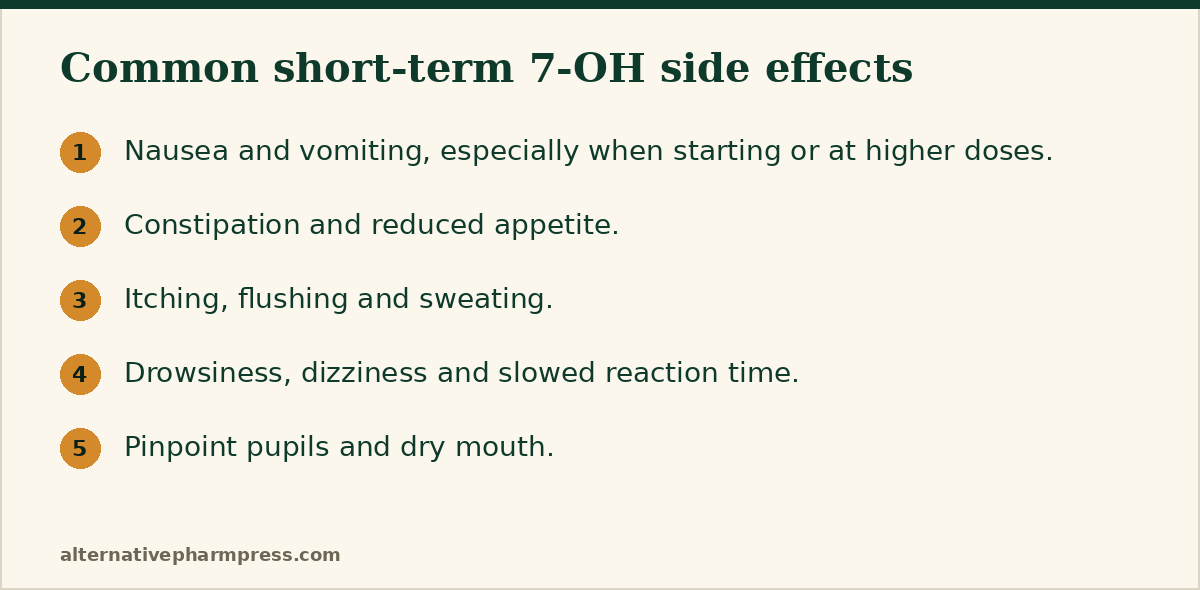
Many users report that 7-OH feels more like a prescription opioid than kratom leaf, with stronger euphoria and sedation. Side effects often increase with dose.
Dependence and withdrawal
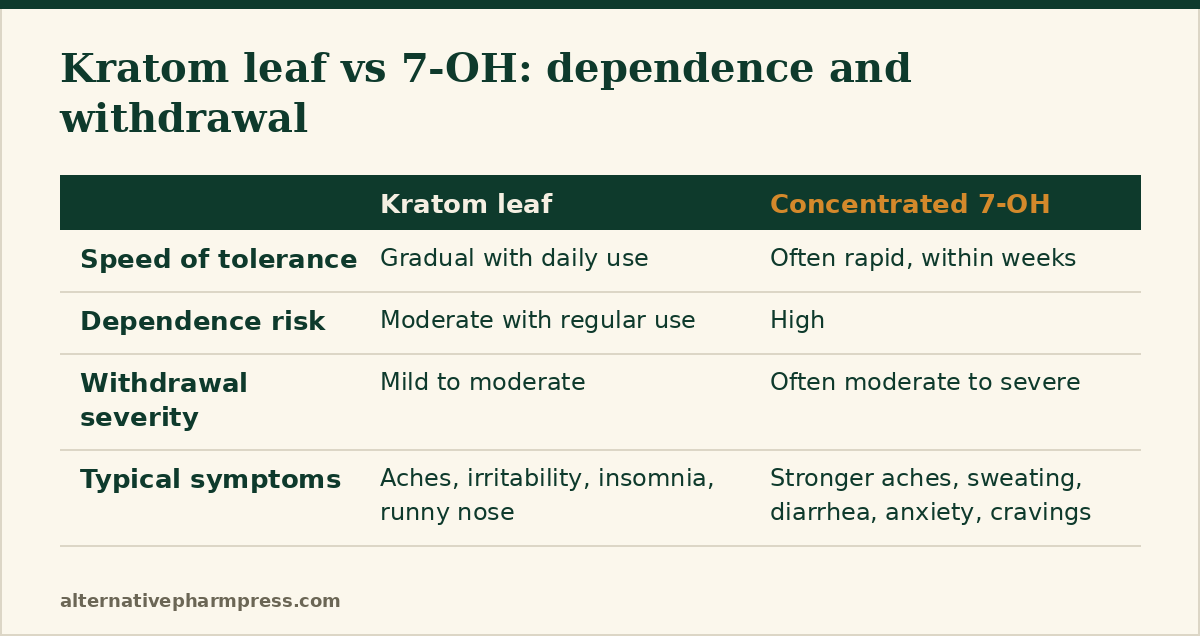
Users frequently describe escalating from one tablet a day to several. Withdrawal can include muscle aches, restless legs, sweating, chills, diarrhea, nausea, insomnia, anxiety and intense cravings. Read 7-OH withdrawal, 7-OH tolerance and 7-OH vs traditional kratom.
Serious risks
Respiratory depression and overdose
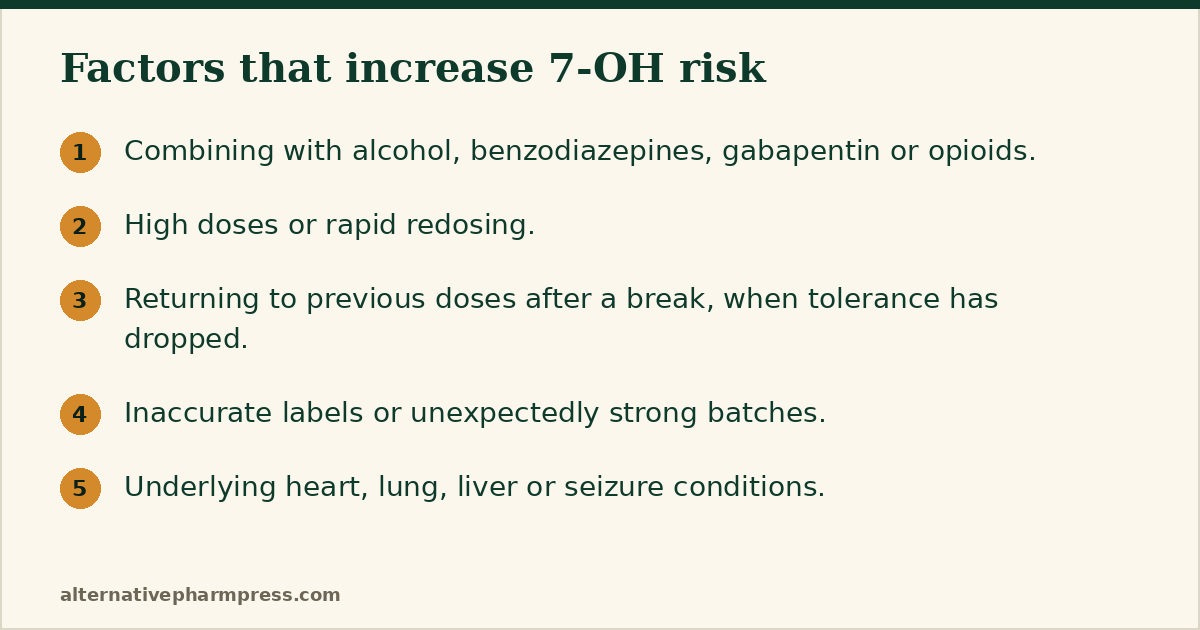
At high doses, or when combined with alcohol, benzodiazepines, gabapentin or other opioids, 7-OH can slow breathing dangerously. Poison centers have reported serious cases, and deaths involving 7-OH products — often with other substances — have been documented.
Seizures
Seizures have been reported with kratom products, sometimes at high doses. Whether 7-OH specifically increases seizure risk isn’t well established, but people with seizure disorders should avoid it.
Heart effects
Kratom products have been associated with rapid heart rate, high blood pressure and rare heart rhythm abnormalities. Combining 7-OH with stimulants may increase these risks.
Liver effects
Rare kratom-associated liver injury has been reported. Data specific to 7-OH products are limited. See kratom liver injury.
Neonatal withdrawal
Opioid-like substances used during pregnancy can cause withdrawal symptoms in newborns. Kratom use in pregnancy has been linked to neonatal abstinence syndrome in case reports.
Factors that increase risk
Accidental ingestion by children and pets
Gummies, flavored shots and small tablets can look like candy. Poison centers have reported children and pets ingesting kratom and 7-OH products, sometimes with serious symptoms such as sedation, vomiting, slowed breathing or seizures. Store products securely and call Poison Control (1-800-222-1222 in the U.S.) or emergency services if exposure occurs.
Mental health effects
Some users report mood improvement while using 7-OH, but many describe anxiety, irritability and depression during withdrawal or between doses. Using 7-OH to self-treat depression, anxiety or trauma can make these conditions harder to manage over time.
Interactions with medications
Like kratom, 7-OH may interact with medications metabolized by liver enzymes, and it has additive effects with other central nervous system depressants. Tell your doctor or pharmacist if you use 7-OH, especially if you take sleep aids, anxiety medications, antidepressants, seizure medications or pain medications.
How to reduce harm
- Avoid combining 7-OH with other depressants or stimulants.
- Don’t use alone, and carry naloxone.
- Be cautious with new products or after any break.
- Store products safely away from children and pets.
- Track use honestly; notice escalation early.
- Seek support if you want to cut back. See kratom detox.
Getting help
Medications used for opioid use disorder, including buprenorphine, have been used for kratom and 7-OH dependence. See Suboxone for kratom withdrawal. In the U.S., the SAMHSA National Helpline (1-800-662-4357) offers free, confidential referrals 24/7.
Regulatory status
The FDA has issued warnings about 7-OH products and recommended scheduling 7-OH under the Controlled Substances Act. Several states have banned 7-OH or restricted kratom products with elevated 7-OH levels. See where DEA scheduling stands and FDA 7-OH scheduling news.
Why side effects are underreported
People who use 7-OH may not report side effects to clinicians because they worry about stigma or legal consequences. Online discussions often focus on positive experiences, while those who struggle with dependence may not post. Poison center data capture only cases where someone calls for help. As a result, the full picture of 7-OH side effects is likely incomplete.
Comparing 7-OH formats
Tablets, shots, gummies and vapes deliver 7-OH differently. Vapes act faster and may feel more intense; shots may contain multiple servings; gummies can be mistaken for candy. Read 7-OH gummies vs tablets, 7-OH tablets guide and 7-OH vapes.
Side effects that signal a problem with use
Beyond physical symptoms, certain patterns suggest 7-OH use may be becoming harmful: needing more to get the same effect, using to avoid withdrawal, spending more money than intended, hiding use from family or friends, or continuing despite health or relationship problems. Recognizing these early makes it easier to cut back or seek help before dependence deepens.
Detection on drug tests
Standard drug panels typically don’t detect 7-OH, but specialized tests can. Workplace and court programs increasingly use expanded panels. See how long 7-OH stays in your system.
Long-term health questions
Because concentrated 7-OH products are relatively new, long-term health effects aren’t well studied. Concerns based on opioid pharmacology include chronic constipation, hormonal changes such as reduced testosterone, sleep-disordered breathing, dental problems from dry mouth and the cumulative risks of dependence. Researchers are also interested in whether repeated high exposure affects mood and cognition. Until more research is available, it’s reasonable to treat long-term 7-OH use with the same caution as long-term opioid use.
How side effects change during tapering
When people reduce 7-OH, side effects often shift from those of the drug itself (constipation, sedation, itching) to withdrawal symptoms (aches, diarrhea, restlessness, anxiety). Tapering slowly can make this transition more manageable. A clinician can suggest medications to ease specific symptoms and monitor for complications such as dehydration or severe low mood. Read kratom detox for tapering approaches that also apply to many 7-OH users.
What to tell a doctor
If you see a clinician about side effects, share the product name, how much you take and how often, how long you’ve used it, any other substances or medications, and any symptoms you’ve noticed. Bringing the packaging helps. This information allows the clinician to check for interactions, assess withdrawal risk and recommend appropriate treatment.
Side effects reported to poison centers
Calls to U.S. poison centers involving kratom and 7-OH products have risen as these products spread. Commonly reported symptoms in these calls include drowsiness, agitation, rapid heart rate, vomiting, confusion and, in more severe cases, slowed breathing and seizures. Many cases involve other substances as well. Exposures in young children, who may find tablets or gummies at home, are a particular concern because small amounts can affect them more strongly. Poison center specialists can give real-time advice; in the U.S., call 1-800-222-1222.
Constipation: a common, under-discussed problem
Like other opioid-acting substances, 7-OH slows movement through the intestines. Chronic constipation can lead to abdominal pain, bloating, hemorrhoids and, rarely, bowel obstruction. Drinking water, eating fiber and staying active can help, and pharmacists can suggest appropriate laxatives. Severe abdominal pain with vomiting or no bowel movements for several days needs medical attention.
FAQ
What are the most common 7-OH side effects?
Nausea, constipation, itching, sweating, drowsiness, dizziness and pinpoint pupils are commonly reported.
Is 7-OH addictive?
Yes. Tolerance and dependence can develop quickly, and withdrawal can be intense.
Can 7-OH cause overdose?
Yes. Serious poisonings and deaths have been reported, especially when 7-OH is combined with other depressants.
How long do 7-OH side effects last?
Short-term side effects usually last several hours. Withdrawal symptoms after regular use may last a week or more.
Is 7-OH safer than opioids?
Lab studies suggest possible differences in how 7-OH signals, but it still carries opioid-like risks, including dependence and overdose.
What should I do if I have side effects from 7-OH?
Stop use and seek medical advice for persistent or severe symptoms. Call 911 for breathing problems, unresponsiveness or seizures.