
Tirzepatide — sold as Mounjaro for type 2 diabetes and Zepbound for chronic weight management and obstructive sleep apnea — isn’t started at full strength. It follows a step-by-step titration schedule designed to reduce side effects while the body adjusts.
This guide explains the approved tirzepatide dosage chart, why doses increase slowly, what to know about missed doses and side effects, and why dosing gray-market “research peptide” tirzepatide is risky. It’s educational information, not a substitute for advice from your prescriber.
Key takeaways
- Tirzepatide is injected once weekly, starting at 2.5 mg for four weeks.
- Doses increase in 2.5 mg steps every four weeks as tolerated: 5, 7.5, 10, 12.5 and a maximum of 15 mg.
- 2.5 mg is a starter dose for tolerability, not a long-term treatment dose.
- Slow titration reduces nausea, vomiting, diarrhea and constipation.
- Your prescriber decides when — or whether — to increase; many people stay on lower maintenance doses.
The approved tirzepatide titration chart
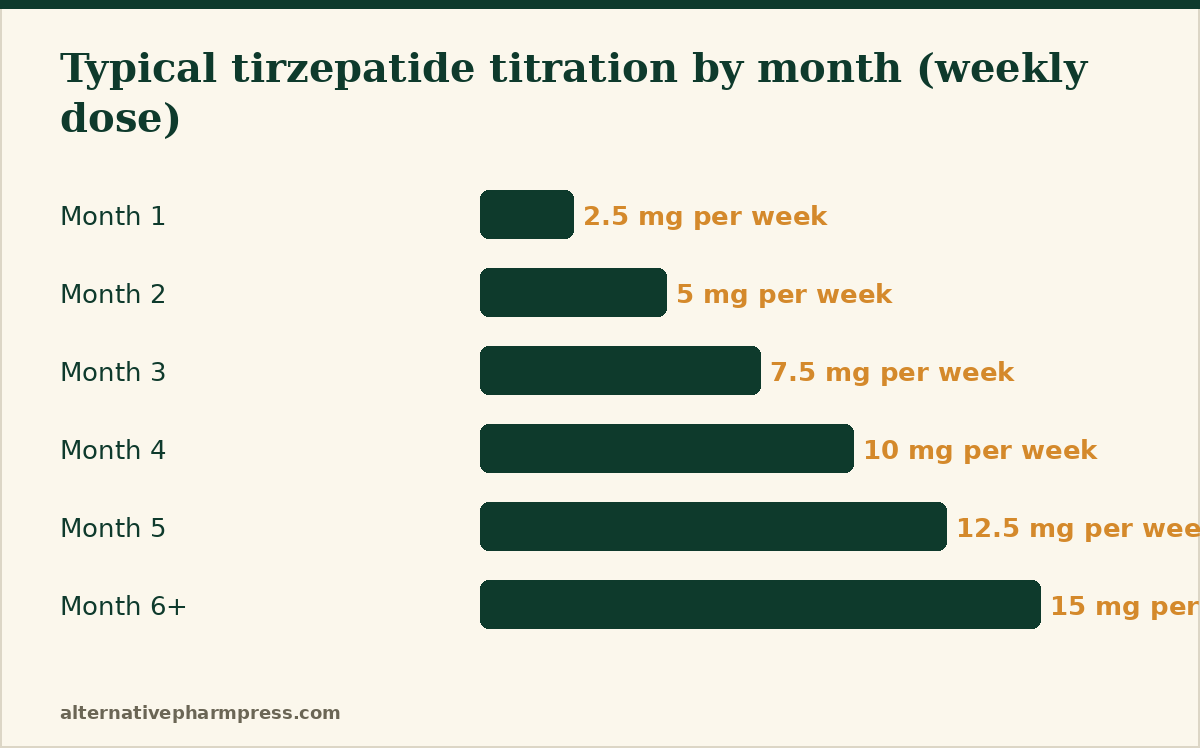
| Weeks | Weekly dose | Purpose |
|---|---|---|
| 1–4 | 2.5 mg | Starting dose to improve tolerability |
| 5–8 | 5 mg | First treatment dose; some stay here |
| 9–12 | 7.5 mg | Optional increase if needed and tolerated |
| 13–16 | 10 mg | Optional increase |
| 17–20 | 12.5 mg | Optional increase |
| 21+ | 15 mg | Maximum dose |
This reflects the dosing in the FDA-approved labeling. In practice, prescribers often slow the schedule, pause at a dose or stay at a lower maintenance dose depending on response and side effects. You don’t have to reach 15 mg.
Why tirzepatide is titrated slowly
Tirzepatide activates both GIP and GLP-1 receptors, slowing stomach emptying and reducing appetite. Increasing too quickly overwhelms the digestive system, causing nausea, vomiting and diarrhea — sometimes severe enough to cause dehydration and kidney problems. Gradual steps let the body adapt. For how the drug works, see is tirzepatide a peptide?.
How tirzepatide is supplied
Approved tirzepatide comes in single-dose prefilled pens and single-dose vials in fixed strengths (2.5, 5, 7.5, 10, 12.5 and 15 mg). Each dose is pre-measured, so patients don’t need to calculate volumes. It’s injected under the skin of the abdomen, thigh or upper arm, on the same day each week, with or without food.
Missed doses
According to the prescribing information, if a dose is missed, it can be taken as soon as possible within four days (96 hours) of the missed dose. If more than four days have passed, skip the missed dose and take the next one on the regular day. Don’t take two doses within three days of each other. If you’ve missed several weeks, talk to your prescriber — restarting at a lower dose may be needed to avoid side effects.
Common side effects by dose
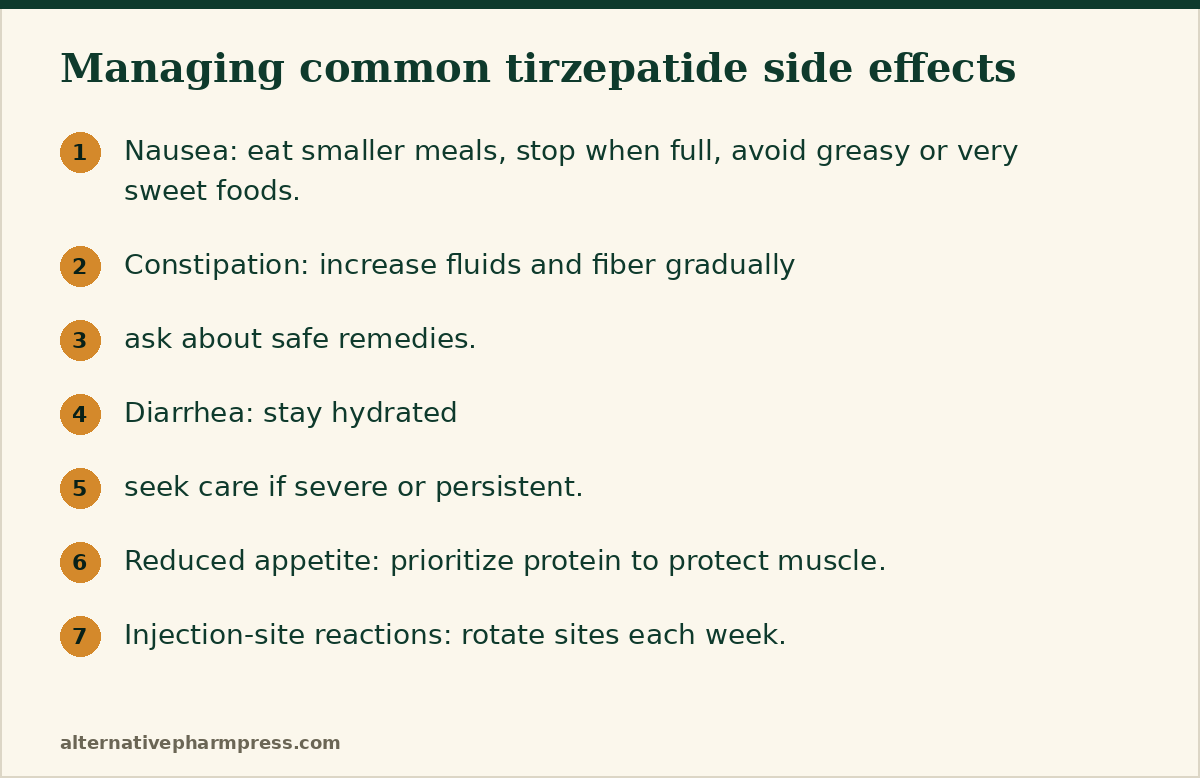
Gastrointestinal side effects tend to be worst in the days after starting or increasing a dose and often ease with time. Serious risks include pancreatitis, gallbladder problems, kidney injury from dehydration, low blood sugar when combined with insulin or sulfonylureas, and a boxed warning about thyroid C-cell tumors seen in rodents. Seek urgent care for severe abdominal pain, persistent vomiting or signs of an allergic reaction.
Effectiveness by dose
In the SURMOUNT-1 trial for weight management, average weight loss at 72 weeks was about 15% at 5 mg, about 19–20% at 10 mg and about 21% at 15 mg, compared with about 3% with placebo. Higher doses generally produce more weight loss on average, but individual responses vary, and many people achieve meaningful results at lower doses with fewer side effects. See semaglutide vs tirzepatide for how it compares.
Why compounded and “research” tirzepatide dosing is risky
During shortages, compounded tirzepatide became widely available, and gray-market “research peptide” powders are still sold online. These introduce problems that approved pens avoid:
- Reconstitution math errors — mixing powder with diluent and measuring with insulin syringe “units” has led to overdoses reported to poison centers.
- Unverified contents — wrong amounts, impurities or entirely different compounds.
- Sterility — non-sterile products risk infection.
- No titration support — users may increase too fast without monitoring.
The FDA has warned about unapproved GLP-1 products. Read our reporting on the GLP-1 peptide crackdown and weight-loss peptides in 2026.
Never adjust tirzepatide doses on your own. Your prescriber will tailor titration to your response, side effects and other medications. If cost is a barrier, ask about manufacturer savings programs or vial options rather than turning to unregulated products.
Practical tips during titration
- Inject on the same day each week; set a reminder.
- Eat slowly and stop at the first sign of fullness.
- Prioritize protein and strength training to limit muscle loss.
- Stay hydrated, especially if you have GI side effects.
- Tell your prescriber about birth control: tirzepatide may reduce the effectiveness of oral contraceptives for a period after starting and after each dose increase. See Zepbound and birth control.
- Plan for the long term: stopping often leads to weight regain. See what happens when you stop Zepbound or Wegovy.
Tirzepatide and other medications
Because tirzepatide slows stomach emptying, it can affect the absorption of oral medications taken at the same time. That’s especially important for drugs with a narrow therapeutic range. People taking insulin or sulfonylureas may need dose adjustments to avoid low blood sugar. Make sure every prescriber and your pharmacist knows you’re on tirzepatide.
How tirzepatide compares with other incretin drugs
| Drug | Receptors | Typical maintenance dose | Frequency |
|---|---|---|---|
| Tirzepatide (Mounjaro, Zepbound) | GIP + GLP-1 | 5–15 mg | Weekly |
| Semaglutide (Ozempic, Wegovy) | GLP-1 | 0.5–2.4 mg | Weekly |
| Liraglutide (Saxenda, Victoza) | GLP-1 | 1.2–3 mg | Daily |
| Retatrutide (investigational) | GIP + GLP-1 + glucagon | Under study | Weekly |
Compare more in retatrutide vs tirzepatide and semaglutide vs liraglutide.
What to discuss with your prescriber before starting
Before starting tirzepatide, it’s worth covering a few topics with your clinician:
- Personal or family history of medullary thyroid cancer, MEN2, pancreatitis or gallbladder disease.
- Current medications, especially insulin, sulfonylureas, oral contraceptives and drugs with narrow dosing ranges.
- Pregnancy plans, since tirzepatide isn’t recommended during pregnancy and should be stopped beforehand.
- Goals and expectations, including weight targets, blood sugar targets and how long you expect to stay on treatment.
- Nutrition and exercise support, especially protein intake and resistance training to preserve muscle.
- Cost and coverage, including insurance prior authorization, savings cards and vial options.
When doses aren’t increased
Titration isn’t automatic. Prescribers commonly hold or slow increases when:
- Side effects are significant — persistent nausea, vomiting or diarrhea suggest the body needs more time.
- Results are already good — if blood sugar or weight goals are being met at a lower dose, there may be no need to go higher.
- Supply or cost issues affect access to certain strengths.
- Other health changes occur, such as dehydration, gallbladder symptoms or new medications.
Some people step back down to a previous dose after a difficult increase. That’s a normal part of individualized care, not a failure.
Maintenance after reaching goals
There’s ongoing discussion in obesity medicine about the best long-term strategy once someone reaches their goal. Trials show that stopping tirzepatide typically leads to regaining much of the lost weight over the following year. Some clinicians keep patients on their effective dose long term; others explore lower maintenance doses. Any change should be made with a prescriber, ideally alongside nutrition support, resistance training and regular check-ins.
Storage and handling of pens
Unused pens are typically stored in the refrigerator. According to the labeling, they can be kept at room temperature for a limited period if needed. Don’t freeze pens, and keep them in their carton to protect from light. Always check the label for current storage instructions, as they may differ between pens and vials.
FAQ
What is the starting dose of tirzepatide?
2.5 mg once weekly for four weeks. It’s a starter dose to improve tolerability, not a long-term treatment dose.
How often is tirzepatide increased?
Typically by 2.5 mg every four weeks as tolerated, up to a maximum of 15 mg weekly. Prescribers may move more slowly or stop at a lower dose.
What’s the maximum tirzepatide dose?
15 mg once weekly.
What if I miss a tirzepatide dose?
If it’s within four days of the missed dose, take it as soon as possible. If more than four days have passed, skip it and resume on your regular day. Check with your prescriber.
Do I need to reach 15 mg for it to work?
No. Many people respond well to lower doses. Your prescriber will decide based on results and side effects.
Can I split a tirzepatide pen dose?
Single-dose pens are designed to deliver the full dose and shouldn’t be split. Talk to your prescriber if you need a different strength.
Sources
For how tirzepatide compares with Foundayo and both forms of Wegovy, see our GLP-1 weight-loss drugs comparison.