
If you want to make kava at home, you’ll quickly encounter a wide range of kava powders: medium grind, micronized, instant, “heady,” “heavy,” single-cultivar and blends from Vanuatu, Fiji, Tonga and Hawaii. The most important distinction is between noble and tudei kava — a difference that affects both experience and safety.
This guide explains noble vs tudei kava, kavalactones and chemotypes, powder types, origin and testing, preparation basics, safety and how to choose a quality product.
Key takeaways
- Noble kava varieties are traditionally used for regular drinking; tudei (“two-day”) kava has long-lasting effects and is associated with nausea and lethargy.
- Tudei kava contains higher levels of flavokavains and a different kavalactone profile; Vanuatu restricts tudei exports.
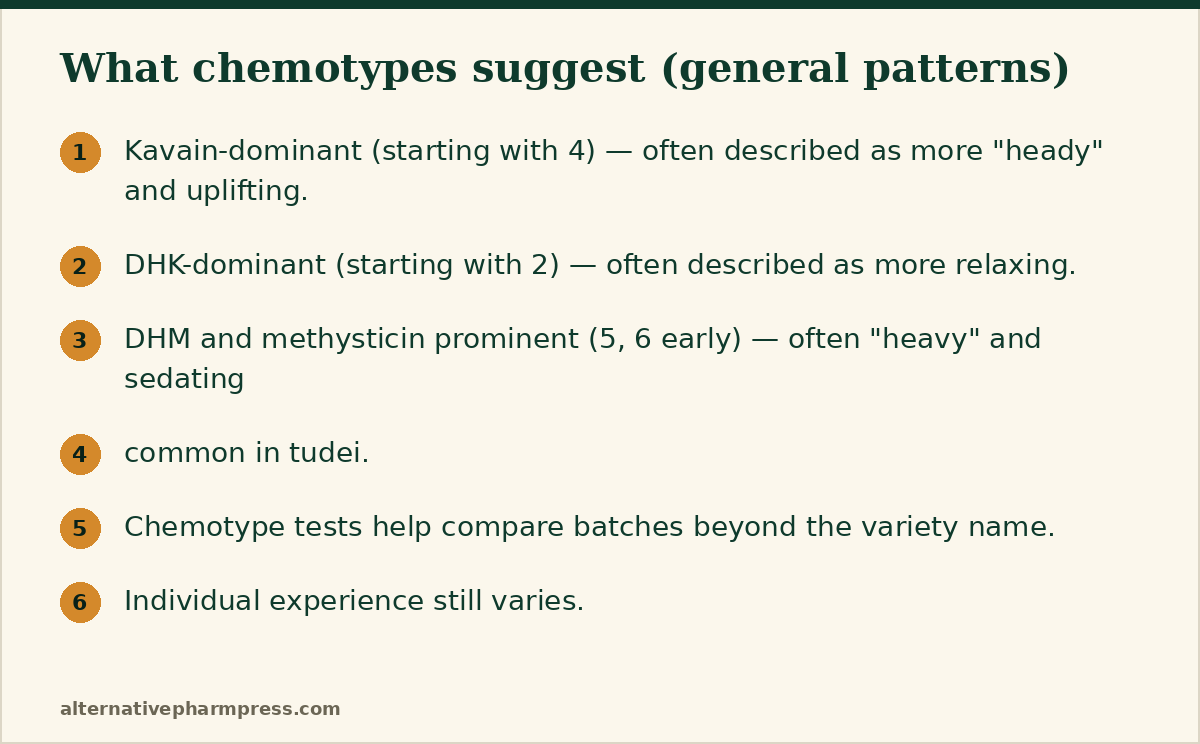
- Chemotype (the ratio of six major kavalactones) shapes whether kava feels “heady” or “heavy.”
- Powder types include medium grind (traditional), micronized and instant (dried kava juice).
- Choose noble, root-only kava with tudei testing, heavy metal and microbial testing.
Noble vs tudei kava
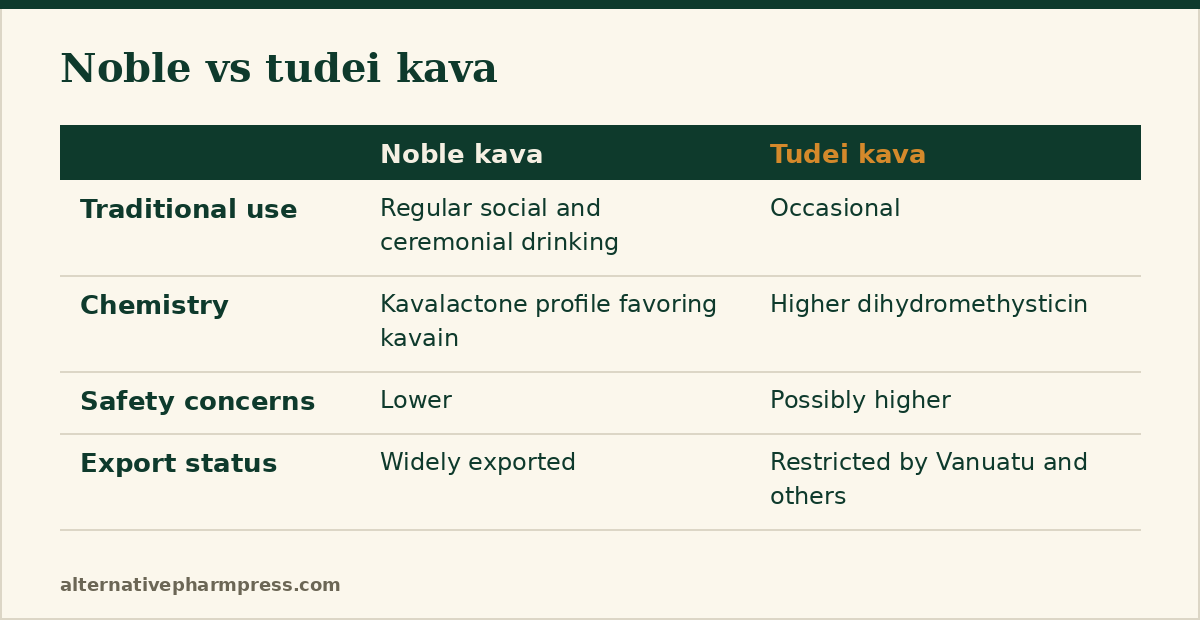
The name “tudei” comes from Bislama (Vanuatu’s creole) for “two day,” referring to its long-lasting effects. Vanuatu’s Kava Act regulates exports to promote noble varieties.
Kavalactones and chemotypes
Kava contains six major kavalactones, numbered in chemotype codes:
- Desmethoxyyangonin (DMY)
- Dihydrokavain (DHK)
- Yangonin (Y)
- Kavain (K)
- Dihydromethysticin (DHM)
- Methysticin (M)
A chemotype lists these in order of abundance — for example, 423156 means kavain is most abundant, followed by DHK, yangonin and so on. Noble kava often has kavain (4) and DHK (2) near the front; tudei kava often has DHM (5) prominent.
Types of kava powder
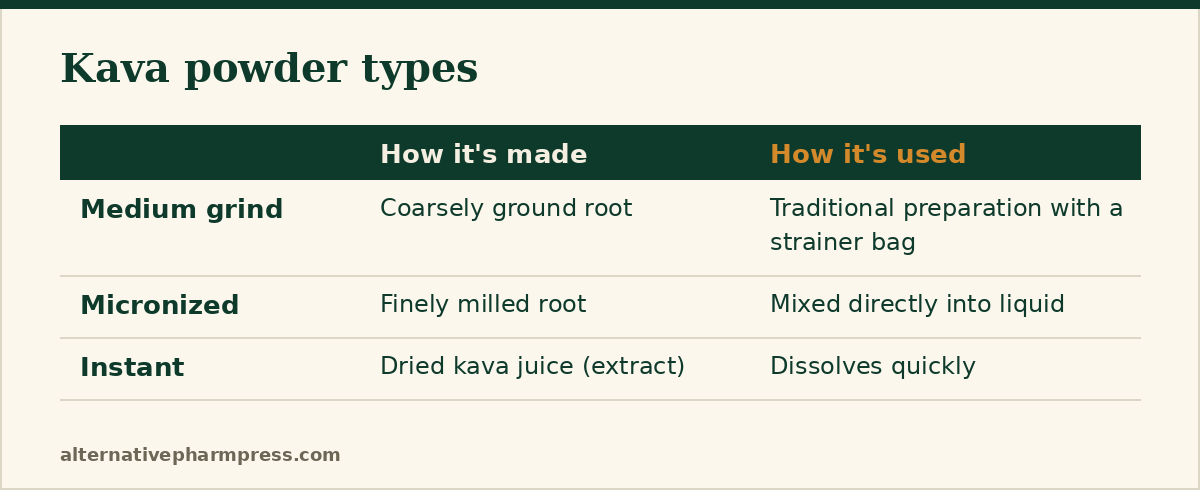
- Medium grind gives the most traditional experience and lets you control strength by how long you knead.
- Micronized kava is convenient but may cause more stomach upset for some because you consume root fiber.
- Instant kava dissolves easily and is popular for travel; quality varies.
Origins
Kava is grown in Vanuatu, Fiji, Tonga, Samoa, Hawaii and other Pacific islands. Each region has its own cultivars and traditions. Vanuatu is known for many noble varieties and export regulations; Fiji kava (yaqona) is widely consumed; Hawaiian ʻawa has distinct cultivars. Origin labeling helps trace quality.
Lab testing to look for
- Noble/tudei testing — such as acetone-based color tests or HPLC analysis of kavalactones and flavokavains.
- Kavalactone percentage and chemotype.
- Heavy metals — lead, arsenic, cadmium, mercury.
- Microbial testing — E. coli, salmonella, yeast and mold.
- Plant part — root and rhizome, not stems or leaves.
Preparing kava powder
- Place medium-grind kava in a strainer bag.
- Submerge in room-temperature or warm (not boiling) water.
- Knead and squeeze for 5–10 minutes.
- Squeeze out the bag and discard the pulp.
- Drink in one or two servings.
Read kava drinks and what is a kava bar for traditional and modern serving styles.
Safety considerations
- Liver — rare liver injury has been reported, mostly with solvent extracts, non-root parts, tudei or heavy use plus alcohol. See kava side effects.
- Skin — heavy use can cause kava dermopathy.
- Driving — kava can impair coordination; don’t drive afterward.
- Interactions — avoid alcohol and sedatives; check medications.
- Pregnancy and breastfeeding — avoid.
How to choose kava powder
- Noble variety from a reputable vendor.
- Origin and cultivar listed.
- Root-only, peeled if possible.
- Lab testing for noble/tudei status, metals and microbes.
- Chemotype or kavalactone data to match your preferences.
- Fresh harvest dates and proper storage.
Storage
Store kava powder in an airtight container in a cool, dark, dry place. Exposure to moisture can promote mold. Most powders stay fresh for many months to a year or more if stored properly.
Price and value
Kava prices vary by origin, cultivar, grind and testing. Instant kava is usually more expensive per serving. Very cheap kava may be lower quality, contain non-root parts or skip testing.
Kava powder vs kava capsules
Capsules offer convenience and no taste but usually contain concentrated extracts, which have been more often linked to liver concerns than traditional water-based preparations. Powder prepared in water is closer to traditional use. Compare with what is kava.
Supporting Pacific farmers
Buying from vendors who source directly from Pacific Island farmers, pay fair prices and respect cultural traditions helps support communities that have cultivated kava for centuries.
Heady vs heavy: matching kava to your goals
Kava drinkers often describe varieties as “heady” (clear-headed, uplifting, sociable) or “heavy” (body-relaxing, sedating). Heady kavas are typically preferred for daytime or social settings, while heavy kavas are chosen for evening relaxation. These descriptions are based on experience and chemotype patterns rather than controlled research. If you’re new to kava, starting with a well-known noble variety in a moderate amount is a sensible way to learn how you respond.
Common mistakes when preparing kava
- Using boiling water, which can make kava harsher and may degrade kavalactones.
- Not kneading long enough, producing weak kava.
- Drinking too much too fast before effects have built.
- Mixing with alcohol, which increases sedation and liver stress.
- Using a fine-mesh bag with micronized kava — micronized is meant to be mixed directly.
Kava for travel
Instant kava is popular for travel because it mixes easily in water without a strainer bag. Check rules for bringing kava across borders; some countries restrict imports. Keep kava in its original labeled packaging to avoid confusion during security checks.
Tasting notes and flavor
Kava tastes earthy, peppery and sometimes slightly bitter or soapy, with a numbing sensation on the tongue and lips. Different cultivars and origins vary in flavor intensity. Many people follow a shell with a “chaser” like pineapple, mango or a sweet drink. Mixing kava with coconut milk or cacao can soften the taste, though purists prefer it plain.
How noble/tudei tests work
Several methods help distinguish noble from tudei kava. A simple acetone test involves mixing kava with acetone and observing color changes; tudei kava often produces a distinctive color due to higher flavokavain content. This test is quick but not definitive. High-performance liquid chromatography (HPLC) measures kavalactones and flavokavains precisely, allowing labs to calculate chemotype and screen for tudei profiles. Reputable vendors increasingly publish HPLC results. If a vendor claims “noble” but can’t show testing, treat the claim with caution.
How strong is a typical serving?
The amount of kavalactones in a serving depends on the kava’s kavalactone percentage, how much powder you use and how efficiently you extract it. A powder testing at 8% kavalactones contains about 80 mg of kavalactones per gram. Traditional preparation extracts only part of this. For example, two tablespoons of medium-grind kava (roughly 15–20 grams) might yield anywhere from around 100 to several hundred milligrams of kavalactones in the drink, depending on technique. Start with a smaller amount the first time and adjust gradually.
Kava and the stomach
Some people experience nausea, bloating or stomach discomfort after kava, especially with micronized powder (since you consume the root fiber) or strong servings on an empty stomach. Eating a light snack beforehand, drinking smaller servings and choosing medium grind prepared traditionally can help. Persistent stomach pain, especially with yellowing of the skin or dark urine, warrants medical evaluation.
Signs of poor-quality kava
- Musty or moldy smell, or visible clumping from moisture.
- Very pale or very dark color compared with typical root powder.
- Excessive fiber or stem pieces, which may indicate non-root parts.
- Unusual nausea or next-day sluggishness, which some drinkers associate with tudei.
- No information about origin, cultivar or testing.
FAQ
What’s the difference between noble and tudei kava?
Noble kava is traditionally used for regular drinking and has a gentler, shorter effect. Tudei kava has longer, heavier effects and is associated with nausea and lethargy.
Is tudei kava dangerous?
Tudei kava has a chemical profile some researchers associate with higher toxicity risk, and exporting countries restrict it. Choosing tested noble kava is recommended.
What is a kava chemotype?
It’s a six-digit code ranking the six main kavalactones by abundance, which helps predict how a kava may feel.
Which kava powder is best for beginners?
Many vendors recommend a well-tested noble kava, often a medium grind for traditional preparation or instant for convenience.
How should I prepare kava powder?
Knead medium-grind kava in a strainer bag with room-temperature or warm water for 5–10 minutes, then drink.
How long does kava powder last?
Stored airtight in a cool, dry place, most kava powder stays fresh for many months to a year or more. Discard it if it smells musty or shows signs of moisture.
Is Hawaiian kava noble?
Many Hawaiian ʻawa cultivars are considered noble, but testing is still the best way to confirm.
Can I mix kava powder into smoothies?
Micronized or instant kava can be mixed into drinks, though taste and stomach tolerance vary.