
Semax is one of the best-known peptides in nootropic circles. Developed in the Soviet Union and approved in Russia for certain neurological conditions, it’s sold elsewhere as a “research peptide” nasal spray for focus, memory and mood. Online communities describe benefits ranging from sharper thinking to faster recovery from brain fog.
This overview explains what semax is, its proposed mechanisms, what research shows, how it’s used, side effects and safety unknowns, and its regulatory status outside Russia.
Key takeaways
- Semax is a synthetic heptapeptide based on a fragment of ACTH (4–10), modified with a Pro-Gly-Pro sequence for stability.
- It’s approved in Russia for conditions such as stroke, cognitive disorders and optic nerve disease; it’s not FDA-approved.
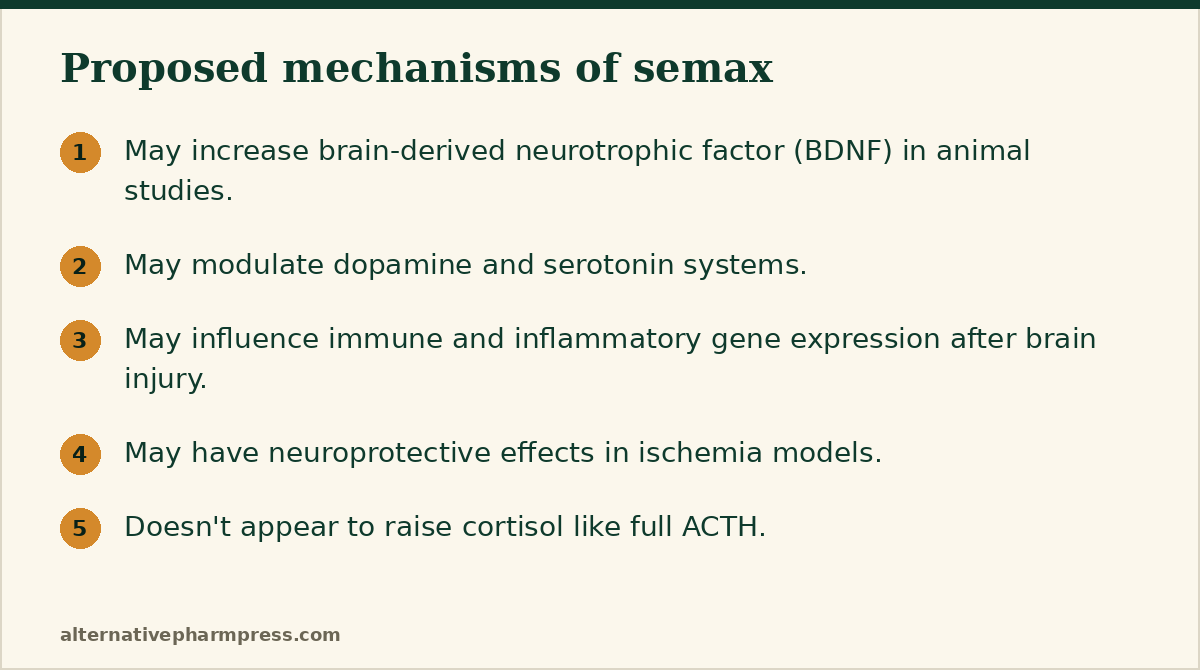
- Proposed mechanisms include increasing BDNF and modulating neurotransmitters and immune signaling.
- Most research is Russian-language, small or in animals; independent large trials are lacking.
- Gray-market products raise quality and sterility concerns; long-term safety is unclear.
What is semax?
Semax (Met-Glu-His-Phe-Pro-Gly-Pro) was developed in the 1980s at the Institute of Molecular Genetics in Moscow. It’s derived from adrenocorticotropic hormone (ACTH), specifically the 4–10 fragment, which has effects on the brain without stimulating cortisol release like full ACTH. Adding the Pro-Gly-Pro tail makes the peptide more resistant to breakdown.
In Russia and some neighboring countries, semax is available as nasal drops in different strengths. Variants like N-acetyl semax amidate are sold online with claims of greater potency, though evidence is limited.
Proposed mechanisms
What the research shows
Stroke
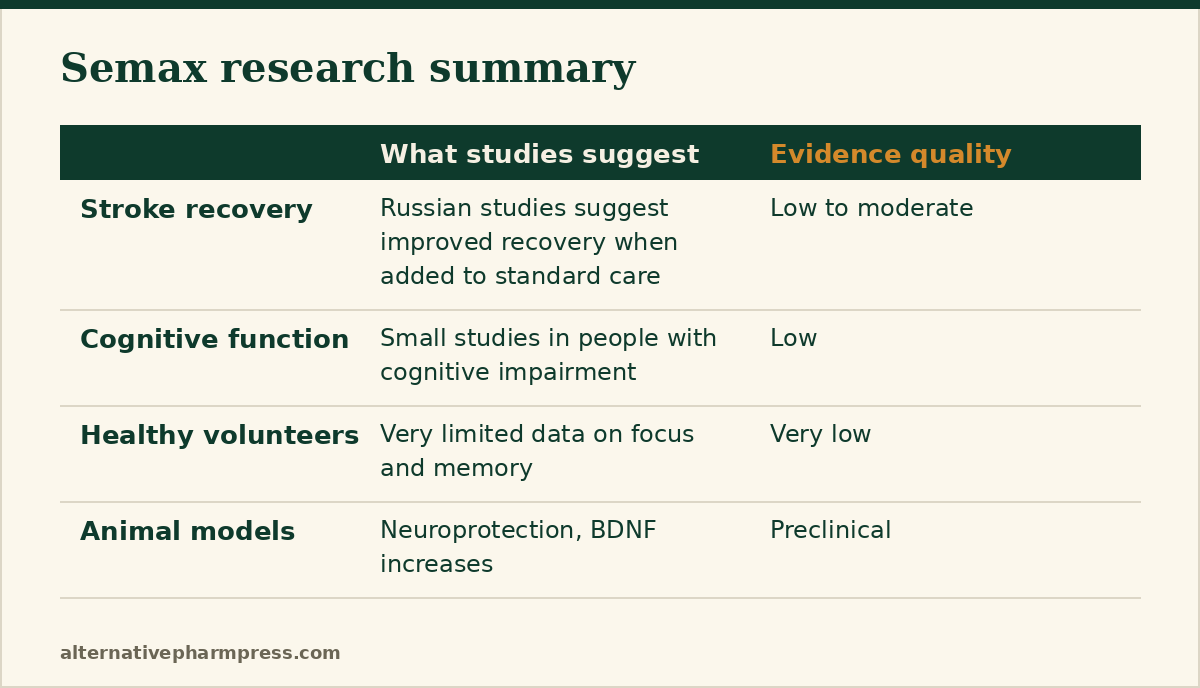
Russian clinical studies have reported that semax added to standard stroke care may improve neurological recovery and functional outcomes. These studies are generally small, and some lacked rigorous blinding. Independent replication in Western trials hasn’t been published.
Cognition
Small studies have examined semax in people with cognitive disorders and in healthy volunteers under stress or fatigue. Some reported improvements in attention and memory, but evidence is limited.
Gene expression
Research has examined how semax affects gene expression in rodent brains after ischemia, showing changes in immune and vascular genes. These findings help explain possible mechanisms but don’t establish clinical benefits.
How semax is used
In Russia, semax is typically administered as intranasal drops. The nasal route may allow some delivery to the brain via olfactory pathways, though how much reaches the brain in humans isn’t well quantified. Gray-market products are sold as nasal sprays or powders for reconstitution. For more on nasal peptide delivery, see BPC-157 nasal spray.
Semax vs selank
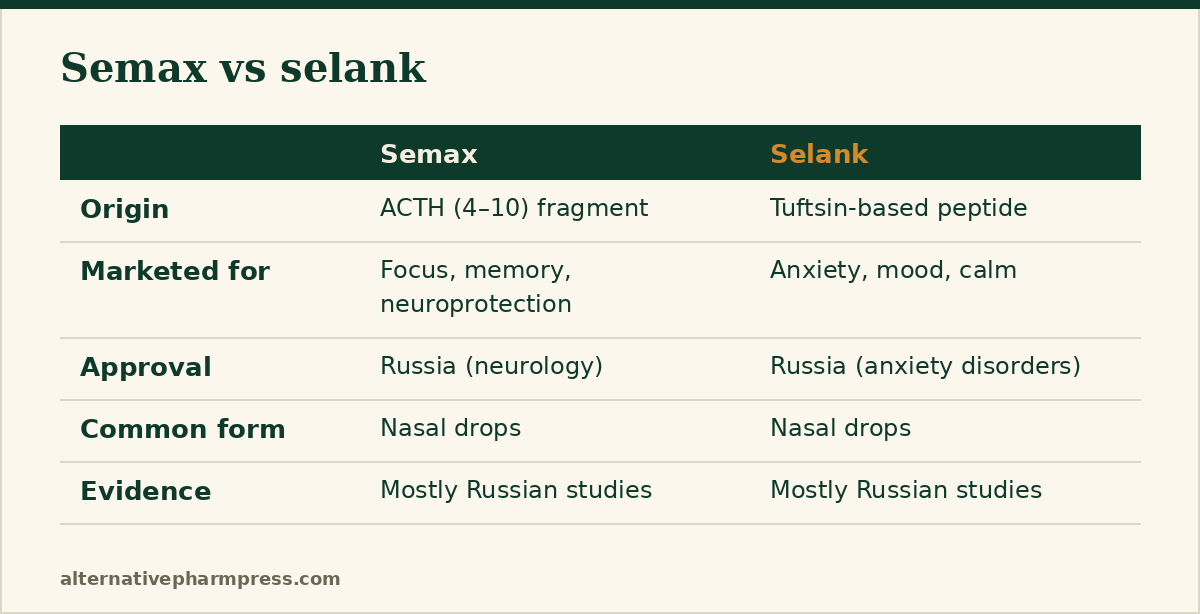
Read selank vs semax for a deeper comparison.
Side effects and safety
Reported side effects in Russian studies are generally mild, such as nasal irritation. However:
- Long-term safety isn’t well studied.
- Hormonal effects — though designed not to stimulate cortisol, long-term endocrine effects are unclear.
- Interactions with psychiatric or neurological medications haven’t been well studied.
- Pregnancy and breastfeeding — no safety data.
- Quality — gray-market products may be impure, mislabeled or non-sterile.
Quality concerns
Products sold as semax online are typically labeled “research use only.” Concerns include incorrect peptide identity or amount, impurities and contamination. Nasal sprays require proper preservatives to prevent microbial growth. Read how to read a peptide COA and research-use-only meaning.
Regulatory status
Semax is approved in Russia but not by the FDA or European Medicines Agency. In the U.S., it’s not approved for any use and can’t legally be marketed for human consumption. Athletes should note anti-doping rules: WADA’s prohibited list covers various peptide hormones and related substances; check the current list before using any peptide. See research peptides in 2026.
Evaluating nootropic peptide claims
Online stories describe dramatic improvements in focus or mood with semax. As with other peptides, anecdotes are vulnerable to placebo effects, expectation and selective reporting. Read BPC-157 before and after for a guide to reading anecdotes critically.
Evidence-based approaches to cognitive health
For focus and memory, strategies with stronger evidence include adequate sleep, regular exercise, managing stress, treating underlying conditions such as ADHD, depression or sleep apnea, and limiting alcohol. For supplements with more research, see nootropics beginners guide, L-theanine and caffeine and alpha-GPC vs citicoline.
Why Russian approval doesn’t settle the question
Drug approval standards differ between countries. Some Russian-approved drugs have strong evidence; others are approved based on smaller or less rigorous studies. Semax’s approval reflects Russian regulatory decisions and clinical practice, but international regulators require independent, rigorous trials before approval.
N-acetyl semax amidate
This modified version adds an acetyl group and an amide group, which sellers claim increase stability and potency. There’s very little published research on this variant in humans.
What BDNF is and why it matters
Brain-derived neurotrophic factor (BDNF) is a protein that supports the survival, growth and connections of neurons. It plays a role in learning, memory and mood, and low BDNF levels have been associated with depression and some neurodegenerative conditions. Many nootropic marketing claims revolve around “boosting BDNF.” Exercise, sleep and certain antidepressants are known to influence BDNF. Whether semax raises BDNF meaningfully in human brains, and whether that improves cognition in healthy people, isn’t established.
Questions to ask before considering semax
- What exactly is in the product, and has it been independently tested?
- What problem am I trying to solve, and have I addressed sleep, mood and medical causes?
- Do I take medications that could interact with a neuroactive peptide?
- Am I subject to anti-doping rules?
- Would I be comfortable telling my doctor I’m using it?
Nasal spray hygiene
Nasal sprays can become contaminated after opening, especially without proper preservatives. Avoid sharing bottles, clean nozzles and discard products that change color or smell unusual.
Why ACTH fragments interested researchers
ACTH is a hormone produced by the pituitary gland that tells the adrenal glands to make cortisol. In the mid-20th century, researchers discovered that certain fragments of ACTH influenced learning, attention and memory in animals without triggering cortisol release. These findings suggested that small peptides could act directly on the brain. Semax emerged from this line of research as a more stable, longer-acting ACTH-derived peptide designed for clinical use in neurological conditions.
What studies in healthy people would need to show
For semax to be considered a proven cognitive enhancer in healthy people, researchers would need large, randomized, double-blind, placebo-controlled trials measuring standardized cognitive outcomes — such as memory tests, attention tasks and real-world performance — over weeks to months. They would also need to track side effects and any rebound effects after stopping. These kinds of trials haven’t been published internationally. Without them, claims about enhanced focus or memory in healthy users remain speculative.
Reported experiences and their limits
Users often describe semax as producing clearer thinking, increased motivation or improved mood within minutes to hours of nasal use. Some report side effects such as irritability, anxiety, headaches or hair shedding, though these reports are anecdotal. Because semax is often used alongside other nootropics, caffeine or lifestyle changes, it’s hard to know what’s responsible for any effect.
Storage and stability
Peptides in solution can degrade with heat and light. Semax nasal solutions are typically stored refrigerated after opening. Gray-market products rarely include stability data, so potency over time is uncertain. Discard any product that changes color, becomes cloudy or develops an unusual smell.
Using semax with other substances
Some nootropic users “stack” semax with racetams, stimulants or other peptides like selank. Combining neuroactive substances increases unpredictability and the potential for side effects. People taking antidepressants, stimulants for ADHD or medications for seizures should be especially cautious and talk with a clinician. Compare other approaches in noopept vs piracetam and modafinil vs adrafinil.
FAQ
What is semax?
Semax is a synthetic peptide based on a fragment of ACTH, developed in Russia and approved there for certain neurological conditions.
What are semax’s benefits?
Russian studies suggest possible benefits for stroke recovery and cognition. Evidence is limited and largely from small or non-independent studies.
Is semax safe?
Short-term side effects reported are mild, but long-term safety and interactions aren’t well studied. Gray-market product quality is a concern.
Is semax legal in the U.S.?
It isn’t FDA-approved and can’t legally be marketed for human use. It’s sold as a research chemical.
How is semax taken?
In Russia, it’s used as nasal drops. Gray-market products are sold as nasal sprays or powders.
Does semax increase BDNF in humans?
Animal studies suggest it may raise BDNF, but whether it does so meaningfully in human brains hasn’t been established.
Can semax help with brain fog?
Some users report clearer thinking, but there’s no strong clinical evidence. Brain fog has many causes worth evaluating with a clinician.
What’s the difference between semax and selank?
Semax is marketed for focus and neuroprotection; selank is marketed for anxiety and calm. Both are Russian-developed peptides.