
The energy drink aisle has a new category: nootropic energy drinks. Instead of promising raw power, these beverages market “clean energy,” “focus” and “flow,” often listing ingredients like L-theanine, lion’s mane, citicoline, ashwagandha and B vitamins alongside caffeine. They’re aimed at students, remote workers, gamers and anyone who wants to feel sharper without the crash.
This guide explains what’s actually in these drinks, whether the doses match research, what the main safety concerns are and how to compare products.
Key takeaways
- Caffeine is usually the main active ingredient; many drinks contain 100–300 mg per can.
- L-theanine is the best-supported “nootropic” add-on, pairing with caffeine to support attention and reduce jitters.
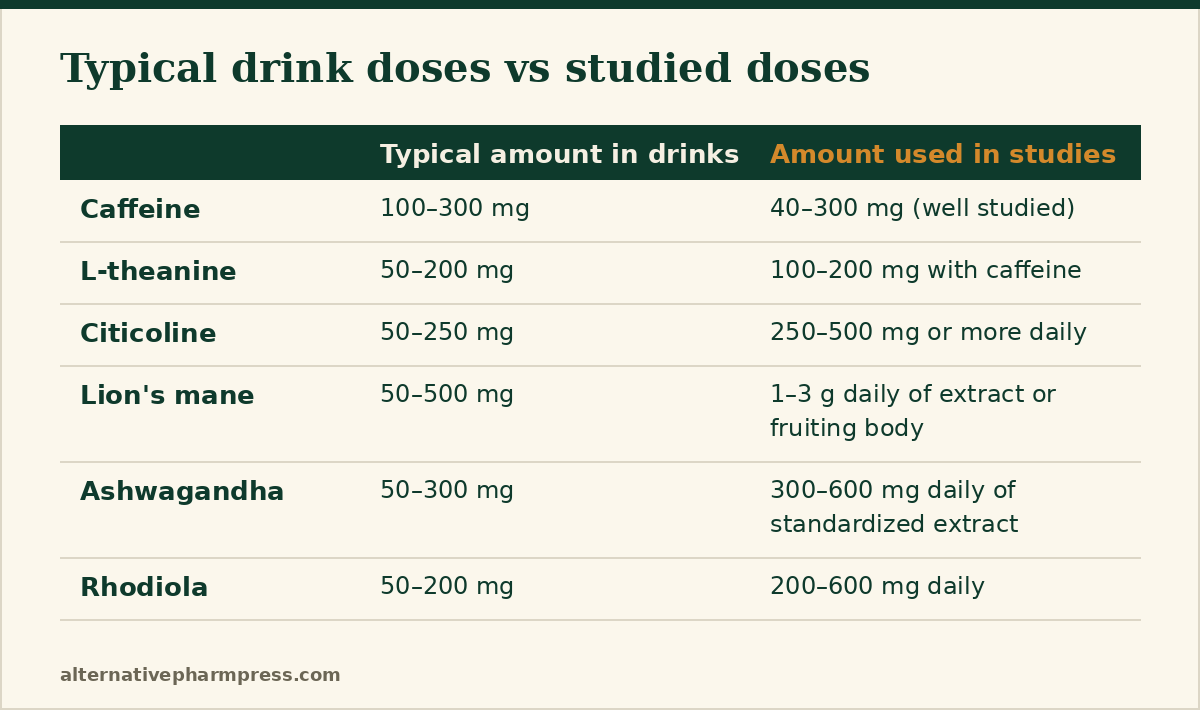
- Many other ingredients — lion’s mane, adaptogens, citicoline, ginkgo — appear at doses below those used in studies.
- Safety concerns include caffeine stacking, heart effects, sleep disruption, sugar and use by teens.
- Read labels for caffeine per can, ingredient amounts and avoid proprietary blends that hide doses.
What makes an energy drink “nootropic”?
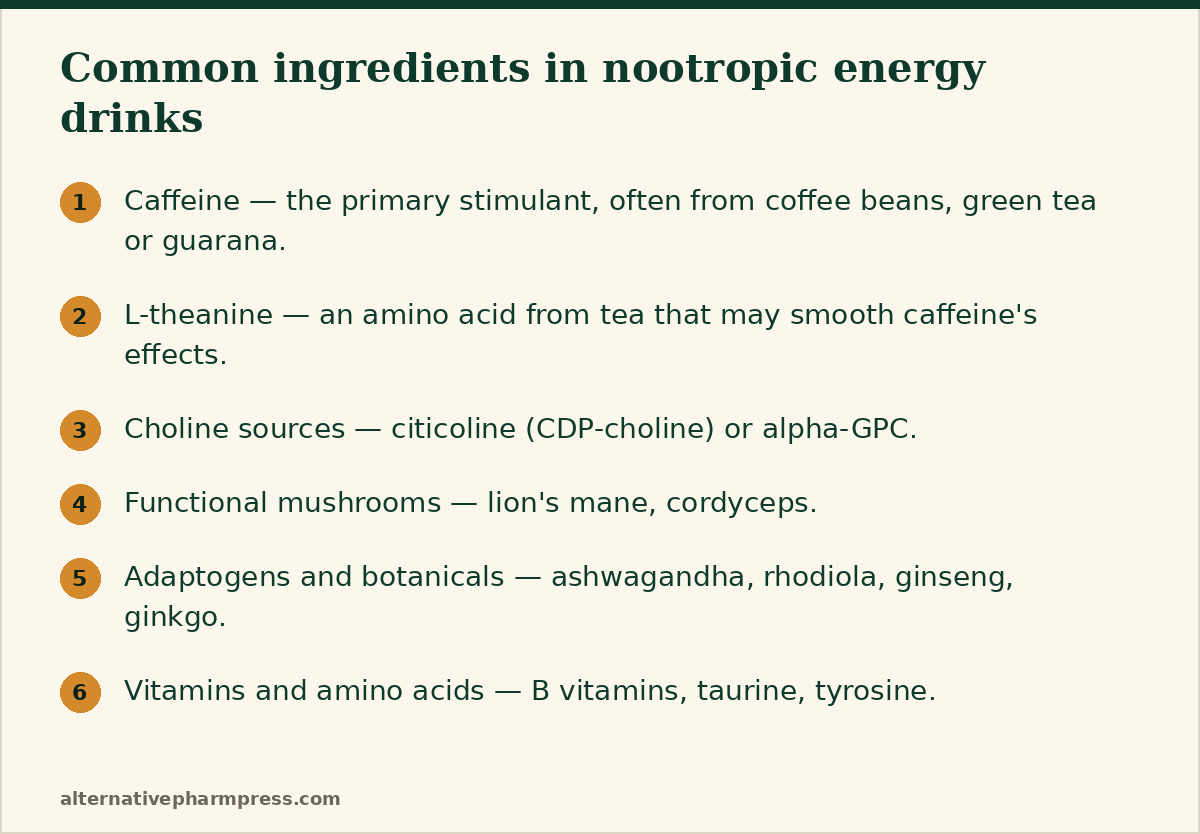
“Nootropic” refers to substances claimed to improve cognitive function, such as memory, focus or motivation. There’s no regulatory definition, so any drink can use the term. In practice, nootropic energy drinks usually include caffeine plus one or more of:
Read our nootropics beginners guide and nootropic drinks for more background.
Ingredient-by-ingredient: doses vs research
Caffeine
Caffeine improves alertness, reaction time and attention in many studies. It’s responsible for most of what you feel from an energy drink.
L-theanine
Several small studies suggest combining L-theanine (about 100–200 mg) with caffeine may improve attention and reduce jitteriness compared with caffeine alone.
Citicoline and alpha-GPC
These choline sources are studied for memory and attention, usually at doses of several hundred milligrams over weeks. Single servings in drinks may be lower. Compare them in alpha-GPC vs citicoline.
Lion’s mane
Studies used grams per day over weeks to months. A drink with a few hundred milligrams is unlikely to provide the same exposure. See what is lion’s mane good for? and lion’s mane vs cordyceps.
Adaptogens
Ashwagandha and rhodiola are studied for stress and fatigue, typically at daily standardized doses over weeks. See ashwagandha vs rhodiola.
How much caffeine are you getting?
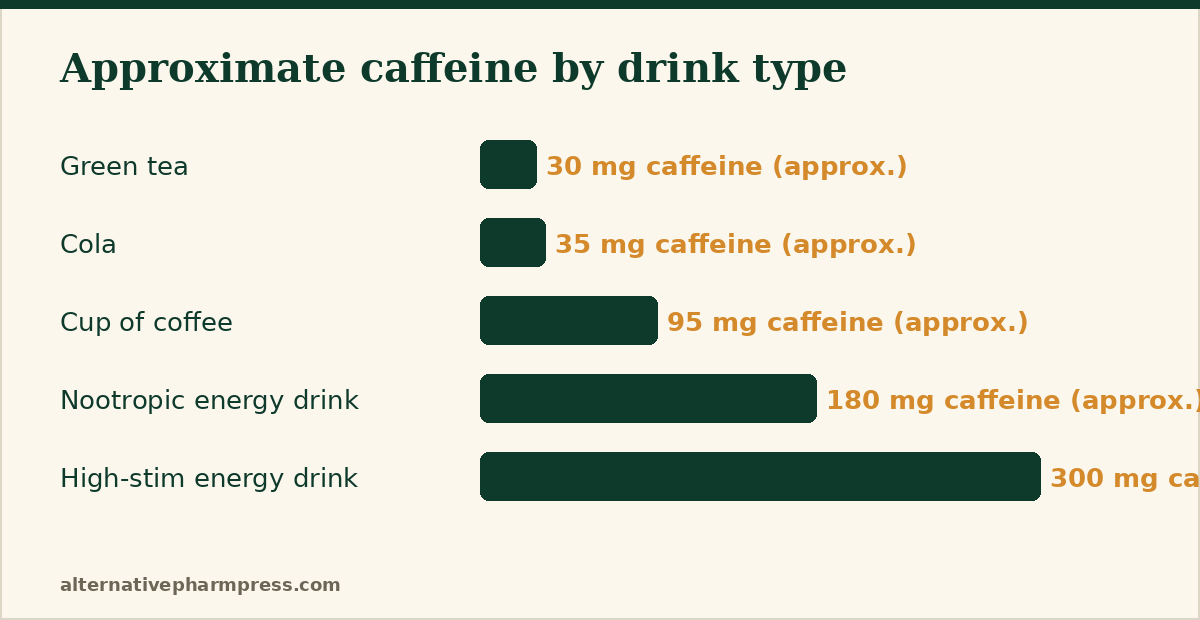
The FDA notes that up to about 400 mg of caffeine daily is generally not associated with dangerous effects for healthy adults. Two cans of a 200 mg drink plus coffee can exceed that quickly. Teens and people sensitive to caffeine should be much more cautious.
Safety concerns
Heart effects
High caffeine intake can raise heart rate and blood pressure and, in rare cases, contribute to arrhythmias, especially in people with underlying heart conditions or when combined with other stimulants.
Sleep disruption
Caffeine’s effects can last many hours. Drinking an energy drink in the afternoon can disrupt sleep, which in turn reduces focus the next day.
Sugar and sweeteners
Some drinks contain substantial sugar, while others use artificial or natural sweeteners. Consider total intake as part of your diet.
Teens and young adults
Energy drinks are popular with teens. Pediatric experts generally recommend that children and adolescents avoid energy drinks because of caffeine’s effects on developing bodies and sleep.
Interactions
Caffeine can interact with stimulant medications, some antidepressants and certain antibiotics. Botanicals like ginkgo may interact with blood thinners. Ashwagandha may affect thyroid function and interact with sedatives.
How to read a nootropic energy drink label
- Find caffeine per can — not per serving if the can holds more than one.
- Check ingredient amounts — avoid proprietary blends that hide doses.
- Compare doses to research — see the table above.
- Look at sugar and sweeteners.
- Watch for other stimulants — guarana, yerba mate, synephrine or yohimbine.
- Check for third-party testing, especially for athletes.
Who should avoid nootropic energy drinks
- Children and teens.
- Pregnant or breastfeeding people (or limit caffeine per medical advice).
- People with heart conditions, high blood pressure or anxiety disorders.
- Anyone taking stimulant medications or MAO inhibitors.
- People with insomnia or caffeine sensitivity.
Alternatives for focus
If you want better focus without high caffeine, consider:
- Coffee or tea in moderate amounts, perhaps with L-theanine.
- Consistent sleep, hydration and regular meals.
- Short breaks and movement during long tasks.
- Exercise, which improves attention and mood.
- Addressing underlying issues like ADHD, depression or sleep apnea with a clinician.
For other formats, see nootropic pouches and mushroom coffee.
Why “clean energy” claims deserve scrutiny
“Clean energy” isn’t a defined term. It may mean natural caffeine sources, no artificial colors or lower sugar. Natural caffeine is still caffeine, and its effects on heart rate and sleep are the same. A drink with 200 mg of caffeine from green coffee beans affects your body much like 200 mg of synthetic caffeine.
Regulatory status
In the U.S., energy drinks may be sold as conventional beverages or as dietary supplements. Beverages must list ingredients but don’t always have to disclose caffeine amounts, though many brands do. Supplements must include a Supplement Facts panel. Neither category is approved for efficacy before sale. Claims like “boosts brain function” are structure/function claims and aren’t evaluated by the FDA. Some states and countries have proposed or passed restrictions on sales of high-caffeine drinks to minors.
Caffeine tolerance and dependence
With daily use, your body adapts to caffeine. You may need more to feel the same effect, and skipping it can cause headaches, fatigue, irritability and poor concentration for a few days. If you’re drinking multiple energy drinks daily, cutting back gradually is usually easier than stopping abruptly.
Testing whether a drink actually helps you
Because most of the effect comes from caffeine, compare a nootropic drink with an equivalent amount of caffeine from coffee or tea on different days. Keep sleep, timing and tasks similar. Note focus, mood, jitteriness and how you sleep that night. If you can’t tell the difference, the extra ingredients may not be worth the premium price.
Timing and best practices
If you choose to drink nootropic energy drinks, a few habits help. Drink earlier in the day to protect sleep. Avoid drinking on an empty stomach if caffeine upsets your stomach. Space out caffeine sources rather than combining an energy drink with coffee and pre-workout. Stay hydrated with water. And avoid mixing energy drinks with alcohol, which can mask intoxication and increase risky behavior.
Energy drinks and exercise
Caffeine is one of the few supplements with strong evidence for improving endurance and some types of strength performance, typically at doses of around 3–6 mg per kilogram of body weight taken before exercise. That’s why many athletes use pre-workout drinks. But energy drinks used during intense exercise in hot conditions can contribute to dehydration and a racing heart, particularly when combined with other stimulants. If you exercise after an energy drink, hydrate well and stop if you feel chest pain, dizziness or palpitations.
Mixing energy drinks with alcohol
Combining energy drinks with alcohol is common but risky. Caffeine can mask the feeling of being drunk, leading people to drink more and take greater risks, while not reducing alcohol’s impairment of coordination and judgment. Health agencies recommend avoiding this combination.
Cost per serving
Nootropic energy drinks are often priced at a premium compared with standard energy drinks, coffee or tea. When comparing, calculate cost per can and consider whether the extra ingredients are present at meaningful doses. A simple cup of coffee and an L-theanine capsule may provide similar effects for less money.
Questions to ask before you buy
- How much caffeine is in one can, and how much will I consume today in total?
- Are ingredient amounts listed, or hidden in a proprietary blend?
- Do the doses match research, or are they token amounts?
- Does the brand use third-party testing?
- Do I have any health conditions or medications that make caffeine riskier?
FAQ
What is a nootropic energy drink?
It’s a caffeinated beverage with added ingredients marketed for focus or cognition, such as L-theanine, choline sources, lion’s mane or adaptogens.
Do nootropic energy drinks work?
Most of the noticeable effect comes from caffeine. L-theanine has some evidence when combined with caffeine; many other ingredients are present at doses below those studied.
How much caffeine is in nootropic energy drinks?
Commonly 100–300 mg per can, though some contain less or more. Always check the label.
Are nootropic energy drinks safe?
For healthy adults in moderation, they’re generally similar to other caffeine sources. Risks include caffeine overload, heart effects and sleep disruption.
Can teenagers drink nootropic energy drinks?
Pediatric experts generally recommend that children and teens avoid energy drinks.
Are nootropic energy drinks better than coffee?
Not necessarily. They may offer convenience and added ingredients, but coffee with moderate caffeine is a well-studied, lower-cost option.