
For centuries, kava has been shared in coconut shells across Fiji, Vanuatu, Tonga, Samoa and Hawaii. Today it’s also poured in kava bars in U.S. cities, sold as powdered “instant kava” and packaged in sleek cans marketed as alcohol alternatives. The market for kava drinks has grown quickly alongside the sober-curious movement.
This guide explains what kava is, how traditional and modern kava drinks differ, what effects to expect, safety concerns including liver health and drug interactions, and how to choose a quality product.
Key takeaways
- Kava comes from the root of Piper methysticum, a Pacific Island plant; its active compounds are kavalactones.
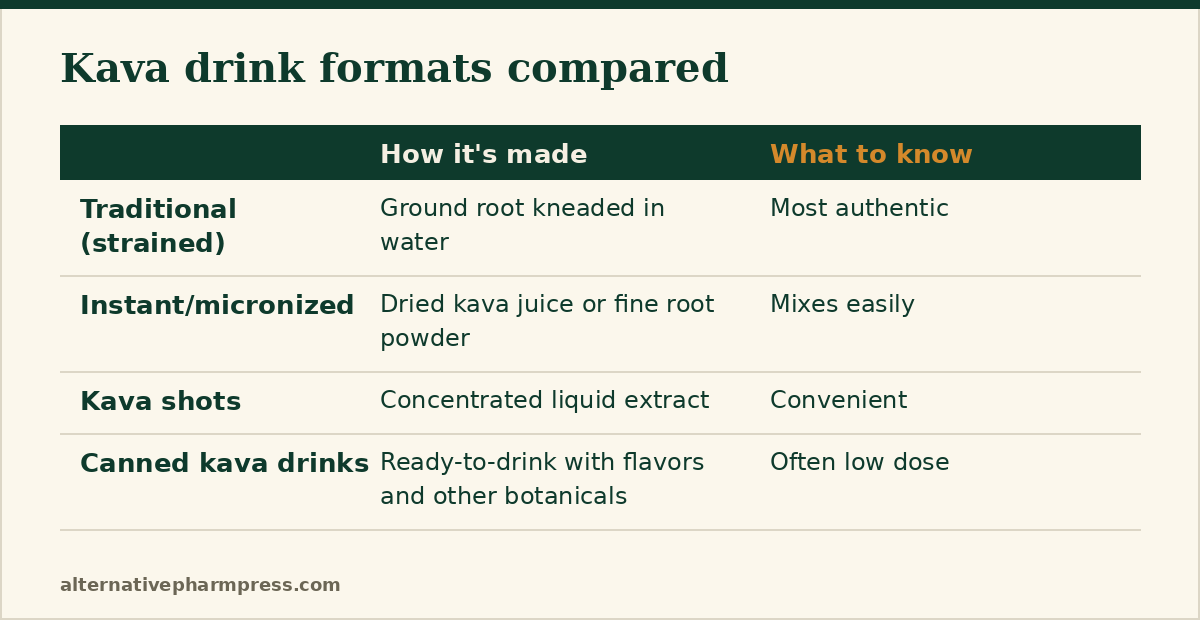
- Traditional kava is made by kneading ground root in water; modern products include instant powders, shots and canned beverages.
- Effects commonly include relaxation, mild euphoria, numb mouth and sociability without heavy intoxication at typical doses.
- Liver injury reports led to bans in Europe in the early 2000s; risk appears linked to product quality, plant part and heavy use.
- Kava can interact with alcohol and medications; avoid driving after drinking it.
What is kava?
Kava (Piper methysticum) is a member of the pepper family. Its root and rhizome contain kavalactones, a group of compounds that influence GABA activity and other brain pathways, producing calming effects. Six major kavalactones account for most of the activity: kavain, dihydrokavain, methysticin, dihydromethysticin, yangonin and desmethoxyyangonin. Their ratio — the chemotype — shapes how a kava feels. For a full introduction, read what is kava?.
Traditional kava preparation
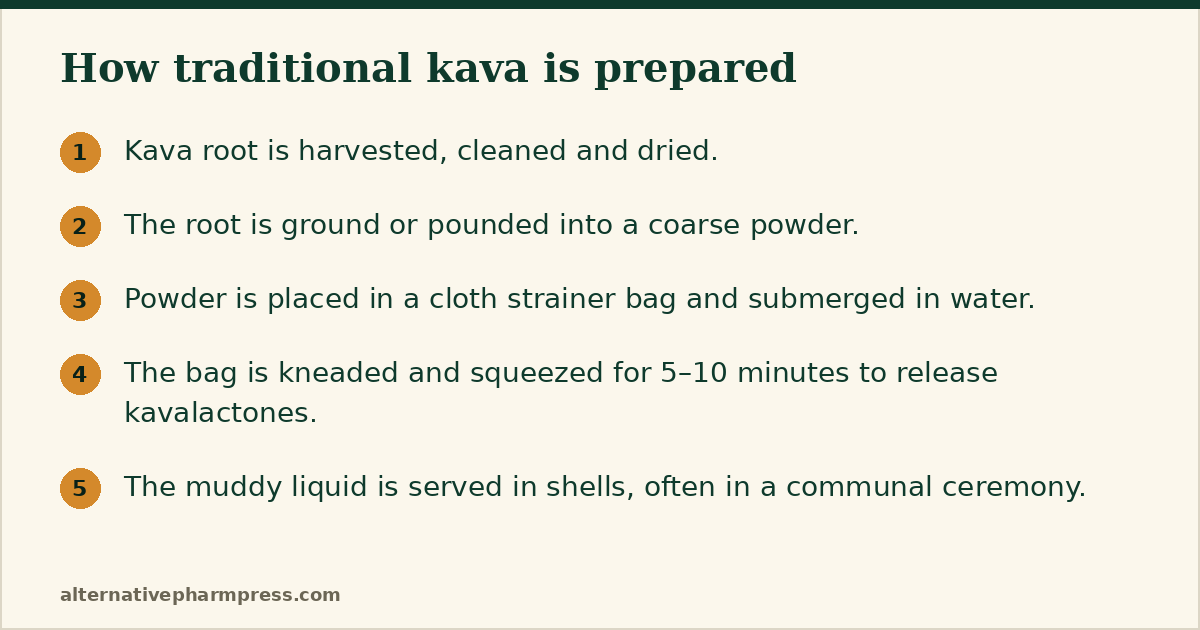
Traditional kava tastes earthy, bitter and peppery, and often numbs the mouth slightly — a sign of kavalactones at work. In Pacific cultures, kava drinking is a social and ceremonial practice with deep cultural meaning, used to welcome guests, mark agreements and gather communities.
Types of kava drinks today
Kava bars
Kava bars serve kava in shells or cups, often alongside non-alcoholic social settings. Some bars also sell kratom drinks, which have very different effects and risks. If you visit a kava bar, ask what’s in each drink. Read kava vs kratom to understand the differences.
Canned kava beverages
Canned “relaxation” drinks are among the fastest-growing kava formats. Many combine kava with flavorings, sweeteners and other botanicals such as L-theanine, ashwagandha or kanna. Kavalactone content varies widely and is sometimes not listed. Some products in this space have also contained kratom, sometimes with limited labeling. Always read the label carefully. See kava vs kanna and our broader guide to nootropic drinks.
What does kava feel like?
Effects usually begin within 20–30 minutes and can last two to three hours. Commonly reported effects include:
- Physical relaxation and muscle ease.
- Calm, sociable mood, sometimes mild euphoria.
- Numbness of the tongue and lips.
- Clear-headedness at moderate doses for many people, depending on chemotype.
- Sedation at higher doses or with “heady” vs “heavy” chemotypes.
Unlike alcohol, kava at typical doses usually doesn’t impair speech or cause hangovers for most people, though heavy use can cause next-day grogginess.
Noble vs tudei kava
Kava varieties are often grouped as noble (traditionally used for regular drinking) and tudei (“two-day,” named for long-lasting effects including nausea and lethargy). Tudei kava has a different kavalactone profile and higher levels of compounds like flavokavains, which some research links to toxicity concerns. Vanuatu and some other exporting countries restrict tudei kava exports. Choose products labeled noble kava from reputable vendors.
Kava and liver safety
In the late 1990s and early 2000s, reports of liver injury in Europe linked to kava supplements led to bans or restrictions in several countries. Later analyses suggested several factors may have contributed:
- Use of stems and leaves rather than peeled root.
- Solvent extracts (acetone or ethanol) rather than water-based preparations.
- Tudei or poor-quality varieties.
- Heavy use or combination with alcohol and other liver-stressing drugs.
Germany’s ban was later overturned by a court, and the WHO has issued guidance supporting water-based preparation from noble root. Still, liver injury remains a recognized risk, especially with heavy use. Stop using kava and seek care if you notice yellow skin or eyes, dark urine, unusual fatigue, nausea or abdominal pain.
Kava dermopathy
Heavy long-term kava drinkers can develop kava dermopathy, a dry, scaly skin condition that typically resolves after stopping or reducing use.
Drug interactions and who should avoid kava
- Alcohol — increases sedation and may raise liver stress. Avoid mixing.
- Benzodiazepines, sleep aids and other sedatives — additive effects.
- Medications metabolized by the liver — kava may affect certain liver enzymes.
- Drugs affecting dopamine — including some Parkinson’s medications.
- Pregnancy and breastfeeding — avoid.
- Liver disease — avoid.
- Driving — kava can impair reaction time; some U.S. drivers have been cited for driving under the influence of kava.
Is kava addictive?
Kava is generally considered to have low addiction potential compared with alcohol or opioids, but some people use it heavily and find it hard to cut back. Read is kava addictive? for a deeper look.
How to choose a quality kava drink
- Look for noble kava from Vanuatu, Fiji, Tonga, Samoa or Hawaii.
- Check that it’s made from root, not stems or leaves.
- Look for kavalactone content per serving and, ideally, chemotype information.
- Ask for lab testing for heavy metals, microbes and tudei screening.
- Read canned beverage labels for added botanicals, caffeine or kratom.
- Avoid products with health claims about curing anxiety or other conditions.
How much kava is in a drink?
Kavalactone content varies a lot between formats. A traditional shell might deliver anywhere from roughly 50 to over 250 mg of kavalactones, depending on how strong the kava is and how it’s prepared. Canned beverages often contain modest amounts — sometimes well below a traditional serving — while concentrated shots can be stronger. Germany’s former medicinal kava products used daily doses of around 60–210 mg of kavalactones in clinical trials for anxiety. If a label doesn’t list kavalactone content, you can’t easily compare products or judge how much you’re taking.
Kava for anxiety: what research says
Several randomized trials and meta-analyses have tested kava extracts for generalized anxiety, with mixed results. Some found modest benefits over placebo; a larger, more recent trial did not find a significant effect for generalized anxiety disorder. Most trials used standardized extracts rather than traditional beverages. Kava may help some people feel calmer, but it isn’t a proven treatment for anxiety disorders. For other options people explore, see supplements for anxiety and ashwagandha vs rhodiola.
Legal status
In the U.S., kava is legal and sold as a dietary supplement and beverage. The FDA issued a consumer advisory about potential liver injury in 2002. Some countries restrict kava imports or sales. Rules for canned beverages marketed with relaxation claims may tighten as the category grows.
Respecting kava’s cultural roots
Kava is far more than a trendy beverage in the Pacific. It plays roles in ceremonies, diplomacy and everyday social life. Many Pacific Islander kava farmers and businesses advocate for fair trade, quality standards and respect for traditional knowledge. Buying from vendors that source directly from Pacific farmers and disclose origin helps support those communities.
How to make traditional kava at home
If you buy medium-grind noble kava root, a simple home method looks like this. Add about two to four tablespoons of kava to a strainer bag, place it in a bowl with roughly a cup of room-temperature or slightly warm water, and knead firmly for 5–10 minutes. Squeeze the bag well and discard the pulp. Drink the liquid in one or two servings rather than sipping slowly, as is traditional. Start with a smaller amount the first time, since strength varies by batch and chemotype. Avoid boiling water, which can break down kavalactones and make the drink harsher.
Kava and driving or work
Even when kava feels mild, studies and roadside reports show it can affect coordination and reaction time, especially at higher doses. Plan to stay home or have a sober driver after a kava session, and avoid using it before operating machinery or doing safety-sensitive work.
FAQ
What do kava drinks do?
They typically promote relaxation, calm mood and sociability, often with a numbing sensation in the mouth. Effects last a few hours.
Are canned kava drinks strong?
Many contain relatively low kavalactone doses compared with traditional kava, but strength varies. Check the label for kavalactone content and added ingredients.
Is kava bad for your liver?
Liver injury has been reported, mainly linked to poor-quality extracts, non-root plant parts and heavy use. Water-based noble root kava appears lower risk, but people with liver disease should avoid it.
Can you drink alcohol with kava?
It’s not recommended. Combining them increases sedation and may increase liver stress.
How long does kava last?
Effects usually last two to three hours, with some people feeling relaxed longer after larger servings.
Will kava show up on a drug test?
Standard drug tests don’t screen for kavalactones. However, some canned “kava” drinks contain other substances, so check labels carefully.