
Kratom is often thought of as an herbal supplement, but its alkaloids act on opioid receptors and influence liver enzymes that process many drugs. That means kratom can interact with prescription medications, over-the-counter drugs, alcohol and other substances in ways that increase side effects or change how drugs work.
This checklist explains the two main ways kratom interactions happen, the highest-risk combinations, other medications to review, warning signs and how to talk to your pharmacist or doctor.
Key takeaways
- Kratom interactions happen through additive effects (for example, sedation) and liver enzyme effects that change drug levels.
- The highest-risk combinations involve alcohol, opioids, benzodiazepines, gabapentin/pregabalin and other sedatives.
- Mitragynine may inhibit CYP2D6 and CYP3A4, enzymes that process many common drugs.
- Stimulants, antidepressants and some heart medications also deserve caution.
- Always tell your pharmacist and doctor that you use kratom.
Emergency signs after combining kratom with other substances include extreme drowsiness, slow or shallow breathing, confusion, seizures, chest pain or unresponsiveness. Call 911 and give naloxone if available.
How kratom interactions happen
Additive (pharmacodynamic) interactions
When two substances have similar effects on the body, they can add together. Kratom at higher doses causes sedation and opioid-like effects; combining it with other sedating substances can deepen drowsiness and slow breathing. At lower doses, kratom can be stimulating, which may add to the effects of caffeine or stimulant medications.
Metabolic (pharmacokinetic) interactions
Lab studies suggest mitragynine and other kratom alkaloids can inhibit liver enzymes, particularly CYP2D6 and CYP3A4, and possibly others. These enzymes metabolize a large share of prescription drugs. Inhibiting them can raise drug levels and increase side effects. The clinical significance in humans is still being studied, but case reports suggest it can matter.
Highest-risk combinations
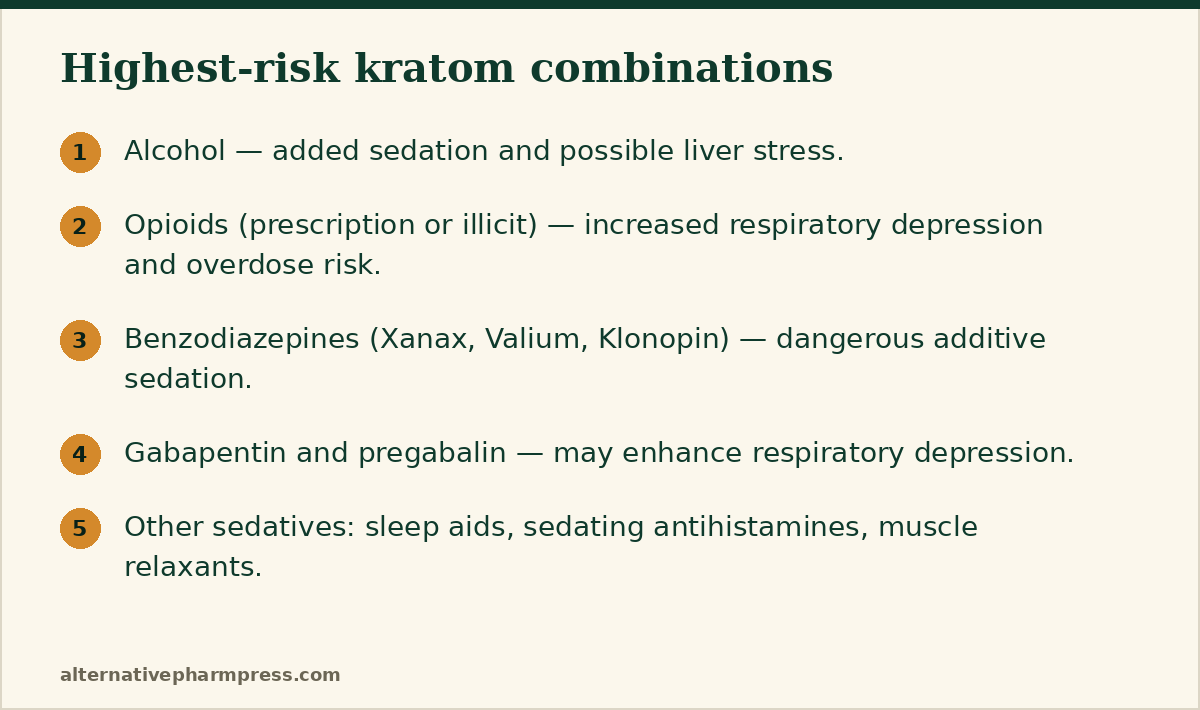
Kratom-associated deaths most often involve multiple substances. Read kratom and alcohol, kratom and gabapentin and can you overdose on kratom?.
Other medications to review
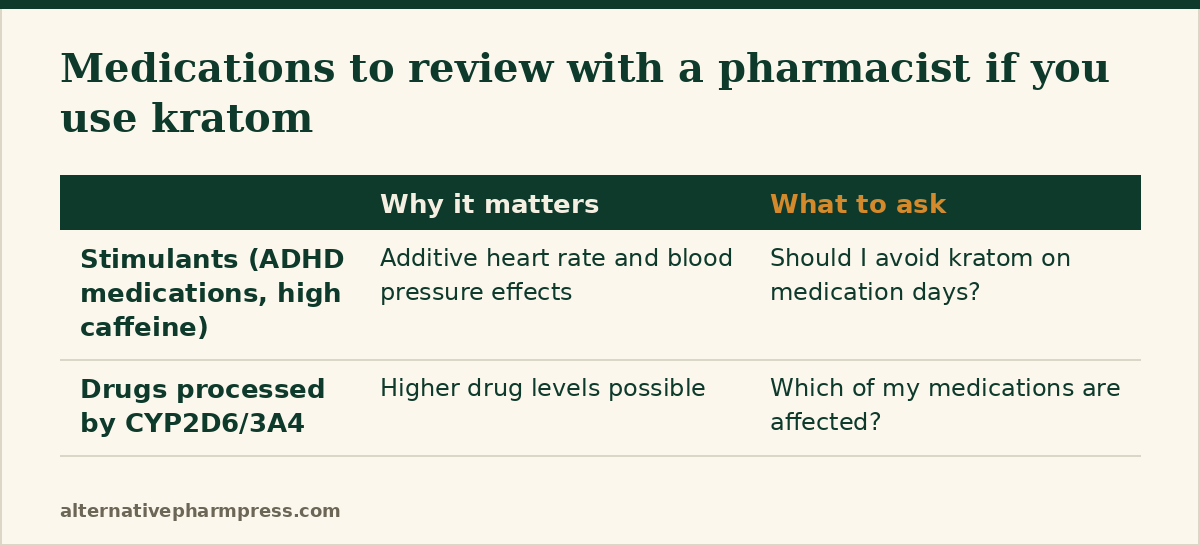
Examples of medications metabolized by CYP2D6 include certain antidepressants, antipsychotics, beta-blockers and some opioids like codeine and tramadol. CYP3A4 processes many drugs, including some statins, calcium channel blockers, immunosuppressants and benzodiazepines.
Kratom and stimulants
Combining kratom with caffeine, energy drinks or prescription stimulants can increase heart rate, blood pressure, anxiety and insomnia. Some case reports describe seizures and heart rhythm problems with kratom, sometimes alongside stimulants. Read kratom and caffeine.
Kratom and antidepressants
Some kratom alkaloids interact with serotonin receptors. Combining kratom with serotonergic drugs could, in theory, contribute to serotonin-related side effects, though evidence is limited. Kratom may also affect the metabolism of some antidepressants. If you take antidepressants, ask your prescriber before using kratom.
Kratom and over-the-counter products
- Sedating antihistamines (diphenhydramine, doxylamine) — added drowsiness.
- Cough syrups with dextromethorphan or codeine — possible interactions.
- Loperamide (Imodium) in high doses — opioid-acting; dangerous at high doses.
- Acetaminophen in high doses — liver stress; kratom has rare liver injury reports.
- Herbal supplements like kava, valerian or kanna — additive effects.
Kratom and other botanicals
Combining kratom with kava, kanna, phenibut or other botanicals increases unpredictability. Read kava vs kratom and kratom vs kanna.
Who is at highest risk
- People taking multiple medications.
- Older adults, who are more sensitive to sedation and falls.
- People with liver or kidney disease.
- People with heart conditions or arrhythmias.
- Anyone with lung disease or sleep apnea.
- People using extracts or 7-OH products, which are more potent. See 7-OH side effects.
Safety checklist
- Make a list of all your medications, supplements and substances.
- Share it with your pharmacist, including kratom.
- Avoid alcohol and sedatives completely when using kratom.
- Don’t combine kratom with opioids or gabapentinoids.
- Use plain leaf, not extracts or 7-OH.
- Space out caffeine and avoid stimulant combinations.
- Watch for warning signs like unusual sleepiness, dizziness, palpitations or confusion.
- Keep naloxone available if you use kratom with any opioid-acting substance.
- Reassess regularly — new prescriptions can create new interactions.
Talking to your pharmacist or doctor
Some people worry about stigma when disclosing kratom use. Pharmacists and doctors need accurate information to keep you safe. You might say: “I use kratom powder, about X grams a day. Could it interact with any of my medications?” Bring product names and lab reports if possible.
Kratom and drug tests
Standard panels don’t usually detect kratom, but specialized tests can. If you’re in a treatment or monitoring program, disclose kratom use to avoid misunderstandings. See does kratom show up on a drug test?.
Kratom and surgery or anesthesia
If you’re scheduled for surgery, tell your surgical team about kratom use. Kratom’s opioid-like effects, tolerance and possible withdrawal can affect anesthesia and pain management after surgery. Clinicians may need to adjust pain medications, plan for withdrawal or monitor breathing more closely. Don’t stop abruptly right before surgery without guidance, as withdrawal could complicate recovery.
Kratom and pregnancy medications
Pregnant people who use kratom may be taking prenatal vitamins, anti-nausea medications or other drugs. Kratom has been associated with neonatal withdrawal. Talk to your prenatal care provider about kratom use so they can plan safely.
Why interaction research is limited
Most information about kratom interactions comes from lab studies on liver enzymes, case reports and analyses of deaths involving multiple substances. Few controlled human studies have examined specific drug combinations. This means the absence of a documented interaction doesn’t guarantee safety. A cautious approach — avoiding high-risk combinations and checking with a pharmacist — is the best strategy.
How much does dose matter?
Interaction risks generally rise with dose. Higher amounts of kratom produce stronger sedation and higher alkaloid levels that may affect liver enzymes more. Concentrated extracts and 7-OH products multiply this risk. People who take kratom several times a day keep alkaloid levels elevated, so interactions with daily medications may be more likely than with occasional use.
Interactions with medications for opioid use disorder
Some people use kratom while taking buprenorphine or methadone, or switch between them. Buprenorphine binds strongly to opioid receptors and can block or displace other opioid-acting substances, which may cause precipitated withdrawal if timed poorly. Methadone combined with kratom may increase sedation and QT-related heart risks. If you’re in treatment for opioid use disorder, tell your treatment team about kratom so they can adjust your plan safely. See Suboxone for kratom withdrawal.
Liver medications and kratom
Kratom has been associated with rare liver injury. People who take medications known to stress the liver — such as high-dose acetaminophen, certain antifungals, some antibiotics, methotrexate or statins in some cases — may face additive risk. If you notice yellowing of the skin or eyes, dark urine or persistent fatigue, stop kratom and seek medical evaluation. Read kratom liver injury.
Building a medication list you can share
Keep an up-to-date list on your phone that includes prescription medications, over-the-counter drugs, vitamins, herbal supplements and substances like kratom, kava or cannabis, with doses and how often you take them. Bring it to every appointment and pharmacy visit. This simple step helps clinicians spot interactions quickly.
Kratom and cannabis
Many people use kratom and cannabis together. Both can cause dizziness, sedation and impaired coordination, and combining them may increase these effects. THC can also raise heart rate, which may add to kratom’s stimulant effects at low doses. Because both substances have variable potency, the combination can feel unpredictable. If you use both, take lower amounts of each, avoid driving and don’t add alcohol. See THC and anxiety for how high-potency THC can trigger panic.
A quick reference for common questions
- Kratom + coffee: usually tolerated in moderation, but can increase jitteriness and heart rate.
- Kratom + ibuprofen: no well-known direct interaction, but both can upset the stomach.
- Kratom + acetaminophen: avoid high acetaminophen doses because of combined liver concerns.
- Kratom + antihistamines: sedating antihistamines add drowsiness.
- Kratom + melatonin: may add to sleepiness.
When in doubt, ask a pharmacist — this list isn’t exhaustive.
FAQ
Can kratom interact with medications?
Yes. Kratom can add to the effects of sedatives and may affect liver enzymes that process many drugs.
Is it safe to mix kratom and alcohol?
No. The combination increases sedation and may stress the liver. Many kratom-associated deaths involve alcohol or other substances.
Can I take kratom with antidepressants?
Ask your prescriber. Kratom may affect serotonin and the metabolism of some antidepressants.
Does kratom interact with blood pressure medication?
Possibly, through liver enzyme effects or additive heart effects. Review your medications with a pharmacist.
Can I take kratom with ADHD medication?
Combining kratom with stimulants may increase heart rate, blood pressure and anxiety. Talk to your prescriber first.
What should I tell my doctor about kratom?
Share what product you use, how much, how often and any other substances or medications you take.