
If you want to inhale CBD, you’ll find two main options: CBD vape juice (e-liquid used in refillable vape devices) and CBD cartridges (pre-filled carts with oil, attached to a battery). Both deliver CBD quickly, but they differ in ingredients, hardware, dosing and risks.
This guide explains how CBD vape juice and cartridges differ, what’s inside each, how devices work, heating byproducts, dosing, safety warnings and what to check before buying. For a broader overview, see our main guide to CBD vapes.
Key takeaways
- CBD vape juice is usually CBD dissolved in PG/VG and flavorings, used in refillable e-cigarette-style devices.
- CBD cartridges typically contain CBD distillate and terpenes in a 510-thread cart.
- Never vape a CBD tincture or oil made for oral use; MCT and other edible oils can harm the lungs.
- Overheating PG/VG can produce formaldehyde and other irritants; cheap hardware can leach metals.
- Choose products with batch-specific COAs, including heavy metals and solvent testing.
What is CBD vape juice?
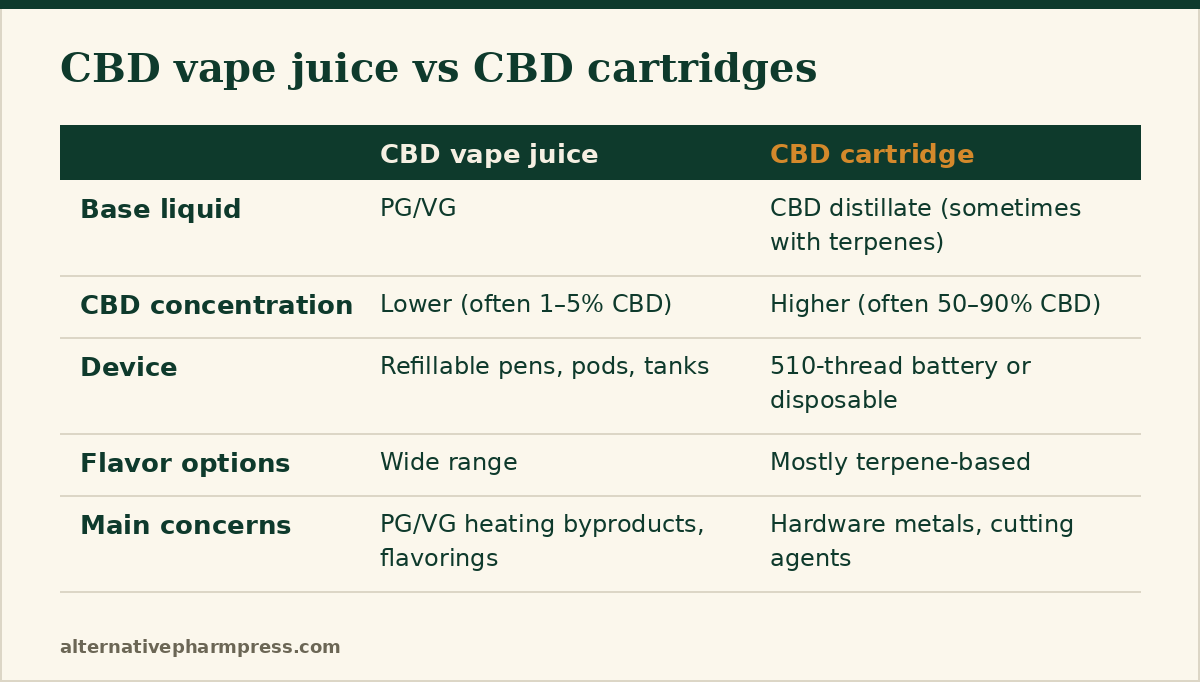
CBD vape juice (e-liquid) is a thin liquid designed for refillable vape pens, pod systems or tank devices — similar to nicotine e-liquids but without nicotine. It typically contains:
- Propylene glycol (PG) — thin, carries flavor, produces “throat hit.”
- Vegetable glycerin (VG) — thicker, produces more vapor.
- CBD — usually isolate or broad-spectrum, made water-dispersible for mixing.
- Flavorings and terpenes.
What is a CBD cartridge?
CBD cartridges contain thicker CBD distillate — a concentrated cannabinoid oil — often mixed with cannabis-derived or botanical terpenes. They screw onto a 510-thread battery or come as part of a disposable device. Cartridges generally contain a much higher concentration of CBD per mL than vape juice.
Side-by-side comparison
Never vape CBD tinctures or oils
Don’t vape oral CBD oils or tinctures. They usually contain MCT, hemp seed, olive or other edible oils. Inhaling oils can cause lipid pneumonia and other lung injuries. Only use products made specifically for vaping.
Heating byproducts
When PG and VG are overheated, they can break down into compounds such as formaldehyde, acetaldehyde and acrolein, which irritate the lungs. Higher wattage and dry coils increase these byproducts. Flavorings add further uncertainty, since many safe-to-eat flavorings haven’t been tested for inhalation. Some flavor chemicals, like diacetyl, are linked to lung damage.
Cartridges avoid PG/VG but face other issues: cutting agents (such as vitamin E acetate, linked to EVALI) and metal leaching from hardware. Read delta-8 carts safety for more on cart hardware and additives.
Device considerations
For vape juice
- Use low wattage settings to reduce overheating.
- Keep coils wet to avoid dry hits.
- Replace coils regularly.
- Use a dedicated device for CBD to avoid mixing with nicotine liquids.
For cartridges
- Choose variable-voltage batteries and start low.
- Avoid ultra-cheap hardware of unknown origin.
- Look for metal testing on filled carts.
- Store carts upright to prevent leaks.
Dosing
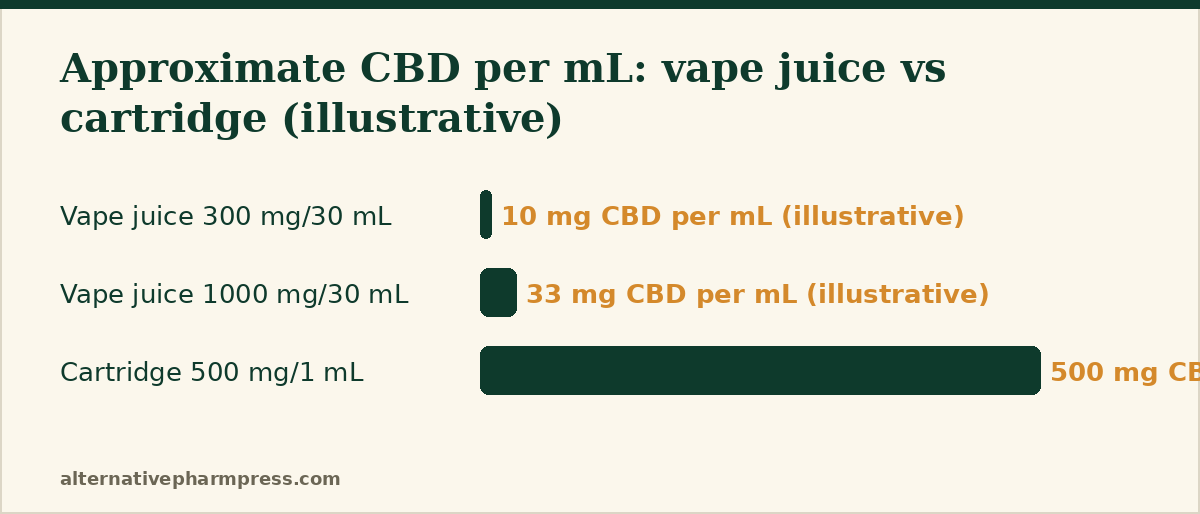
Dosing inhaled CBD is imprecise. With vape juice, calculate mg per mL from the label (total mg divided by mL), but the amount absorbed depends on device, puff length and exhalation. Cartridges deliver more CBD per puff due to higher concentration. Many people start with one or two small puffs and wait about 10 minutes.
Drug tests
Isolate-based vape juices carry lower drug-test risk; full-spectrum or broad-spectrum products may contain THC. Some “CBD” products have been found to contain delta-8 or delta-9 THC. See can CBD fail a drug test? and full-spectrum vs broad-spectrum CBD.
What to check before buying

More tips in what to check when buying CBD online and best CBD brands 2026.
Who should avoid vaping CBD
- People with asthma, COPD or other lung conditions.
- Pregnant or breastfeeding people.
- Anyone under 21.
- People trying to quit nicotine vaping who might be drawn back into the habit.
- Anyone who experiences cough, chest pain or shortness of breath after vaping.
Alternatives to vaping
If you want CBD without lung exposure, consider oils, capsules or gummies. They act more slowly but avoid inhalation risks. See CBD capsules, CBD gummies vs CBD oil and CBD edibles.
Legal status
Hemp-derived CBD vape products are federally legal if they meet THC limits, but many states regulate vaping products, flavors and age limits. Some states restrict flavored vapes or hemp vapes specifically. Federal hemp rule changes in 2026 add limits on THC per container. See the federal hemp THC limit and CBD.
Why some people prefer vape juice
Vape juice users often like the wide range of flavors, the ability to use existing vape devices and lower upfront costs. Because concentrations are lower, each puff delivers less CBD, which some people find easier to control. However, the PG/VG base and flavorings introduce their own inhalation concerns.
Why some people prefer cartridges
Cartridges are compact, convenient and deliver higher CBD per puff. Many contain fewer ingredients — just distillate and terpenes — which may appeal to people wary of flavorings. Hardware quality is the main concern.
Mixing CBD into nicotine e-liquid
Some people add CBD to nicotine e-liquids. This combines the risks of nicotine — addiction, cardiovascular effects — with CBD vaping concerns, and makes dosing unpredictable. It’s better to keep CBD and nicotine products separate, and better still to avoid nicotine entirely.
CBD vape additives: what the research shows
Research on inhaling CBD vape additives is limited, but studies of e-cigarette liquids offer insights. PG and VG are generally recognized as safe to eat, but inhalation is different: they can irritate airways, and overheating creates harmful compounds. Flavorings, especially sweet and dessert flavors, contain chemicals that can be toxic when heated. The EVALI outbreak showed how dangerous certain additives — notably vitamin E acetate — can be when inhaled. Choosing simple formulations with full testing is the best way to reduce unknowns.
Disposal and environmental impact
Disposable CBD pens and used cartridges contain batteries, metal and plastic. Lithium batteries can cause fires in garbage trucks and landfills, so recycle them at designated drop-off sites. Refillable devices produce less waste over time.
Choosing between them
If you value precise, low-concentration dosing and already own a refillable device, vape juice may suit you — with careful attention to wattage and flavor choices. If you want simplicity and fewer ingredients, a well-tested distillate cartridge with quality hardware may be preferable. If you can avoid inhaling CBD altogether, oral or topical formats remove the lung-related concerns entirely.
Additive vape juice vs ready-to-use
Some CBD vape products are “additives” — concentrated CBD liquids designed to be mixed into another e-liquid — while others are ready to use. Additives require careful measuring and mixing to reach the intended concentration, and mixing errors can produce unexpectedly strong or weak liquids. If you use an additive, follow the instructions closely and label the mixed bottle with the final mg per mL.
Signs a product or device is causing problems
Stop vaping and reassess if you notice a harsh or burnt taste, persistent coughing, wheezing, chest tightness, headaches, nausea or unusual fatigue. A burnt taste usually means the coil or wick is dry or the power is too high. Respiratory symptoms that persist after stopping should be checked by a clinician. Tell them exactly which product and device you used.
Price and value comparisons
Vape juice often appears cheaper than cartridges, but it contains less CBD per mL. To compare value, calculate cost per milligram of CBD: divide the price by total milligrams on the COA. Factor in hardware costs — refillable devices and coils for vape juice, or batteries for cartridges — and how quickly you go through a bottle or cart.
FAQ
What’s the difference between CBD vape juice and a CBD cartridge?
Vape juice is CBD in a PG/VG base for refillable devices; cartridges contain concentrated CBD distillate for 510-thread batteries or disposables.
Can I vape CBD oil?
No. Oral CBD oils contain edible oils that can damage the lungs when inhaled. Use only products designed for vaping.
Is CBD vape juice safe?
It carries risks from heating PG/VG and flavorings. Use low wattage, avoid dry hits and choose tested products.
How much CBD is in vape juice?
It varies. A 30 mL bottle with 1,000 mg CBD contains about 33 mg per mL, much less than a typical cartridge.
Will CBD vape juice show up on a drug test?
Isolate-based juices carry lower risk, but full- and broad-spectrum products may contain THC.
Can I use CBD vape juice in my nicotine vape?
You can use the same type of device, but it’s better to use a dedicated device and avoid mixing CBD with nicotine liquids.