
GHK-Cu — a naturally occurring copper-binding peptide — has become one of the most popular ingredients in anti-aging skincare and a fixture in “research peptide” shops. Serums promise firmer, smoother skin; injectable vials promise faster healing, thicker hair and even systemic rejuvenation.
This guide explains what GHK-Cu is, what research shows for skin, wound healing and hair, how topical and injectable uses differ, safety questions and how to evaluate products.
Key takeaways
- GHK-Cu is a tripeptide (glycine-histidine-lysine) bound to copper, found naturally in human plasma, saliva and urine.
- Levels decline with age, which inspired interest in GHK-Cu for skin aging.
- Lab and small human studies suggest topical GHK-Cu may support collagen production, skin firmness and wound healing.
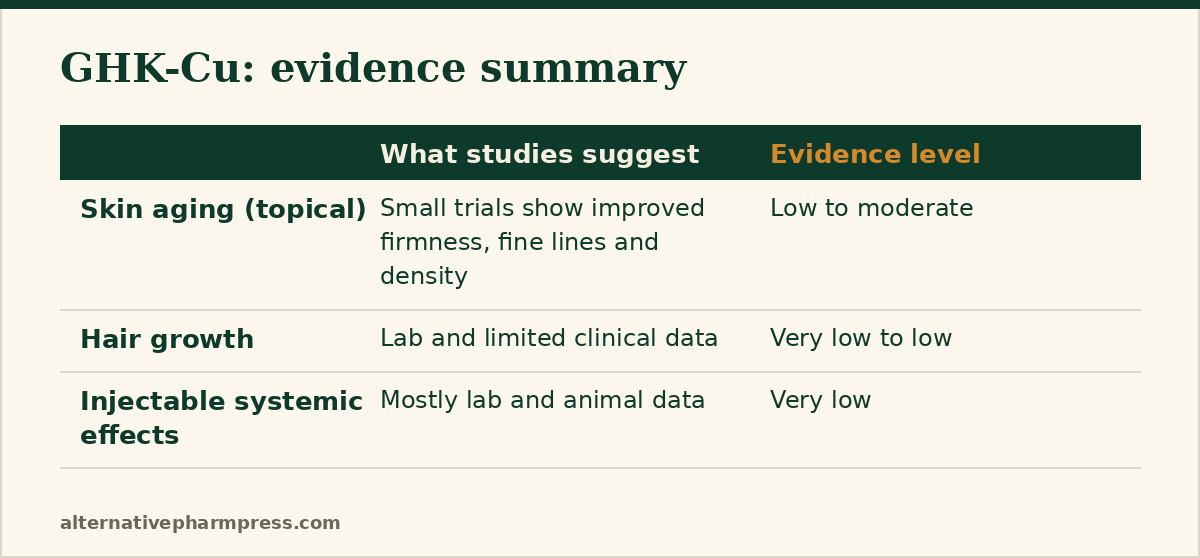
- Evidence for hair growth is limited; evidence for injectable GHK-Cu in humans is very limited.
- Injectable “research” GHK-Cu is unapproved; product quality, sterility and copper dosing are key concerns.
What is GHK-Cu?
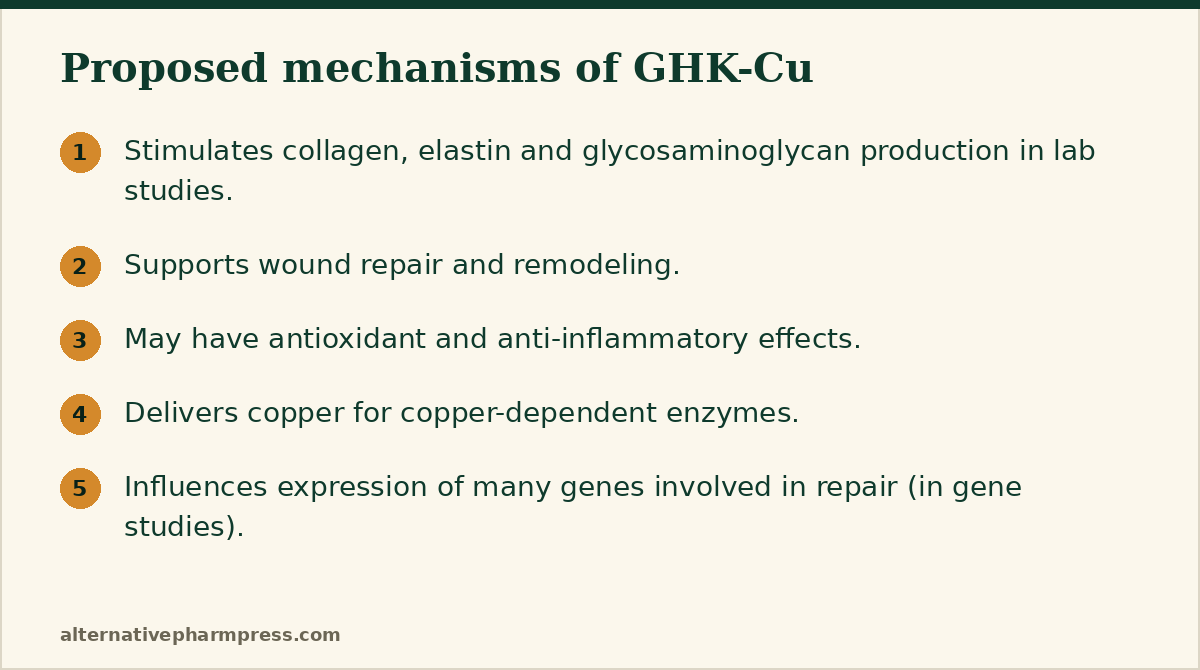
GHK (glycyl-L-histidyl-L-lysine) was identified in the 1970s by researcher Loren Pickart, who found it in human plasma. GHK has a strong affinity for copper ions, forming GHK-Cu. Copper is essential for enzymes involved in collagen formation, antioxidant defense and tissue repair. GHK-Cu levels in plasma decline with age, from roughly 200 ng/mL at age 20 to about 80 ng/mL by age 60, according to early studies. For a glossary entry, see GHK-Cu.
Proposed mechanisms
What the research shows
Skin aging
Several small clinical studies, often industry-sponsored, have tested GHK-Cu creams and serums over 8–12 weeks. Reported improvements include increased skin density and thickness, reduced fine lines, improved firmness and better clarity. Some studies compared GHK-Cu with vitamin C or retinoic acid creams and found comparable effects on certain measures. These studies are small and not always independently replicated.
Wound healing
GHK-Cu has accelerated wound healing in animal studies, and it has been explored in human wound dressings. High-quality human trials are limited.
Hair
Lab studies suggest GHK-Cu may influence hair follicle size and growth phases. Some hair products include copper peptides, but strong clinical evidence for treating hair loss is lacking. Established treatments such as minoxidil and finasteride have much stronger evidence.
Gene expression studies
Computational studies have suggested GHK influences the expression of many human genes involved in repair, inflammation and antioxidant responses. These findings are interesting but don’t demonstrate clinical benefits.
Topical vs injectable GHK-Cu
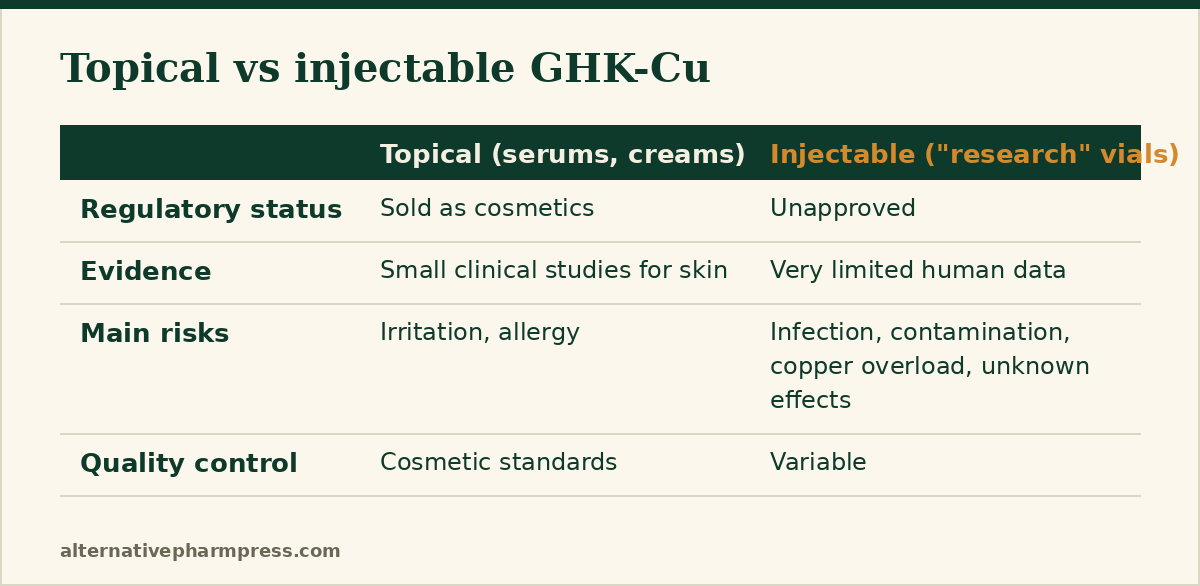
Injectable GHK-Cu is marketed for systemic benefits like recovery, skin and hair, often in combination with BPC-157 or TB-500. Read GHK-Cu vs BPC-157 and research peptides explained.
Safety considerations
Topical
Topical GHK-Cu is generally well tolerated. Possible side effects include irritation, redness and allergic reactions. Copper peptides may interact with strong acids (like high-concentration vitamin C or AHAs) in skincare routines, reducing effectiveness or increasing irritation. Many dermatologists suggest using them at different times of day.
Injectable
Concerns with injectable GHK-Cu include:
- Sterility and endotoxins — non-sterile products can cause infections or inflammation.
- Copper exposure — excess copper can be toxic; people with Wilson’s disease or copper metabolism disorders must avoid it.
- Injection-site reactions — pain, swelling and discoloration have been reported.
- Unknown long-term effects.
- Mislabeling — products may contain different peptides or amounts.
Read how to read a peptide COA and research-use-only meaning.
How to use topical GHK-Cu
- Patch test on a small area first.
- Apply to clean skin, usually once or twice daily.
- Avoid layering with strong acids at the same time.
- Use sunscreen — no skincare ingredient replaces sun protection.
- Give it time — studies typically ran 8–12 weeks.
Evaluating GHK-Cu products
- Concentration — many products don’t list it; look for brands that do.
- Formulation — stability of copper peptides depends on pH and ingredients.
- Color — GHK-Cu is blue; very pale products may contain little peptide.
- Packaging — airtight, opaque containers help preserve stability.
- Testing — reputable brands test for contaminants.
Regulatory status
Topical GHK-Cu is sold as a cosmetic ingredient and doesn’t require FDA approval for cosmetic claims. Injectable GHK-Cu isn’t approved for human use. Regulatory attention to peptides sold for injection has increased. See research peptides in 2026.
GHK-Cu and other skincare ingredients
GHK-Cu is often compared with retinoids, vitamin C and other peptides like matrixyl. Retinoids have the strongest evidence for treating photoaging. Vitamin C supports collagen and provides antioxidant protection. GHK-Cu may complement these, but it’s not a replacement for evidence-based skincare.
Who should avoid GHK-Cu
- People with copper allergies or Wilson’s disease.
- Those with active skin infections or open wounds (unless guided by a clinician).
- Anyone pregnant or breastfeeding considering injectable products.
- People with a history of cancer, due to theoretical concerns about growth-promoting effects (discuss with a clinician).
GHK-Cu in microneedling and clinic treatments
Some aesthetic clinics apply copper peptide serums after microneedling or laser treatments, hoping to support healing. Applying any product to freshly microneedled skin increases absorption and the risk of irritation or infection if products aren’t sterile. Clinic-grade products used in controlled settings differ from home DIY approaches. If you’re considering this, ask the provider about product sterility and evidence.
Why the blue color matters
GHK-Cu gives products a characteristic blue color because of the copper complex. A product claiming high copper peptide content that’s colorless may contain very little GHK-Cu, or a different peptide. Color isn’t a precise measure, but it can be a quick sanity check.
Realistic expectations for topical use
Even in favorable studies, improvements from GHK-Cu creams were gradual and modest — subtle changes in firmness, texture and fine lines measured over two to three months. GHK-Cu isn’t a substitute for sunscreen, retinoids or professional treatments for deeper wrinkles. Combining a consistent routine with sun protection, sleep and not smoking will usually make a bigger difference than any single ingredient.
The “copper uglies” effect
Some users of high-concentration copper peptide products report temporary dullness, uneven texture or rough skin, sometimes nicknamed “copper uglies.” This effect isn’t well studied, but it’s thought to relate to overuse or high concentrations. Using products as directed and avoiding layering multiple copper-containing products may reduce the risk.
Building a skincare routine with GHK-Cu
A simple routine that includes copper peptides might look like this:
- Morning: gentle cleanser, vitamin C serum (if used), moisturizer and broad-spectrum sunscreen.
- Evening: cleanser, GHK-Cu serum, moisturizer.
- Alternate evenings: retinoid on some nights and GHK-Cu on others, if your skin tolerates both.
Introduce one new product at a time, two to three weeks apart, so you can identify the cause of any irritation. If you have a skin condition such as rosacea or eczema, ask a dermatologist before adding active ingredients.
Why injectable peptide trends spread
Injectable GHK-Cu gained popularity through social media, longevity clinics and peptide communities. Its appeal often comes from extrapolating topical and lab findings to whole-body effects. Without clinical trials testing injectable GHK-Cu for specific outcomes, it’s difficult to know whether these extrapolations hold. Peptide sellers’ “research use only” labels also mean no one is responsible for confirming safety for human use.
Storage of copper peptide products
Copper peptide serums can degrade with heat, light and air. Keep them tightly closed in a cool place, use them within the period recommended on the label and discard products that change color or smell unusual.
Copper and health
Copper is an essential trace mineral, but too much can be harmful, causing nausea, abdominal pain, liver damage and, in severe cases, neurological problems. Most people get enough copper from diet. Topical GHK-Cu delivers very little copper systemically, but repeated injections add copper directly to the body. People with liver disease or copper metabolism disorders should avoid injectable copper peptides.
FAQ
What are the benefits of GHK-Cu?
Small studies suggest topical GHK-Cu may improve skin firmness, density and fine lines and support wound healing. Evidence for hair growth and injectable use is limited.
Is GHK-Cu safe?
Topical GHK-Cu is generally well tolerated. Injectable products carry risks related to sterility, copper exposure and unknown long-term effects.
Does GHK-Cu help hair growth?
Lab studies are promising, but strong clinical evidence is lacking. Minoxidil and finasteride have much stronger evidence.
Can I use GHK-Cu with vitamin C?
Many dermatologists recommend using them at different times of day, since strong acids may reduce copper peptide effectiveness or increase irritation.
Is injectable GHK-Cu legal?
It isn’t FDA-approved for human use and is sold as a research chemical.
Can GHK-Cu replace retinol?
Not really. Retinoids have much stronger evidence for treating photoaging. GHK-Cu may complement a routine but isn’t a direct replacement.
Is GHK-Cu good for sensitive skin?
Many people with sensitive skin tolerate copper peptides better than retinoids or acids, but patch testing is still wise.
How long does GHK-Cu take to work on skin?
Studies typically measured results after 8–12 weeks of consistent use.