
For people who want a simple, consistent way to take CBD, capsules and softgels are an appealing choice. They’re tasteless, portable and pre-measured — no droppers or sugar-coated gummies. But capsules also have slower onset and lower absorption than some other formats.
This guide covers how CBD capsules work, their pros and cons, absorption and onset, dosing considerations, safety and interactions, drug-test risk and how to choose a quality product.
Key takeaways
- CBD capsules deliver a fixed dose per capsule, usually 10–50 mg.
- Oral CBD has low bioavailability (often estimated around 6–20%); taking it with a fatty meal can increase absorption significantly.
- Effects typically start in 30 minutes to 2 hours and last 4–8 hours.
- CBD can interact with medications, and high doses can affect liver enzymes.
- Choose capsules with a batch-specific COA, clear CBD per capsule and known THC content.
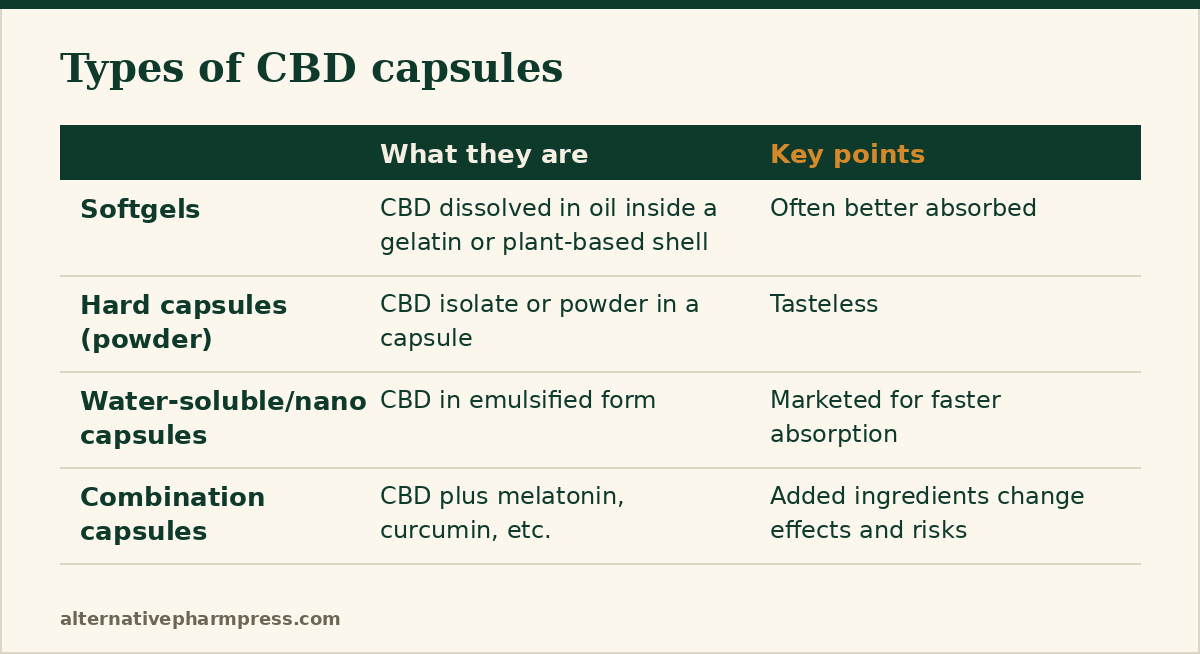
Types of CBD capsules
Pros and cons
Pros:
- Precise, consistent dosing.
- No taste — useful for people who dislike hemp flavor.
- Convenient and discreet.
- No sugar compared with gummies.
- Easy to add to a supplement routine.
Cons:
- Slower onset than oils or vapes.
- Lower bioavailability due to digestion and liver metabolism.
- Less flexible dosing — harder to adjust in small increments.
- May contain gelatin, which isn’t suitable for everyone.
Absorption and the food effect
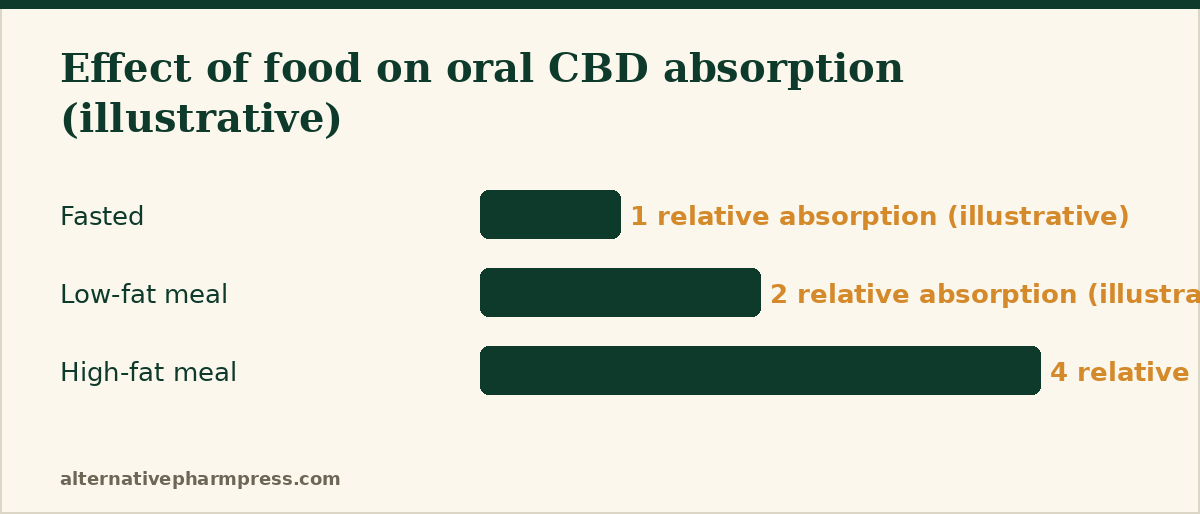
This chart is illustrative. Pharmacokinetic studies have shown that taking oral CBD with a high-fat meal can increase blood levels several-fold compared with taking it on an empty stomach. For consistent results, take capsules with food at similar times each day.
Capsules vs oils vs gummies
| Feature | Capsules | Oil (sublingual) | Gummies |
|---|---|---|---|
| Onset | 30 min–2 hrs | 15–60 min | 30 min–2 hrs |
| Dose precision | High | Adjustable | High |
| Taste | None | Earthy | Sweet |
| Sugar | None | None | Often |
| Flexibility | Low | High | Low |
See CBD gummies vs CBD oil, CBD tincture vs CBD oil and CBD edibles.
Dosing considerations
Retail capsules commonly contain 10, 25 or 50 mg of CBD. Research doses vary widely — from about 25 mg to several hundred milligrams daily — depending on the condition studied. The prescription CBD medicine Epidiolex is dosed by body weight at much higher levels for certain seizure disorders.
A practical approach many clinicians suggest:
- Start with a low daily dose (for example, 10–25 mg).
- Take it with food at the same time each day.
- Keep it consistent for at least a week before adjusting.
- Increase gradually if needed, tracking effects and side effects.
- Talk to a clinician if you take medications or have health conditions.
What people use CBD capsules for
Common reasons include stress, sleep, pain and general wellness. Evidence varies by use: CBD has strong evidence for certain rare seizure disorders (as Epidiolex), while research for anxiety, sleep and pain is more limited and mixed. Read CBD for sleep: what human trials found and CBD gummies for pain relief.
Side effects
- Drowsiness or fatigue.
- Diarrhea or stomach upset.
- Changes in appetite or weight.
- Elevated liver enzymes at higher doses, especially with certain medications.
Drug interactions
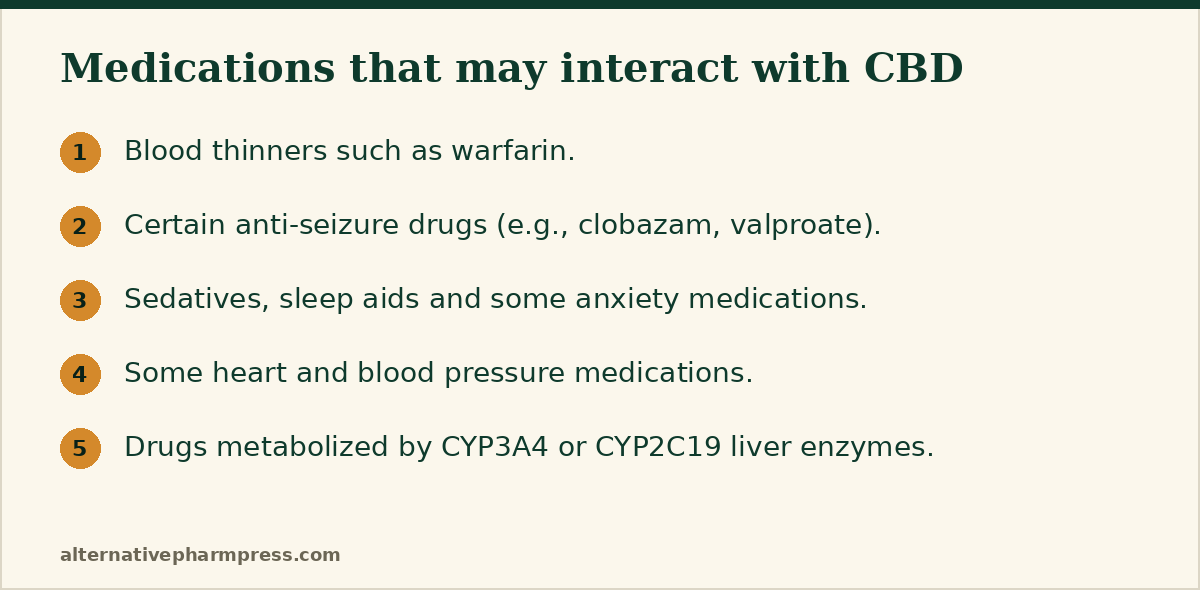
CBD inhibits liver enzymes that process many medications, which can increase drug levels. Always tell your doctor or pharmacist you take CBD. See CBD and blood pressure medication.
Drug tests
Full-spectrum capsules contain small amounts of THC; daily use may lead to a positive drug test. Broad-spectrum and isolate capsules carry lower risk, but mislabeling happens. See can CBD fail a drug test? and full-spectrum vs broad-spectrum CBD.
How to choose CBD capsules
- Batch-specific COA showing CBD per capsule and THC levels.
- Contaminant testing — heavy metals, pesticides, residual solvents, microbes.
- Spectrum that fits your needs.
- Capsule material — gelatin or vegan.
- Added ingredients — melatonin, botanicals or vitamins.
- No disease claims.
For brand reviews, see best CBD brands 2026 and what to check when buying CBD online.
Who should be cautious
- People pregnant or breastfeeding.
- Those with liver disease.
- Anyone taking multiple medications.
- Children, except under medical supervision.
Water-soluble and “nano” CBD claims
Some capsules use water-soluble or “nano-emulsified” CBD, marketed as dramatically more bioavailable. Emulsification can improve absorption in some studies, but claims like “10x absorption” are often based on small or company-funded tests. If you choose these products, compare cost per milligram and look for independent data.
Taking CBD capsules with other supplements
Many people take CBD alongside other supplements such as magnesium, melatonin, fish oil or turmeric. Combining CBD with sedating supplements like melatonin, valerian or kava may increase drowsiness. Curcumin and some other botanicals may also affect liver enzymes. If you take several supplements, keep a list and review it with a pharmacist.
Legal status
Hemp-derived CBD capsules are federally legal if they meet THC limits, though the FDA hasn’t approved CBD as a dietary supplement. State rules vary. Federal changes in 2026 add THC-per-container limits that can affect full-spectrum products. See the federal hemp THC limit and CBD.
When to take CBD capsules
Timing depends on your goals. People using CBD for sleep often take it one to two hours before bed, while those using it for daytime stress may take it in the morning with breakfast. Because capsules last several hours, some people split their daily amount into two doses. Whatever timing you choose, consistency helps you judge whether it’s working.
How long to try before deciding
Some people notice effects within days, while others need several weeks of consistent use to judge results. A reasonable trial might be four to six weeks at a stable dose, tracking the symptom you care about — such as sleep quality, stress levels or pain. If you don’t see meaningful improvement, it may not be worth continuing, especially given the cost.
Storage
Keep capsules in a cool, dry place away from sunlight, in the original container with the lid tightly closed. Softgels can soften or stick together in heat. Check expiration dates.
Reading the label correctly
Capsule labels can be confusing. Some list total CBD per bottle (for example, 1,500 mg), while others list CBD per capsule (for example, 25 mg). A bottle of 60 capsules at 25 mg each contains 1,500 mg total. Some labels list “hemp extract” or “full-spectrum hemp oil” amounts rather than CBD content, which can overstate how much CBD you’re actually getting. Look for “CBD per capsule” on the label and confirm it on the COA.
Calculating value
To compare products, calculate cost per milligram of CBD: divide the price by total milligrams of CBD in the bottle. For example, a $60 bottle containing 1,500 mg of CBD works out to $0.04 per mg. Compare that with other brands using the COA’s actual CBD content rather than the label claim. Lower cost per milligram isn’t always better if testing is incomplete, but it helps you spot overpriced products.
Capsules for specific needs
Sleep
Some “sleep” capsules combine CBD with melatonin, CBN or herbal ingredients. If you’re sensitive to melatonin or already take it, check the amount. Read CBN vs melatonin and CBN for sleep.
Daytime use
People who want to avoid any drowsiness may prefer lower doses and isolate or broad-spectrum products, taken with breakfast. If you feel sleepy, try moving your dose to the evening.
Older adults
Older adults may be more sensitive to drowsiness and dizziness and are more likely to take medications that interact with CBD. Starting low and reviewing medications with a pharmacist is especially important.
FAQ
Are CBD capsules effective?
They deliver consistent doses, but oral CBD has low bioavailability. Effectiveness depends on dose, timing with food and individual response.
How long do CBD capsules take to work?
Usually 30 minutes to 2 hours, with effects lasting four to eight hours.
Should I take CBD capsules with food?
Yes. Taking oral CBD with a meal, especially one containing fat, can significantly increase absorption.
Are CBD capsules better than oil?
Capsules offer convenience and no taste; oils allow flexible dosing and may act slightly faster. The best choice depends on your preferences.
Can CBD capsules interact with medications?
Yes. CBD can affect liver enzymes that process many drugs. Check with a pharmacist.
Can I open a CBD capsule and mix it into food?
Powder capsules can usually be opened, and softgel contents can be squeezed out, but it’s messy and may waste some CBD. Check the label first.
Are vegan CBD capsules available?
Yes. Many brands use plant-based capsule shells made from cellulose or pullulan instead of gelatin.
Will CBD capsules make me fail a drug test?
Full-spectrum capsules can, with frequent use. Broad-spectrum and isolate products carry lower risk.