
Kava (Piper methysticum) has been used for centuries in the Pacific Islands, and today it’s sold in kava bars, powders, capsules and canned drinks. Many people describe it as relaxing and sociable without heavy intoxication. But kava side effects are real, and the most serious — liver injury — led several countries to restrict kava in the early 2000s.
This guide covers what’s known about kava’s side effects: liver risk and what may cause it, skin changes, digestive and neurological effects, driving impairment, drug interactions, who should avoid kava and practical ways to reduce risk.
Key takeaways
- Most short-term side effects are mild: numb mouth, stomach upset, headache and drowsiness.
- Liver injury is rare but serious; risk appears higher with solvent extracts, non-root plant parts, poor-quality or tudei kava, heavy use and alcohol.
- Heavy long-term use can cause kava dermopathy, a dry, scaly skin condition that usually reverses after stopping.
- Kava can impair driving and interacts with alcohol, sedatives and some medications.
- Choose noble kava root, avoid mixing with alcohol and stop if you notice signs of liver problems.
Common short-term side effects
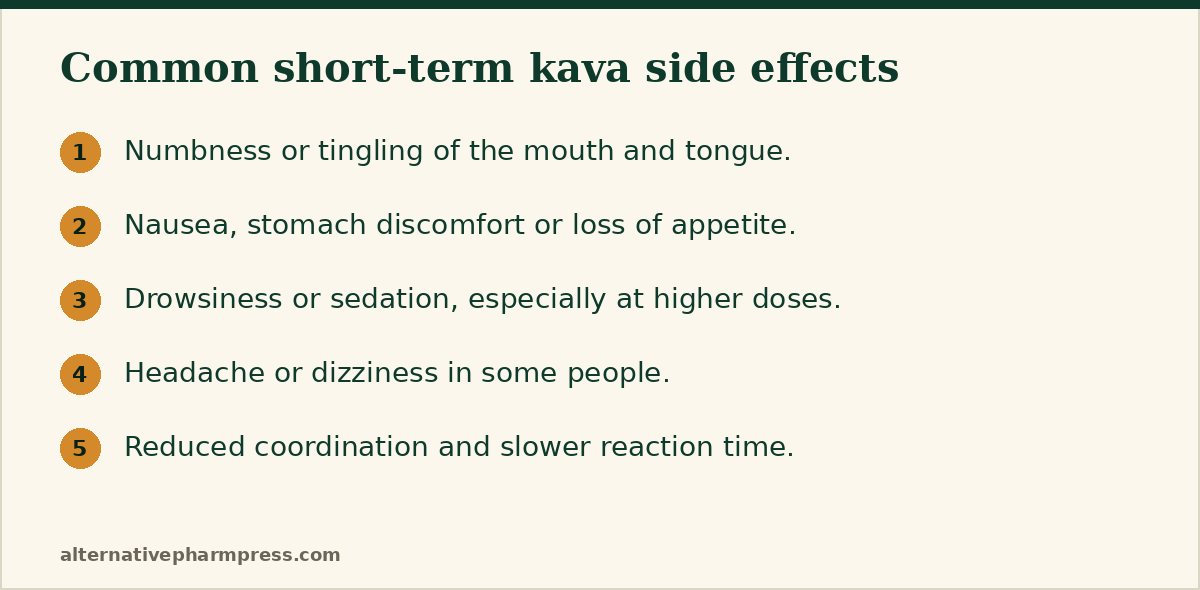
Mouth numbness is expected — it’s caused by kavalactones acting as local anesthetics. Stomach upset is common with strong traditional brews or when drinking on an empty stomach. For an introduction to kava, see what is kava? and kava drinks.
Kava and liver injury
What happened in Europe
In the late 1990s and early 2000s, reports emerged in Germany, Switzerland and other countries of liver injury in people taking kava supplements, including cases requiring transplants. Regulators in several countries banned or restricted kava. The U.S. FDA issued a consumer advisory in 2002.
What may have caused the cases
Later reviews identified several possible contributing factors:
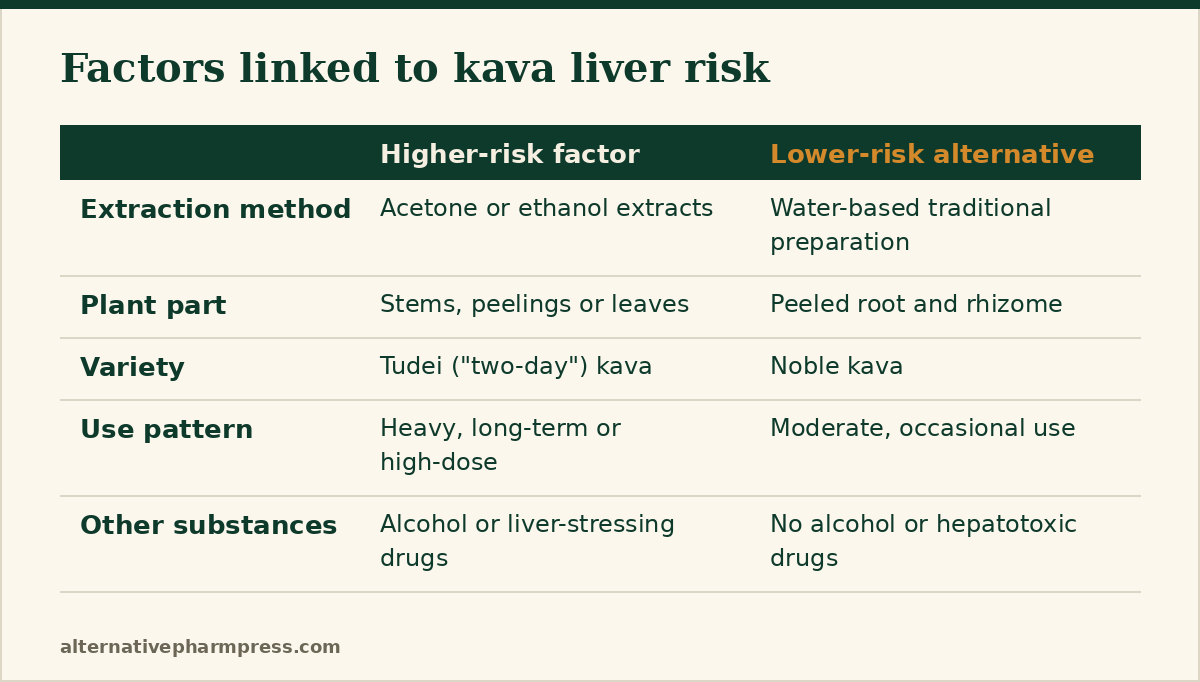
Some researchers also suspect mold contamination (aflatoxins), compounds called flavokavains (higher in tudei kava) or individual genetic differences in liver enzymes. Germany’s ban was overturned by a court in 2014, and the World Health Organization has issued guidance emphasizing water-based preparations from noble kava root.
How common is liver injury?
Liver injury from kava appears to be rare, especially with traditional water-based preparations. However, because it can be severe, any signs of liver problems should be taken seriously.
Warning signs of liver injury
- Yellowing of the skin or eyes (jaundice).
- Dark urine or pale stools.
- Unusual fatigue or weakness.
- Nausea, vomiting or loss of appetite.
- Pain in the upper right abdomen.
- Itching without a rash.
Stop kava and seek medical care if these occur. Liver tests can help identify problems early.
Kava dermopathy
Heavy, long-term kava drinkers can develop kava dermopathy — dry, scaly, yellowish skin, often on the palms, soles, back and shins. It’s associated with very high consumption, such as daily heavy drinking in some Pacific communities. The condition typically resolves after reducing or stopping kava. Some researchers have explored links with niacin metabolism, but the mechanism isn’t fully understood.
Other side effects with heavy use
Studies of heavy kava drinkers have described:
- Weight loss and reduced appetite.
- Changes in blood tests, such as elevated liver enzymes (GGT) and lower albumin.
- Shortness of breath and fatigue in some reports.
- Eye irritation or red eyes.
- Rare neurological effects — movement disorders have been reported in isolated cases.
Kava and driving
Kava can slow reaction time and impair coordination. In the U.S., some drivers have been charged with driving under the influence after drinking large amounts of kava. Avoid driving or operating machinery after drinking kava, especially in larger amounts.
Drug interactions
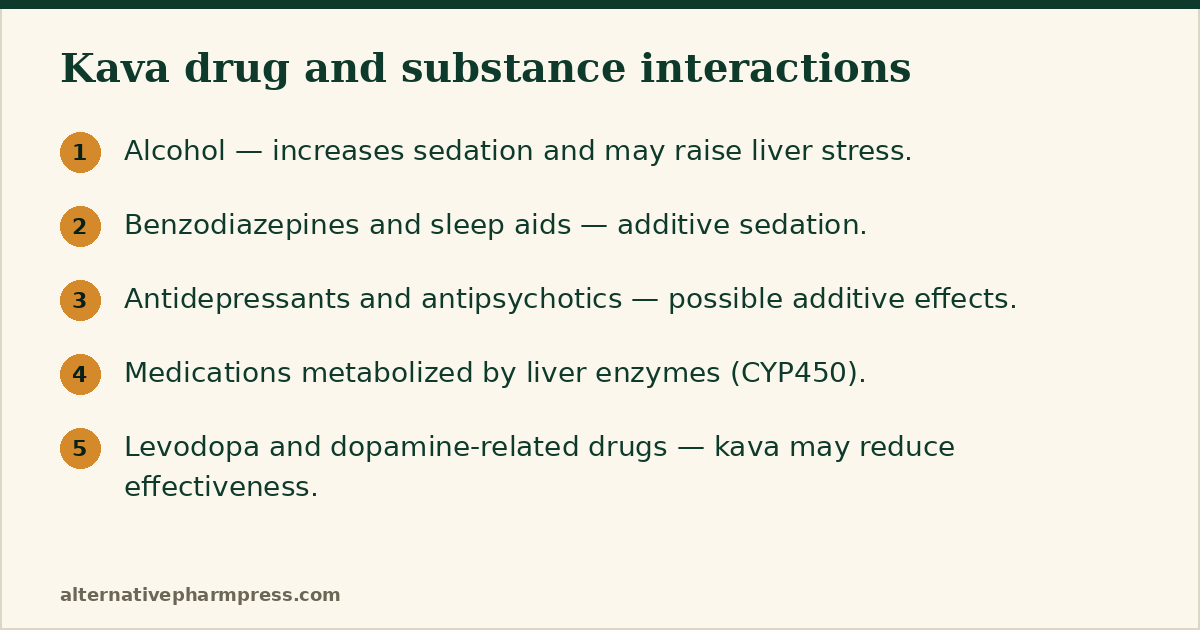
Kava may affect cytochrome P450 enzymes involved in metabolizing many drugs. If you take prescription medications — especially for anxiety, sleep, depression, seizures, Parkinson’s disease or pain — talk with a pharmacist or doctor before using kava.
Who should avoid kava
- People with liver disease or elevated liver enzymes.
- Anyone who drinks alcohol regularly or heavily.
- People taking hepatotoxic medications such as high-dose acetaminophen or certain antifungals.
- Pregnant or breastfeeding people.
- People with Parkinson’s disease or taking levodopa.
- People with depression or on psychiatric medications, without medical guidance.
- Anyone under 18.
- Anyone about to have surgery (stop at least two weeks before, due to sedation interactions).
How to lower your risk
- Choose noble kava from reputable vendors.
- Use root-only products, not stems or leaves.
- Prefer water-based preparations over solvent extracts.
- Don’t mix with alcohol or other sedatives.
- Use in moderation — avoid daily heavy use.
- Take breaks periodically.
- Look for lab testing, including heavy metals, microbes and tudei screening.
- Get liver tests if you use kava regularly or have risk factors.
Is kava addictive?
Kava appears to have low addiction potential compared with alcohol or opioids, and withdrawal symptoms are uncommon. Some people do develop habits of heavy use. Read is kava addictive? for more.
Kava vs other relaxation options
People often compare kava with kratom, kanna and alcohol. These substances have very different risk profiles. Kratom acts on opioid receptors and carries dependence risk; kanna affects serotonin; alcohol is far more toxic to the liver than moderate kava for most people. See kava vs kratom and kava vs kanna.
Side effects of kava supplements vs beverages
Most liver injury reports involved concentrated supplements — tablets and capsules made from solvent extracts — rather than traditional beverages. Capsules can also deliver kavalactones more conveniently in higher doses. Canned kava drinks vary; some contain modest kavalactone levels, others are stronger and may include additional botanicals. Read labels carefully.
Kava and mental health
Kava has been studied for anxiety, with mixed results; some trials found modest benefits and others found none. Kava isn’t a substitute for treatment of anxiety disorders, and people with depression should be cautious because sedatives can sometimes worsen low mood. See best supplements for anxiety for an evidence overview.
How long do kava side effects last?
Most short-term side effects, such as mouth numbness, mild nausea and drowsiness, fade within a few hours as kavalactone levels fall. Some people feel groggy the next morning after a large session. Skin changes from heavy use typically improve over weeks after stopping. Liver injury, if it occurs, requires medical evaluation and may take weeks to months to resolve; in rare severe cases, it can be life-threatening.
Tips for first-time kava drinkers
If you’re trying kava for the first time, start with a small serving of noble kava and wait at least 30 minutes before having more. Drink in a safe, comfortable setting, avoid alcohol and don’t plan to drive. Eat lightly beforehand if you’re prone to nausea. Notice how you feel the next day too — some people experience mild grogginess. If you take any prescription medications, check with a pharmacist first.
Kava and alcohol: why the combination worries experts
Kava bars are often promoted as alcohol-free spaces, but some people drink kava and alcohol on the same night. Both are depressants that can impair coordination and judgment, and the combination may increase sedation more than either alone. Some laboratory research suggests alcohol may increase the absorption of kavalactones, and alcohol itself places stress on the liver. Many of the European liver injury cases involved people who also drank alcohol or took other liver-stressing medications. If you enjoy kava, keeping it separate from alcohol is one of the simplest ways to reduce risk.
What liver tests can show
For regular kava drinkers, a simple blood test called a liver function panel can check levels of enzymes such as ALT, AST, ALP and GGT, along with bilirubin. Studies of heavy kava users in Pacific communities and Australia have often found raised GGT, which typically returns toward normal after cutting back. A single abnormal result doesn’t necessarily mean serious damage, but it’s a signal to talk with a clinician and consider pausing kava. If you have other risk factors, such as heavy drinking, fatty liver disease or viral hepatitis, regular monitoring makes even more sense.
Reading kava product labels
Useful labels list the kava variety (ideally noble), country of origin, plant part (root or rhizome), kavalactone content per serving and preparation method. Be wary of products that don’t specify the plant part, use vague terms like “kava blend,” or make strong claims about treating anxiety or insomnia. Third-party testing for heavy metals, microbes and tudei screening adds further reassurance.
FAQ
What are the most common kava side effects?
Numb mouth, stomach upset, drowsiness, headache and reduced coordination are most common.
Is kava bad for your liver?
Rare but serious liver injury has been reported, mainly linked to solvent extracts, poor-quality kava, heavy use and alcohol. Traditional water-based noble kava appears lower risk.
What is kava dermopathy?
A dry, scaly skin condition seen in heavy long-term kava drinkers. It usually resolves after reducing or stopping kava.
Can I drink alcohol with kava?
It’s not recommended. Combining them increases sedation and may increase liver stress.
Does kava interact with medications?
Yes. It can interact with sedatives, some antidepressants, Parkinson’s medications and drugs metabolized by liver enzymes. Check with a pharmacist.
Is it safe to drink kava every day?
Daily heavy use increases the risk of skin changes and liver effects. Moderate, occasional use of noble kava appears lower risk, but periodic breaks and liver monitoring are sensible for regular users.