
Walk into many smoke shops or browse online hemp stores and you’ll find jars of dense, frosty buds that look, smell and smoke like marijuana. They’re labeled THCA flower and sold as legal hemp. For several years, this product occupied one of the biggest gray zones in cannabis law.
This guide explains what THCA flower is, how it was sold legally, why testing methods matter, how federal and state rules are changing, what effects to expect, drug test implications and what to look for on a lab report.
Key takeaways
- THCA flower is cannabis flower high in THCA but under 0.3% delta-9 THC at testing.
- When smoked or vaporized, THCA converts into delta-9 THC, producing a marijuana-like high.
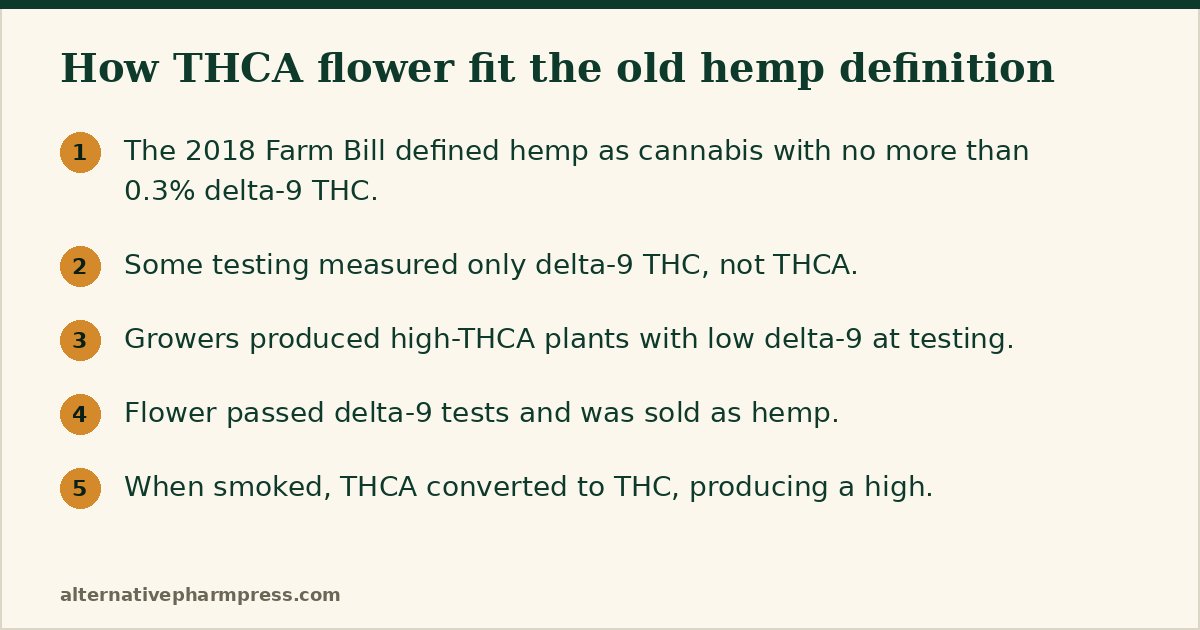
- The 2018 Farm Bill measured delta-9 only, which created the THCA loophole; total THC testing closes it.
- Federal legislation passed in late 2025 moves hemp to a total-THC standard and restricts intoxicating hemp products.
- THCA flower will cause positive drug tests and is banned or restricted in many states.
What is THCA flower?
Cannabis plants produce THCA (tetrahydrocannabinolic acid) rather than THC. THCA isn’t intoxicating in raw form because it doesn’t bind effectively to CB1 receptors. When heated — smoked, vaped or baked — THCA undergoes decarboxylation and becomes delta-9 THC. For the science, read does THCA get you high? and THCA vs delta-9 THC.
High-THCA cannabis grown to have low delta-9 levels at harvest can technically meet a delta-9-only definition of hemp. Chemically, though, it’s equivalent to marijuana once lit.
How the loophole worked
Total THC vs delta-9 testing
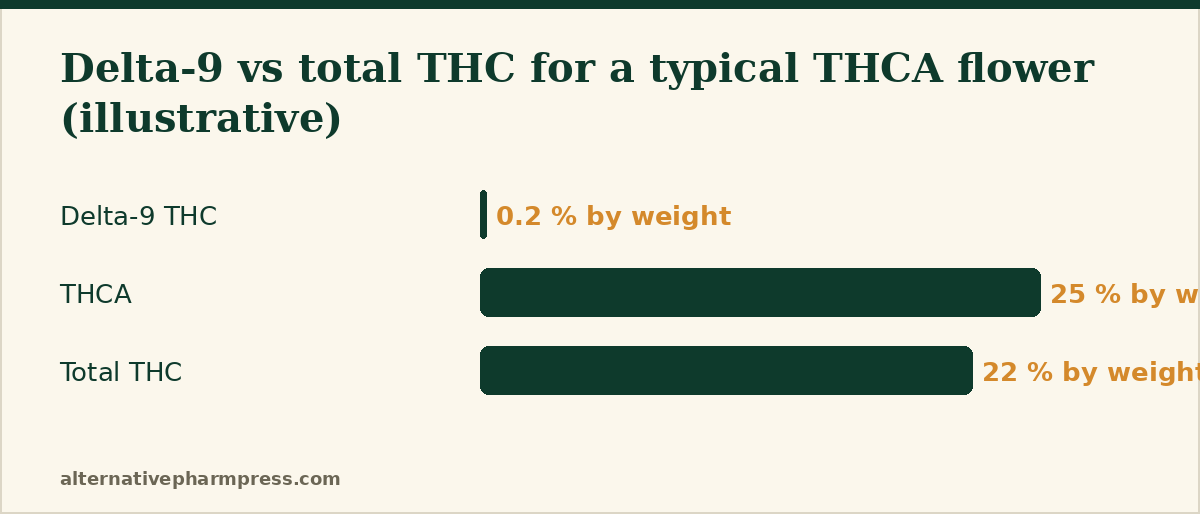
USDA rules for hemp crops required pre-harvest testing using total THC (delta-9 plus THCA × 0.877) or a method that accounts for decarboxylation. But rules for finished products and retail sales were less clear, and some sellers relied on delta-9-only results. A flower with 25% THCA and 0.2% delta-9 THC has about 22% total THC — far above the 0.3% limit under a total-THC standard.
Federal changes
In late 2025, Congress passed legislation that redefines hemp using a total-THC standard and restricts intoxicating hemp-derived products, with implementation and enforcement timelines extending into 2026. This change directly affects THCA flower. Read federal hemp law 2026 explained, hemp ban 2026 and is THCA legal after December 11, 2026?.
State laws
States have taken different approaches:
- Total THC standards that effectively ban THCA flower outside licensed cannabis markets.
- Bans on smokable hemp.
- Age limits and licensing for hemp retailers.
- Specific bans on intoxicating hemp products.
- Legal adult-use cannabis markets, where high-THC flower is sold through licensed dispensaries instead.
Rules change frequently. See THCA legal status by state and is THCA legal in Texas?.
Effects of THCA flower
Smoked or vaporized THCA flower produces effects similar to marijuana: euphoria, relaxation, altered perception, increased appetite and, at higher doses, anxiety or paranoia. Potency depends on THCA content, cultivar and how it’s consumed. Read THC and anxiety and indica vs sativa.
THCA flower vs other hemp products
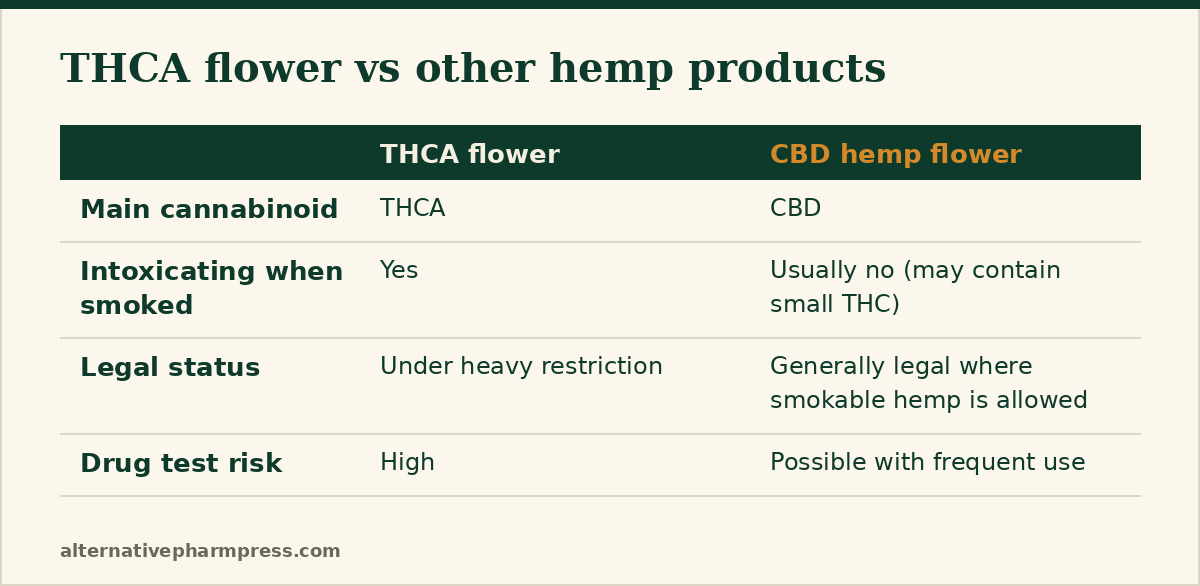
Compare further in THCA vs delta-8, THCA vs CBD and CBD vs hemp vs THC.
Drug tests
Smoking THCA flower produces THC, which is metabolized into THC-COOH — the main target of drug tests. THCA flower will cause positive results just like marijuana. Read how long THCA stays in your system.
What to check on a THCA flower COA
- THCA, delta-9 THC and total THC values.
- Testing date — THCA can convert to THC over time, raising delta-9 levels in stored flower.
- Pesticides, heavy metals and microbes — mold and yeast testing is important for flower.
- Moisture content and water activity, related to mold risk.
- Batch number matching the product, from an accredited lab.
- Lab accreditation (ISO/IEC 17025).
A COA that lists only delta-9 THC without THCA or total THC is incomplete.
Health and safety considerations
- Smoking risks — combustion produces tar and irritants; vaporizing reduces but doesn’t eliminate exposure.
- Mental health — high-THC use is linked to anxiety, dependence and, in vulnerable people, psychosis.
- Impaired driving — never drive after use.
- Accidental ingestion — keep away from children and pets.
- Pregnancy and breastfeeding — avoid.
- Drug interactions — THC can interact with sedatives and some medications.
Why the loophole mattered
THCA flower allowed high-THC cannabis to be sold in states without legal marijuana markets, often without the testing, packaging and age-verification requirements of licensed dispensaries. Supporters argued it gave adults access and supported hemp farmers. Critics pointed to public health concerns, youth access and unfair competition with regulated cannabis businesses. The federal shift to total THC reflects these debates.
What happens to THCA flower now?
As federal and state rules tighten, many hemp businesses are reformulating, exiting the THCA market or shifting to states with licensed cannabis programs. Consumers in states with adult-use cannabis can buy regulated flower from dispensaries. In states without legal cannabis, THCA flower access is likely to shrink. Read hemp ban product impact for how different product categories are affected.
How THCA changes during storage
THCA slowly converts to delta-9 THC over time, especially with heat, light and air exposure. A flower that tested under 0.3% delta-9 at harvest can exceed that level months later. This “decarb drift” created legal headaches for sellers and is another reason total-THC testing is considered more meaningful. Store flower in airtight, opaque containers in a cool place to slow degradation.
THCA flower quality factors
Beyond legal questions, consumers judge flower by appearance, aroma and effects. Quality indicators include:
- Trichome coverage — frosty, resinous buds.
- Aroma — strong, pleasant terpene profile.
- Moisture — not too dry or too damp.
- Cure — properly dried and cured flower smokes smoother.
- Clean testing — no mold, pesticides or heavy metals.
Common myths about THCA flower
“THCA flower is legal everywhere because it’s hemp.” Many states ban or restrict it, and federal rules are tightening.
“THCA flower won’t show up on a drug test.” Smoking it produces THC metabolites, causing positive results.
“THCA flower is weaker than marijuana.” Once heated, high-THCA flower is just as potent as comparable marijuana.
“If the COA says under 0.3% delta-9, it’s compliant.” Under total-THC standards, THCA counts toward the limit.
Traveling with THCA flower
Crossing state lines with THCA flower carries legal risk, especially into states with total-THC rules or smokable hemp bans. Law enforcement field tests can’t distinguish hemp from marijuana, and drivers have been detained while lab testing is performed. Air travel adds further complications. If you’re unsure of the rules where you’re going, don’t bring it.
Buying online: shipping and age verification
Many THCA flower sellers ship directly to consumers, often with limited age verification. Shipping restrictions vary: some carriers prohibit shipping hemp flower, and many states bar delivery into their borders. Under total-THC rules, packages could be treated as marijuana shipments. Reputable sellers verify age, restrict shipping to permitted states and provide full COAs. A seller willing to ship anywhere without checks is a warning sign about how carefully it handles compliance and quality.
The view from regulated cannabis markets
Licensed cannabis businesses in adult-use states have argued that THCA flower undercuts them by avoiding taxes, seed-to-sale tracking and testing requirements they must meet. Some state regulators have issued warnings or seized products. As total-THC standards take effect, regulators expect consumers in legal states to shift back to licensed dispensaries, where flower is tested under state rules and sold with standardized labeling.
Edibles and infusions with THCA flower
Some people use THCA flower to make homemade edibles. Baking or decarboxylating flower converts THCA to THC, so homemade edibles from THCA flower are as intoxicating as marijuana edibles — and difficult to dose accurately. Edibles take longer to take effect and can cause intense, prolonged highs if too much is eaten. Label homemade edibles clearly and store them where children and pets can’t reach them.
FAQ
Is THCA flower legal?
It’s under heavy restriction. Federal law is moving to a total-THC standard, and many states already ban or restrict it. Check current local laws.
Does THCA flower get you high?
Yes. When smoked or vaporized, THCA converts to delta-9 THC, producing effects similar to marijuana.
Will THCA flower show up on a drug test?
Yes. It produces THC metabolites that standard drug tests detect.
What’s the difference between THCA flower and marijuana?
Chemically, very little once heated. The difference is mainly legal classification based on delta-9 levels at testing.
Why is THCA flower being banned?
Regulators view it as marijuana sold under a hemp loophole, without the oversight of licensed cannabis markets.
How should I read a THCA flower COA?
Check THCA, delta-9 and total THC, the testing date, contaminant results and that the batch number matches your product.