
Retatrutide has drawn intense attention as the next step beyond semaglutide and tirzepatide. Developed by Eli Lilly, it’s a triple hormone receptor agonist that targets GLP-1, GIP and glucagon receptors. In clinical trials, it produced some of the largest average weight losses ever seen with a medication.
This research update explains how retatrutide works, what trials have shown so far, side effects, how it compares with existing drugs, where it is in the approval process and why buying gray-market “research peptide” retatrutide carries real risks.
Key takeaways
- Retatrutide is an investigational once-weekly injection that activates GLP-1, GIP and glucagon receptors.
- In a 48-week phase 2 trial, people with obesity taking the highest dose lost about 24% of body weight on average.
- Phase 3 trials (the TRIUMPH program) are evaluating obesity, diabetes, sleep apnea, knee osteoarthritis and more.
- Side effects mirror other incretin drugs: nausea, diarrhea, vomiting, constipation, plus heart rate increases.
- Retatrutide is not FDA-approved; gray-market “research use only” vials have unknown identity, purity and sterility.
How retatrutide works
Retatrutide is a single peptide engineered to activate three hormone receptors:
- GLP-1 receptor — reduces appetite, slows stomach emptying and improves insulin release. This is how semaglutide works.
- GIP receptor — enhances insulin secretion and may improve fat metabolism; tirzepatide adds this to GLP-1.
- Glucagon receptor — increases energy expenditure and fat breakdown in the liver, potentially adding to weight loss and reducing liver fat.
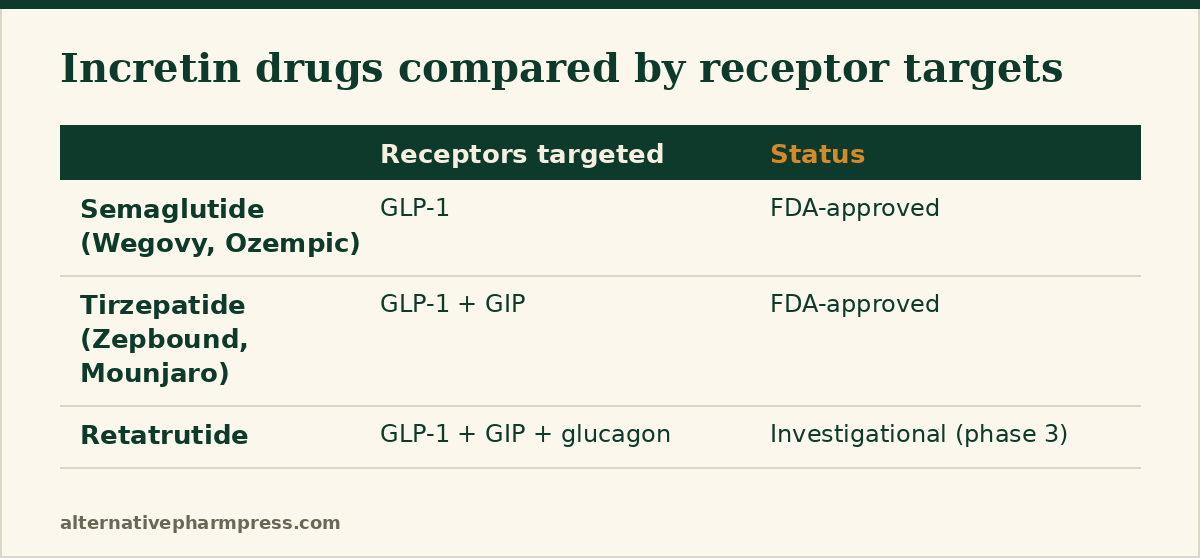
Adding glucagon activity is unusual because glucagon normally raises blood sugar. In combination with GLP-1 and GIP effects, however, trials have shown improved blood sugar alongside weight loss. For background on these hormones, read GLP-1 vs GLP-2 vs GLP-3 and is tirzepatide a peptide?.
What clinical trials show
Phase 2 obesity trial
In a 48-week phase 2 trial published in 2023, adults with obesity (without diabetes) received weekly retatrutide at different doses or placebo. Average weight loss at the highest dose (12 mg) was about 24%, compared with about 2% on placebo. Many participants were still losing weight at the end of the trial.
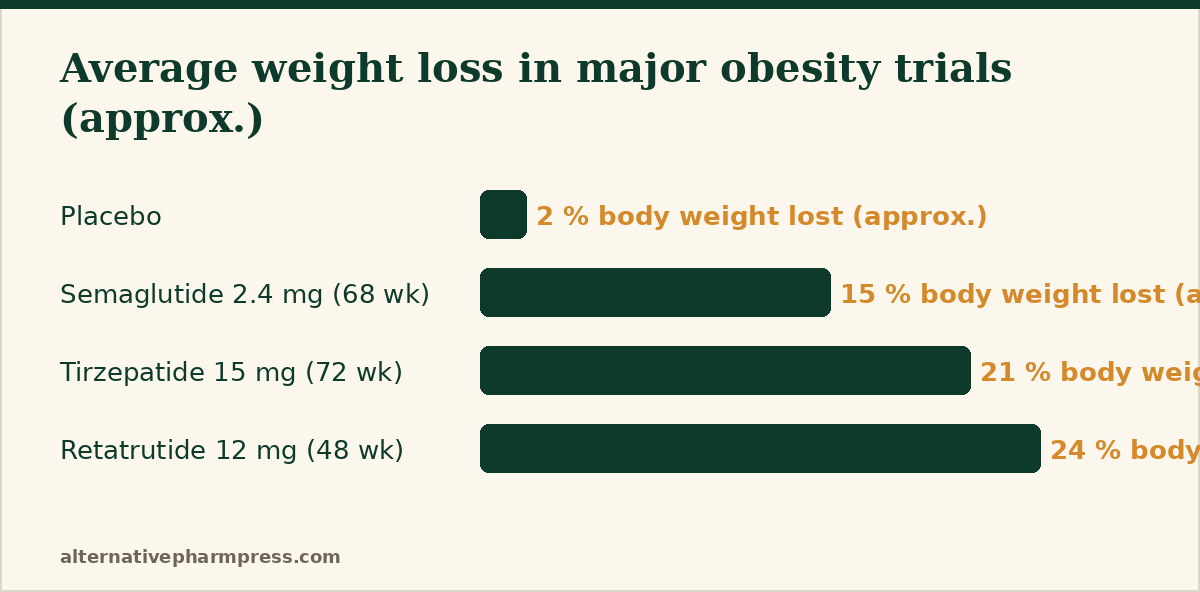
These figures come from different trials with different durations and populations, so they can’t be directly compared. Head-to-head trials are needed. Read retatrutide vs tirzepatide and retatrutide vs semaglutide.
Phase 2 diabetes trial
A separate phase 2 trial in people with type 2 diabetes showed substantial reductions in HbA1c and body weight compared with placebo and dulaglutide.
Liver fat
A sub-study found large reductions in liver fat, with many participants reaching normal liver fat levels — of interest for metabolic dysfunction-associated steatotic liver disease (MASLD).
Phase 3 TRIUMPH program
Lilly’s phase 3 trials are evaluating retatrutide for obesity, type 2 diabetes, obstructive sleep apnea, knee osteoarthritis pain, cardiovascular and kidney outcomes. Early phase 3 readouts reported in 2025–2026 have generally been consistent with strong weight loss, though full publications and regulatory review are still pending. Check official sources for the latest results.
Side effects
Retatrutide’s side effects in trials resemble those of other incretin drugs:
- Gastrointestinal — nausea, diarrhea, vomiting and constipation, mostly during dose escalation.
- Increased heart rate — dose-related increases were observed, peaking and then partly declining over time.
- Reduced appetite and changes in taste or food preference.
- Skin sensations (dysesthesia) have been reported in some trial participants.
- Possible risks shared with the class — gallbladder problems, pancreatitis, dehydration-related kidney issues and muscle loss alongside fat loss.
Long-term safety, including rare events, will become clearer with larger and longer trials.
Approval status
As of late 2026, retatrutide remains investigational. It is not approved by the FDA or other major regulators, and it isn’t available by prescription outside clinical trials. Lilly has indicated it may seek approval after phase 3 data mature. For broader context, see weight-loss peptides in 2026.
Gray-market retatrutide: why it’s risky
Online “research peptide” sellers market retatrutide vials labeled for research use only. These products carry serious concerns:
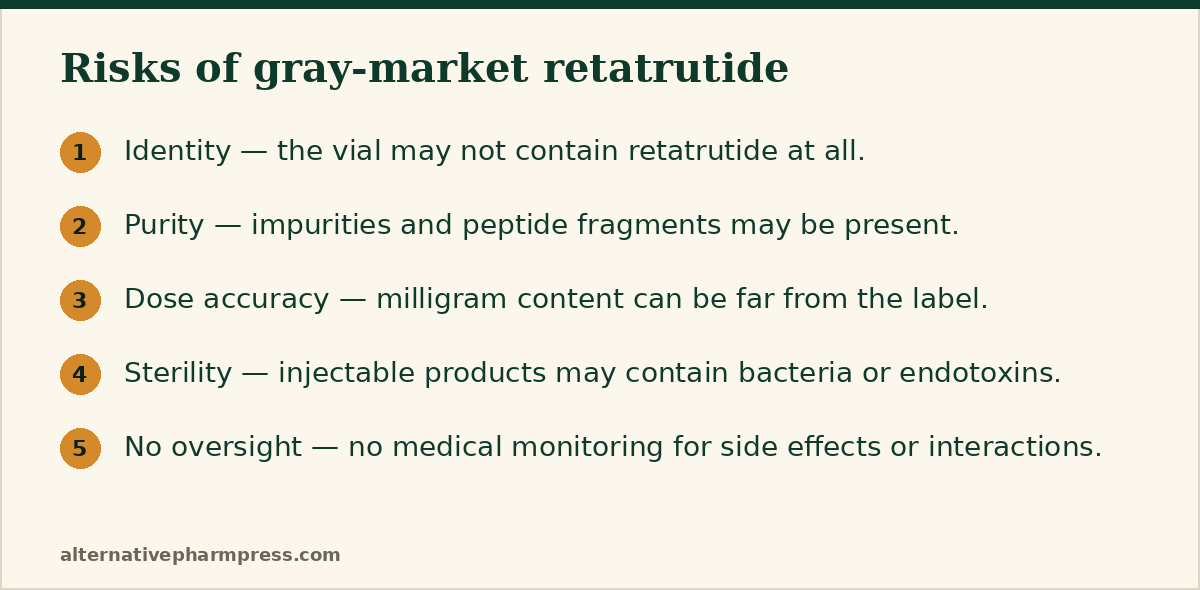
Regulators have stepped up enforcement against unapproved GLP-1 products. Read the GLP-1 peptide crackdown, what research-use-only means and how to read a peptide COA. Even a COA can’t guarantee sterility of a vial you inject at home.
Who might benefit when it’s approved
If approved, retatrutide may be considered for people with obesity or overweight with weight-related conditions, and possibly for type 2 diabetes, fatty liver disease and other conditions studied in phase 3. Like existing drugs, it would likely be used alongside nutrition, physical activity and medical follow-up.
Questions that remain
- Long-term safety, especially cardiovascular and heart rate effects.
- Muscle and bone effects with very large weight loss.
- Weight regain after stopping — a known issue with incretin drugs. See what happens when you stop Zepbound or Wegovy.
- Head-to-head comparisons with tirzepatide.
- Cost and access once approved.
Current alternatives
Approved options today include semaglutide (Wegovy) and tirzepatide (Zepbound), plus oral options under development or newly approved. See semaglutide vs tirzepatide, tirzepatide dosage chart and orforglipron vs oral semaglutide.
Dose escalation in trials
In clinical trials, retatrutide was started at a low weekly dose and increased gradually over several weeks to reduce gastrointestinal side effects. Participants who escalated more slowly tended to have fewer side effects. Doses studied ranged from about 1 mg up to 12 mg weekly. Because the drug isn’t approved, there are no official dosing guidelines outside of trials, and self-dosing gray-market products adds the risk of miscalculating doses from vials with unknown content.
Why the glucagon component matters
Glucagon receptor activation may increase energy expenditure and help mobilize fat from the liver. That’s one hypothesis for why retatrutide produced such large weight loss and liver fat reductions. Glucagon activity may also contribute to the heart rate increases seen in trials. Understanding the balance between these benefits and effects is a major focus of ongoing research.
Muscle preservation and lifestyle
Rapid, large weight loss with any incretin drug can include loss of lean mass, not just fat. Researchers are studying how much muscle is lost with retatrutide and how resistance training and adequate protein intake might help preserve it. Anyone on a weight-loss medication in the future will likely benefit from strength training, sufficient protein and regular medical follow-up.
How to follow retatrutide news reliably
Because retatrutide is so widely discussed, misinformation spreads quickly. Reliable sources include peer-reviewed journals such as the New England Journal of Medicine, the ClinicalTrials.gov registry, company press releases and regulatory announcements from the FDA. Be skeptical of social media posts promising early access, discounted “retatrutide” or dramatic personal results from unverified products.
Who was studied in the trials
Phase 2 participants were adults with a body mass index of 30 or higher, or 27 or higher with at least one weight-related condition. People with certain conditions, such as a history of pancreatitis or some thyroid cancers, were typically excluded, as is standard for incretin drug trials. That means results may not apply to everyone, including teenagers, people who are pregnant or those with complex medical histories. Phase 3 trials are enrolling larger and more diverse groups, which will help answer who benefits most and who might face higher risks.
What retatrutide is not
Retatrutide isn’t a supplement, a “fat-burning peptide” or something that works without changes in eating. Like other incretin drugs, it reduces appetite and food intake, which drives most of the weight loss. It also isn’t the same as products sold as “reta” or “GLP-3” on peptide websites, which may contain something else entirely. When you see these terms online, treat them as marketing until proven otherwise.
Questions to ask your clinician
If you’re interested in medical weight loss, it can help to ask:
- Am I a candidate for an approved GLP-1 or GLP-1/GIP drug today?
- What results and side effects should I expect in the first six months?
- How will we protect muscle and bone during weight loss?
- What happens if I stop the medication?
- Is a clinical trial for newer drugs like retatrutide an option for me?
ClinicalTrials.gov lists recruiting studies, and your clinician can help you judge whether one fits.
FAQ
What is retatrutide?
It’s an investigational once-weekly injectable peptide that activates GLP-1, GIP and glucagon receptors, studied for obesity, diabetes and related conditions.
How much weight did people lose on retatrutide?
In a 48-week phase 2 trial, people on the highest dose lost about 24% of body weight on average.
Is retatrutide FDA-approved?
No. As of late 2026, it remains in phase 3 trials and isn’t approved for prescription use.
Is retatrutide better than tirzepatide?
Phase 2 results looked larger, but trials differed in design and duration. Head-to-head trials are needed for a fair comparison.
What are the side effects of retatrutide?
Mainly nausea, diarrhea, vomiting and constipation, plus dose-related heart rate increases. Long-term safety is still being studied.
Is it safe to buy retatrutide online?
Gray-market products are unapproved, may be mislabeled or contaminated and lack medical oversight. They carry significant risks.