
Kratom (Mitragyna speciosa) belongs to the coffee family (Rubiaceae), and in Southeast Asia it was traditionally chewed or brewed by laborers to stay energized. Today, many people mix kratom powder into coffee, take capsules with an energy drink or buy kratom beverages that also contain caffeine. But stimulants and kratom alkaloids can interact in ways that matter.
This guide explains how kratom and caffeine each work, what happens when they’re combined, the cardiovascular and neurological risks, kratom energy products and practical tips for reducing harm.
Key takeaways
- Kratom and coffee are botanical cousins, but their main active compounds work differently.
- At lower doses, kratom can feel stimulating; combining it with caffeine may amplify jitteriness, heart rate and anxiety.
- Case reports describe seizures, heart rhythm problems and high blood pressure with kratom, sometimes alongside other stimulants.
- Many kratom energy drinks and shots contain caffeine and sometimes concentrated extracts, making doses unpredictable.
- People with heart conditions, seizure history or anxiety should be especially cautious.
How caffeine works
Caffeine blocks adenosine receptors in the brain. Adenosine builds up during waking hours and promotes sleepiness, so blocking it increases alertness. Caffeine also raises heart rate and blood pressure modestly, boosts adrenaline and can cause anxiety or jitteriness at higher doses. Most healthy adults tolerate up to about 400 mg per day.
How kratom works
Kratom’s main alkaloid, mitragynine, acts as a partial agonist at mu-opioid receptors and also interacts with adrenergic, serotonin and other receptors. Its metabolite, 7-hydroxymitragynine (7-OH), is a more potent opioid agonist. At lower doses, many users describe kratom as stimulating; at higher doses, it becomes sedating and opioid-like. Read what kratom is used for and mitragynine explained.
Why people combine them
- Tradition — kratom was used for energy, and coffee-like effects are expected.
- Taste — coffee masks kratom’s bitter flavor.
- Energy and focus — some believe caffeine enhances kratom’s stimulating effects.
- Convenience — many kratom shots and drinks include caffeine.
What happens when you combine kratom and caffeine
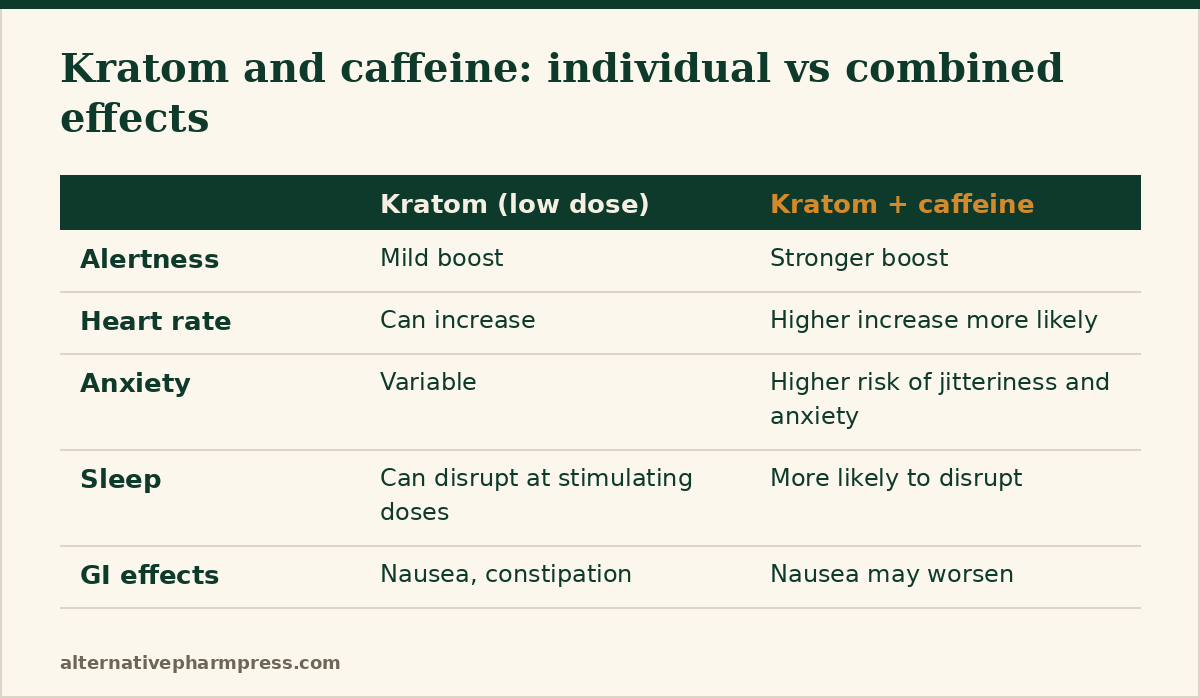
There are few controlled studies examining kratom and caffeine together. The concern comes from their overlapping effects: both can raise heart rate and blood pressure, both can disrupt sleep, and both can cause anxiety in sensitive people. Combining them may stack these effects.
Cardiovascular concerns
Kratom has been associated in case reports and observational studies with tachycardia (fast heart rate), high blood pressure and, rarely, heart rhythm abnormalities including QT prolongation. Some research has examined mitragynine’s effects on cardiac ion channels in lab settings. Caffeine, in high doses, also raises heart rate and can trigger palpitations.
The combination may be riskier for people with:
- Known heart disease or arrhythmias.
- High blood pressure.
- Use of other stimulants, such as prescription ADHD medications or pre-workout supplements.
- Dehydration or electrolyte imbalances.
Seizure concerns
Seizures have been reported in some people using kratom, often at high doses or with other substances. Caffeine at very high doses can also lower seizure threshold. People with a seizure history or taking medications that lower seizure threshold should avoid combining them.
Kratom energy drinks and shots
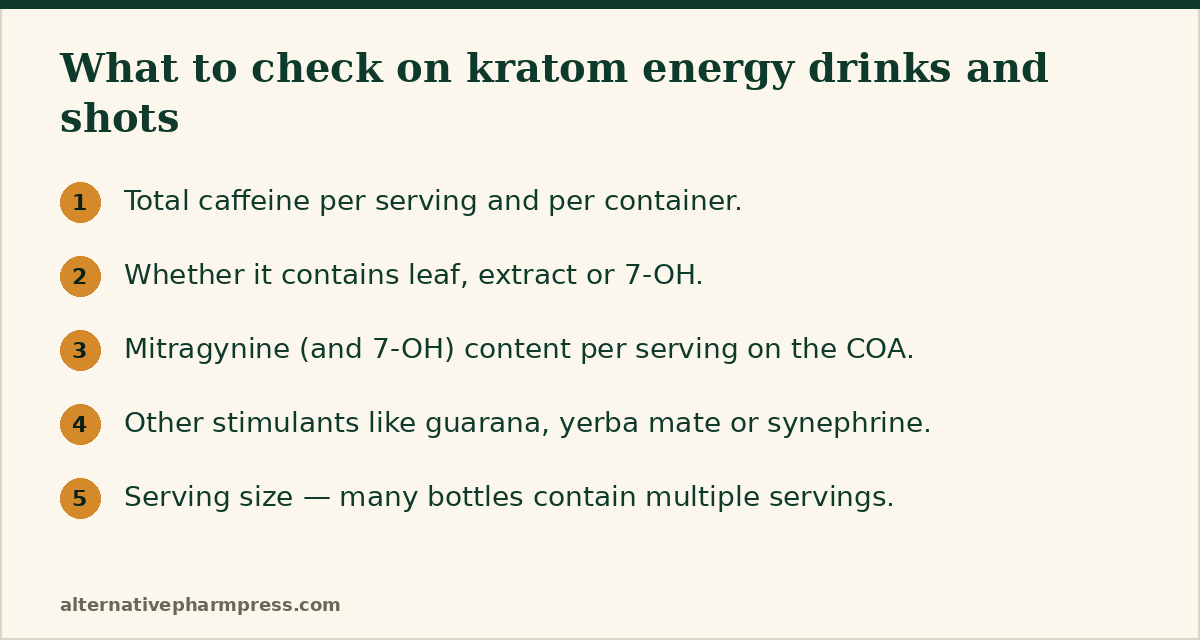
Many shots combine concentrated kratom extracts with caffeine and other stimulants. Because extracts are far more potent than leaf, it’s easy to take more alkaloids than intended. Some products have also contained 7-OH. Read kratom drinks and kratom extract vs leaf.
Kratom, caffeine and dependence
Both caffeine and kratom can cause dependence. Kratom dependence can lead to opioid-like withdrawal; caffeine withdrawal causes headaches, fatigue and irritability. People who use both daily may find quitting harder because withdrawal symptoms overlap. See kratom withdrawal and kratom tolerance.
Safer-use tips
- Use plain leaf, not extract if you choose to use kratom; weigh doses precisely.
- Limit caffeine — avoid strong coffee, energy drinks or pre-workouts alongside kratom.
- Don’t stack stimulants — avoid combining with prescription stimulants or other energizing supplements.
- Stay hydrated — both substances can cause fluid loss.
- Watch for warning signs — chest pain, racing or irregular heartbeat, severe headache, confusion or fainting require medical attention.
- Avoid late-day use to protect sleep.
- Check product labels and COAs — see how to read a kratom lab report.
Other combinations to avoid
Kratom combined with alcohol, benzodiazepines, gabapentin or opioids carries more serious risks, including respiratory depression. Read kratom and alcohol and can you overdose on kratom?. Some medications also interact with kratom through liver enzymes.
Who should avoid mixing kratom and caffeine
- People with heart disease, arrhythmias or high blood pressure.
- Anyone with a seizure disorder.
- People with anxiety or panic disorders.
- Those who are pregnant or breastfeeding.
- People taking stimulant medications or MAO inhibitors.
- Anyone under 21.
Traditional use vs modern products
In Thailand and Malaysia, traditional kratom use often involved chewing fresh leaves or drinking leaf tea throughout the workday — relatively low doses, often by people accustomed to physical labor. Modern products, including powdered leaf in large amounts, extracts, shots and 7-OH tablets, can deliver far higher doses, often alongside high-caffeine drinks. That difference matters when comparing traditional safety experience to today’s market. For more, see kratom guide for beginners.
Kratom coffee and “kratom latte” trends
Some cafés and online vendors sell kratom lattes or premixed kratom coffee. These blends make it easy to consume both substances without tracking doses. If you try one, ask how much kratom (in grams or mg of mitragynine) and caffeine each serving contains, and avoid multiple servings in a short period.
Does caffeine make kratom stronger?
Many people report that caffeine seems to “boost” kratom’s energizing effects, while others say it makes them anxious or nauseous. There’s no strong scientific evidence that caffeine increases kratom’s potency or changes how it’s metabolized in a meaningful way, though both substances share some liver metabolism pathways. What’s more likely is that their stimulating effects simply add together. That’s why the combination can feel stronger — and why side effects like jitteriness and a racing heart can stack too.
Liver considerations
Rare cases of liver injury have been linked to kratom. Caffeine itself isn’t generally harmful to the liver, and coffee drinking is associated with lower liver disease risk in population studies. However, if you develop signs of liver injury while using kratom — such as yellowing skin or eyes, dark urine or persistent fatigue — stop and seek medical care. Read kratom liver injury for details.
Warning signs that need medical attention
Seek urgent care or call emergency services if you notice any of the following after using kratom with caffeine or other stimulants:
- Chest pain or pressure.
- A racing, pounding or irregular heartbeat that doesn’t settle with rest.
- Fainting or near-fainting.
- Seizure, unusual jerking movements or confusion.
- Severe headache, especially with vision changes.
- Shortness of breath.
- Severe vomiting or inability to keep fluids down.
Tell medical staff exactly what you took, including the product name, how much and when. Bringing the package or lab report helps clinicians respond appropriately.
Building a lower-stimulant routine
If you rely on kratom and caffeine to get through the day, it may help to look at the underlying reasons. Poor sleep, chronic pain, low mood and demanding work schedules often drive stimulant use. Improving sleep quality, getting regular daylight and movement, eating balanced meals and addressing pain or mood with a clinician can reduce the need for both substances. Cutting back on one at a time — for example, gradually lowering caffeine first — tends to be easier than changing everything at once.
FAQ
Is it safe to mix kratom and coffee?
Many people do, but combining them can increase heart rate, blood pressure, anxiety and sleep problems. People with heart conditions or seizure risk should avoid it.
Does caffeine make kratom stronger?
There’s no strong evidence that caffeine increases kratom potency, but their stimulating effects can add together, making the combination feel more intense.
Are kratom energy shots dangerous?
They can be, because many combine concentrated extracts with high caffeine and other stimulants. Doses can be unpredictable.
Can kratom and caffeine cause heart problems?
Case reports link kratom to fast heart rate, high blood pressure and rare rhythm problems. Caffeine adds to these effects, so caution is important.
Can I drink coffee during a kratom taper?
Moderate coffee is usually fine, but too much caffeine can worsen anxiety, restlessness and insomnia, which are already common during kratom withdrawal. Many people find cutting back on caffeine makes a taper more comfortable.
Is kratom related to coffee?
Yes. Kratom belongs to the Rubiaceae family, the same plant family as coffee, though their active compounds differ.
How much caffeine is too much with kratom?
There’s no established safe threshold for the combination. Keeping caffeine low and avoiding energy drinks or pre-workouts with kratom reduces risk.