
Small white pouches tucked under the lip were long associated with nicotine products. Now a growing category of nootropic pouches offers nicotine-free alternatives promising focus, energy or calm. They contain ingredients like caffeine, L-theanine, B vitamins and herbal extracts, and are marketed to students, gamers, athletes and office workers.
This guide explains what’s typically in nootropic pouches, how they work, how much caffeine you may be getting, the safety concerns and how to choose a product.
Key takeaways
- Most nootropic pouches are nicotine-free and rely on caffeine as the main active ingredient, often with L-theanine.
- Caffeine content commonly ranges from about 20 to 100+ mg per pouch — comparable to a small to strong cup of coffee.
- Ingredients absorb partly through the gums and cheek lining, and partly when swallowed.
- Concerns include caffeine stacking, gum irritation, unclear ingredient amounts and appeal to minors.
- Pouches aren’t evaluated as drugs; choose products with clear labeling and third-party testing.
What are nootropic pouches?
Nootropic pouches are small fiber pouches filled with plant fibers, flavorings, sweeteners and active ingredients. Users place a pouch between the gum and upper lip for 15–60 minutes. Some are designed to mimic the experience of nicotine pouches without nicotine, which may appeal to people trying to quit or who want a stimulant alternative. For background on nootropics generally, see nootropics beginners guide.
Common ingredients
Caffeine
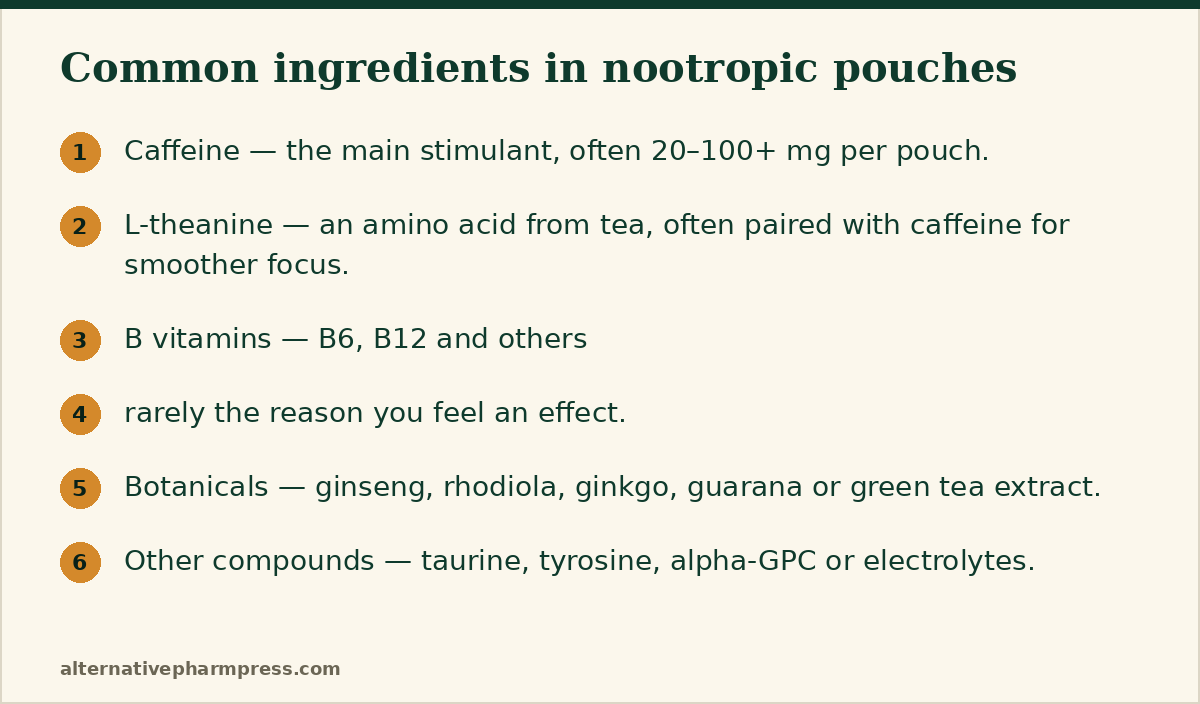
Caffeine is responsible for most of the noticeable effect. It blocks adenosine receptors, reducing feelings of tiredness and increasing alertness. Some pouches use caffeine from guarana or green tea, which is still caffeine.
L-theanine
L-theanine is found in tea. Small studies suggest pairing it with caffeine may improve attention and reduce jitteriness compared with caffeine alone. Typical pouch doses are often smaller than those used in studies (100–200 mg).
Botanicals and other compounds
Ingredients like ginseng, rhodiola and ginkgo have mixed evidence for cognition, and pouch doses may be too low to matter. Compare herbs in ashwagandha vs rhodiola, and see choline sources in alpha-GPC vs citicoline.
How pouches deliver ingredients
The inner lip and gums have thin tissue with good blood flow, so some ingredients can absorb directly into the bloodstream. In practice, much of the pouch content mixes with saliva and is swallowed, absorbing through the gut. Caffeine absorbs well either way. Effects usually begin within 10–30 minutes.
How much caffeine are you getting?
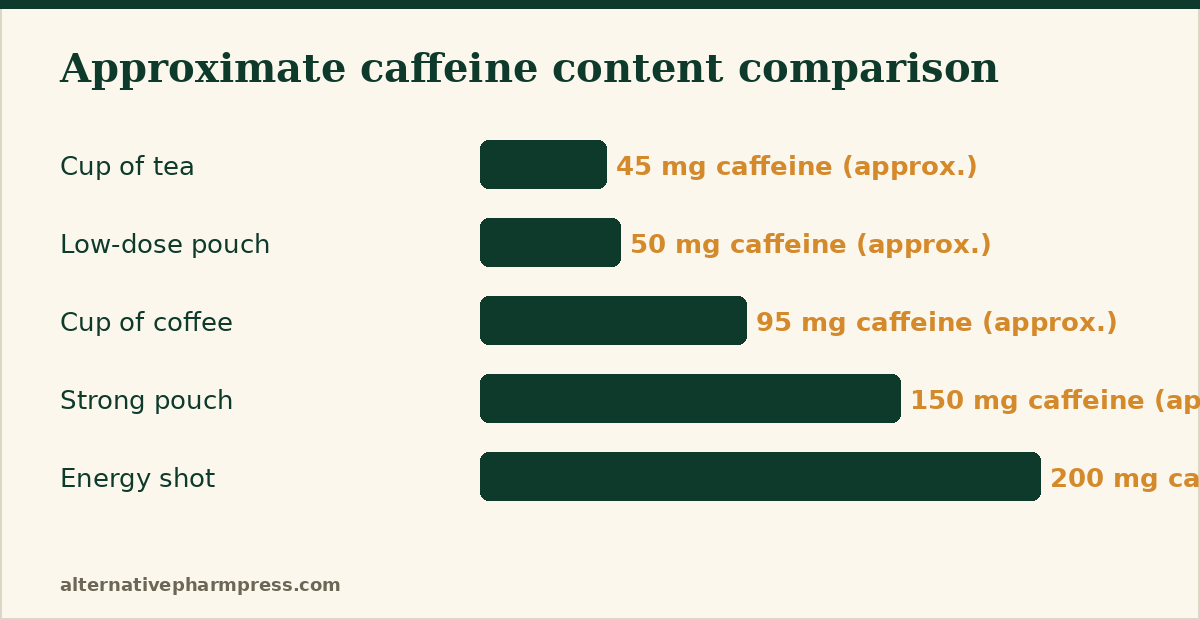
Values are approximate. The FDA notes that up to about 400 mg of caffeine per day is generally not associated with dangerous effects in healthy adults, but sensitivity varies. Pouches make it easy to use several in a day, potentially stacking caffeine quickly — especially when combined with coffee, energy drinks or pre-workout supplements.
Benefits people report
- Quick alertness without brewing coffee.
- Portable, discreet use at work, while studying or gaming.
- Nicotine-free alternative for people used to the pouch habit.
- Less jitteriness for some, when caffeine is paired with L-theanine.
Evidence for most added botanicals at pouch doses is limited. Most of what users feel comes from caffeine.
Safety concerns
Caffeine overload
Too much caffeine can cause anxiety, rapid heartbeat, insomnia, stomach upset, headaches and, in extreme cases, heart rhythm problems. People with heart conditions, anxiety disorders, high blood pressure or pregnancy should be careful or avoid high-caffeine pouches.
Oral health
Repeated pouch use in the same spot may cause gum irritation, recession or soreness. Rotate placement and take breaks. Some pouches are acidic or contain sweeteners that may affect teeth.
Appeal to minors
Bright packaging and candy flavors can appeal to teens. Caffeine sensitivity is often greater in young people. Many health experts recommend adolescents limit caffeine intake.
Label accuracy
Supplement products aren’t approved before sale. Independent testing of supplements has found mislabeled ingredients in some products. Look for third-party testing.
Confusion with nicotine products
Some nicotine pouches look similar. Make sure you know which product you’re using, and store them away from children and pets.
Who should avoid nootropic pouches
- Pregnant or breastfeeding people (or limit caffeine to medical guidance).
- People with heart arrhythmias, high blood pressure or anxiety disorders.
- Children and teens.
- People taking stimulant medications for ADHD or other conditions.
- Anyone sensitive to caffeine or prone to insomnia.
How to choose a nootropic pouch
- Check caffeine per pouch and total daily intake from all sources.
- Look at ingredient amounts — proprietary blends hide doses.
- Seek third-party testing for contents and contaminants.
- Avoid exaggerated claims such as “limitless focus” or “replace sleep.”
- Consider flavor and sweeteners if you’re concerned about dental health.
- Start with one pouch and wait before using another.
For broader product comparisons, see best nootropic brands 2026 and nootropic drinks.
Pouches vs coffee, drinks and capsules
| Format | Onset | Caffeine control | Pros | Cons |
|---|---|---|---|---|
| Nootropic pouch | 10–30 min | Fixed per pouch | Portable, discreet | Gum irritation; easy to stack |
| Coffee or tea | 15–45 min | Varies by brew | Familiar; antioxidants | Less portable; variable dose |
| Energy drinks | 15–45 min | Fixed per can | Convenient | Sugar; high doses |
| Capsules | 30–60 min | Precise | Exact dosing | Slower onset |
Nicotine-free pouches for quitting nicotine
Some former nicotine pouch users find caffeine pouches help replace the habit and hand-to-mouth ritual. That may help some people, but caffeine doesn’t treat nicotine withdrawal. Nicotine replacement therapy, prescription medications and behavioral support are proven methods for quitting. If you’re quitting nicotine, a healthcare provider or quitline can help.
What “nootropic” really means on a label
The word “nootropic” isn’t a regulatory category. It’s a marketing term for products claiming to support mental performance. That means a pouch labeled nootropic can contain anything from well-studied caffeine and L-theanine to herbal extracts with little evidence. It also means there are no minimum standards for what qualifies. Treat the label as a description of intent, not proof of effect, and judge the product by its ingredient list and doses.
Caffeine timing and sleep
Caffeine’s half-life is roughly five hours in many adults, and longer in some people, including during pregnancy or with certain medications. A pouch at 4 p.m. can still affect sleep at bedtime. Poor sleep then reduces focus the next day, which can drive more caffeine use — a cycle many people recognize. Consider setting a caffeine cutoff time, such as early afternoon, and counting pouches toward your total intake.
Tolerance and dependence
Regular caffeine use leads to tolerance, so the same pouch may feel weaker over time. Stopping suddenly can cause withdrawal headaches, fatigue, irritability and difficulty concentrating, typically for a few days. If you use several pouches a day and want to cut back, reducing gradually over a week or two usually feels easier than stopping all at once.
Regulation and labeling in 2026
In the U.S., most nicotine-free pouches are sold as dietary supplements or conventional foods, depending on how they’re marketed. That means manufacturers must follow labeling and safety rules, but products aren’t approved before sale. Some states and retailers have begun restricting sales of caffeine products to minors, and regulators have shown interest in highly caffeinated products marketed to young people. Expect labeling expectations and age restrictions to evolve.
A simple way to test whether a pouch helps you
Because most of the effect comes from caffeine, a fair test is to compare a pouch with an equal amount of caffeine from coffee or tea on different days. Keep the time of day, sleep and workload similar, and note your focus, mood, jitteriness and sleep that night. If the pouch feels no different from the same caffeine dose in a cup of coffee, you’re mostly paying for convenience and flavor. That can still be worthwhile, but it helps to know what you’re buying.
Disposal and environmental impact
Used pouches are often discarded on sidewalks and in parks. Wrap them and place them in the trash, and keep cans closed and stored away from children and pets, who may mistake them for candy.
FAQ
Do nootropic pouches contain nicotine?
Most marketed as nootropic or energy pouches are nicotine-free, but always check the label because some look similar to nicotine products.
How much caffeine is in a nootropic pouch?
It varies, commonly from about 20 mg to over 100 mg per pouch. Some strong products exceed 150 mg.
Are nootropic pouches safe?
For healthy adults using them in moderation, they’re generally comparable to other caffeine sources. Risks include caffeine overload, gum irritation and unclear labeling.
Do nootropic pouches work?
Most noticeable effects come from caffeine. Evidence for added botanicals at pouch doses is limited.
Can teenagers use nootropic pouches?
They’re generally not recommended for teens due to caffeine sensitivity and the potential to build habits.
How long should a pouch stay in?
Most labels suggest about 15–60 minutes. Follow product directions and remove it if it causes irritation.