
Delta-8 THC vape cartridges (“carts”) became a staple of hemp shops because they’re discreet, fast-acting and easy to use. But vaping adds risks that gummies don’t have: you’re inhaling heated oil and anything mixed into it, through hardware that may leach metals.
This guide explains what’s in delta-8 carts, why cutting agents and hardware matter, how to spot counterfeit products and what to check on a lab report.
Key takeaways
- A delta-8 cart typically contains delta-8 distillate (often 80–95%) plus terpenes for flavor.
- Cutting agents like vitamin E acetate, MCT oil, PG/VG and PEG can be harmful when inhaled; vitamin E acetate was linked to the 2019 EVALI outbreak.
- Cheap hardware can leach lead, nickel, chromium and other metals into the oil.
- Counterfeit carts are common; check batch-matched COAs and buy from reputable sources.
- Delta-8 vapes show up on THC drug tests and face growing legal restrictions.
What’s inside a delta-8 cart
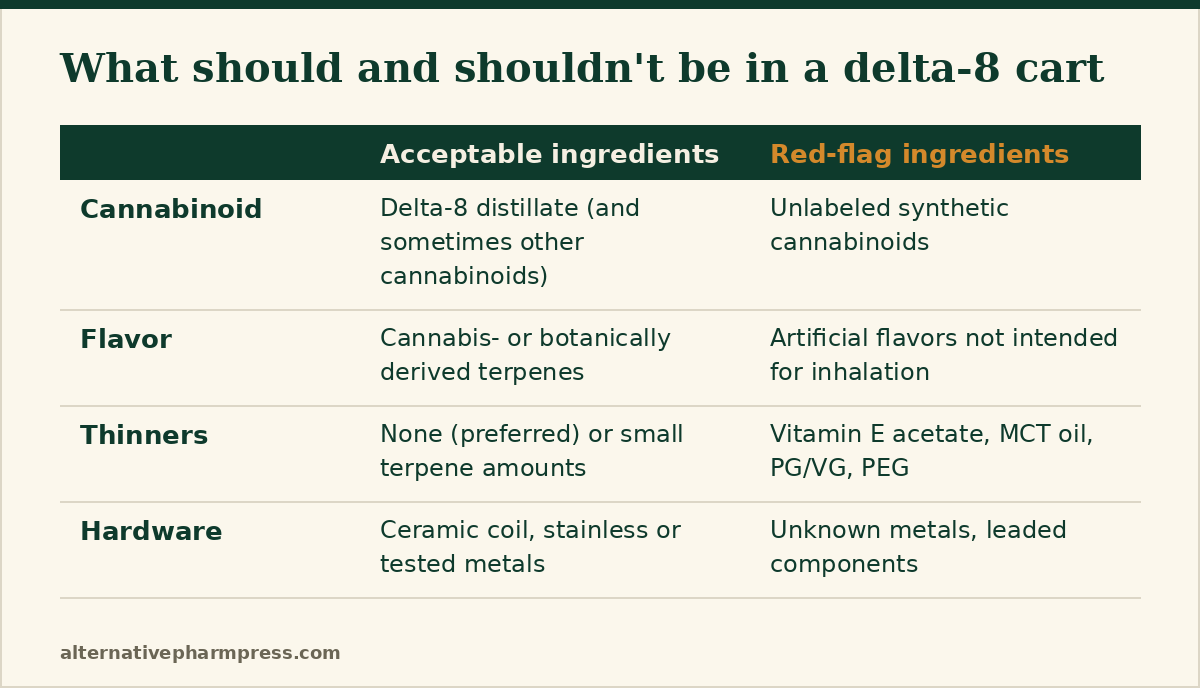
Delta-8 distillate is a thick, honey-like oil produced by converting CBD into delta-8 THC and then distilling it. Most carts contain 80–95% delta-8, with 5–15% terpenes for flavor and to improve flow. Some carts also contain delta-9, THCP, HHC or other cannabinoids. Learn more about the base cannabinoid in delta-8 vs delta-9 THC and about extract types in distillate vs live resin.
Why cutting agents are dangerous
Distillate is thick, and some manufacturers thin it to work in cheap hardware or to stretch product. Common thinners include:
- Vitamin E acetate — safe on skin or in food, but when inhaled it’s strongly linked to EVALI (e-cigarette or vaping product use-associated lung injury). The 2019 outbreak hospitalized more than 2,800 people in the US and caused dozens of deaths, mostly tied to illicit THC carts.
- MCT oil — fine to eat, but inhaling heated oils can cause lipid-related lung inflammation.
- PG/VG (propylene glycol and vegetable glycerin) — used in nicotine e-liquids; when overheated, can produce irritants such as formaldehyde.
- PEG (polyethylene glycol) — can break down into harmful compounds when heated.
The safest carts contain only cannabinoid distillate and terpenes. Ask for confirmation on the COA or brand documentation.
Hardware matters
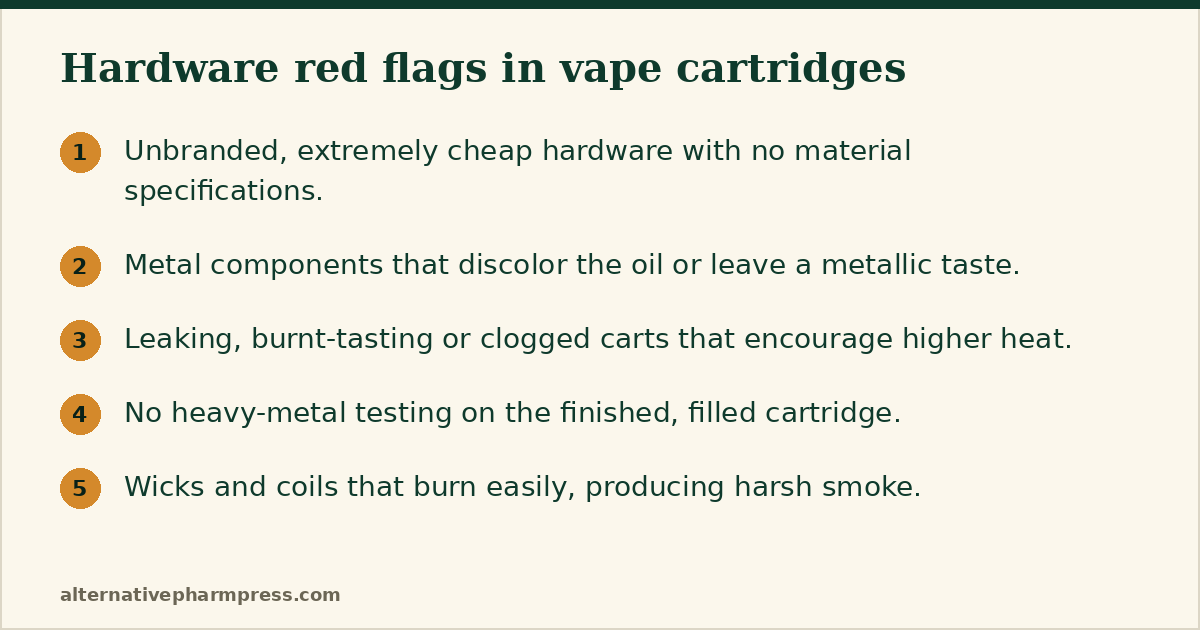
Studies of cannabis vape hardware have found that some cartridges leach lead, nickel, chromium, copper and other metals into the oil — especially after the oil sits in the cart for weeks. Ceramic heating elements and quality-tested metals reduce risk. A good COA tests the filled cartridge for heavy metals, not just the distillate before filling.
Also consider:
- Voltage: high battery voltage burns oil, producing harsher compounds. Lower settings are gentler.
- Disposables: all-in-one devices are convenient but generate electronic waste and use unknown hardware.
Counterfeit and “lookalike” carts
Popular brands are frequently counterfeited. Fake packaging is sold online in bulk, and counterfeit carts may contain anything. Protect yourself:
- Scan the QR code and verify it leads to the brand’s official site.
- Match the batch number on the box with the COA.
- Be wary of prices that are dramatically lower than usual.
- Buy from reputable retailers rather than social media sellers.
How to read a vape cart COA
A trustworthy delta-8 cart COA shows:
- Cannabinoid profile: delta-8, delta-9 (within legal limits), and any other cannabinoids.
- Residual solvents: conversion and extraction can leave solvents behind.
- Heavy metals: ideally tested on the filled cartridge.
- Pesticides and microbes.
- Cutting agent screening: some labs test for vitamin E acetate.
- Lab accreditation (ISO 17025) and a date within the last year.
Our best delta-8 vapes and carts list focuses on brands with complete testing.
Effects and dosing
Vaping delivers delta-8 into the bloodstream through the lungs. Effects begin within minutes, peak within 15–30 minutes and fade over 2–3 hours. That fast feedback makes it easier to control dose than edibles: take one small puff, wait 10–15 minutes, then decide. Even “milder” delta-8 can cause anxiety, racing heart, dizziness and impaired coordination at higher doses.
Lung health and vaping
Any inhaled product can irritate the lungs. Symptoms to watch for include persistent cough, chest pain, shortness of breath, nausea or fever. If these appear after vaping, stop and see a doctor — and tell them what you’ve vaped. EVALI can develop over days to weeks.
Drug tests and legality
Delta-8 vapes produce THC metabolites that standard drug tests detect. See does delta-8 show up on drug tests?. Legally, delta-8 is banned or restricted in many states, and federal hemp changes in 2026 restrict intoxicating hemp products further. Check delta-8 legal status by state and the federal hemp law explainer.
Carts vs gummies
| Factor | Carts | Gummies |
|---|---|---|
| Onset | Minutes | 30 minutes to 2 hours |
| Duration | 2–3 hours | 4–8 hours |
| Dose control | Easier (puff by puff) | Harder (delayed onset) |
| Lung exposure | Yes | No |
| Main risks | Cutting agents, metals | Overconsumption, accidental ingestion |
See our delta-8 gummies guide for edibles.
Who should avoid vaping delta-8
People with asthma, COPD or other lung conditions; anyone pregnant or breastfeeding; people under 21; those with heart conditions; anyone with a history of psychosis; and anyone subject to drug testing.
How to use a cart more safely (where legal)
If you choose to vape delta-8, a few habits reduce risk:
- Use the lowest voltage that produces vapor; avoid “burnt” hits.
- Take small, short puffs rather than long, deep draws.
- Space out sessions to avoid building tolerance quickly.
- Store carts upright at room temperature to reduce leaks and clogging.
- Replace carts that taste burnt, metallic or unusual.
- Never share carts or batteries that you didn’t buy from a verified source.
Disposables vs 510-thread carts
Many delta-8 products now come as disposable all-in-one vapes with a built-in battery. They’re convenient but you can’t control voltage, you can’t see the hardware specs, and they create electronic waste. 510-thread cartridges attach to a reusable battery, letting you choose low-voltage settings and reuse the battery. If you vape regularly, a quality variable-voltage battery and well-made carts give you more control.
Why terpenes aren’t automatically harmless
Terpenes give cannabis its aroma — limonene, myrcene, pinene, linalool and many others. In vape carts they add flavor and thin the distillate. But terpenes are volatile organic compounds, and at high concentrations or temperatures they can irritate the airways and degrade into other compounds. Some manufacturers add 10–20% terpenes, far more than found naturally in cannabis flower. Others use botanical terpenes derived from non-cannabis plants or flavor additives never tested for inhalation.
A sensible approach is to favor carts with moderate terpene content from known sources, avoid “candy” or dessert flavors that suggest added flavorings, and stop using any product that causes coughing, chest tightness or throat irritation.
Delta-8 cart myths
“If it’s sold in a store, it’s been tested.” Hemp vape products are lightly regulated; many stores sell untested or counterfeit carts.
“Clear oil means pure oil.” Clarity reflects distillation, not the absence of cutting agents or contaminants.
“Thick oil can’t be cut.” Cutting agents can be blended without dramatically changing viscosity.
“The 2019 outbreak was only about illegal carts.” Most EVALI cases involved illicit THC products, but the lesson is that any unregulated inhalable oil can carry hidden additives.
“Disposables are safer because they’re sealed.” Sealing doesn’t tell you what’s inside or what the hardware is made of.
FAQ
What’s in a delta-8 cart?
Usually delta-8 distillate (about 80–95%) and terpenes. Some contain other cannabinoids or, in low-quality products, harmful cutting agents.
Are delta-8 carts safe?
They carry risks, especially from cutting agents and low-quality hardware. Tested products with only distillate and terpenes are lower risk, but no inhaled product is risk-free.
What is vitamin E acetate and why is it dangerous?
It’s an additive once used to thin THC oils. Inhaled, it was strongly linked to the 2019 EVALI lung injury outbreak.
How long do delta-8 cart effects last?
Effects usually start within minutes, peak in 15–30 minutes and last about two to three hours.
How can I tell if a delta-8 cart is fake?
Verify the QR code and batch number against the brand’s official COA, be wary of very low prices and buy from reputable retailers.
Can I refill a delta-8 cart?
Most carts aren’t designed to be refilled, and opening them can damage seals or contaminate the oil. Refilled or “reused” carts are also a common sign of counterfeits.
Why does my cart taste burnt?
Usually because the voltage is too high, the cart is nearly empty or the wick has dried out. Lower the voltage and stop using a cart that keeps tasting burnt.
How long does a delta-8 cart last?
A 1 g cart typically lasts a few hundred puffs, depending on puff length and voltage. Oil can degrade over months, so use carts within their best-by window.