
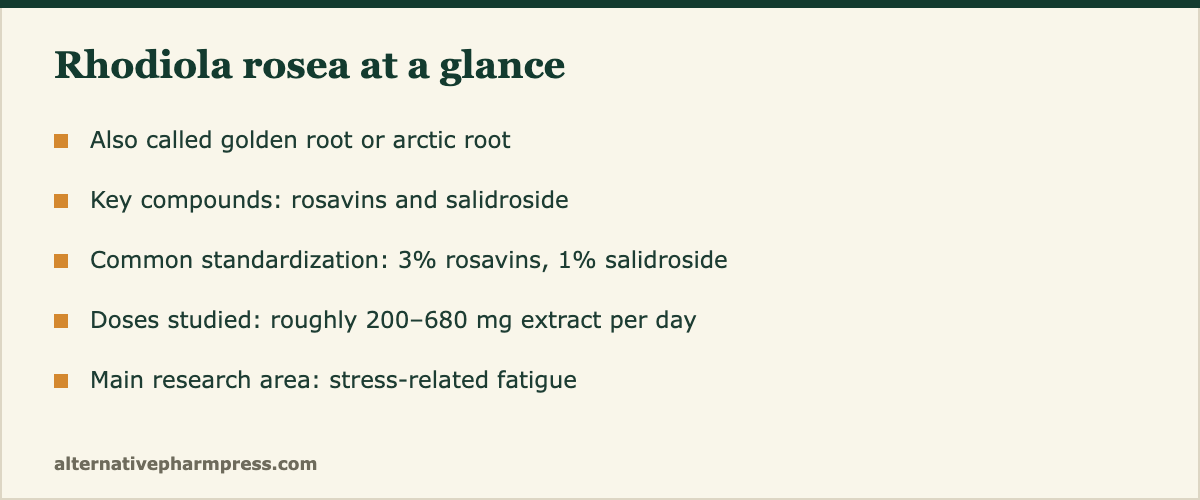
Rhodiola rosea, also called golden root or arctic root, is a flowering plant that grows in cold, high-altitude regions of Europe, Asia and North America. Its root has been used for centuries in Scandinavian and Russian folk medicine to fight fatigue, and Soviet researchers studied it intensively in the 1960s and 1970s as a way to improve endurance and stress tolerance.
Today it’s one of the most popular "adaptogens," a loose term for herbs said to help the body resist stress. Unlike many supplements, rhodiola has a modest body of clinical trials behind it. This guide looks at what those trials found, why the results are mixed, and how to choose a product if you decide to try it.
Key takeaways
- Best evidence: small trials suggest rhodiola may reduce stress-related fatigue and burnout symptoms over a few weeks.
- Active compounds: rosavins and salidroside; quality extracts are standardized to these markers.
- Mixed results: many trials are small or older, and reviews rate the overall evidence as limited.
- Usually well tolerated: side effects include dizziness, dry mouth and trouble sleeping if taken late.
- Quality varies: testing has found some products with little or no real Rhodiola rosea.
What is rhodiola?
Rhodiola rosea is one of roughly 200 species in the Rhodiola genus, but it’s the one with most of the research. The root contains a group of compounds unique to this species called rosavins (rosavin, rosarin and rosin), plus salidroside and tyrosol, which are found in other Rhodiola species too.
Most clinical studies have used standardized extracts, often the Swedish extract known as SHR-5 or extracts standardized to about 3% rosavins and 1% salidroside, which mirrors the natural ratio in the root. That standardization matters, because powdered root and extracts from other species may not behave the same way.
How rhodiola is thought to work
Researchers believe rhodiola affects the body’s stress response system, including the hypothalamic-pituitary-adrenal (HPA) axis that regulates cortisol. Lab and animal studies also suggest it influences neurotransmitters such as serotonin, dopamine and norepinephrine, and that salidroside has antioxidant effects in cells.
These mechanisms are plausible but mostly come from animal and cell studies. They explain why researchers are interested, not whether the supplement works in people.
Rhodiola for fatigue and burnout
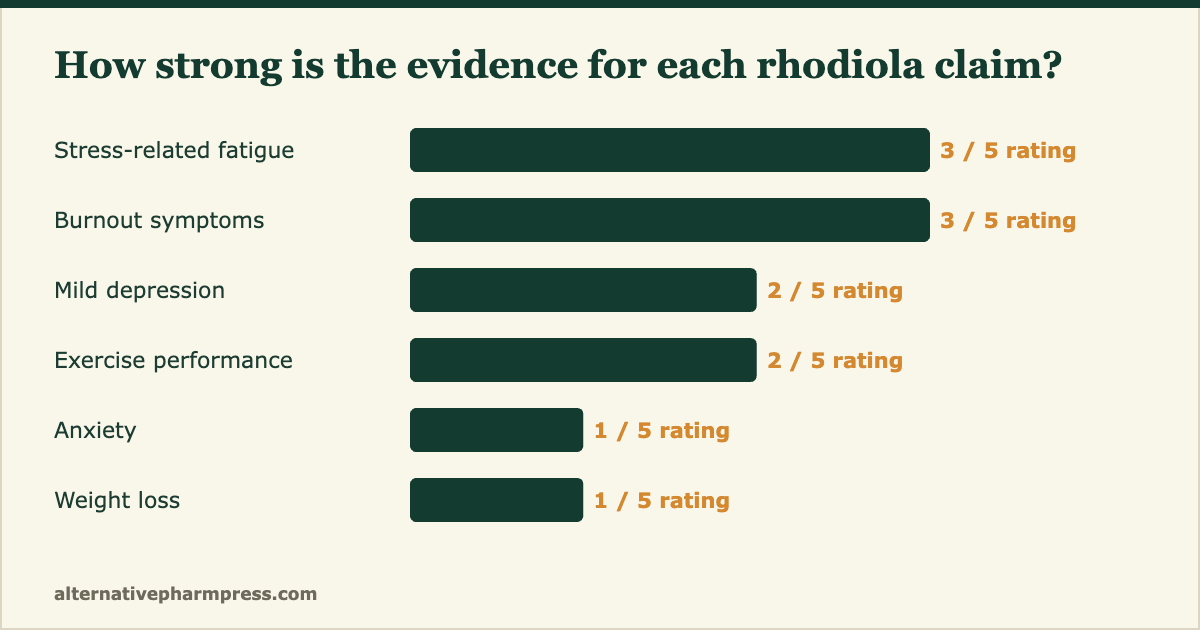
The strongest human data involves fatigue linked to stress.
- Night-shift physicians: an early double-blind trial in young doctors on night duty reported improved performance on mental fatigue tests after two weeks of a low-dose extract.
- Students during exams: another small trial reported reduced mental fatigue and better well-being in students taking rhodiola during an exam period.
- Burnout-related fatigue: a randomized, placebo-controlled trial in adults with stress-related fatigue found that 576 mg per day of SHR-5 for four weeks reduced fatigue scores and improved attention compared with placebo.
- Life stress: an open-label study in adults with life-stress symptoms reported improvements in fatigue, anxiety and concentration after four weeks, but without a placebo group the results are hard to interpret.
Taken together, these studies suggest a possible benefit for stress-related fatigue, especially over a few weeks of use. But the trials are small, several are older, and some had design problems. Systematic reviews have concluded that the evidence is promising but inconsistent.
The European Medicines Agency has a herbal monograph for rhodiola root as a "traditional herbal medicinal product" for temporary relief of stress symptoms such as fatigue and a feeling of weakness. That category is based on long-standing use rather than proof from clinical trials.
Rhodiola and mood
A small randomized trial in people with mild to moderate depression compared rhodiola with the antidepressant sertraline and placebo. Rhodiola produced smaller improvements than sertraline but caused fewer side effects. Another earlier trial reported benefits at certain doses. These results are interesting, but they’re not strong enough to make rhodiola a treatment for depression. Anyone with depression should work with a healthcare provider rather than self-treating.
Evidence for anxiety is thinner, mostly coming from small open-label studies. If anxiety is your main concern, our guide to supplements for anxiety compares the options and their evidence.
Rhodiola and exercise
Rhodiola was studied in the Soviet era as a performance enhancer, and modern studies have looked at endurance, perceived exertion and recovery. Results are mixed: some trials report slightly better endurance or lower perceived effort with a single dose, while others find no effect. It’s not on the World Anti-Doping Agency prohibited list, but athletes should still choose third-party-tested products to reduce contamination risk.
Rhodiola vs ashwagandha
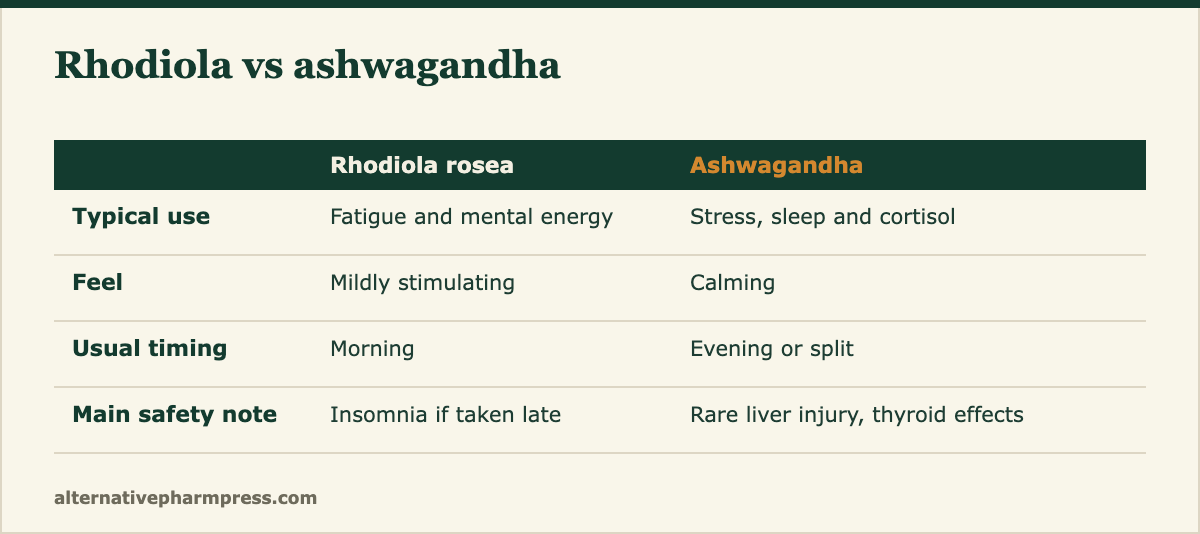
Rhodiola and ashwagandha are often compared because both are sold as adaptogens. They tend to be used differently. Rhodiola is generally described as mildly stimulating and is typically taken in the morning for fatigue and mental energy. Ashwagandha is more often used in the evening for stress and sleep, and it has a larger body of trials for stress and cortisol. Our ashwagandha vs rhodiola comparison goes deeper, and our ashwagandha benefits guide covers that herb’s research.
Side effects and safety
In clinical trials, rhodiola has generally been well tolerated over periods of up to 12 weeks. Reported side effects include:
- Dizziness or dry mouth.
- Trouble sleeping or vivid dreams, especially if taken late in the day.
- Irritability or restlessness at higher doses.
- Mild digestive upset.
Long-term safety beyond a few months hasn’t been well studied. Avoid rhodiola during pregnancy and breastfeeding, because there isn’t enough safety data.
Possible drug interactions
Because rhodiola may affect neurotransmitters and blood sugar, caution is advised with:
- Antidepressants and other medications that affect serotonin.
- Diabetes medications, since some research suggests rhodiola may lower blood sugar.
- Blood pressure medications.
- Stimulants, including high caffeine intake.
- Drugs metabolized by certain liver enzymes, based on lab studies.
People with bipolar disorder should avoid rhodiola unless a psychiatrist approves, because stimulating herbs may trigger mania in some people. Talk to a pharmacist or doctor before combining rhodiola with prescription medications.
How to choose a rhodiola supplement
Testing of commercial products has found serious quality problems. One analysis of rhodiola products sold in the U.S. and Europe found that a meaningful share contained little or no rosavins, suggesting substitution with other, cheaper Rhodiola species.
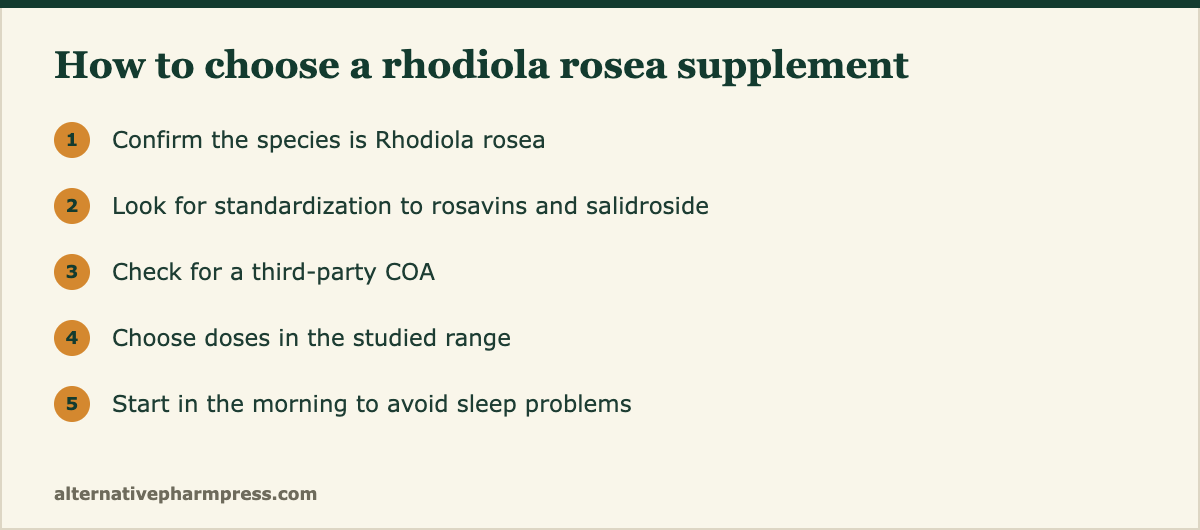
A product standardized only to salidroside could come from a different Rhodiola species, because salidroside isn’t unique to Rhodiola rosea. Rosavins are a more specific marker. Third-party testing for identity, heavy metals and contaminants adds another layer of confidence. Our best nootropic brands roundup explains how to read supplement certificates of analysis.
How it’s typically taken
Clinical studies have used roughly 200 to 680 mg per day of standardized extract, usually taken in the morning or split between morning and early afternoon. Some people take it for a few weeks at a time rather than continuously. Follow the product label, start at the lower end, and talk to a healthcare provider if you take medications or have a health condition.
Why rhodiola results are inconsistent
Several factors help explain why some trials find a benefit and others don’t. Studies have used different extracts, doses and durations, ranging from a single dose before a test to twelve weeks of daily use. Some measured objective outcomes such as reaction time, while others relied on questionnaires about how tired people felt. Sample sizes were often under 100 people, which makes chance findings more likely. Finally, many supplements on the market don’t match the extracts used in research, so even a positive trial may not apply to the product on the shelf.
There’s also the question of who benefits. Rhodiola appears to be studied most successfully in people who are already fatigued or under heavy stress, rather than in healthy, well-rested volunteers. If you’re simply looking for a boost on an ordinary day, the effect may be small or unnoticeable.
Realistic expectations
If you decide to try rhodiola, think of it as a modest, possible aid rather than a solution. A reasonable approach is to choose a standardized product, take it in the morning for three to four weeks, and note whether your energy or sense of stress changes. If nothing changes, there’s little reason to continue. Persistent fatigue also deserves a medical check, since thyroid problems, anemia, sleep apnea and depression are common, treatable causes.
Sustainability concerns
Wild Rhodiola rosea has been heavily harvested, and the species is now listed in Appendix II of CITES, which regulates international trade to prevent overexploitation. Choosing cultivated or responsibly sourced rhodiola helps reduce pressure on wild populations.
Bottom line
Rhodiola rosea is one of the better-studied adaptogens, with small trials suggesting it may reduce stress-related fatigue and burnout symptoms over a few weeks. The evidence is still limited and inconsistent, and product quality is a real problem. If you try it, choose a standardized Rhodiola rosea extract with third-party testing, take it early in the day, and check with a healthcare provider if you take medication. For a broader starting point, see our nootropics beginner’s guide.
FAQ
What is rhodiola rosea good for?
It’s mainly studied for stress-related fatigue and burnout. Smaller studies have looked at mood, focus and exercise.
How long does rhodiola take to work?
Some people notice effects within days, but most studies measured benefits after one to four weeks of daily use.
Can I take rhodiola every day?
Studies have used it daily for up to 12 weeks. Long-term safety beyond that is not well studied.
Does rhodiola keep you awake?
It can. Rhodiola is mildly stimulating, so taking it in the morning helps avoid sleep problems.
Can I take rhodiola with antidepressants?
Talk to your doctor first. Rhodiola may affect serotonin and other neurotransmitters, so interactions are possible.
Is rhodiola the same as ashwagandha?
No. They’re different plants with different effects. Rhodiola tends to be energizing, while ashwagandha is more calming.