
Ashwagandha (Withania somnifera), sometimes called Indian ginseng or winter cherry, has been used in Ayurvedic medicine for thousands of years. Today it’s one of the best-selling supplements in the world, marketed for stress relief, better sleep, energy, athletic performance and hormone balance.
Unlike many trendy herbs, ashwagandha has dozens of human clinical trials. This guide reviews what research shows about ashwagandha benefits, how extracts differ, side effects and safety concerns — including rare liver injury and thyroid effects — and who should avoid it.
Key takeaways
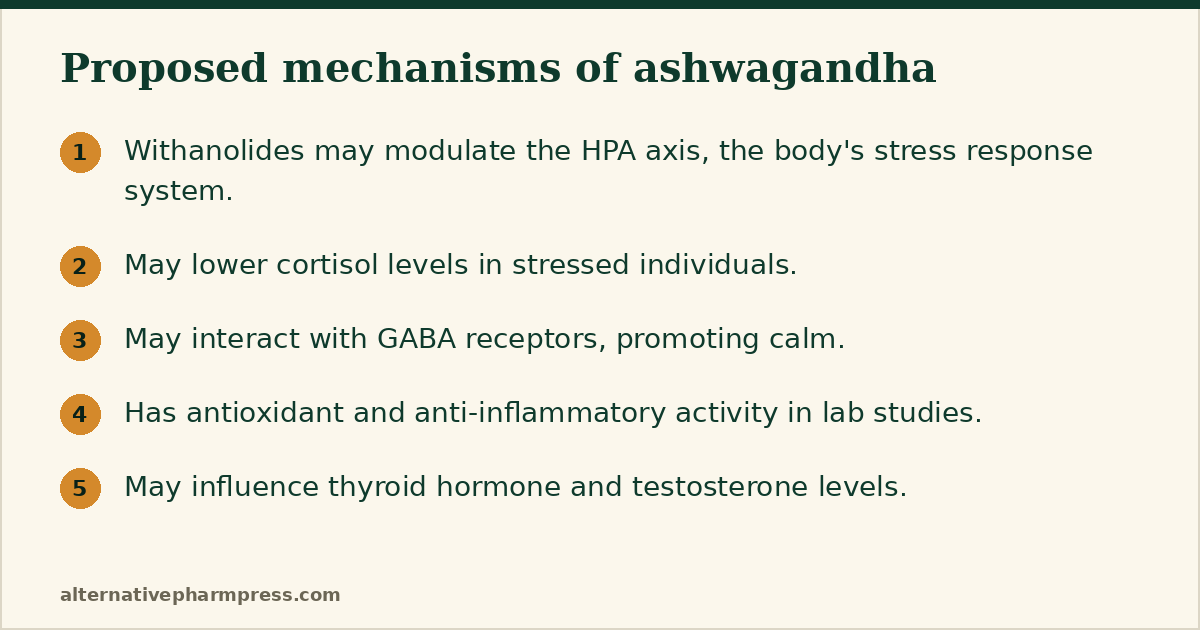
- Ashwagandha is an adaptogen containing withanolides, compounds thought to influence stress responses.
- Multiple small to medium trials suggest it may reduce perceived stress and cortisol and improve sleep quality.
- Some studies report benefits for strength, endurance and testosterone in men, though results vary.
- Popular extracts include KSM-66 (root) and Sensoril (root and leaf); doses in studies often range 240–600 mg/day.
- Rare liver injury, thyroid effects and interactions mean some people should avoid it; several countries have restricted ashwagandha.
What is ashwagandha?
Ashwagandha is a small shrub in the nightshade family, native to India, the Middle East and parts of Africa. The root is most commonly used, though some extracts include leaves. Its name in Sanskrit roughly means “smell of the horse,” referring to the root’s odor and the traditional belief that it imparts strength.
Ashwagandha is classified as an adaptogen — a term for substances believed to help the body adapt to stress. The term is popular in wellness marketing but isn’t a recognized medical category. Compare with ashwagandha vs rhodiola.
How it might work
What the research shows
Stress and anxiety
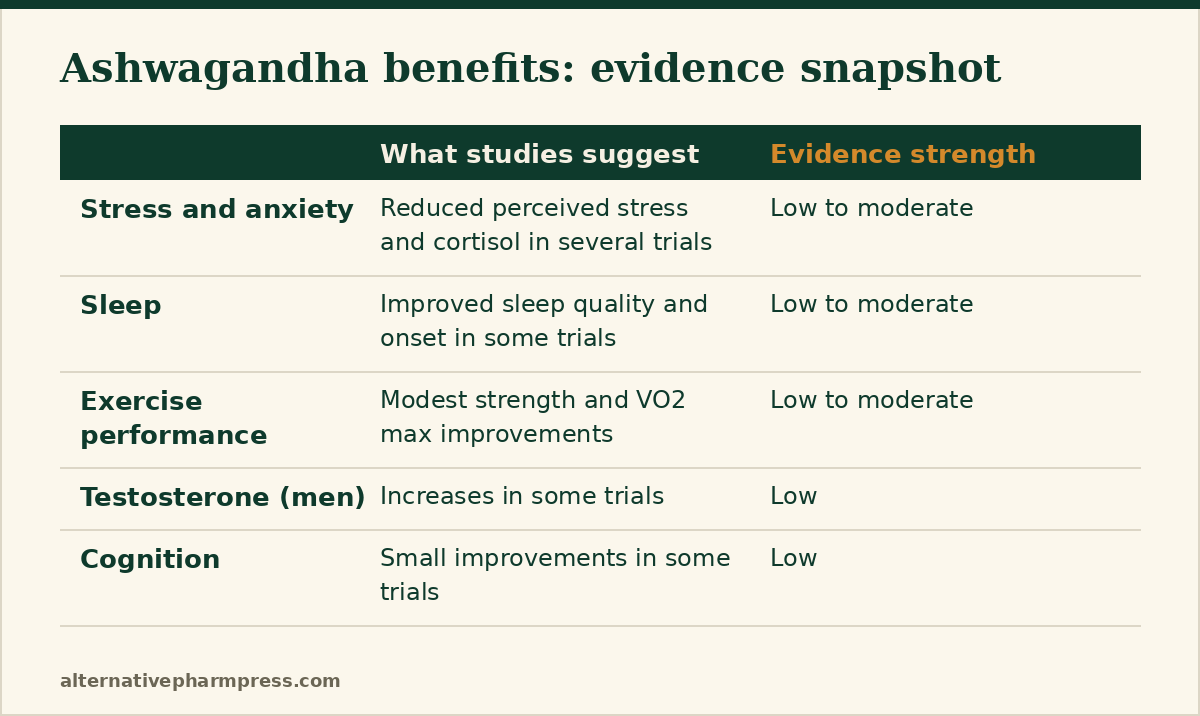
Several randomized controlled trials found that ashwagandha extract (often 240–600 mg/day for 6–8 weeks) reduced scores on stress and anxiety questionnaires and lowered cortisol compared with placebo. Meta-analyses generally support a modest effect, though many trials are small, short and funded by extract manufacturers.
Sleep
Trials in adults with insomnia or poor sleep found improvements in sleep quality, sleep onset and total sleep time with ashwagandha. The leaf contains triethylene glycol, which some researchers suggest may contribute to sleep effects.
Exercise and muscle
Studies in young men doing resistance training found greater gains in strength and muscle size with ashwagandha than placebo. Some studies also reported improved VO2 max. Results vary, and long-term effects are unknown.
Testosterone and fertility
Some trials reported increased testosterone and improved sperm parameters in men, particularly those with stress or infertility. Evidence is limited and not consistent.
Thyroid
A few studies and case reports suggest ashwagandha can increase thyroid hormone levels, which may be a concern for people with hyperthyroidism or on thyroid medication.
Popular extracts
| Extract | Plant part | Typical dose in studies | Notes |
|---|---|---|---|
| KSM-66 | Root | 300–600 mg/day | Most studied; full-spectrum root extract |
| Sensoril | Root and leaf | 125–500 mg/day | Higher withanolide content |
| Shoden | Root and leaf | 120–240 mg/day | Highly concentrated withanolides |
| Generic root powder | Root | 1–6 g/day | Traditional use |
Standardization to withanolide content helps compare products.
Side effects
Common side effects are usually mild: stomach upset, diarrhea, nausea and drowsiness. Some people experience headaches or emotional blunting.
Liver injury
Case reports and a case series have described liver injury associated with ashwagandha supplements, typically appearing weeks to months after starting. Symptoms included jaundice, itching and fatigue. Most cases resolved after stopping. The NIH LiverTox database recognizes ashwagandha as a rare cause of liver injury.
Stop ashwagandha and see a doctor if you develop yellowing of the skin or eyes, dark urine, severe itching, nausea or abdominal pain.
Regulatory actions
Some countries, including Denmark, have restricted or banned ashwagandha supplements, citing safety concerns such as possible effects on hormones and pregnancy. Other regulators continue to permit it. These differing positions reflect uncertainty about long-term safety.
Who should avoid ashwagandha
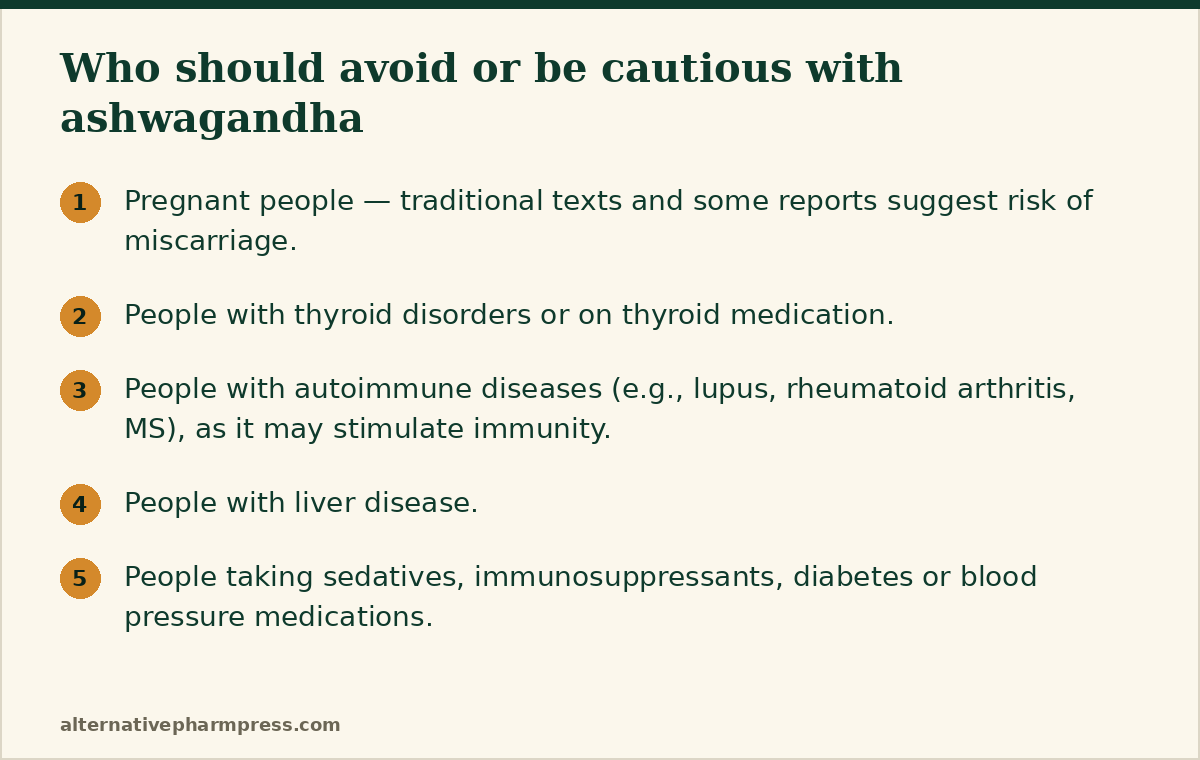
People with hormone-sensitive prostate cancer should also be cautious due to possible testosterone effects. Stop ashwagandha at least two weeks before surgery because of possible interactions with anesthesia and sedation.
Drug interactions
- Sedatives and sleep aids — additive drowsiness.
- Thyroid medications — may increase thyroid hormone effects.
- Immunosuppressants — may counteract effects.
- Diabetes medications — may lower blood sugar further.
- Blood pressure medications — may lower blood pressure further.
How to choose an ashwagandha supplement
- Choose a standardized extract with known withanolide content.
- Look for third-party testing for contaminants, including heavy metals.
- Check plant part — root only or root and leaf.
- Use studied doses (often 240–600 mg/day of extract).
- Avoid proprietary blends that hide doses.
- Talk to a clinician if you take medications or have health conditions.
For other options, see best supplements for anxiety and best nootropic brands 2026.
How long does ashwagandha take to work?
Most trials measured effects after 6–12 weeks. Some people notice changes in sleep or stress within a few weeks. If you don’t notice benefits after a couple of months, it may not be worth continuing.
Cycling ashwagandha
Some people cycle ashwagandha — taking it for a period and then stopping — though there’s no strong evidence for specific cycling schedules. Given limited long-term safety data, periodic breaks and reassessment are reasonable.
Ashwagandha and mental health
Some people with anxiety or depression try ashwagandha. While trials suggest it may reduce stress scores, it isn’t a substitute for evidence-based treatment. A few users report emotional blunting or feeling “flat.” If you have a mental health condition or take psychiatric medications, discuss ashwagandha with your clinician first.
Ashwagandha for women
Some studies have looked at ashwagandha for stress, sleep and sexual function in women, with modest positive findings. However, ashwagandha should be avoided during pregnancy, and women with thyroid conditions or hormone-sensitive conditions should be cautious.
Ashwagandha gummies and drinks
Ashwagandha now appears in gummies, teas, sleep drinks and “stress relief” beverages. These products may contain lower doses than studied extracts, or combine ashwagandha with other herbs, melatonin or caffeine. Check labels carefully. See nootropic drinks.
Limitations of ashwagandha research
Although ashwagandha has more human trials than many herbs, the research has important limitations. Many studies are small, last only 6–12 weeks and are funded by companies that sell proprietary extracts. Different trials use different extracts, doses and outcome measures, making it hard to compare results. Some trials were conducted in specific populations, such as stressed adults in India, which may not generalize to everyone. Long-term safety data beyond a few months is limited. These factors don’t mean ashwagandha doesn’t work, but they suggest modest expectations.
Practical tips for trying ashwagandha
- Start with a single standardized product at a studied dose rather than a multi-herb blend.
- Take it consistently for six to eight weeks before judging results.
- Track one or two outcomes — such as stress levels on a 0–10 scale or sleep quality — before and during use.
- Notice side effects like stomach upset, drowsiness or mood changes.
- Stop and reassess if you don’t see benefits or develop side effects.
Ashwagandha and athletes
Ashwagandha isn’t on the World Anti-Doping Agency prohibited list, but supplements can be contaminated with banned substances. Athletes should choose products certified by programs such as NSF Certified for Sport or Informed Sport. Given reported effects on testosterone in some studies, athletes in tested sports should be especially careful about product quality.
Storage
Keep ashwagandha capsules or powder sealed in a cool, dry place away from sunlight, and check the expiration date.
Ashwagandha root powder vs extracts
Traditional Ayurvedic use often involved root powder mixed with milk or ghee, sometimes several grams per day. Modern extracts concentrate withanolides so lower doses can be used. Root powder may cause more digestive upset at high doses and is harder to standardize. Extracts allow more consistent dosing but vary in concentration and plant part.
FAQ
What are the main benefits of ashwagandha?
Trials suggest it may reduce stress and cortisol, improve sleep quality and modestly support exercise performance.
How long does ashwagandha take to work?
Most studies measured effects after 6–12 weeks, though some people notice changes sooner.
Is ashwagandha safe?
It’s generally well tolerated short-term, but rare liver injury and thyroid effects have been reported. Some people should avoid it.
Can ashwagandha raise testosterone?
Some trials in men reported increases, but evidence is limited and results vary.
Who should not take ashwagandha?
Pregnant people, those with thyroid disorders, autoimmune diseases or liver disease, and people on certain medications should avoid or be cautious.
Can ashwagandha cause liver damage?
Rare cases of liver injury have been reported. Stop and seek care if you notice jaundice, dark urine or severe itching.
What’s the best time to take ashwagandha?
Many people take it in the evening for sleep or split doses. Follow product directions and studies’ dosing patterns.