
Reishi (Ganoderma lucidum and related species), known as lingzhi in Chinese, has been used in East Asian traditional medicine for over 2,000 years. Revered as the “mushroom of immortality,” it’s now one of the most popular functional mushrooms, found in capsules, teas, tinctures, coffees and gummies marketed for immunity, calm, sleep and longevity.
This guide reviews what research says about reishi mushroom benefits, the key compounds involved, extract quality issues, side effects and interactions, and how to choose a product.
Key takeaways
- Reishi contains polysaccharides (beta-glucans) and triterpenes (ganoderic acids), the two main groups studied for effects.
- Human studies suggest possible effects on immune markers, fatigue and quality of life, but many trials are small and of variable quality.
- Evidence for sleep, anxiety and longevity in humans is limited.
- Reishi may lower blood pressure and blood sugar and affect clotting; rare liver injury has been reported with reishi powder.
- Choose fruiting-body or dual extracts with measured beta-glucans and triterpenes, plus contaminant testing.
What is reishi?
Reishi is a woody, shelf-like mushroom that grows on hardwood trees. Its glossy reddish cap made it a symbol of health and longevity in Chinese, Japanese and Korean cultures. Because it’s tough and bitter, reishi isn’t eaten like culinary mushrooms; it’s traditionally simmered into tea or prepared as extracts. Several species are sold as reishi, and genetic studies show many commercial products labeled G. lucidum are actually G. lingzhi or related species.
For a broader overview of functional mushrooms, see functional mushrooms research.
Key compounds
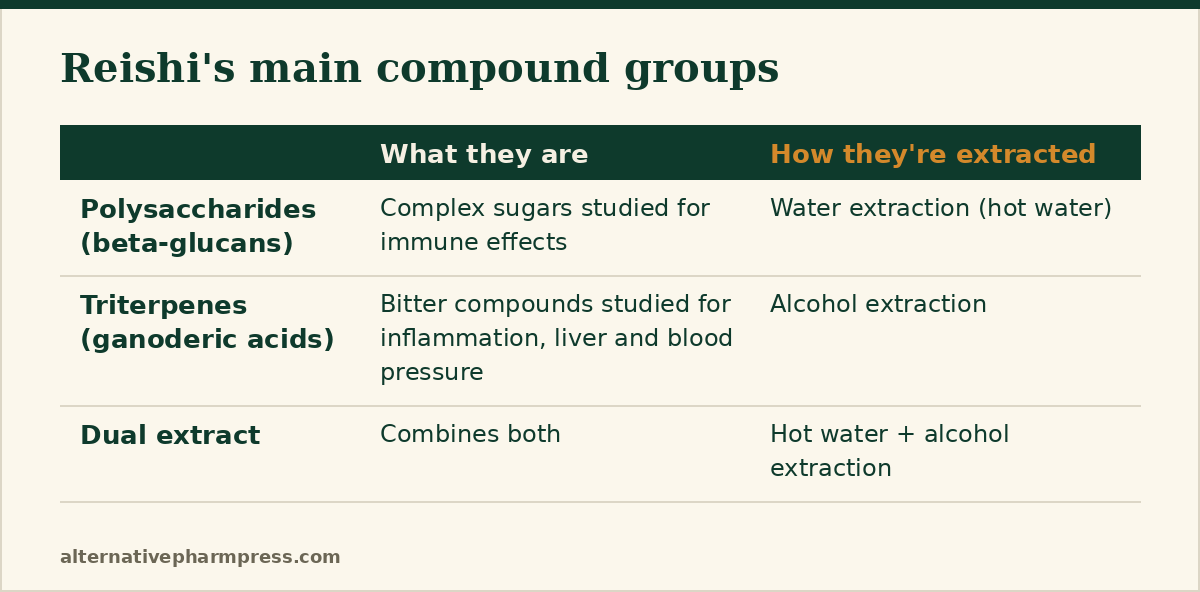
Because these compounds dissolve differently, extraction method matters. A hot-water extract emphasizes polysaccharides; an alcohol extract captures triterpenes. Dual extracts combine both.
What the research shows
Immune function
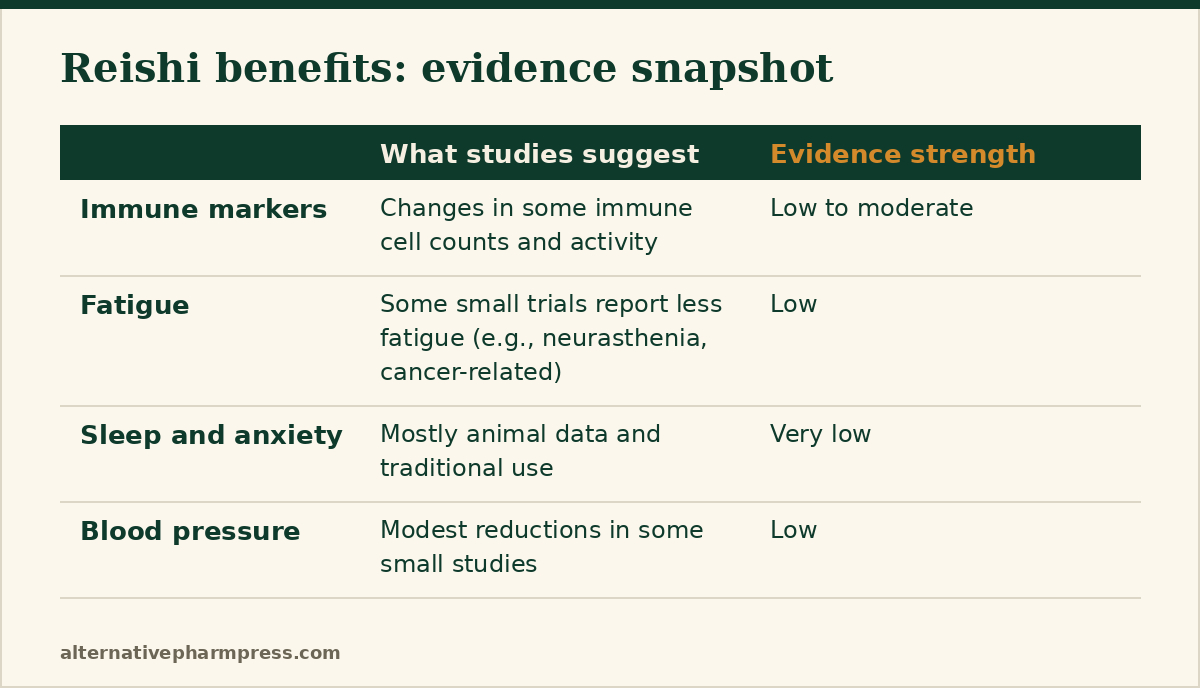
Reishi polysaccharides interact with immune cells in lab studies. Some small human trials reported changes in immune markers such as natural killer cell activity, but results are inconsistent and their clinical meaning is unclear.
Cancer support
A Cochrane review found that reishi used alongside conventional cancer treatment might improve immune markers and quality of life in some patients, but evidence was low quality and didn’t support reishi as a standalone cancer treatment. People with cancer should talk to their oncology team before using reishi, as it may interact with treatments.
Fatigue
A few small trials suggest reishi may reduce fatigue in conditions such as neurasthenia and cancer-related fatigue. More rigorous studies are needed.
Blood sugar and heart health
Some trials examined reishi for blood sugar, cholesterol and blood pressure, with mixed results. A review found no consistent benefit for cardiovascular risk factors.
Sleep and stress
Reishi is often marketed for calm and sleep, based largely on traditional use and animal studies. Human evidence is limited. Compare with chaga vs reishi and reishi vs lion’s mane.
Side effects
Reishi is generally well tolerated in short-term use, but reported side effects include:
- Digestive upset, dry mouth or throat irritation.
- Dizziness and headaches.
- Skin rash or itching.
- Nosebleeds or bleeding in rare cases.
- Liver injury — rare case reports, mostly with reishi powder products.
Stop reishi and see a doctor if you notice yellowing of the skin or eyes, dark urine, unusual fatigue or bleeding. Rare liver injury has been reported with reishi supplements.
Drug interactions
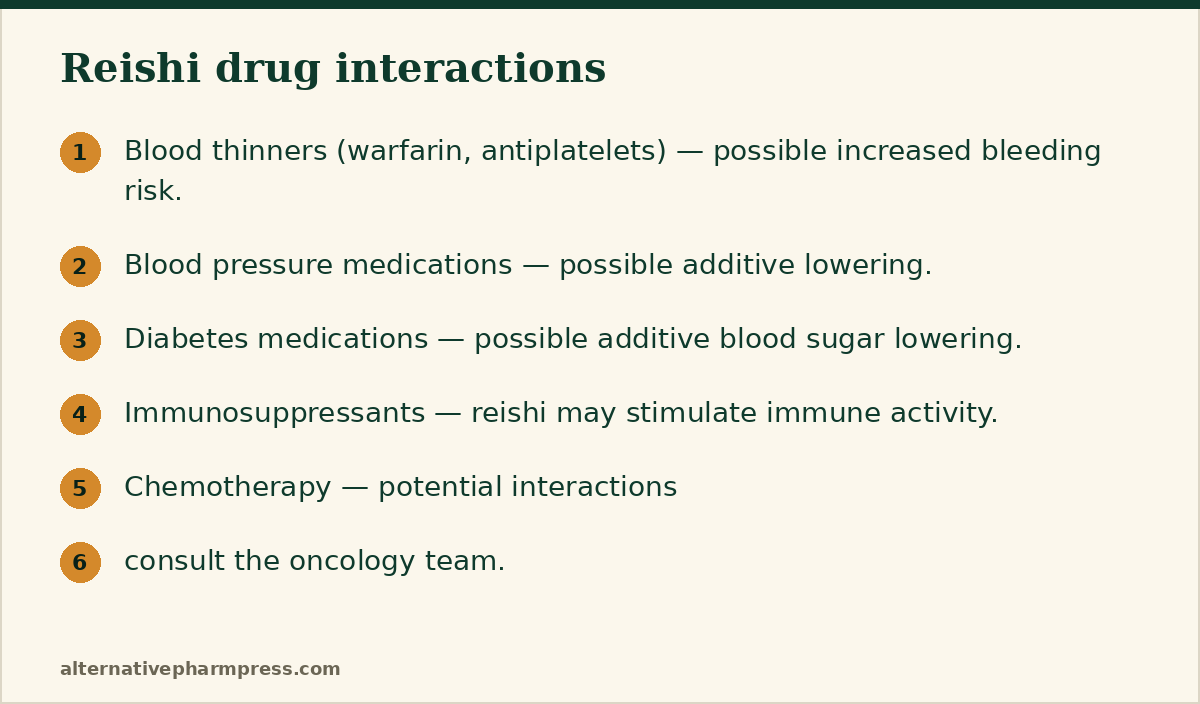
People scheduled for surgery should stop reishi at least two weeks beforehand due to bleeding concerns. Pregnant or breastfeeding people should avoid reishi supplements because of limited safety data.
Extract quality issues
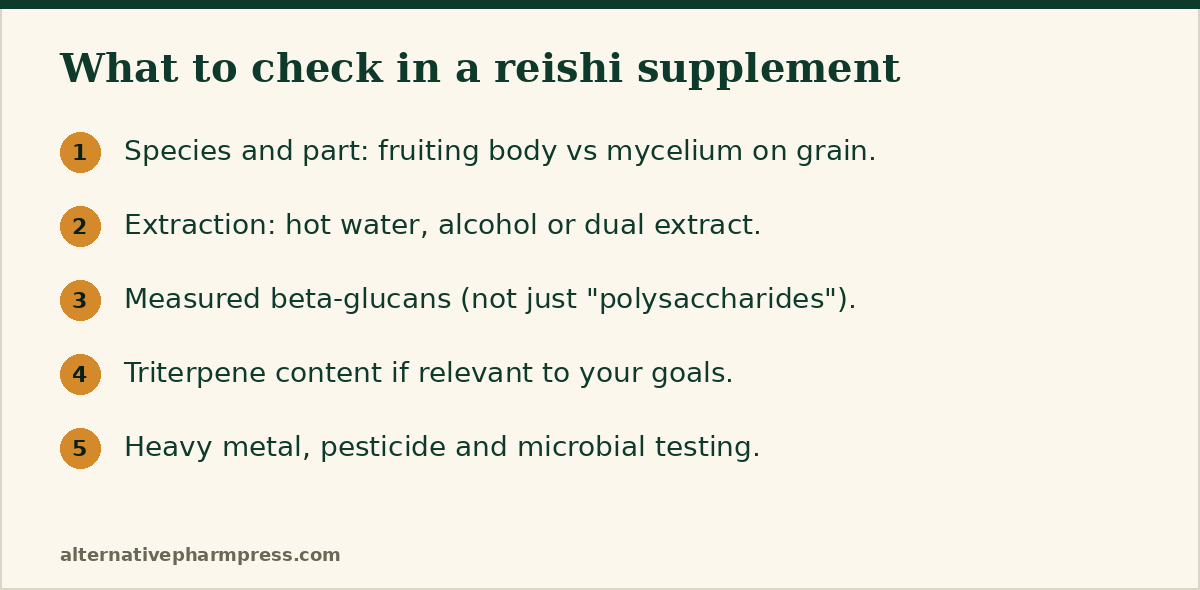
Many mushroom supplements are made from mycelium grown on grain, which can contain substantial starch. Testing for beta-glucans and alpha-glucans (starch) helps reveal true mushroom content. Read functional mushrooms in 2026: label problems and do mushroom gummies work?.
How reishi is used
- Capsules or tablets of extract.
- Powders added to coffee, tea or smoothies. See mushroom coffee.
- Tinctures (alcohol or dual extracts).
- Traditional tea made by simmering sliced reishi for hours.
Doses in studies vary widely, often from about 1 to 9 grams daily of dried mushroom or equivalent extract.
Reishi vs other functional mushrooms
| Mushroom | Main marketed use | Evidence |
|---|---|---|
| Reishi | Calm, immunity, longevity | Low; mixed |
| Lion’s mane | Focus, memory | Low to moderate in small trials |
| Cordyceps | Energy, endurance | Low; mixed |
| Turkey tail | Immune support | Studied as cancer adjunct (PSK) |
| Chaga | Antioxidant, immune | Very limited human data |
Compare in turkey tail vs reishi, cordyceps benefits and what is lion’s mane good for?.
Who should avoid reishi
- People taking blood thinners or with bleeding disorders.
- Those with low blood pressure or on blood pressure medication.
- People with liver disease.
- Anyone on immunosuppressants or with an organ transplant.
- Pregnant or breastfeeding people.
- People scheduled for surgery within two weeks.
Reishi and longevity claims
Reishi’s reputation as a longevity mushroom comes from traditional texts and modern lab research on antioxidant and anti-inflammatory activity. There’s no human evidence that reishi extends lifespan. Healthy lifestyle factors — physical activity, diet, sleep, not smoking and social connection — remain the best-supported longevity strategies.
Making reishi tea
To make traditional reishi tea, simmer a few grams of dried, sliced reishi in water for one to two hours, then strain. The tea is bitter; some people add ginger, honey or other teas. Because triterpenes don’t dissolve well in water, hot-water tea mainly extracts polysaccharides.
Reishi in cancer care: a closer look
Reishi is widely used as a complementary therapy in parts of Asia, and some cancer patients elsewhere use it hoping to support immunity or reduce side effects. Research suggests possible benefits for quality of life and immune markers in some studies, but no reliable evidence that reishi shrinks tumors or improves survival on its own. Because reishi may affect blood clotting, blood counts and drug metabolism, it can complicate chemotherapy and surgery. Integrative oncology services can help patients decide whether and how to use reishi safely alongside conventional treatment.
How long does reishi take to work?
In studies reporting effects, participants typically took reishi for several weeks to a few months. Reishi isn’t a fast-acting supplement. Tracking symptoms like energy, sleep quality or frequency of colds over two to three months gives a better sense of whether it’s helping.
Reishi species and authentication
DNA testing of commercial reishi products has found that many don’t contain the species listed on the label, and some contain other mushrooms or fillers. Reputable brands use DNA barcoding or other identity testing to confirm species. If authentication matters to you, ask the brand how it verifies identity.
Reishi spore powder and spore oil
Some products use reishi spores — the tiny reproductive cells released from the mushroom’s underside — sold as “cracked” spore powder or spore oil. Marketers claim spores are more potent because they contain concentrated triterpenes and other compounds. Spores have a tough outer wall that must be broken to release contents, which is why “cracked” or “broken-wall” products exist. Research on spore products in humans is limited, and they’re often expensive. As with other forms, quality and testing vary.
Reishi and the liver: what case reports show
Published case reports describe liver injury in people taking reishi powder supplements, sometimes after one to two months of use. Symptoms included jaundice, fatigue and elevated liver enzymes, and most improved after stopping. Reishi tea and traditional extracts have a long history of use without widespread reports, but the possibility of rare reactions — possibly related to product contamination, individual sensitivity or specific formulations — is a reason to monitor for symptoms and choose tested products.
Tracking whether reishi helps
If you try reishi for a specific goal, such as better sleep or fewer colds, write down your baseline before starting and track the same measures over two to three months. Note any side effects such as dry mouth, dizziness or digestive upset. If you don’t see meaningful benefit after a fair trial, it may not be worth continuing.
FAQ
What are the benefits of reishi mushroom?
It’s marketed for immunity, calm, sleep and longevity. Human studies suggest possible effects on immune markers and fatigue, but evidence is limited and mixed.
Does reishi help with sleep?
Reishi is traditionally used for calm and sleep, and animal studies are encouraging, but human evidence is limited.
Is reishi safe?
It’s generally well tolerated short-term, but rare liver injury has been reported, and it may interact with blood thinners, blood pressure and diabetes medications.
How much reishi should I take?
Studies used a wide range, often 1–9 grams daily of dried mushroom equivalent. Follow product directions and talk to a clinician if you take medications.
Can reishi help with cancer?
Reishi may improve some immune markers and quality of life as an adjunct, but it isn’t a cancer treatment. Talk to your oncology team before use.
What’s the difference between reishi extracts?
Hot-water extracts emphasize polysaccharides; alcohol extracts capture triterpenes; dual extracts contain both.