
Semaglutide — sold as Ozempic, Wegovy and Rybelsus — is one of the most widely used medications in the world. As it’s often grouped with “peptides” online, many people ask: is semaglutide a peptide? The answer is yes. Semaglutide is a synthetic peptide designed to mimic the natural hormone GLP-1, with clever chemical modifications that make it last far longer in the body.
This guide explains semaglutide’s structure, how it works, how oral and injectable forms differ, how it compares with other peptides and why its peptide status matters for regulation and compounding.
Key takeaways
- Semaglutide is a 31-amino-acid peptide closely based on human GLP-1.
- Key modifications — an amino acid substitution and a fatty acid side chain — protect it from breakdown and let it bind albumin, giving a half-life of about one week.
- It activates GLP-1 receptors, reducing appetite, slowing stomach emptying and improving insulin release.
- It’s available as a weekly injection (Ozempic, Wegovy) and a daily tablet (Rybelsus; higher-dose oral formulations for weight are emerging).
- Semaglutide is an FDA-approved drug, unlike many “research peptides” sold online.
What is a peptide?
Peptides are short chains of amino acids linked by peptide bonds. They’re smaller than proteins — typically fewer than about 50 amino acids. Many hormones are peptides, including insulin, oxytocin and GLP-1. Peptide drugs can be highly specific for their targets but are often broken down quickly in the body, which is a major design challenge. For a primer, read research peptides explained.
Semaglutide’s structure
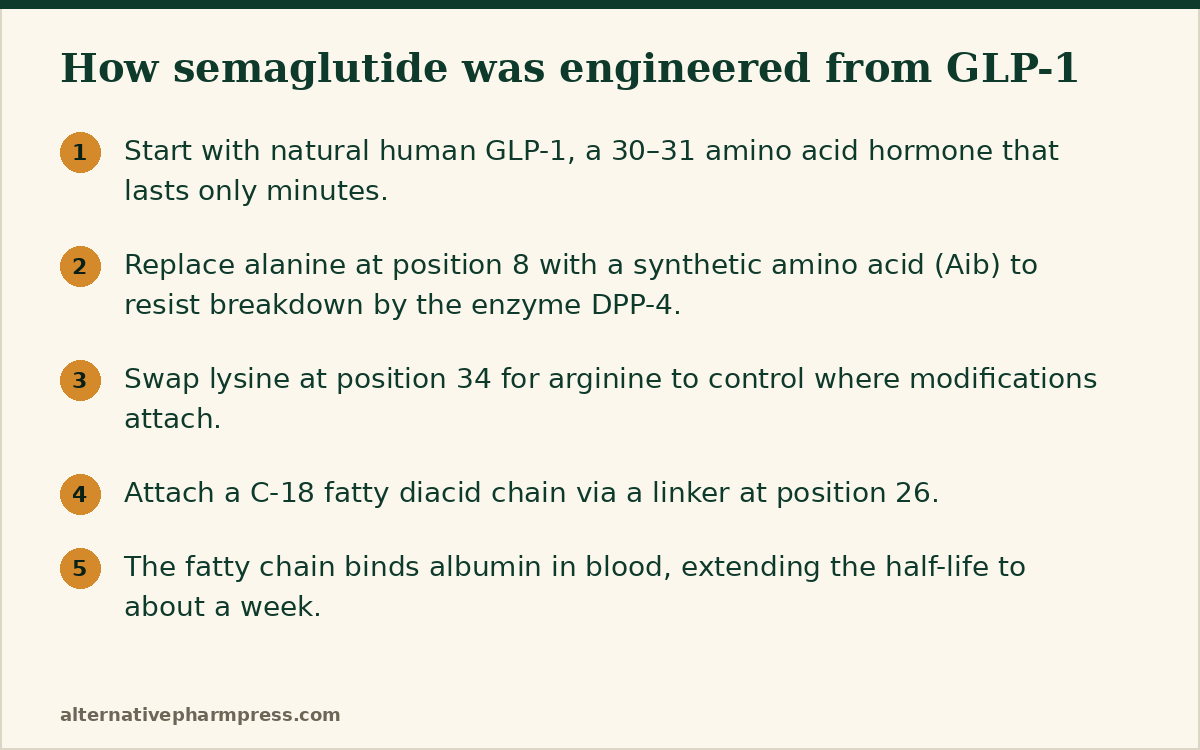
Natural GLP-1 is cleared within minutes by the enzyme DPP-4 and the kidneys. Semaglutide’s modifications protect it from DPP-4 and allow it to bind albumin, a blood protein, which slows its removal. That’s why it can be taken once a week.
How semaglutide works
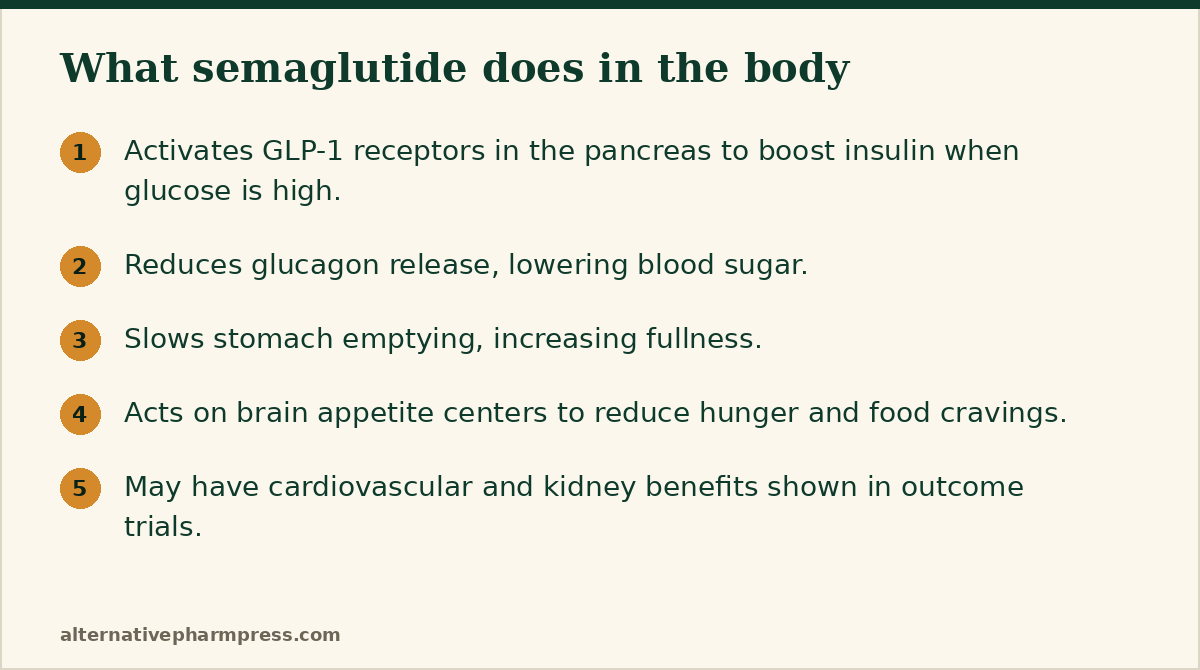
These effects together lower blood sugar in type 2 diabetes and reduce food intake, leading to weight loss. Large trials have also shown cardiovascular benefits in certain populations. For a comparison with other drugs, see semaglutide vs tirzepatide and semaglutide vs liraglutide.
Oral vs injectable semaglutide
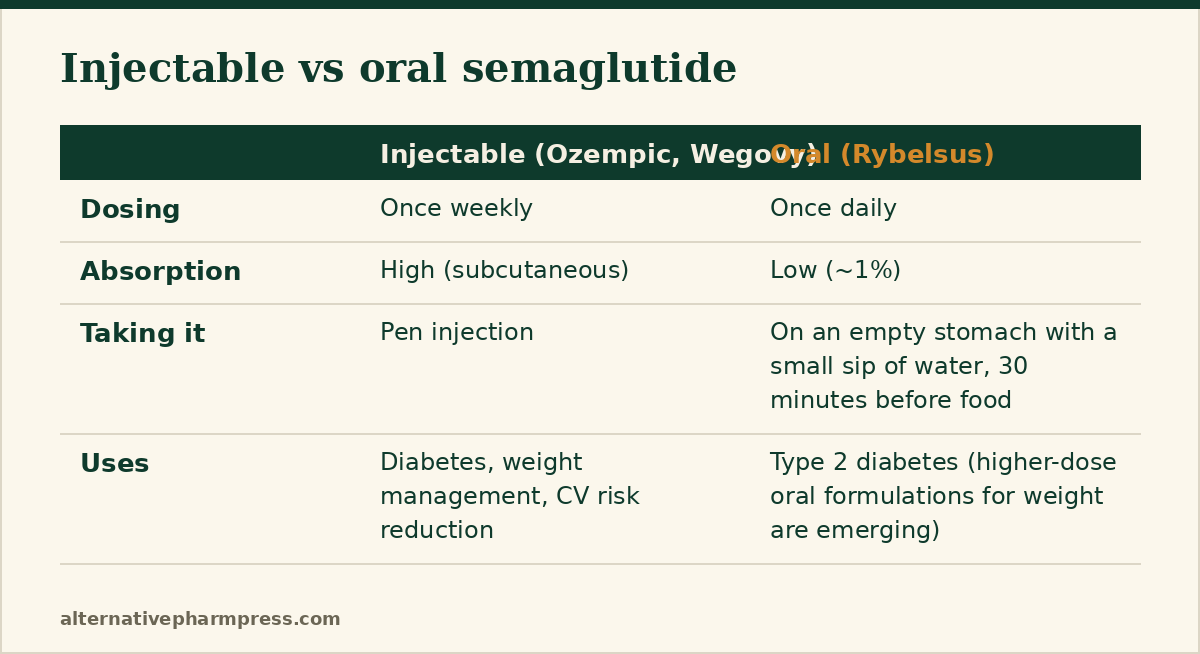
Getting a peptide into the bloodstream by mouth is difficult because stomach acid and enzymes break it down. Oral semaglutide uses an absorption enhancer called SNAC, which protects the peptide locally and helps it cross the stomach lining. Even so, only a small fraction is absorbed, so oral doses are much higher than injected doses. Compare with newer non-peptide oral options in orforglipron vs oral semaglutide.
Semaglutide vs other peptides
| Peptide | Type | Status |
|---|---|---|
| Semaglutide | GLP-1 receptor agonist | FDA-approved (Ozempic, Wegovy, Rybelsus) |
| Liraglutide | GLP-1 receptor agonist | FDA-approved (Victoza, Saxenda) |
| Tirzepatide | GLP-1/GIP dual agonist | FDA-approved (Mounjaro, Zepbound) |
| Retatrutide | GLP-1/GIP/glucagon triple agonist | Investigational |
| BPC-157 | Gastric-derived peptide | Unapproved; research use only |
See is tirzepatide a peptide?, retatrutide peptide and GLP-1 vs GLP-2 vs GLP-3.
Side effects
Common side effects include nausea, vomiting, diarrhea, constipation and abdominal discomfort, especially during dose increases. Other risks include gallbladder problems, pancreatitis, kidney problems from dehydration and low blood sugar when combined with insulin or sulfonylureas. Semaglutide carries a boxed warning about thyroid C-cell tumors seen in rodents; it’s not recommended for people with a personal or family history of medullary thyroid carcinoma or MEN2.
Why “peptide” matters for regulation
Because semaglutide is a peptide drug, it’s regulated as a prescription medicine. During shortages, compounding pharmacies were allowed to make copies under certain conditions. As shortages resolved, the FDA moved to limit compounding of semaglutide. Meanwhile, gray-market “research peptide” semaglutide sold online raises safety concerns: products may be mislabeled, impure, contaminated or contain different salt forms. Read the GLP-1 peptide crackdown, weight-loss peptides in 2026 and how to read a peptide COA.
Semaglutide salt forms
Some compounded and gray-market products used semaglutide sodium or semaglutide acetate, salt forms that differ from the base form in approved products. The FDA warned that these salt forms haven’t been shown to be the same as the approved drug and may not be safe or effective.
Stopping semaglutide
When people stop semaglutide, appetite usually returns and many regain weight over the following year. Read what happens when you stop Zepbound or Wegovy.
Peptide manufacturing
Semaglutide is manufactured using a combination of recombinant DNA technology (producing the peptide backbone in yeast) and chemical synthesis to attach modifications. This process requires strict quality controls. Gray-market products may use different synthesis methods with less oversight, raising concerns about purity and impurities like peptide fragments.
A brief history
GLP-1 was identified in the 1980s as an “incretin” hormone released from the gut after meals. Researchers quickly realized its potential for diabetes, but natural GLP-1 lasted only minutes in the body. The first GLP-1 drug, exenatide, came from a compound found in Gila monster venom. Liraglutide followed, using a fatty acid attachment to extend action to about a day. Semaglutide refined this approach further, achieving once-weekly dosing. Its approval for type 2 diabetes in 2017 and for chronic weight management in 2021 transformed obesity medicine.
Storage and handling
Injectable semaglutide pens must be kept refrigerated before first use and can then be stored at room temperature for a limited time according to the label. Peptides can be damaged by freezing, heat and light. Never use a pen that has been frozen. Gray-market vials shipped without temperature control may have degraded before arrival — another reason to use approved, pharmacy-dispensed products.
Who is semaglutide for?
Semaglutide is approved for adults with type 2 diabetes (Ozempic, Rybelsus), for chronic weight management in adults and some adolescents with obesity or overweight with related conditions (Wegovy), and for reducing cardiovascular risk in certain adults with established heart disease and obesity. It’s not intended for cosmetic weight loss in people without these conditions. A clinician will consider medical history, other medications and potential risks before prescribing.
Semaglutide and muscle mass
Rapid weight loss on semaglutide includes some loss of lean mass along with fat. Researchers are studying how much and whether it matters for long-term health. Strength training, adequate protein intake and regular medical follow-up are commonly recommended to help preserve muscle during treatment.
Why peptide drugs are usually injected
Most peptide medicines, including insulin and GLP-1 drugs, are given by injection because the digestive system is designed to break proteins and peptides into amino acids. Stomach acid denatures them, and enzymes like pepsin and trypsin cut them apart. Even if a peptide survives, its size makes crossing the gut lining difficult. Injection bypasses these barriers, delivering the peptide under the skin where it slowly enters the bloodstream. Oral semaglutide is a notable exception made possible by its absorption enhancer, and researchers are developing other strategies, including non-peptide small molecules that activate the same receptors.
Semaglutide in the body over time
After an injection, semaglutide levels rise gradually, peaking within one to three days, and then decline slowly. Because the half-life is about a week, it takes four to five weeks of regular dosing to reach steady levels — one reason doses are increased gradually. After stopping, semaglutide remains in the body for several weeks, and side effects or appetite changes may linger during that time.
Common misconceptions
“Semaglutide is a steroid.” It isn’t. It’s a peptide hormone analog with a completely different structure and mechanism.
“Natural GLP-1 supplements work the same way.” Supplements marketed as “GLP-1 boosters” don’t contain semaglutide and haven’t shown comparable effects.
“All peptides are the same category.” Approved peptide drugs undergo extensive trials; many “research peptides” have little human evidence.
FAQ
Is semaglutide a peptide?
Yes. It’s a 31-amino-acid synthetic peptide based on human GLP-1, with modifications that extend its action to about one week.
How is semaglutide different from natural GLP-1?
It has amino acid changes that resist breakdown and a fatty acid chain that binds albumin, extending its half-life from minutes to about a week.
Why can semaglutide be taken as a pill?
Oral semaglutide uses an absorption enhancer called SNAC, though only a small fraction is absorbed, so higher doses are needed.
Is semaglutide the same as research peptides sold online?
No. Approved semaglutide is a regulated medication. Gray-market “research” versions may be mislabeled, impure or unsafe.
What are the main side effects of semaglutide?
Nausea, vomiting, diarrhea and constipation are most common. Serious risks include pancreatitis, gallbladder disease and a boxed warning for thyroid tumors in rodents.
How long does semaglutide stay in your body?
Its half-life is about one week, so it takes roughly five weeks after the last dose for most of it to leave the body.
Is semaglutide a hormone?
It’s a synthetic analog of the hormone GLP-1, designed to mimic its effects for much longer.