
HHC (hexahydrocannabinol) became one of the most popular hemp-derived cannabinoids after delta-8, sold in vapes, gummies and pre-rolls. Many sellers marketed it as federally legal. But its legal footing was always uncertain, and 2026 brings major changes.
This guide explains what HHC is, why its legal status has been contested, how federal rules changed in late 2025, the main approaches states take, how HHC compares with delta-8 legally and what consumers should keep in mind. Laws change quickly, so always check current rules where you live.
Key takeaways
- HHC is a hydrogenated form of THC, usually made by chemically converting hemp-derived CBD or other cannabinoids.
- Sellers argued HHC was legal under the 2018 Farm Bill because it came from hemp; regulators and some states disagreed.
- Federal legislation passed in late 2025 restricts intoxicating hemp-derived and synthesized cannabinoids, affecting HHC.
- Many states ban or restrict HHC directly or through rules on “synthetic” or intoxicating cannabinoids.
- HHC can cross-react on drug tests, and product quality varies widely.
What is HHC?
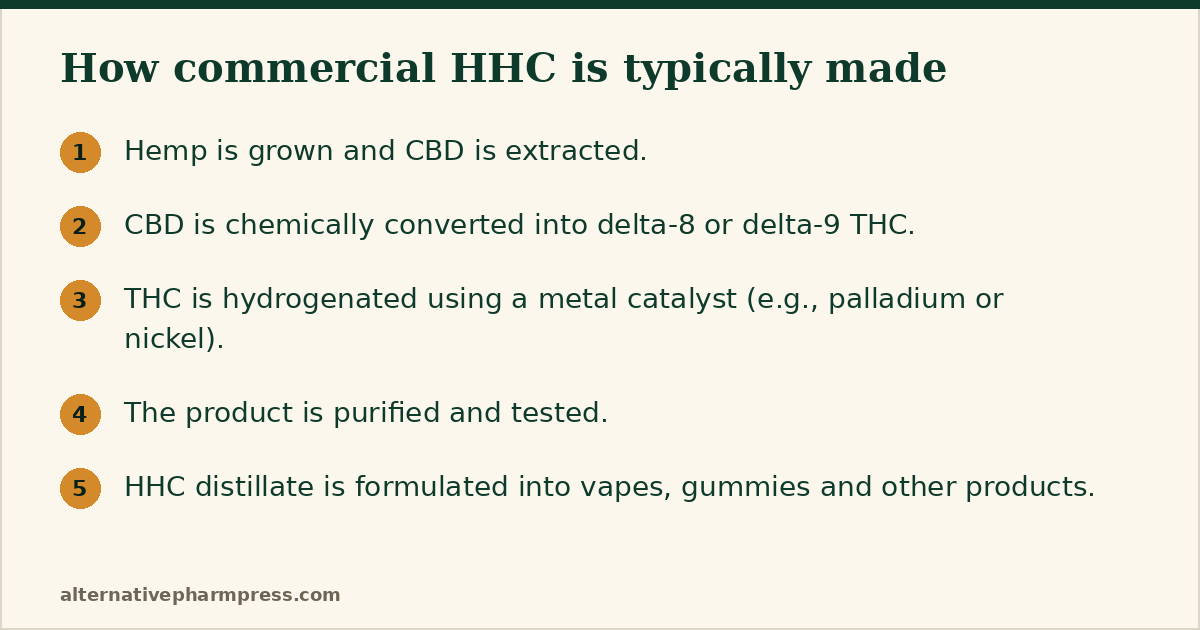
HHC is made by adding hydrogen atoms to THC’s molecular structure — a process called hydrogenation, similar to how vegetable oil is turned into margarine. HHC occurs in trace amounts in cannabis, but commercial HHC is produced in labs, usually starting from hemp-derived CBD that’s converted to delta-8 or delta-9 THC and then hydrogenated with a metal catalyst. For comparisons, read HHC vs delta-8 and delta-8 vs delta-9 vs THC-O.
Why HHC’s legal status was contested
The hemp argument
The 2018 Farm Bill legalized hemp and its derivatives, isomers and cannabinoids with no more than 0.3% delta-9 THC. Sellers argued that HHC, made from hemp, fell under this definition.
The synthetic argument
Opponents argued that HHC is synthetically derived because it requires chemical conversion. The DEA’s position has been that synthetically derived tetrahydrocannabinols remain controlled. Courts and agencies didn’t always agree on how this applied to products like delta-8 and HHC, leaving a gray area.
Federal changes in late 2025
Congress passed legislation in late 2025 that changes the definition of hemp and restricts intoxicating hemp-derived products, including cannabinoids synthesized or manufactured outside the plant. The changes include a total-THC standard and limits on THC per container, with implementation timelines extending into 2026. This affects HHC, delta-8, THC-O, THCP and THCA products. Read federal hemp law explained, hemp ban 2026 and hemp ban product impact.
How states regulate HHC
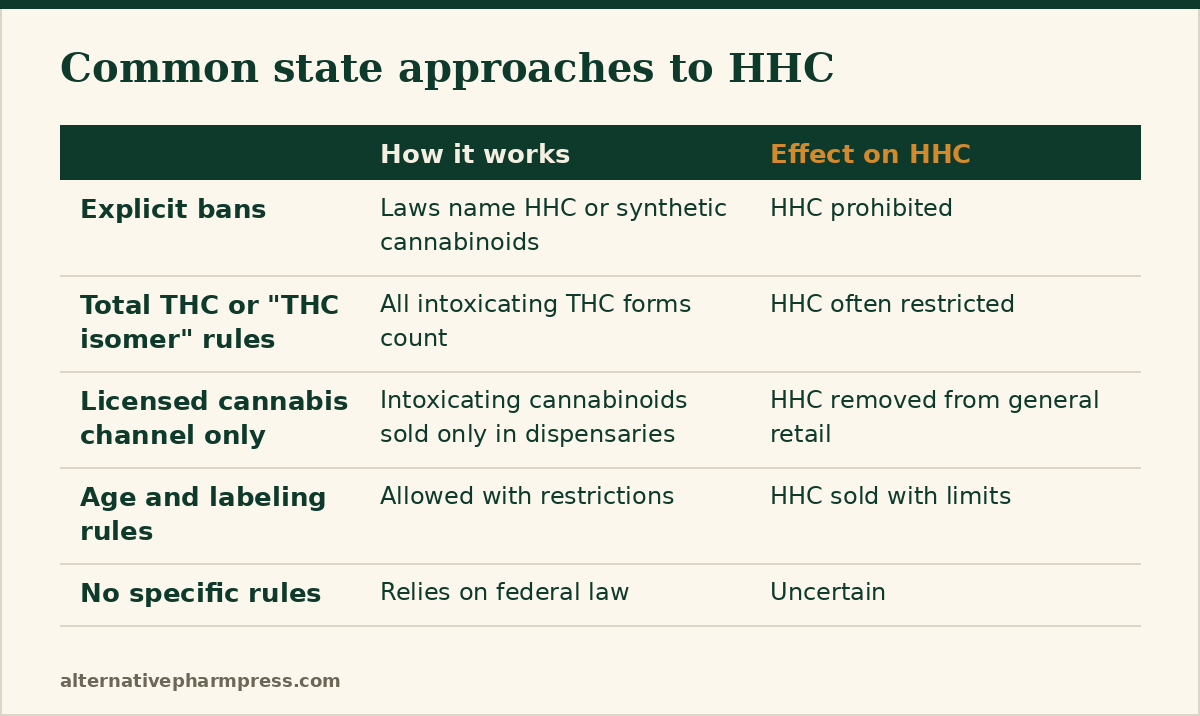
States update laws frequently, and the same state may change its approach more than once in a year. Rather than relying on a static list, check your state’s cannabis regulator, agriculture department or attorney general for current guidance. Our legal status hub and delta-8 legal states pages track related changes.
HHC vs delta-8: legal comparison
| Factor | HHC | Delta-8 |
|---|---|---|
| Origin | Hydrogenated THC, typically lab-made | Converted from CBD, typically lab-made |
| Natural presence | Trace amounts | Trace amounts |
| Federal 2025 changes | Restricted as intoxicating/synthesized | Restricted as intoxicating/synthesized |
| State treatment | Often grouped with delta-8 or “synthetic” cannabinoids | Many states ban or restrict |
| Drug test risk | May cross-react | Positive on standard tests |
Read delta-8 vs CBD and best delta-8 brands for more context.
Effects and safety
HHC produces effects similar to THC: euphoria, relaxation, altered perception and impairment. Potency varies because commercial HHC contains a mix of two forms (9R-HHC, more active, and 9S-HHC, less active). Safety concerns include:
- Limited human research on HHC’s effects and long-term safety.
- Residual catalysts — metals used in hydrogenation must be removed.
- Reaction byproducts from conversion processes.
- Mislabeling and inconsistent potency.
- Mental health risks similar to THC, including anxiety and psychosis in vulnerable people. See THC and anxiety.
HHC and drug tests
There’s limited research on how HHC metabolites appear on drug tests. Some studies and reports suggest HHC can cross-react with THC immunoassays, while others suggest it may be less detectable. Products may also contain delta-8 or delta-9 THC. If you’re tested, assume HHC could cause a positive result. See does delta-8 show up on drug tests?.
Quality and testing
International context
Several European countries banned HHC after it spread rapidly in 2022–2024, often adding it to narcotics lists. That trend influenced U.S. debates about semi-synthetic cannabinoids.
What consumers should consider
- Check current state and local laws before buying or traveling.
- Understand that federal rules are changing and enforcement may follow.
- Expect retailers to reformulate or remove HHC products.
- Avoid driving after using HHC.
- Be cautious with potency and start low.
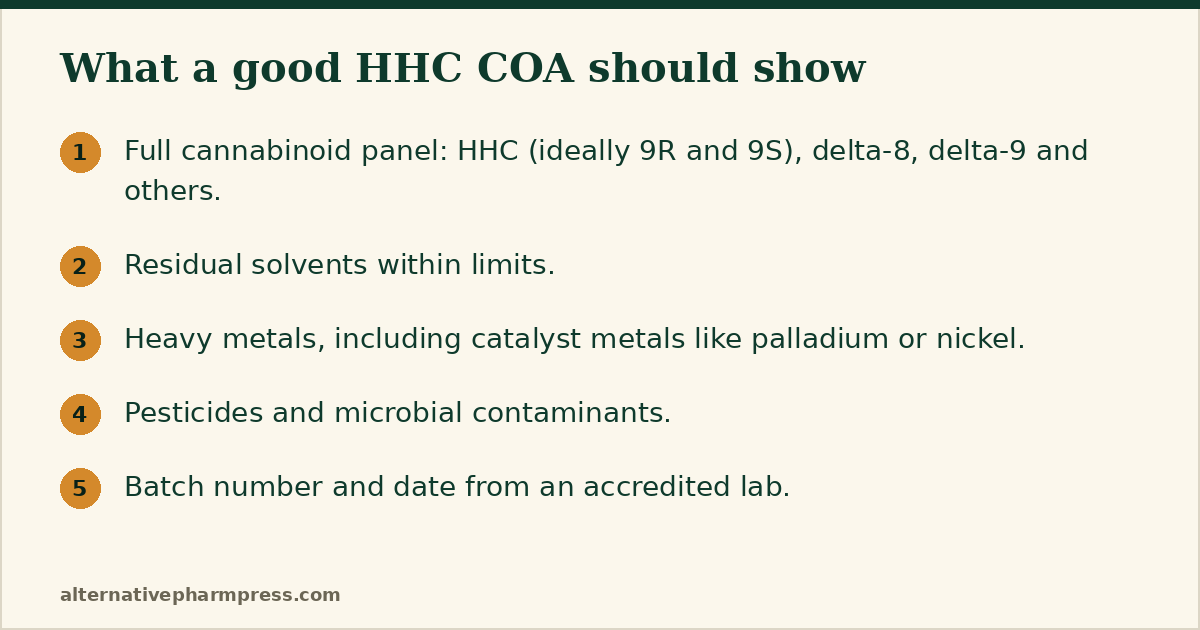
- Look for full COAs including catalyst metals.
Why semi-synthetic cannabinoids drew scrutiny
Regulators raised concerns about semi-synthetic cannabinoids for several reasons. Many are produced through chemical reactions that can leave byproducts or residues, and testing for these isn’t always standardized. Products were widely sold in convenience stores and online with limited age verification. Poison control centers reported rising calls related to delta-8 and similar products, including accidental ingestion by children. And because these products are intoxicating, critics argued they effectively bypassed state cannabis regulations.
Industry perspectives
Hemp industry groups argued that well-tested products made from legal hemp provide adults with access to cannabinoids in states without legal marijuana and support farmers and small businesses. Some called for regulation — testing, labeling, age limits — rather than outright bans. The 2025 federal changes moved the policy closer to restriction, but debates continue over how to treat products like HHC at state and federal levels.
What to watch in 2026
Key developments include federal implementation timelines, how enforcement agencies interpret “synthesized” cannabinoids, court challenges and state legislative sessions. Retailers may shift inventory to non-intoxicating CBD products, licensed cannabis channels or other markets. Consumers should expect product availability and labeling to change throughout the year.
Traveling with HHC
Because laws vary widely, carrying HHC across state lines can carry legal risk. Field tests used by police often can’t distinguish HHC from THC. Air travel adds further complications under federal rules. If you’re unsure, don’t travel with HHC products.
How to check HHC rules where you live
Because laws change quickly, a few reliable steps help you stay informed:
- Visit your state cannabis or hemp regulator’s website, which often publishes guidance on intoxicating hemp products.
- Check your state agriculture department, which usually oversees hemp licensing.
- Look for attorney general opinions or recent press releases on hemp-derived THC products.
- Read recent local news coverage of hemp law changes, noting the date.
- Ask retailers which law they rely on — reputable shops should be able to explain their compliance approach.
If guidance is unclear, assume the product may not be legal and avoid buying or carrying it.
Why the chemistry matters legally
Legal arguments about HHC often hinge on chemistry. Because commercial HHC is created by chemically altering another cannabinoid, many regulators treat it as “synthesized” rather than naturally derived. The 2025 federal changes specifically address cannabinoids synthesized or manufactured outside the plant. That distinction is likely to be central in enforcement and court challenges, and it’s one reason HHC, delta-8 and THC-O have been grouped together in many state laws.
Workplace and probation considerations
Even where HHC is sold openly, employers and court programs typically treat any positive cannabinoid result the same way. Hemp-derived products are rarely accepted as an explanation for a failed test. If you’re subject to testing, avoiding HHC entirely is the safest option.
What happens to existing products
When rules change, retailers may be given a period to sell remaining inventory, or they may be required to remove products immediately. Consumers who already own HHC products may face uncertainty about possession. In general, enforcement focuses on sellers and manufacturers, but possession laws vary by state. If in doubt, consult local legal guidance.
FAQ
Is HHC legal in 2026?
Federal legislation passed in late 2025 restricts intoxicating hemp-derived and synthesized cannabinoids, and many states ban or restrict HHC. Check current local laws.
Is HHC synthetic?
Commercial HHC is typically made by chemically hydrogenating THC derived from hemp CBD, which many regulators consider semi-synthetic.
Is HHC stronger than delta-8?
Users often describe HHC as somewhere between delta-8 and delta-9 in strength, but potency varies by product and the ratio of HHC forms.
Will HHC show up on a drug test?
It may. HHC can cross-react with some THC tests, and products may contain delta-8 or delta-9 THC.
Can I order HHC online and have it shipped?
Shipping rules depend on your state and the carrier. Many sellers no longer ship to states that ban HHC, and federal changes may restrict interstate sales further. Check local law before ordering.
Why are states banning HHC?
Concerns include intoxicating effects, limited safety research, chemical byproducts and sales outside regulated cannabis markets.
What’s the difference between HHC and THC?
HHC is a hydrogenated version of THC with a slightly different structure. It produces similar effects but has much less research.