

Mushroom coffee has gone from niche health-store item to supermarket shelves and social media feeds. Brands blend ground coffee or instant coffee with extracts of functional mushrooms like lion’s mane, chaga, reishi and cordyceps, promising smoother energy, better focus and immune support with less caffeine.
This guide looks at what mushroom coffee contains, how much caffeine it has compared with regular coffee, what the research says about the mushrooms involved, quality issues and how to choose a product.
Key takeaways
- Mushroom coffee usually combines coffee with powdered functional mushroom extracts; it doesn’t taste like mushrooms.
- Many blends contain less caffeine than regular coffee — often about half — which may explain some reported “smoother energy.”
- Human evidence for the mushrooms is early and mixed; doses in coffee are often lower than in studies.
- Quality varies: fruiting-body extracts with measured beta-glucans are generally preferred over mycelium on grain.
- Most people tolerate mushroom coffee well, but some mushrooms interact with medications.
What is mushroom coffee?
Mushroom coffee isn’t made from mushrooms instead of coffee beans. It’s typically regular ground or instant coffee mixed with dried, powdered mushroom extracts. Some brands use a “coffee alternative” base (cacao, chicory or herbal blends) with no or little coffee. Common mushrooms include:
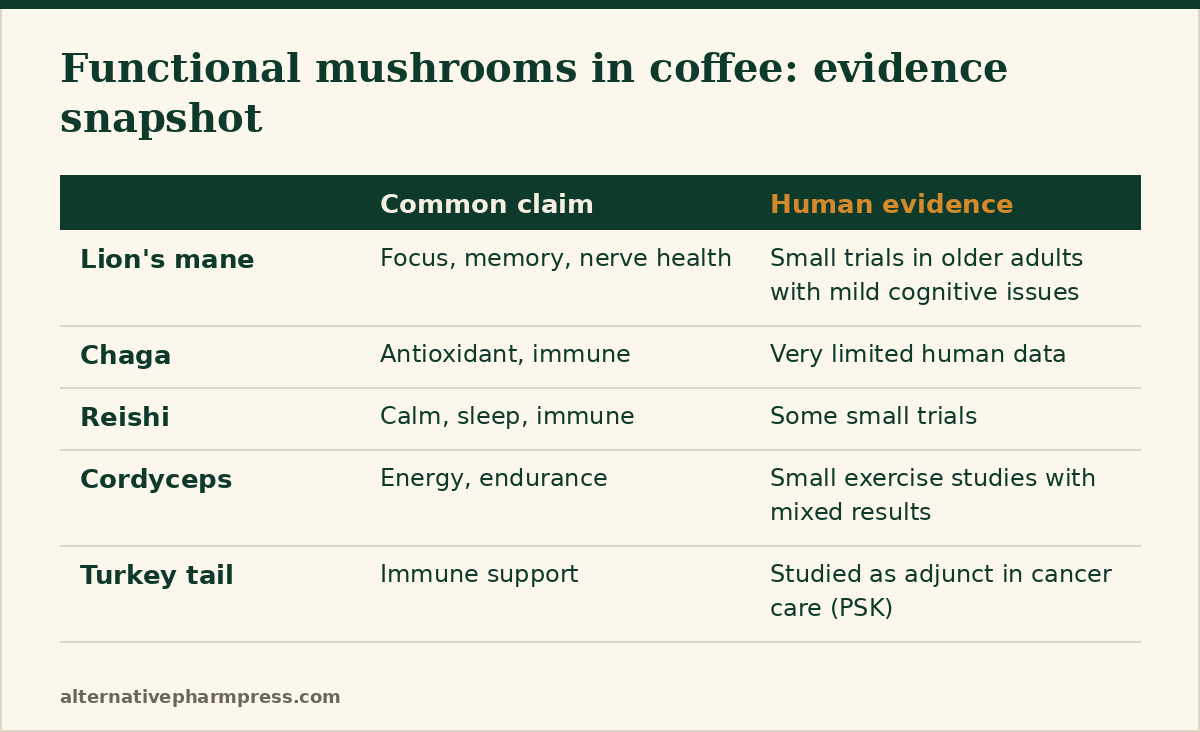
- Lion’s mane (Hericium erinaceus) — marketed for focus and memory.
- Chaga (Inonotus obliquus) — marketed for antioxidants and immune support.
- Reishi (Ganoderma lucidum) — marketed for calm and stress.
- Cordyceps (Cordyceps militaris) — marketed for energy and endurance.
- Turkey tail (Trametes versicolor) — marketed for immune health.
For a broader overview of these species, see functional mushrooms research.
How much caffeine is in mushroom coffee?
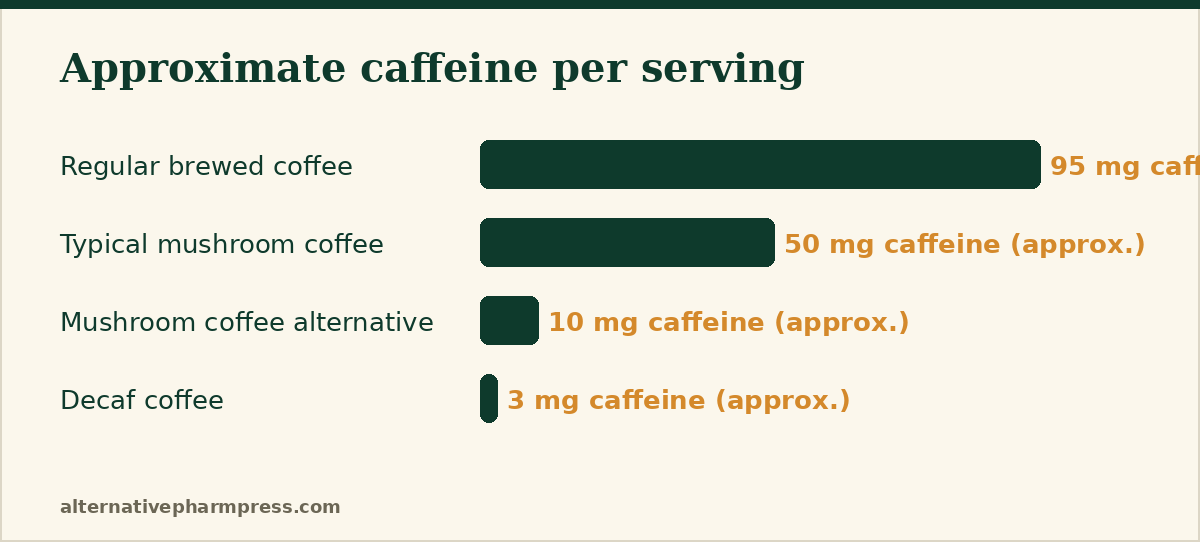
Many mushroom coffees replace part of the coffee with mushroom powder, so a serving often contains around 40–60 mg of caffeine, roughly half a regular cup. Some contain as much as standard coffee; others use coffee alternatives with almost none. Lower caffeine alone could explain why some people feel less jittery.
What the research says about each mushroom
Lion’s mane
Lion’s mane contains compounds (hericenones and erinacines) that stimulate nerve growth factor in lab studies. A few small human trials in older adults with mild cognitive impairment suggested modest improvements, and studies in healthy adults show mixed results. Read what is lion’s mane good for? and lion’s mane 2026 trials.
Chaga
Chaga is rich in antioxidants and polysaccharides in lab tests, but human clinical data are scarce. Chaga is high in oxalates, and heavy use has been linked to kidney problems in case reports. See chaga vs reishi.
Reishi
Reishi has a long history in traditional medicine. Small studies have looked at fatigue, sleep and immune markers with mixed results. Rare cases of liver toxicity have been reported with reishi powder supplements. Compare it in reishi vs lion’s mane.
Cordyceps
Cordyceps militaris and related species have been studied for exercise performance and fatigue in small trials, with inconsistent results. See lion’s mane vs cordyceps.
The dose problem
A typical mushroom coffee might contain 250–1,000 mg of combined mushroom powder per serving, sometimes split across several species. Many human studies used 1–3 grams daily of a single mushroom extract, or standardized compounds. That means each mushroom in a coffee blend may be present below studied doses. Brands that list exact amounts per mushroom and beta-glucan content make comparison easier.
Fruiting body vs mycelium
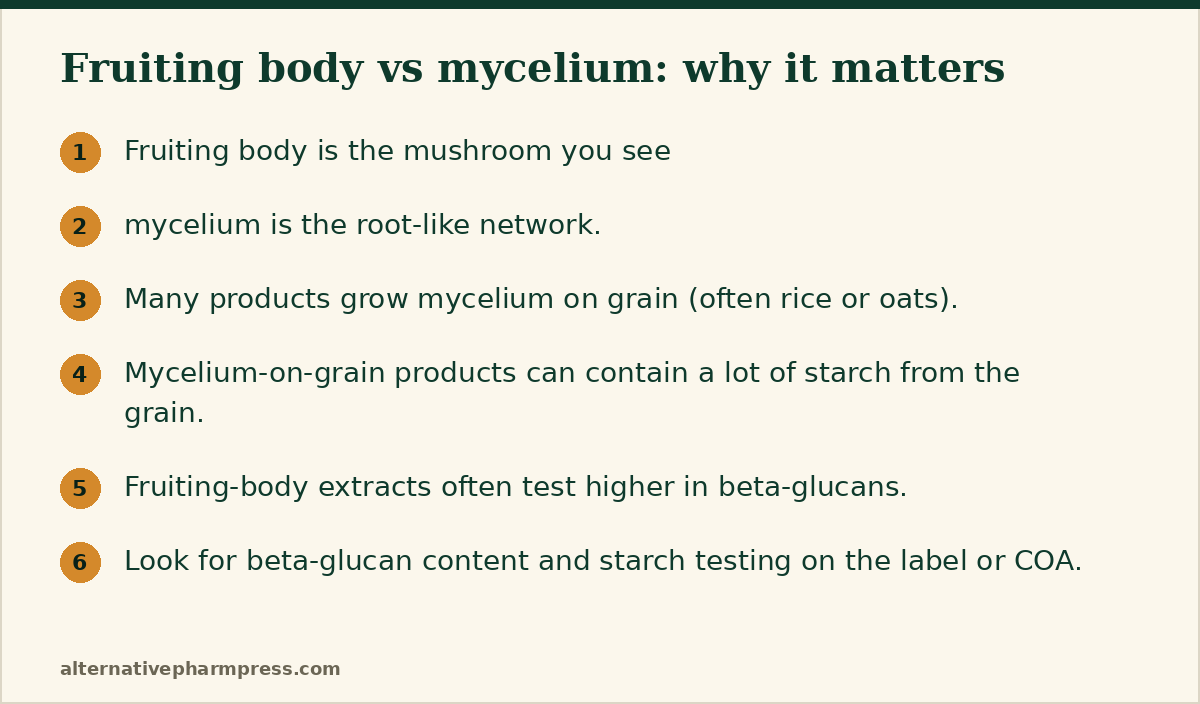
This is one of the biggest quality debates in the industry. Products listing “full-spectrum” or “myceliated grain” may contain substantial starch from the substrate. Testing for beta-glucans (a key active polysaccharide) and alpha-glucans (starch) helps reveal what you’re getting. Read functional mushrooms in 2026: label problems and do mushroom gummies work?.
Potential benefits people report
- Smoother energy — likely related to lower caffeine and possibly L-theanine in some blends.
- Fewer jitters or crashes.
- Easier on the stomach for some people, though evidence is anecdotal.
- A ritual that feels healthier — which can matter for habit change.
These experiences are real for some users, but controlled studies of mushroom coffee products themselves are rare.
Side effects and interactions
Most people tolerate mushroom coffee well. Possible issues include:
- Digestive upset — bloating or loose stools.
- Allergic reactions — rare but possible, especially in people with mold or mushroom allergies.
- Blood sugar effects — some mushrooms may lower glucose; caution with diabetes medications.
- Blood thinning — reishi and others may affect clotting; caution with anticoagulants.
- Immune effects — people on immunosuppressants or with autoimmune disease should check with a doctor.
- Kidney concerns — chaga’s high oxalate content may be an issue with kidney stones or kidney disease.
- Caffeine sensitivity — still relevant if the blend contains coffee.
Pregnant or breastfeeding people should avoid medicinal mushroom supplements due to limited safety data. For specific concerns, see lion’s mane side effects.
How to choose a mushroom coffee
- Check caffeine per serving.
- Look for mushroom amounts per species, not just a blend total.
- Prefer fruiting-body extracts with tested beta-glucan content.
- Look for third-party testing for heavy metals, pesticides and microbes (mushrooms can accumulate metals).
- Check the coffee quality — organic or specialty coffee if that matters to you.
- Avoid disease claims like curing anxiety or preventing cancer.
For brand comparisons, see best lion’s mane brands 2026.
Is mushroom coffee worth it?
If you enjoy the taste, want less caffeine and like the idea of adding functional mushrooms, mushroom coffee can be a reasonable choice. But it’s usually more expensive than coffee, and the health benefits from coffee-level mushroom doses aren’t well established. If you want a specific mushroom for a specific goal, a standardized supplement with a known dose may be more practical. And for less caffeine at lower cost, half-caf coffee or tea are simple options.
Mushroom coffee vs regular coffee
| Feature | Regular coffee | Mushroom coffee |
|---|---|---|
| Caffeine | ~95 mg per cup | Often ~40–60 mg |
| Taste | Familiar coffee flavor | Slightly earthy; often similar |
| Price | Lower | Usually higher |
| Evidence for health effects | Large body of observational data | Limited for products themselves |
| Main draw | Flavor, energy | Lower caffeine, functional ingredients |
Regular coffee itself has been associated with lower risks of several conditions in large observational studies, though cause and effect aren’t certain.
Why lower caffeine might matter
Many people who switch to mushroom coffee report fewer jitters and better sleep. A simple explanation is reduced caffeine. If you’ve been drinking several cups of regular coffee and switch to mushroom coffee with half the caffeine, you’ve cut your intake meaningfully. That change alone can improve sleep, reduce anxiety and ease stomach upset for sensitive people. Testing half-caf coffee for a few weeks can tell you whether caffeine reduction, rather than mushrooms, is what helps.
How to make mushroom coffee at home
You can make your own blend by adding a measured scoop of a single-mushroom extract powder to brewed coffee. This approach lets you choose the mushroom, control the dose and verify the extract’s beta-glucan content. Stir well, since some powders don’t dissolve fully. Many people add milk or plant-based milk and a little sweetener to soften the earthy notes. Start with a small amount to check how your stomach tolerates it.
Heavy metals and testing
Mushrooms can absorb heavy metals like lead, cadmium and arsenic from their growing environment. Wild-harvested chaga, in particular, may vary in contaminant levels. Reputable brands test for heavy metals and publish results. If a brand can’t provide testing, consider another option, especially if you drink mushroom coffee daily.
Storage tip
Keep mushroom coffee sealed and dry. Mushroom powders absorb moisture easily, which can cause clumping and shorten shelf life.
FAQ
Does mushroom coffee have caffeine?
Most do, typically around 40–60 mg per serving — about half a regular cup — though some contain more or almost none.
Does mushroom coffee taste like mushrooms?
Usually not much. Most taste like slightly earthy coffee.
What are the benefits of mushroom coffee?
Users often report smoother energy and fewer jitters, likely partly due to lower caffeine. Evidence for mushroom-specific benefits at coffee-level doses is limited.
Is mushroom coffee safe to drink every day?
For most healthy adults, yes. People taking blood thinners, diabetes drugs or immunosuppressants, or with kidney stones or mushroom allergies, should check with a clinician.
Which mushroom is best in mushroom coffee?
It depends on your goals. Lion’s mane is popular for focus, reishi for calm and cordyceps for energy, but evidence for each is still developing.
Can mushroom coffee replace regular coffee?
It can if you enjoy the taste and want less caffeine, but it’s typically more expensive and its health benefits aren’t well established.