

Delta-8 THC gummies became one of the most popular hemp products in the US almost overnight. They’re sold in smoke shops, gas stations and online, often in colorful packaging and potencies from 10 mg to more than 50 mg per piece. For many buyers they were the first legal way to try a THC edible.
But delta-8 gummies raise real questions: how strong are they, how do they compare with regular THC, are they still legal, and how can you tell a good product from a risky one? This guide answers them.
Key takeaways
- Delta-8 THC is an isomer of delta-9 THC; most people find it somewhat less potent, but it is still intoxicating.
- Gummies take 30 minutes to 2 hours to kick in and effects can last 4–8 hours.
- Most delta-8 is made from CBD through chemical conversion, so lab testing for byproducts matters.
- Delta-8 shows up on THC drug tests.
- Federal hemp law is changing in 2026, and many states already ban or restrict delta-8.
What is delta-8 THC?
Delta-8-tetrahydrocannabinol is a cannabinoid with almost the same structure as delta-9 THC, the main intoxicating compound in marijuana. The only difference is the location of a double bond in the molecule. That small change makes delta-8 bind CB1 receptors somewhat less strongly, so most users describe it as milder and “clearer.”
Cannabis plants make only trace amounts of delta-8. Nearly all commercial delta-8 is produced by converting hemp-derived CBD using acids and solvents. That process can leave behind byproducts and residual chemicals if it isn’t done and tested carefully — one reason the FDA has issued warnings about delta-8 products. For a broader comparison, see delta-8 vs delta-9 THC and delta-8 vs CBD.
How strong are delta-8 gummies?
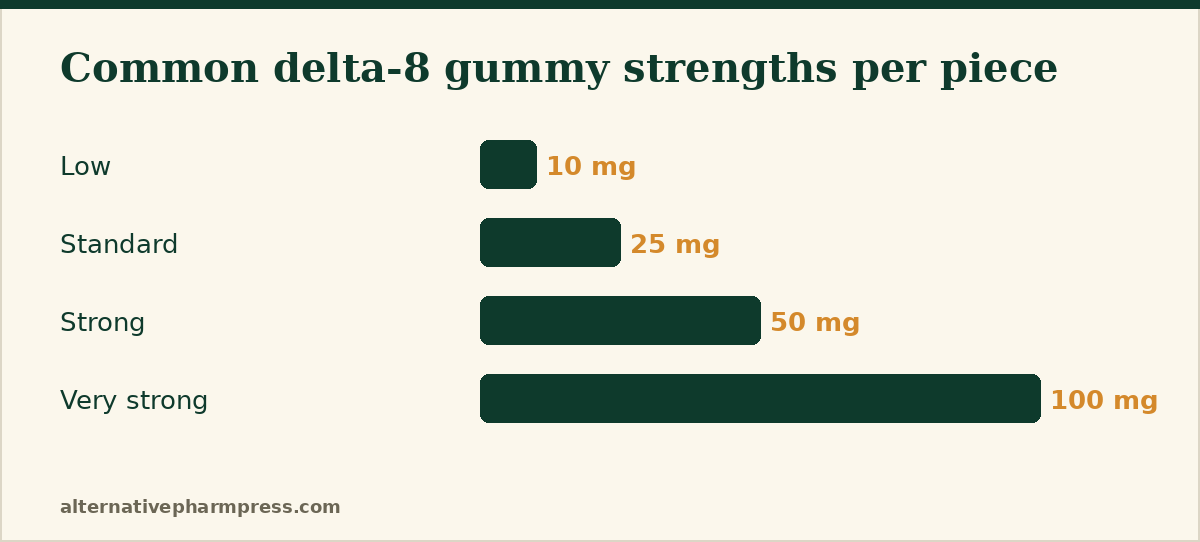
Delta-8 is often described as roughly half to two-thirds as potent as delta-9, but individual responses vary a lot. A 25 mg delta-8 gummy can feel strong to someone new to THC.
| Experience level | Common starting amount | Notes |
|---|---|---|
| Never used THC | 5 mg or less (a quarter of a 20–25 mg gummy) | Wait at least 2 hours before more |
| Occasional user | 10–15 mg | Effects vary with food and body weight |
| Regular user | 20–30 mg | Tolerance builds with frequent use |
These are general harm-reduction ranges, not medical advice.
How long do delta-8 gummies take to work?
Edibles are absorbed through the gut and processed by the liver, which converts THC into 11-hydroxy-THC — a metabolite that can feel stronger and longer-lasting than smoked THC.
- Onset: 30 minutes to 2 hours (slower on a full stomach)
- Peak: 2–4 hours
- Duration: 4–8 hours, sometimes longer
- After-effects: grogginess the next morning is common at higher doses
The number one mistake with gummies is taking more because “it’s not working yet.” Wait at least two hours.
What do delta-8 gummies feel like?
Typical effects include relaxation, mild euphoria, altered time perception, increased appetite and sleepiness. Many users report less anxiety than with delta-9, but at higher doses delta-8 can still cause:
- Anxiety, racing heart or paranoia
- Dizziness and poor coordination
- Dry mouth and red eyes
- Heavy sedation or confusion
Children and pets are at serious risk from accidental ingestion; poison centers have reported thousands of delta-8 exposures, many in kids who mistook gummies for candy.
Are delta-8 gummies legal?
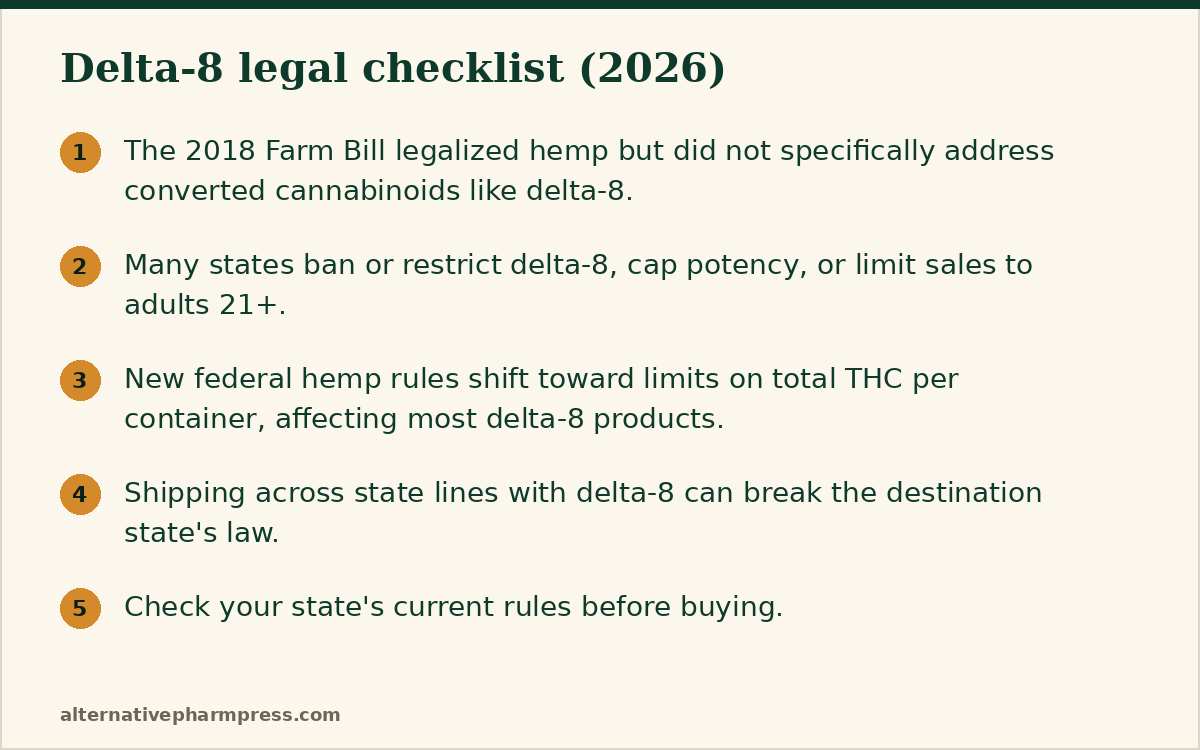
Delta-8 sat in a legal gray zone for years: hemp-derived and technically under the 0.3% delta-9 THC limit, but intoxicating. Many states closed the gap themselves, and federal changes taking effect in 2026 restrict intoxicating hemp products further. See our delta-8 legal status by state guide, the delta-8 legal states list and our explainers on the hemp ban and federal hemp law.
Do delta-8 gummies show up on drug tests?
Yes. Delta-8 is metabolized into a THC-COOH metabolite that standard immunoassay drug tests detect. If you’re subject to testing, avoid delta-8. Detection windows are similar to other THC products — days for occasional use, weeks for heavy use. Our guide to how long THCA stays in your system explains the timelines, which apply to delta-8 too.
How to choose a safer delta-8 gummy
Because delta-8 is made by chemical conversion, the certificate of analysis (COA) is essential:
- Batch-matched COA from an ISO 17025-accredited lab, linked by QR code or batch number.
- Cannabinoid panel showing delta-8 per gummy and delta-9 THC (should be within legal limits).
- Residual solvents and heavy metals testing.
- Ideally, testing for unknown peaks or byproducts from conversion.
- Child-resistant packaging and no cartoon or candy-brand imitation.
- A clear mg per gummy and per package.
Our best delta-8 gummies and best delta-8 brands lists focus on brands with full testing.
Delta-8 vs other hemp gummies
| Gummy type | Intoxicating? | Notes |
|---|---|---|
| Delta-8 THC | Yes, usually milder | Made by converting CBD |
| Hemp delta-9 THC | Yes | Legal under 0.3% by dry weight; dose per gummy can be meaningful |
| THCA (heated in manufacturing) | Yes | Behaves like delta-9 |
| HHC | Yes | Hydrogenated THC analogue; less research |
| CBD | No | Non-intoxicating |
Compare further in delta-8 vs delta-10, HHC vs delta-8, THCP vs delta-8 and best delta-9 hemp gummies.
Who should avoid delta-8 gummies
- People under 21
- Anyone pregnant or breastfeeding
- People with a history of psychosis or severe anxiety
- People taking sedatives, blood thinners or medications with known cannabinoid interactions
- Anyone who will drive, operate machinery or is drug-tested
Storage and safety at home
Gummies look like candy, which makes storage a real safety issue. Keep them in their original child-resistant packaging, locked away and out of sight. Heat can melt gummies and redistribute the cannabinoid unevenly, so store them somewhere cool. If a child or pet eats a gummy, call Poison Control (1-800-222-1222) or your vet right away, even if they seem fine — symptoms can take time to appear.
Common mistakes with delta-8 gummies
- Redosing too soon. Most bad experiences come from taking a second gummy before the first has kicked in.
- Assuming “hemp” means mild. A 50 mg gummy is a very large dose for most people.
- Mixing with alcohol. Alcohol can increase THC absorption and intensify impairment.
- Ignoring the COA. Without testing, you can’t know what’s actually in the gummy.
- Driving. THC impairs reaction time and judgment; it’s illegal to drive impaired in every state.
- Using before a drug test. Delta-8 will very likely produce a positive result.
What to do if you take too much
Too much THC is rarely life-threatening for healthy adults, but it can be very unpleasant: racing heart, panic, nausea, dizziness and confusion. If it happens, find a calm, safe place, sip water, eat something, and remind yourself it will pass — usually within a few hours. Some people find that CBD or black pepper help, though evidence is limited. Seek medical help for chest pain, fainting, severe vomiting or if a child has eaten an edible.
Why gummies feel different from vaping
Many people who’ve vaped delta-8 are surprised by how different a gummy feels. When you inhale THC, it goes from your lungs into your bloodstream and reaches the brain within minutes; effects peak quickly and fade within two to three hours. When you eat it, THC travels to the liver first, where a larger share is converted into 11-hydroxy-THC. This metabolite crosses into the brain efficiently and is associated with stronger, more body-heavy effects that last much longer.
That’s why the same milligram amount can feel stronger as an edible, and why dosing advice for vapes doesn’t transfer to gummies. If you’re switching formats, start lower than you think you need.
Delta-8 gummies and tolerance
Like other THC products, regular delta-8 use builds tolerance. People who use gummies daily often find they need two or three times their original dose for the same effect. Tolerance also increases the risk of side effects such as cannabis hyperemesis syndrome — a cycle of severe nausea and vomiting seen in some heavy long-term users. Taking regular breaks (for example, a few days off each week or a two-week break every couple of months) can help reset tolerance and reduce risk.
FAQ
Do delta-8 gummies get you high?
Yes. Delta-8 is intoxicating, though many people find it milder than delta-9 THC.
How long do delta-8 gummies last?
Effects typically last four to eight hours, with onset between 30 minutes and two hours.
How many mg of delta-8 should a beginner take?
Many experts suggest starting at 5 mg or less and waiting at least two hours before taking more.
Will delta-8 gummies show up on a drug test?
Yes. Standard THC drug tests detect delta-8 metabolites.
Are delta-8 gummies legal?
It depends on your state, and federal hemp rules are tightening in 2026. Check your state’s current law before buying.
Can you cut delta-8 gummies in half?
Yes, and it’s a good idea when starting out. Cutting a gummy into halves or quarters is the easiest way to take a lower dose. Potency may not be perfectly even across a gummy, so cut-up doses are approximate.
Is delta-8 safer than delta-9?
Not necessarily. Delta-8 is often milder, but it’s usually made through chemical conversion and is less studied. Product quality and dose matter more than the label.
Does delta-8 show up on a drug test?
Yes, it can. Delta-8 is broken down into THC-COOH metabolites that standard cannabis drug tests detect, and most tests can’t tell them apart from delta-9 metabolites.
What happens to delta-8 and THCA products on December 11, 2026?
Federal law will count all THC, including THCA, toward the 0.3% limit and cap finished products at 0.4 mg total THC per container. Most intoxicating hemp products sold today would no longer qualify as hemp, unless Congress changes the law first.