
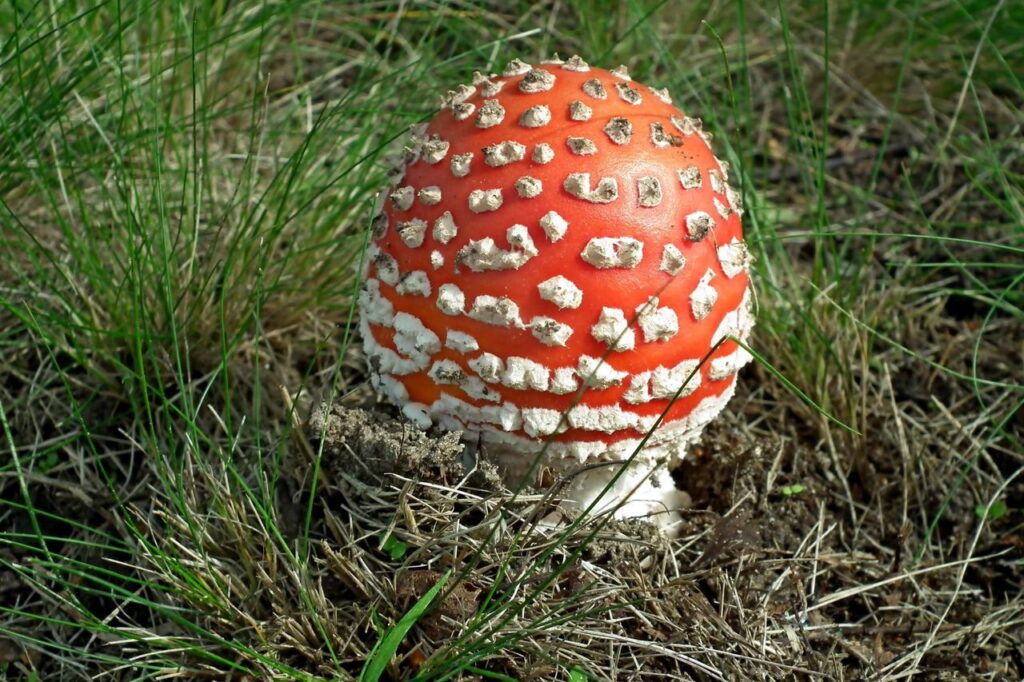
Amanita muscaria (fly agaric) and psilocybin mushrooms are unrelated fungi with different chemistry. Fly agaric contains ibotenic acid and muscimol, which act on glutamate and GABA receptors and cause a sedating, often confused intoxication. Psilocybin mushrooms contain psilocybin, a classic serotonergic psychedelic. Psilocybin is Schedule I federally; fly agaric is unscheduled but barred from US conventional food.
This is a harm-reduction comparison, not a guide to use. It contains no preparation or dosing information. It exists because the two are routinely confused, and because a wave of “mushroom” gummies and chocolates has made it hard to know which compounds a product actually contains.
Below we cover the chemistry, how the effects differ, the research, toxicity and emergencies, the legal position in the US, UK and Canada as of September 2026, and what a label can and cannot tell you.
At a glance
| Property | Amanita muscaria | Psilocybin mushrooms |
|---|---|---|
| Species | Amanita muscaria (fly agaric) | Mainly Psilocybe species |
| Main active compounds | Ibotenic acid, muscimol; traces of muscarine | Psilocybin, converted in the body to psilocin |
| Main receptor targets | GABA-A (muscimol), glutamate (ibotenic acid) | Serotonin 5-HT2A |
| Type of effect | Sedation, confusion, agitation, delirium-like states | Classic psychedelic: altered perception and emotion |
| Clinical research | Essentially none; toxicology reports | Phase 2 and 3 trials in depression |
| Main acute risks | CNS depression or excitation, vomiting; rare intubation | Panic, paranoia, risky behaviour; lookalike poisoning |
| US federal status | Not scheduled; FDA says not authorised in food | Schedule I controlled substance |
| US state exceptions | Louisiana bans muscimol and ibotenic acid | Regulated access in Oregon and Colorado; New Mexico medical law |
| UK | Not a controlled drug; supply for psychoactive use restricted | Class A drug |
| Canada | Not listed under the CDSA | Controlled under the CDSA; limited exemptions |
Two different fungi with two different chemistries
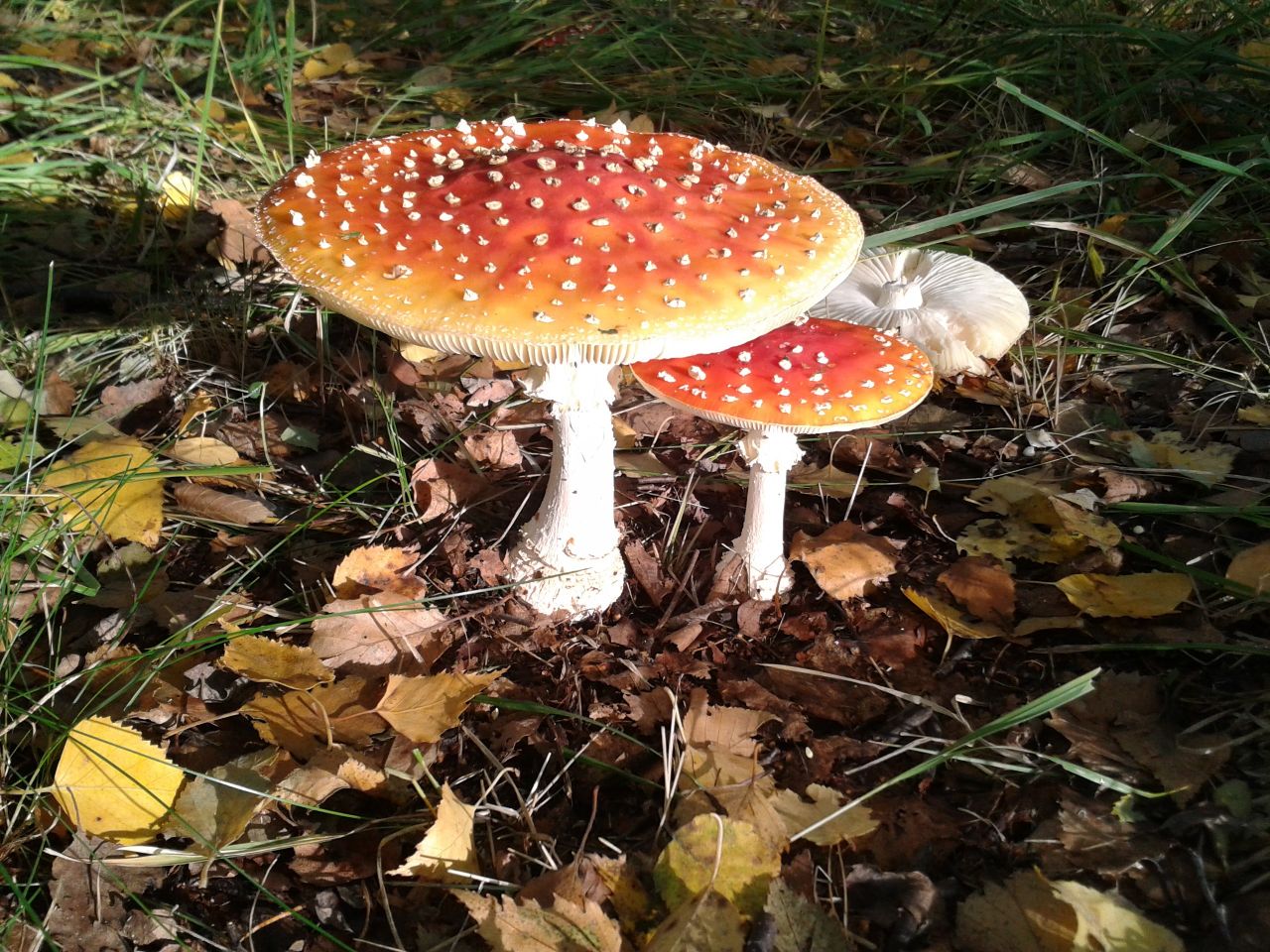
Fly agaric is the red-capped, white-spotted toadstool of fairy tales. It belongs to the genus Amanita, which also includes some of the deadliest mushrooms known, such as the death cap. Its main active compounds are ibotenic acid and muscimol.1 Ibotenic acid is structurally similar to glutamate and acts on glutamate receptors, including the NMDA receptor. Muscimol resembles GABA and acts on GABA-A receptors, the same broad system targeted by sedative drugs.
Ibotenic acid can convert to muscimol, and the balance between the two varies from mushroom to mushroom and product to product. That variability is one reason effects are hard to predict. Despite the name, fly agaric contains only small amounts of muscarine, the compound first isolated from it, so muscarine is not the main driver of its effects.
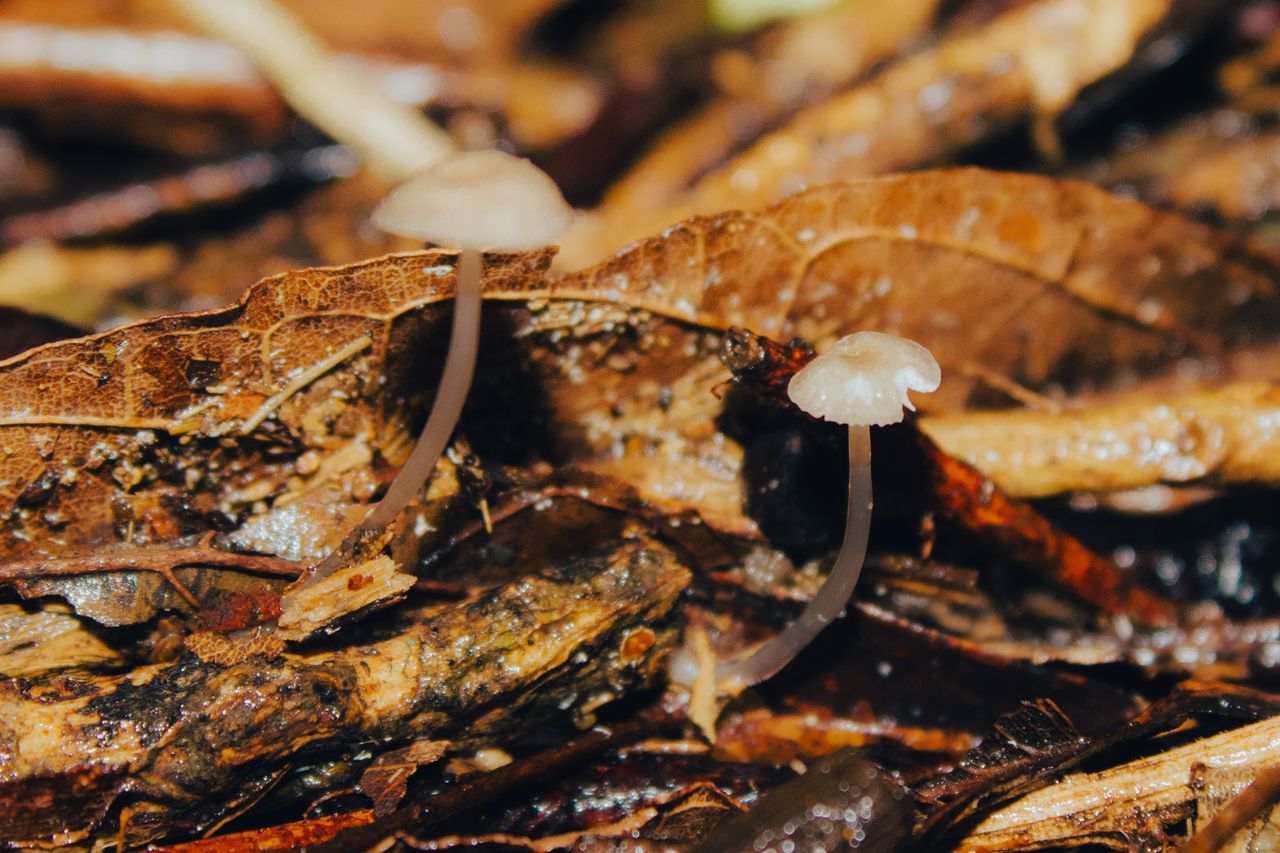
Psilocybin mushrooms are mostly small brown species in the genus Psilocybe. Psilocybin is a prodrug: the body converts it to psilocin, which acts mainly as an agonist at serotonin 5-HT2A receptors, the defining feature of classic psychedelics.2 The two groups share neither chemistry nor mechanism. Calling both “magic mushrooms” hides that.
How the effects differ
Muscimol and ibotenic acid produce what toxicologists call the pantherina syndrome, named after the related panther cap. It involves central nervous system dysfunction and can swing between excitation and depression.1 A review of cases reported to a regional poison centre in Oregon from 2002 to 2016 found gastrointestinal upset, agitation and sedation, alone or in combination. Symptoms began within six hours in all but one patient and usually settled within a day. Five patients needed intubation; there were no deaths.3
People describe fly agaric intoxication as dreamlike, confusing or sedating rather than visually psychedelic, with nausea common. Twitching, muddled speech and periods of deep sleep are reported.
Psilocybin produces changes in perception, emotion, thought and sense of self, typically lasting several hours. Its physical toxicity is low, but the psychological intensity carries its own risks. In a global survey of 9,233 past-year users, 0.2% had sought emergency medical treatment, mostly for anxiety, panic or paranoia; nearly all were back to normal within 24 hours.4
What the research shows
Psilocybin is one of the most studied psychedelics in modern medicine. In a 2022 phase 2 trial of 233 people with treatment-resistant depression, a single high dose of a synthetic psilocybin, given with psychological support, reduced depression scores more than a very low control dose at three weeks. The benefit was not clearly sustained at 12 weeks, adverse events occurred in 77% of participants, and suicidal thoughts or behaviour occurred in all groups.7
In April 2026 the FDA granted Compass Pathways a rolling review for its synthetic psilocybin in treatment-resistant depression, based on phase 3 trials.8 As of September 2026 no psilocybin medicine is FDA-approved, and trial conditions (screening, preparation, monitoring) bear little resemblance to unsupervised use of wild or retail mushrooms.
Fly agaric has no comparable research. The literature consists of chemistry, ethnography and poisoning reports.1,3 Marketing claims about muscimol for sleep or anxiety are not backed by controlled human trials. Our deeper look at Amanita muscaria in 2026 and what muscimol research shows covers this in more detail.
Toxicity, emergencies and harm reduction
The single biggest risk with both is misidentification. Foraged Amanitas can be confused with other species, including lethal ones, and small brown mushrooms picked as psilocybin mushrooms can be toxic lookalikes. In the Oregon poison centre series, 12 of 34 cases involved foraging and another 12 were accidental ingestions.3
Manufactured products carry a different risk. In 2024, US investigators linked Diamond Shruumz chocolate bars and other mushroom-containing chocolates to 180 poisonings in 34 states: 73 people were hospitalised, 38 needed intensive care, 29 were intubated and two died. Testing of some products found muscimol, psilocin and kavalactones, but not in every product tested.6
- Emergencies: for suspected poisoning, call 911 or Poison Help (1-800-222-1222) in the US, 999 or 111 in the UK, or 911 or a provincial poison centre in Canada. Keep any leftover product or mushroom for identification.
- Mixing: combining muscimol with alcohol or other sedatives adds to central nervous system depression; mixing substances was among the most reported reasons for psilocybin emergencies.4
- Lithium: in an analysis of online reports, 47% of 62 reports of classic psychedelics taken with lithium involved seizures.5
- Mental health history: people with bipolar disorder have been excluded from recent psilocybin trials, so risks in this group are poorly understood.5
- Mindset and setting: poor mindset and poor setting were, with mixing substances, the most reported reasons for psilocybin emergencies, and young age was the only predictor of higher risk.4
- Children and pets: edibles look like sweets; accidental ingestion by children appears in poison centre data.3
On drug testing, standard workplace panels do not look for psilocin or muscimol, although specialised laboratory tests can detect psilocin. Products may also contain undeclared substances that standard tests do detect.
Legal status in September 2026
United States
Psilocybin and psilocin are Schedule I substances under the Controlled Substances Act. Some states have carved out regulated access. Oregon runs licensed psilocybin services for adults 21 and over under a 2020 ballot measure. Colorado allows adults 21 and over to grow, possess and share natural medicine without payment, and licenses healing centres, but prohibits retail sale.11 New Mexico passed a Medical Psilocybin Act in 2025 and is setting up a medical programme. A number of cities have also deprioritised enforcement. None of this changes federal law. If the FDA approves a psilocybin medicine, the DEA would still need to reschedule that specific product before it could be prescribed, as happened with the cannabidiol medicine Epidiolex in 2018.
Fly agaric is not federally scheduled. In December 2024 the FDA concluded that A. muscaria and its constituents (muscimol, ibotenic acid and muscarine) are not authorised for use in conventional food, do not meet the GRAS standard, and are unapproved food additives. It said it was evaluating their use in dietary supplements.9 Louisiana, which has restricted fly agaric for human consumption since 2005, enacted Act 154 in 2025, making production, distribution and possession of muscimol, ibotenic acid and their analogues an offence from 1 August 2025.10 Other states may follow, so check local law.
United Kingdom and Canada
In the UK, psilocybin mushrooms are Class A drugs under the Misuse of Drugs Act 1971. Fly agaric is not a controlled drug, but supplying it for its psychoactive effect is likely to fall within the Psychoactive Substances Act 2016.
In Canada, psilocybin and psilocin are controlled under the Controlled Drugs and Substances Act; legal access is limited to clinical trials, the Special Access Program and case-by-case exemptions.12 Fly agaric is not listed under the Act, but products sold for consumption remain subject to food and natural health product rules.
Gummies, chocolates and what labels leave out
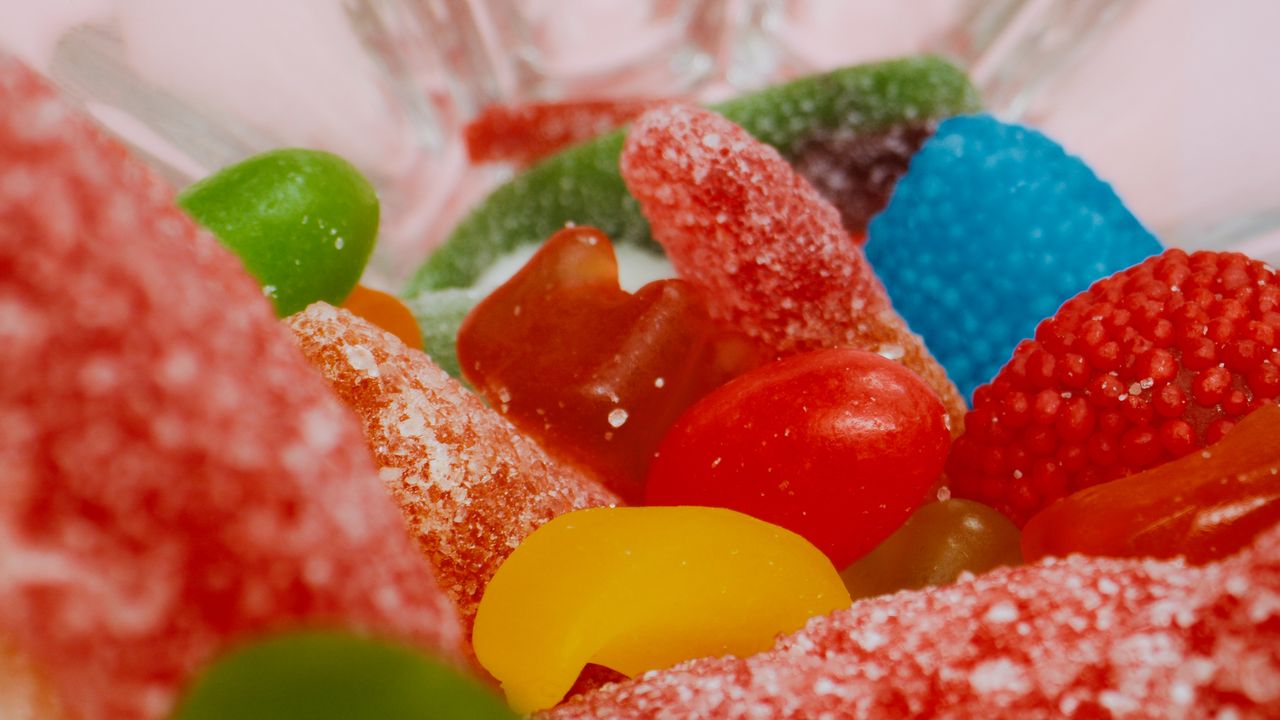
Many products sold as legal “mushroom” gummies contain fly agaric extract or muscimol. Others are vague blends. The Diamond Shruumz investigation found that composition varied between products and that there was no standardised oversight of testing for finished products.6
A product advertising legal psilocybin is a contradiction under US federal law: either it does not contain psilocybin, or it is an illegal product. Terms such as “nootropic mushroom blend”, “proprietary blend” or “psychedelic experience” without a named compound and amount are warning signs.
What a credible certificate of analysis should show:
- The species and compounds by name, including muscimol and ibotenic acid if the product contains fly agaric.
- Quantities per unit from an accredited third-party lab, matched to the batch number.
- Screening for undeclared psychoactive substances, heavy metals and microbes.
A certificate of analysis reduces uncertainty but cannot make an unapproved food additive safe. Our guide to signs a brand is genuinely third-party tested explains how to check one. For non-psychoactive species, see our overview of functional mushrooms in 2026.
Frequently asked questions
Is Amanita muscaria a magic mushroom?
Not in the usual sense. “Magic mushrooms” normally means psilocybin-containing species. Fly agaric contains ibotenic acid and muscimol, which act on glutamate and GABA receptors rather than serotonin receptors. Its effects are typically sedating and confusing rather than classically psychedelic, and its toxicity profile is different.
Is Amanita muscaria legal in the US?
It is not a federally controlled substance. However, the FDA said in December 2024 that fly agaric and its constituents are not authorised for use in conventional food.9 Louisiana criminalised muscimol and ibotenic acid from August 2025.10 Rules are changing, so check state and local law before assuming a product is legal.
Can Amanita muscaria kill you?
Deaths from fly agaric itself are rare. In one US poison centre series of 34 cases, five people were intubated and none died.3 The larger dangers are confusing it with deadly Amanita species, and manufactured products of uncertain content: the 2024 Diamond Shruumz outbreak involved two deaths among 180 cases.6
Do Amanita muscaria or psilocybin show up on a drug test?
Standard workplace drug panels do not test for psilocin or muscimol. Specialised laboratory tests can detect psilocin. The bigger practical risk is that a mislabelled gummy or chocolate may contain undeclared substances that standard tests do detect. Anyone facing testing for work or treatment should assume that unlabelled or vaguely labelled products carry that risk.
Are amanita gummies safer than psilocybin?
There is no basis for calling either safe. Psilocybin has low physical toxicity but real psychological risks, and it is illegal federally. Fly agaric products are unscheduled but have almost no clinical research, the FDA considers them unapproved food additives, and product contents can vary widely, as the 2024 poisoning outbreak showed.6
Is amanita muscaria psychedelic?
Not in the same way as psilocybin. Its active compounds, muscimol and ibotenic acid, act on GABA and glutamate systems and cause sedation, confusion and dream-like states rather than classic psychedelic effects.
Is amanita muscaria legal?
Amanita muscaria isn’t federally controlled, but FDA has said muscimol isn’t approved as a food ingredient, and Louisiana bans the mushroom for human consumption. Check state law before buying.
Sources
- Michelot D, Melendez-Howell LM. Amanita muscaria: chemistry, biology, toxicology, and ethnomycology. Mycol Res. 2003;107(Pt 2):131-146. DOI: 10.1017/s0953756203007305. PMID: 12747324. pubmed.ncbi.nlm.nih.gov
- Johnson MW, Griffiths RR. Potential Therapeutic Effects of Psilocybin. Neurotherapeutics. 2017;14(3):734-740. DOI: 10.1007/s13311-017-0542-y. PMID: 28585222. pubmed.ncbi.nlm.nih.gov
- Moss MJ, Hendrickson RG. Toxicity of muscimol and ibotenic acid containing mushrooms reported to a regional poison control center from 2002-2016. Clin Toxicol (Phila). 2019;57(2):99-103. DOI: 10.1080/15563650.2018.1497169. PMID: 30073844. pubmed.ncbi.nlm.nih.gov
- Kopra EI, Ferris JA, Winstock AR, Young AH, Rucker JJ. Adverse experiences resulting in emergency medical treatment seeking following the use of magic mushrooms. J Psychopharmacol. 2022;36(8):965-973. DOI: 10.1177/02698811221084063. PMID: 35388724. pubmed.ncbi.nlm.nih.gov
- Nayak SM, Gukasyan N, Barrett FS, Erowid E, Erowid F, Griffiths RR. Classic Psychedelic Coadministration with Lithium, but Not Lamotrigine, is Associated with Seizures: An Analysis of Online Psychedelic Experience Reports. Pharmacopsychiatry. 2021;54(5):240-245. DOI: 10.1055/a-1524-2794. PMID: 34348413. pubmed.ncbi.nlm.nih.gov
- Rumph JT, Winquist A, Troeschel AN, Pulver S, Schnall AH, Ebersole J, et al. Severe Illness Associated with Eating Mushroom-Containing Chocolate Products: United States, January-October 2024. MMWR Morb Mortal Wkly Rep. 2026;75(13):179-184. DOI: 10.15585/mmwr.mm7513a2. PMID: 41955162. pubmed.ncbi.nlm.nih.gov
- Goodwin GM, Aaronson ST, Alvarez O, Arden PC, Baker A, Bennett JC, et al. Single-Dose Psilocybin for a Treatment-Resistant Episode of Major Depression. N Engl J Med. 2022;387(18):1637-1648. DOI: 10.1056/NEJMoa2206443. PMID: 36322843. pubmed.ncbi.nlm.nih.gov
- Compass Pathways. Compass Pathways Announces FDA Granted NDA Rolling Review Request and Awarded Commissioner’s National Priority Voucher. Press release, 24 April 2026. ir.compasspathways.com
- US Food and Drug Administration. FDA Alerts Industry and Consumers about the Use of Amanita Muscaria or its Constituents in Food. Constituent update, 18 December 2024. fda.gov
- Louisiana State Legislature. HB 176 (2025 Regular Session), Act No. 154: regulation of certain hallucinogenic chemicals (beta-phenyl-GABA, muscimol, ibotenic acid; new R.S. 40:989.5). Signed June 2025, effective 1 August 2025. legis.la.gov
- Colorado Department of Revenue, Natural Medicine Division. Natural Medicine Frequently Asked Questions. nmd.colorado.gov
- Health Canada. Psilocybin and psilocin (Magic mushrooms). Canada.ca, modified 8 October 2025. canada.ca
Editorial note: This article is for general information only and is not medical or legal advice. Amanita muscaria and psilocybin mushroom products have not been evaluated by the FDA to diagnose, treat, cure or prevent any disease. Laws vary by location and change often, so verify the rules that apply where you are. Always talk to a licensed healthcare provider before use, especially if you are under 21, pregnant or nursing, taking medication, or managing a health condition.
More comparisons