
CBD isn’t just for people. CBD dog treats, oils and chews have become a fast-growing pet product category, marketed for joint pain, anxiety, noise phobias and more. Many dog owners say CBD helps their pets. Veterinarians, meanwhile, have been cautious: research is growing, but products are unregulated and dosing isn’t standardized.
This guide reviews what research shows about CBD for dogs, how dosing works, side effects and interactions, the dangers of THC, and how to choose a product with your veterinarian’s input.
Key takeaways
- Dogs have an endocannabinoid system, and CBD has been studied in dogs for osteoarthritis pain, epilepsy and anxiety.
- Some small trials found improvements in arthritis pain and mobility; results for seizures and anxiety are mixed.
- Common side effects include drowsiness, diarrhea and elevated liver enzymes (ALP).
- THC is toxic to dogs; even small amounts can cause serious symptoms. Avoid full-spectrum products unless your vet approves.
- Pet CBD isn’t FDA-approved; choose products with batch-specific COAs and talk to your vet first.
How CBD works in dogs
Like humans, dogs have an endocannabinoid system with cannabinoid receptors in the brain, nervous system and immune cells. Dogs may actually have more CB1 receptors in certain brain regions than humans, which may be one reason they’re especially sensitive to THC. CBD interacts with multiple targets, including serotonin and TRPV1 receptors, which could influence pain, inflammation and anxiety. For basics on CBD, see CBD meaning.
What the research shows
Osteoarthritis
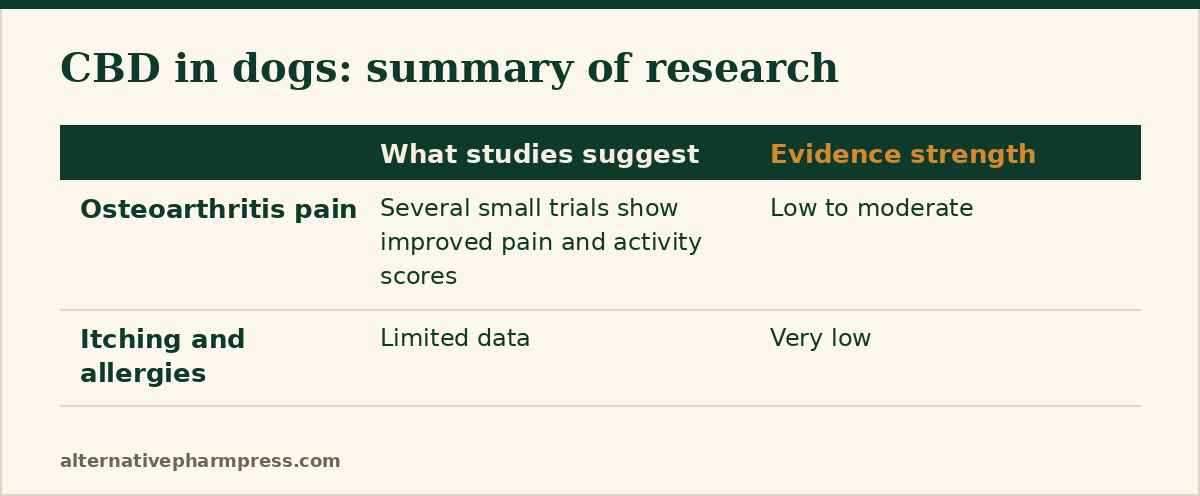
Several small randomized, placebo-controlled studies in dogs with osteoarthritis reported improvements in owner-reported pain, mobility and veterinary assessments with CBD oil compared with placebo. These studies are encouraging but small, often industry-funded and of short duration.
Epilepsy
A small study at Colorado State University found that dogs receiving CBD alongside standard anti-seizure medications had fewer seizures than the placebo group, though not all dogs responded. Larger follow-up research is ongoing. CBD should never replace prescribed anti-seizure medication without veterinary guidance.
Anxiety
Studies on CBD for dog anxiety, including noise-related fear and car travel, have shown mixed results. Some found little difference from placebo; others suggested modest benefits at higher doses.
Why THC is dangerous for dogs
THC toxicity in dogs is an emergency. Signs include stumbling, dribbling urine, dilated pupils, extreme sleepiness, sensitivity to sound or touch, vomiting, slow heart rate and, in severe cases, seizures or coma. Contact your veterinarian or an animal poison control service immediately.
Dogs are much more sensitive to THC than humans. Veterinary poison control centers have reported large increases in cannabis exposures in dogs, often from edibles. Full-spectrum CBD products contain small amounts of THC, which may be unsafe for small dogs or at higher doses. Products made for humans may contain more THC than labeled or ingredients toxic to dogs, like xylitol or chocolate. Use only pet-specific, THC-free products unless your vet advises otherwise. See full-spectrum vs broad-spectrum CBD.
Dosing considerations
There’s no FDA-approved CBD dose for dogs. Research studies have used doses roughly in the range of 1–2 mg per kilogram of body weight, given twice daily, for osteoarthritis. Many products recommend lower amounts. Because dogs absorb and metabolize CBD differently, and because product concentrations vary, it’s best to work with your veterinarian on dosing.
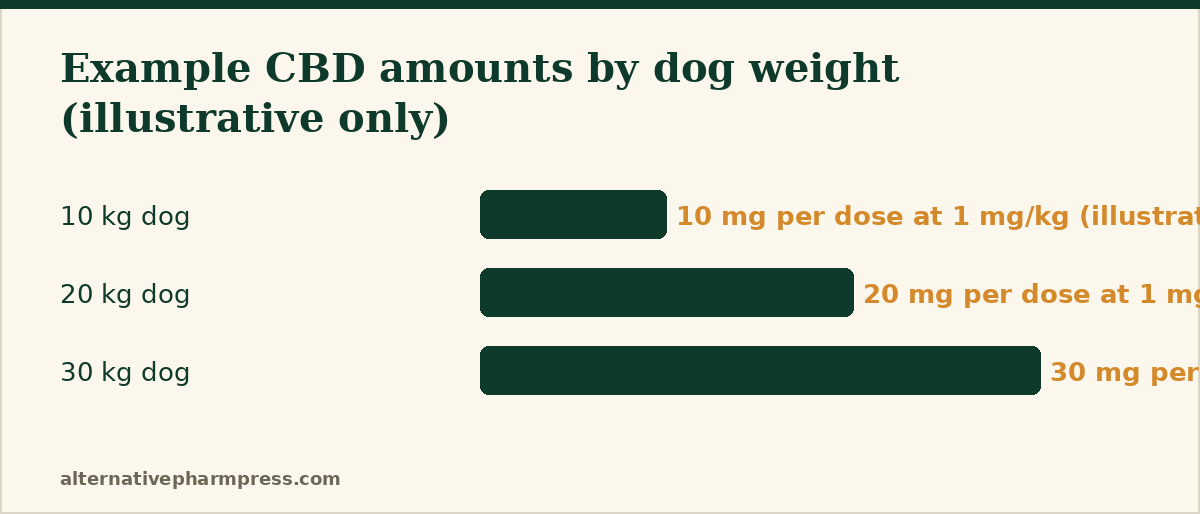
This chart is illustrative only and not a dosing recommendation. Your vet should guide dosing, especially if your dog takes medications or has health conditions.
Side effects
- Drowsiness or lethargy.
- Diarrhea or vomiting.
- Increased appetite or thirst.
- Elevated alkaline phosphatase (ALP) — a liver enzyme often increased in dogs on CBD; its significance isn’t fully understood.
- Dribbling urine — more common with THC exposure.
- Low blood pressure — possible at higher doses.
Veterinarians may recommend periodic bloodwork for dogs using CBD long term.
Drug interactions
CBD can inhibit liver enzymes that process many medications. In dogs, potential interactions include:
- Anti-seizure drugs such as phenobarbital.
- NSAIDs like carprofen or meloxicam.
- Sedatives and anxiety medications.
- Steroids and some heart medications.
Always tell your vet about any CBD products your dog is taking.
CBD treats vs oils
How to choose a CBD product for your dog
- Talk to your veterinarian first.
- Choose pet-specific products, not human edibles.
- Prefer THC-free (broad-spectrum or isolate) unless your vet advises otherwise.
- Check the COA for CBD content, THC levels and contaminants.
- Check mg of CBD per treat or per mL.
- Avoid harmful ingredients like xylitol, chocolate, grapes or raisins.
- Avoid exaggerated claims like curing cancer or arthritis.
- Look for quality seals such as the National Animal Supplement Council (NASC) seal.
See also what to check when buying CBD online.
Legal and veterinary context
Pet CBD products aren’t FDA-approved, and veterinarians in some states face limits on discussing or recommending cannabis products. Some states have passed laws allowing vets to discuss CBD with clients. Hemp-derived CBD for pets must meet THC limits, and federal hemp changes in 2026 may affect products. See the federal hemp THC limit and CBD.
Monitoring your dog
Keep a simple log: mobility, pain signs, behavior, sleep, appetite and side effects. Video your dog’s walking or climbing stairs before and during CBD use. This helps you and your vet judge whether CBD is helping.
Alternatives and complements
For arthritis: weight management, controlled exercise, physical rehabilitation, joint supplements (like omega-3 fatty acids) and veterinary medications such as NSAIDs or newer antibody treatments. For anxiety: behavior modification, training, environmental changes and veterinary anti-anxiety medications. CBD may be used alongside these approaches, not as a replacement.
CBD for cats
Cats metabolize many substances differently from dogs, and research on CBD in cats is very limited. Some studies suggest cats absorb and process CBD differently and may be more prone to certain side effects. Never give a cat a product made for dogs or people without your veterinarian’s approval.
When to stop and call the vet
Stop CBD and contact your veterinarian if your dog shows unusual lethargy, vomiting, diarrhea that doesn’t resolve, loss of coordination, urine dribbling, tremors or seizures, or behavior changes. Bring the product packaging and COA to the appointment.
Senior dogs and CBD
Many owners consider CBD for older dogs with stiffness, restlessness at night or cognitive changes. Senior dogs are more likely to take multiple medications and to have kidney or liver changes, which makes veterinary oversight especially important. Your vet may suggest baseline bloodwork before starting and periodic checks afterward. For senior dogs with arthritis, combining weight management, gentle exercise, comfortable bedding, non-slip flooring and proven pain medications often provides the biggest improvements; CBD might be one piece of a broader plan.
Questions to ask your veterinarian
- Is CBD likely to help my dog’s specific condition?
- Could it interact with my dog’s current medications?
- What dose and product would you suggest, and how should we adjust it?
- What side effects should I watch for?
- Do we need bloodwork before or during use?
- How will we judge whether it’s working?
Introducing CBD gradually
If your vet agrees to a trial, start at the low end of the suggested range and keep it consistent for a week or two before adjusting. Give it at the same times each day, ideally with food, which may improve absorption. Watch your dog closely for the first few doses, especially for wobbliness or unusual sleepiness. Avoid starting CBD at the same time as other new medications or supplements, so you can tell which change is responsible for any effects.
Storing CBD pet products safely
Keep CBD treats and oils out of reach — many dogs will eat an entire bag of tasty chews if given the chance. Store human cannabis products separately and securely, since accidental ingestion of THC edibles is one of the most common reasons dogs are taken to emergency vets for cannabis toxicity. Check expiration dates and store oils away from heat and light.
FAQ
Is CBD safe for dogs?
Short-term studies suggest CBD is generally well tolerated in dogs, with side effects like drowsiness, diarrhea and elevated liver enzymes. Long-term safety needs more research.
Does CBD help dogs with arthritis?
Several small trials found improvements in pain and mobility in dogs with osteoarthritis, though more research is needed.
Can CBD treats get my dog high?
CBD itself isn’t intoxicating, but products containing THC can cause toxicity. Use THC-free pet products.
How much CBD should I give my dog?
There’s no approved dose. Studies have used about 1–2 mg/kg twice daily for arthritis. Work with your vet to determine a dose.
Can I give my dog human CBD gummies?
No. Human products may contain THC, xylitol or other ingredients toxic to dogs.
How long does CBD take to work in dogs?
Some owners notice changes within days; in arthritis studies, benefits were often assessed after several weeks.