
Many people start kratom for energy, pain or to ease off other opioids, then find that daily use has turned into dependence. Stopping can bring days of restlessness, aches, insomnia and low mood. A kratom detox — the process of clearing kratom from your system and managing withdrawal — goes much more smoothly with a plan.
This guide covers tapering versus quitting cold turkey, what withdrawal looks like, ways to manage symptoms, when medical detox makes sense, medication options and how to build support for the weeks after.
Key takeaways
- Regular kratom use can cause physical dependence, with opioid-like withdrawal when you stop.
- Gradual tapering usually reduces withdrawal severity compared with stopping abruptly.
- Acute symptoms typically peak at 1–3 days and ease within about a week, though sleep and mood issues can linger.
- Medical detox and medications like buprenorphine can help, especially with heavy use or 7-OH and extract products.
- Long-term success improves with counseling, peer support and a relapse plan.
Why kratom causes withdrawal
Kratom’s main alkaloid, mitragynine, and its more potent metabolite 7-OH act on opioid receptors. With daily use, the brain adapts — receptors become less responsive and the body’s own systems adjust to the constant input. When kratom suddenly stops, these adaptations leave the nervous system out of balance, producing withdrawal. For the receptor science, read kratom and the opioid receptor research and kratom tolerance.
Withdrawal tends to be more intense for people who use:
- Large daily amounts of leaf powder.
- Extracts, shots or 7-OH products, which are much more potent. See kratom extract vs leaf.
- Multiple doses throughout the day for months or years.
- Kratom alongside other substances such as alcohol, benzodiazepines or opioids.
Common withdrawal symptoms
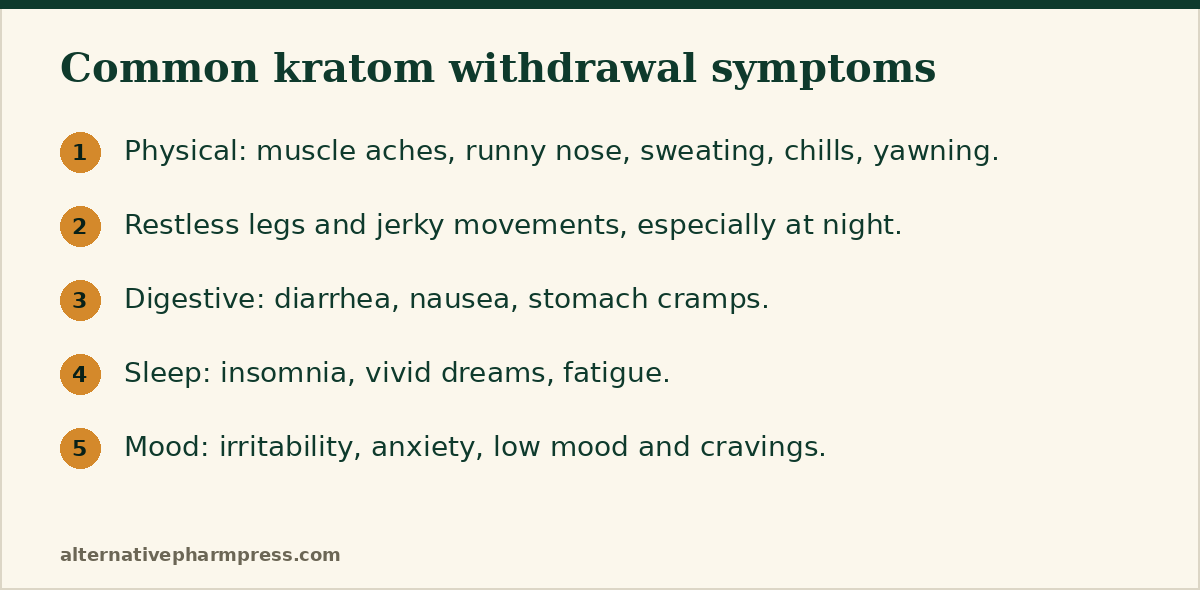
For a detailed timeline, see kratom withdrawal.
Typical withdrawal timeline
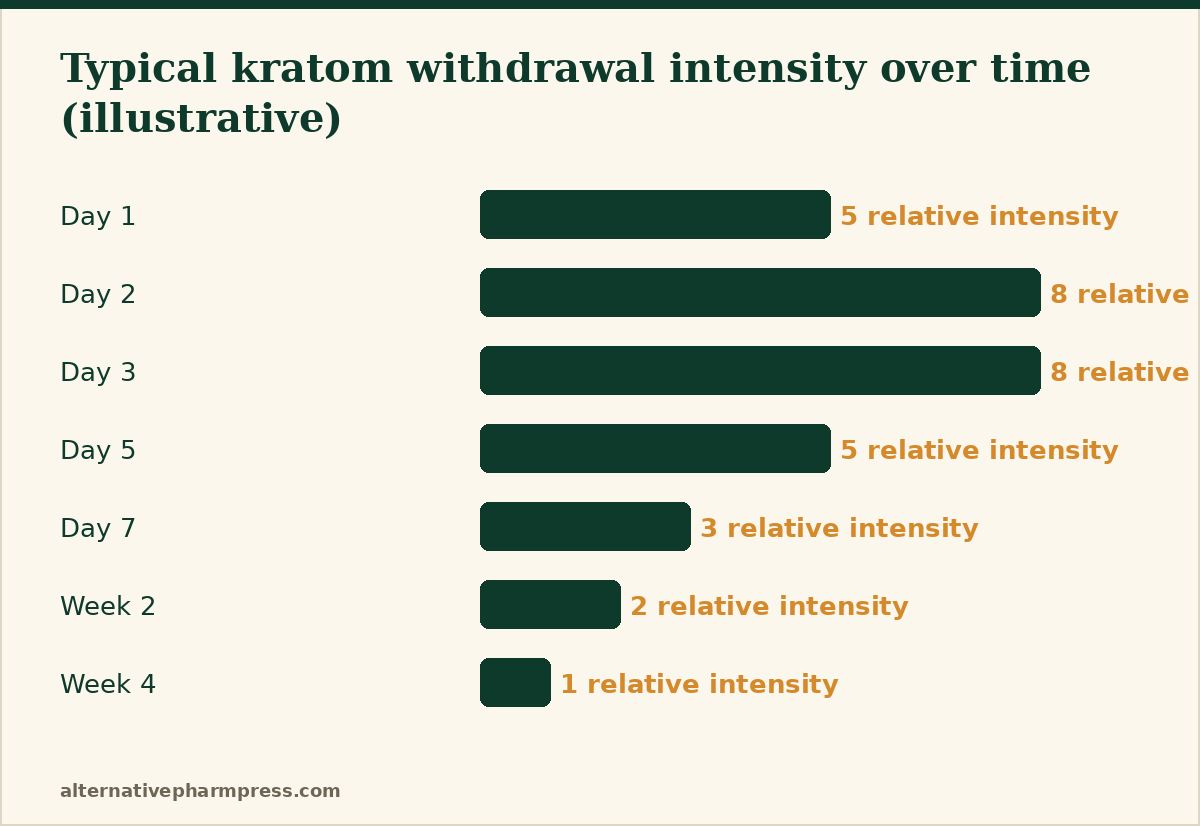
This chart is illustrative. Symptoms usually start 12–24 hours after the last dose, peak around days 2–3 and ease over the following week. Some people experience post-acute withdrawal — lingering low energy, poor sleep, anxiety or cravings — for weeks or months.
Tapering vs cold turkey
Cold turkey
Stopping all at once ends use quickly but often produces more intense withdrawal. For people with light, occasional use, this may be manageable. For heavy users, cold turkey increases the chance of relapse because symptoms feel unbearable.
Tapering
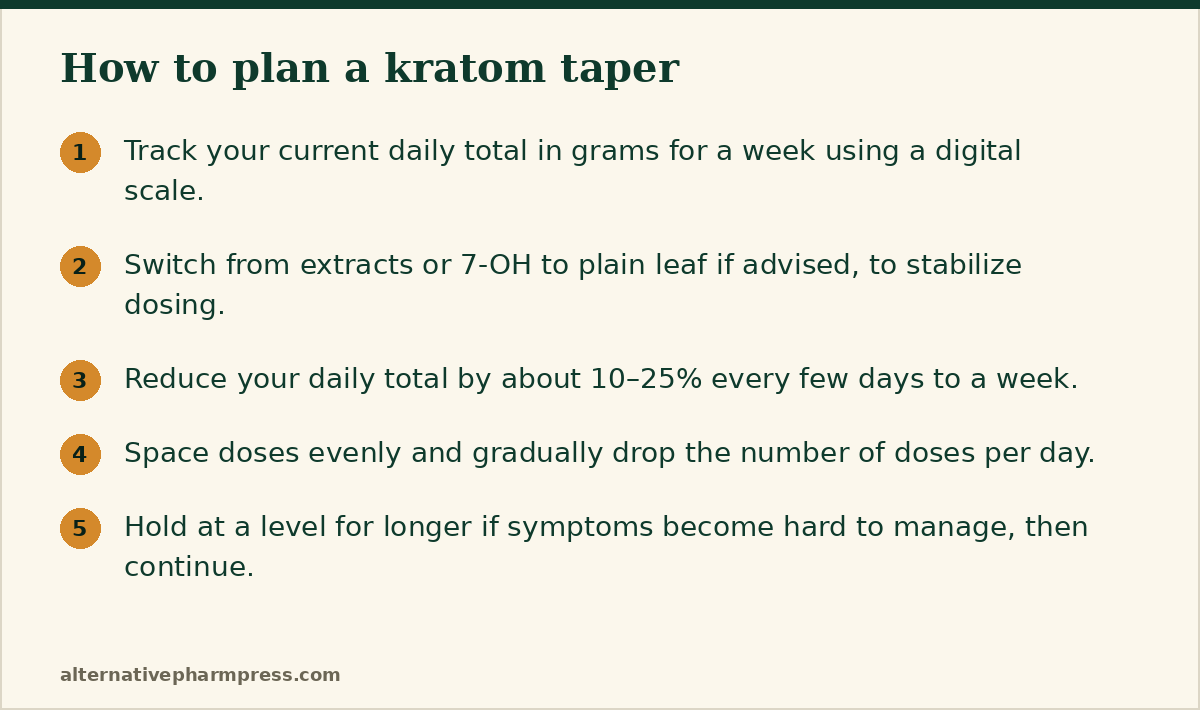
Tapering means gradually lowering your dose over days or weeks. It lets the nervous system adjust in smaller steps and usually reduces withdrawal intensity. A taper works best when it’s written down, measured precisely and paced to your situation.
How to build a kratom taper
Additional tapering tips:
- Weigh every dose. Eyeballing teaspoons makes it impossible to taper consistently. See kratom capsules vs powder.
- Keep the same product during the taper so potency stays consistent.
- Remove extra supply from the house so you can’t easily dose above plan.
- Expect discomfort at the end — the last few grams can be the hardest.
- Tell someone you trust about your plan so they can support you.
If you use concentrated 7-OH products, tapering may be harder and riskier. A clinician can help design a safer plan. See 7-OH withdrawal.
Managing symptoms at home
- Hydration and nutrition — replace fluids lost to sweating and diarrhea; eat simple, nourishing foods.
- Sleep hygiene — consistent bedtimes, dark rooms, limited screens.
- Gentle exercise — walking or stretching can ease restlessness and lift mood.
- Warm baths or showers — many people find these soothing for aches.
- Over-the-counter options — some people use pain relievers or anti-diarrheal medicine; check with a pharmacist about safe use and interactions.
- Avoid alcohol and sedatives — they can be dangerous and complicate recovery.
Medical detox and medications
Medical support is a good idea if you use heavily, use extracts or 7-OH, have tried to quit before without success, use other substances, or have physical or mental health conditions.
Options a clinician may discuss include:
- Buprenorphine (e.g., Suboxone) — used off-label for kratom dependence in case reports and clinical practice, either for short-term detox or longer maintenance. See Suboxone for kratom withdrawal.
- Clonidine or lofexidine — can reduce sweating, anxiety and restlessness.
- Symptom-specific medications for nausea, diarrhea or sleep.
- Inpatient or outpatient detox programs with monitoring.
Some people choose ongoing medication rather than a full detox, which can be an effective long-term strategy.
Life after detox
Detox is only the first step. Cravings and stress can trigger a return to use. Supports that help:
- Counseling — cognitive behavioral therapy and other approaches help address triggers.
- Peer support — online communities and mutual-help groups offer shared experience.
- Treating underlying issues — chronic pain, depression, anxiety or ADHD often contributed to kratom use and need their own treatment.
- A relapse plan — know your warning signs and who to call. If you return to use, remember tolerance drops after a break.
Kratom detox products: be cautious
Some companies sell “kratom detox kits,” teas or supplements promising to flush kratom from your system or eliminate withdrawal. There’s no evidence these products speed up withdrawal or remove alkaloids faster than your body naturally does. Some contain unproven herbs or high doses of vitamins. Focus on proven strategies and medical care instead. If your goal is passing a drug test, see does kratom show up on a drug test?.
Safety warnings
Kratom withdrawal is generally not life-threatening for healthy adults, but complications can occur:
- Dehydration from vomiting or diarrhea.
- Severe depression or suicidal thoughts — seek help immediately.
- Polysubstance withdrawal — stopping alcohol or benzodiazepines at the same time can be dangerous and requires medical supervision.
- Pregnancy — talk to a healthcare provider before stopping; withdrawal can affect the pregnancy.
Need help now? In the U.S., the SAMHSA National Helpline (1-800-662-4357) offers free, confidential treatment referrals 24/7. If you’re in crisis or thinking about harming yourself, call or text 988.
How to tell if you need help quitting
Signs that kratom use has become a problem include using more than intended, spending a lot of money or time on it, cravings, failed attempts to cut back, using to avoid withdrawal, and continuing despite problems at work, home or with health. If several of these apply, you’re not alone — and professional help can make a real difference. Our kratom guide for beginners explains dependence risks for new users.
A note on switching products during detox
Some people try to quit by switching from kratom to another substance, such as kava, kanna, phenibut or tianeptine. This can create a new dependence, and some of these substances carry serious risks of their own. Tianeptine, for example, has its own severe withdrawal syndrome; see tianeptine withdrawal. If you need help managing symptoms, a clinician can recommend safer options.
Sample taper: what it can look like
As an illustration only, imagine someone using 12 grams of plain leaf per day across four doses. A gradual taper might look like this:
- Week 1: 10 g per day (four doses of 2.5 g).
- Week 2: 8 g per day (four doses of 2 g).
- Week 3: 6 g per day (three doses of 2 g).
- Week 4: 4 g per day (two doses of 2 g).
- Week 5: 2 g per day (one dose), then stop.
Some people need longer holds at each level, especially near the end. Others can move faster. The key is a written plan, precise measurement and flexibility. People using extracts or 7-OH products may have much higher effective doses and usually benefit from medical guidance rather than a DIY taper.
Supporting someone through a kratom detox
If a friend or family member is quitting, practical help matters. Offer to keep them company during the hardest days, help with meals and errands, encourage rest and hydration, and avoid judgment if they struggle. Learn the warning signs of severe depression and know how to contact crisis services. If they relapse, encourage them to try again and to involve a clinician — relapse is common in recovery and doesn’t mean failure.
FAQ
How long does a kratom detox take?
Acute withdrawal usually lasts about 5–10 days, with the worst symptoms on days 2–3. Lingering sleep and mood issues can last weeks.
Is it better to taper off kratom or quit cold turkey?
Tapering usually reduces withdrawal intensity and relapse risk, especially for heavy users.
What medications help with kratom withdrawal?
Clinicians may use buprenorphine, clonidine or lofexidine, and medications for specific symptoms like nausea or insomnia.
Can kratom withdrawal be dangerous?
It’s usually not life-threatening, but dehydration, depression and withdrawal from other substances can cause complications. Seek medical help if you’re concerned.
Do kratom detox kits work?
There’s no evidence they speed detox or prevent withdrawal. Focus on tapering, symptom management and medical support.
How fast should I taper?
Many people reduce their daily total by about 10–25% every few days to a week, slowing down if symptoms become hard to manage. A clinician can personalize the plan.