

Ozempic (semaglutide) is a once-weekly injection approved by the FDA to lower blood sugar in adults with type 2 diabetes and to reduce the risk of major cardiovascular events in those who also have heart disease. The same drug at higher doses is sold as Wegovy for weight management. Because millions of people now use semaglutide, its side effects are some of the most discussed in medicine.
Most people experience at least some digestive side effects, especially in the first weeks and after dose increases. A much smaller number face serious complications. This guide summarizes what the clinical trials, the prescribing information and large real-world studies show, so you know what’s common, what’s rare and when to call your doctor.
Key takeaways
- Most common: nausea, vomiting, diarrhea, constipation and stomach pain, usually worst when starting or increasing the dose.
- Serious but uncommon: pancreatitis, gallbladder problems, kidney injury from dehydration and, rarely, bowel obstruction.
- Boxed warning: thyroid C-cell tumors were seen in rodents; people with certain thyroid cancer histories should not use it.
- Body composition: a meaningful share of weight lost can be lean mass, so protein and strength training matter.
- Get help fast for severe abdominal pain, persistent vomiting, signs of dehydration or vision changes.
How Ozempic works, and why it causes side effects
Semaglutide mimics GLP-1, a gut hormone that tells the pancreas to release insulin when blood sugar rises, reduces the release of glucagon, slows how fast the stomach empties and acts on the brain to reduce appetite. Those same actions explain most of its side effects. Slower stomach emptying and appetite changes are behind the nausea, fullness and reflux that many people feel. For background on the molecule itself, see our explainer on whether semaglutide is a peptide.
Common side effects
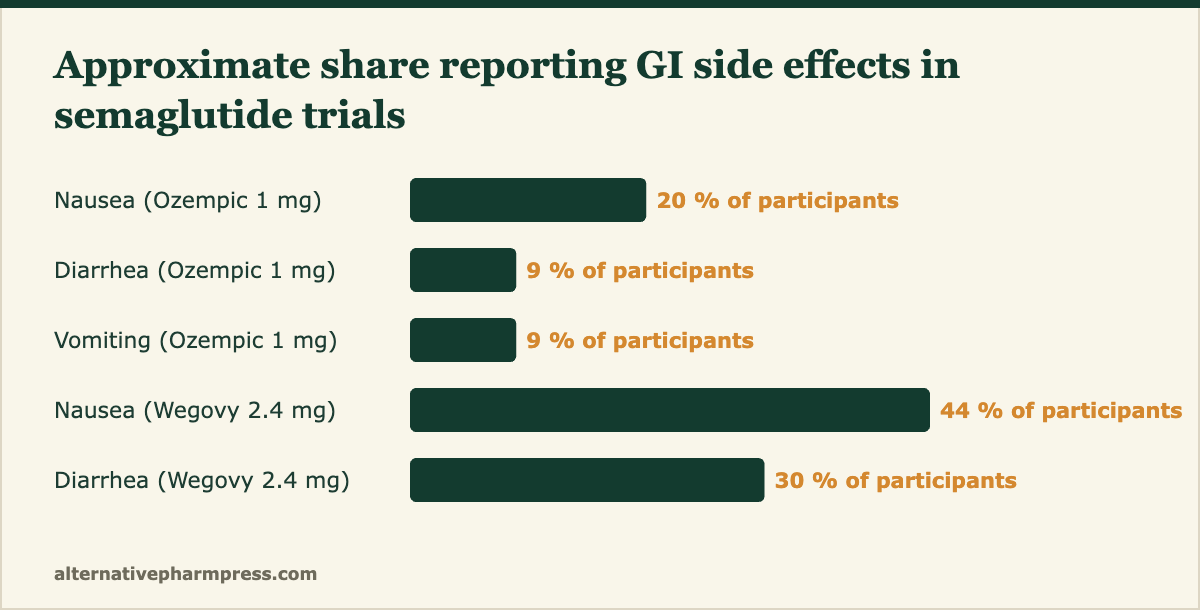
In the SUSTAIN clinical trials for type 2 diabetes, gastrointestinal side effects were the most frequently reported. Nausea affected roughly 15 to 20 percent of people, depending on the dose, compared with a few percent on placebo. Vomiting, diarrhea, constipation and abdominal pain were also common. In the higher-dose weight-loss trials for Wegovy, rates were higher still, with nausea reported by more than 40 percent of participants.
Other commonly reported effects include:
- Indigestion, burping and acid reflux.
- Bloating and gas.
- Fatigue, especially early on.
- Headache and dizziness.
- Injection-site reactions.
- Changes in taste or reduced interest in certain foods.
For most people these effects are mild to moderate and fade over weeks. They tend to flare after each dose increase, which is why prescribers raise the dose gradually. A small share of trial participants stopped treatment because of digestive side effects.
Serious side effects
The prescribing information lists several less common but serious risks.
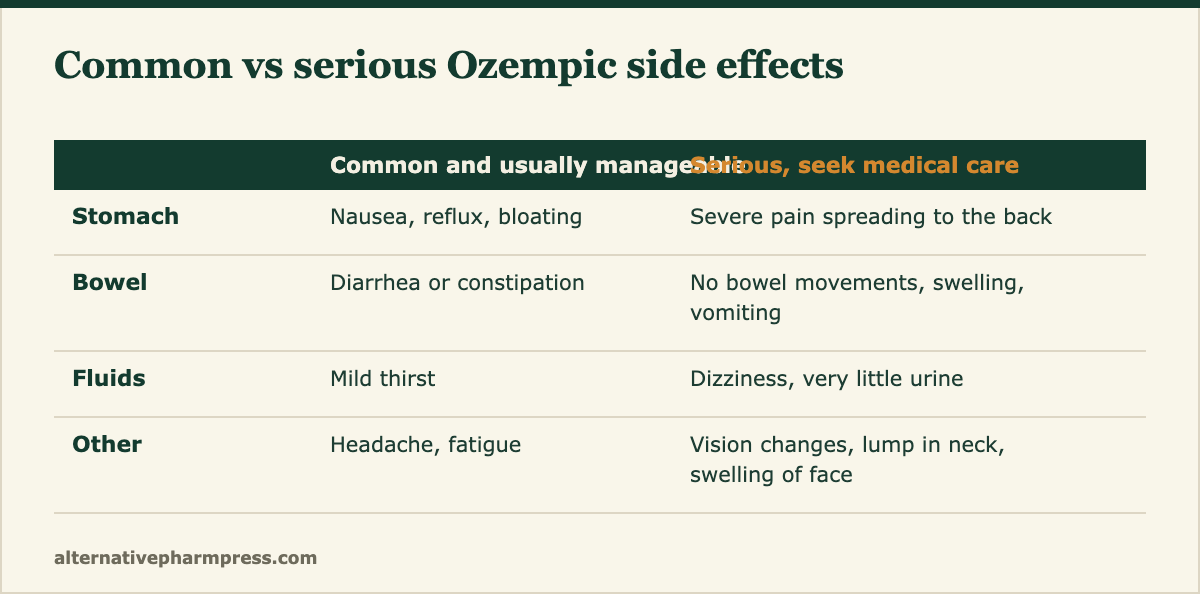
Pancreatitis. Acute pancreatitis has been reported with GLP-1 drugs. Symptoms include severe, persistent pain in the upper abdomen that may spread to the back, sometimes with vomiting. Anyone with these symptoms should stop the medication and seek care.
Gallbladder disease. Gallstones and gallbladder inflammation occurred more often with semaglutide than with placebo in trials. Rapid weight loss itself raises gallstone risk. Warning signs include pain in the upper right abdomen, fever and yellowing of the skin or eyes.
Kidney injury. Vomiting and diarrhea can lead to dehydration, which can worsen kidney function, particularly in people with existing kidney disease. Staying hydrated and reporting persistent GI symptoms is important.
Low blood sugar. Ozempic alone rarely causes hypoglycemia, but the risk rises when it’s combined with insulin or sulfonylureas. Doses of those drugs may need adjusting.
Diabetic retinopathy complications. In the SUSTAIN-6 trial, people with existing diabetic eye disease had more retinopathy complications on semaglutide, possibly related to rapid improvement in blood sugar. People with retinopathy should have eye monitoring.
Bowel obstruction (ileus). The FDA added ileus to the label based on post-marketing reports.
Pulmonary aspiration during anesthesia. Because semaglutide slows stomach emptying, the label now warns about the risk of food being inhaled into the lungs during procedures with sedation or anesthesia. Tell your surgical team you take it.
Allergic reactions. Serious hypersensitivity reactions, including anaphylaxis, are rare but possible.
The thyroid boxed warning
Ozempic carries a boxed warning because semaglutide caused thyroid C-cell tumors in rodents. It’s not known whether it causes these tumors, including medullary thyroid carcinoma, in humans. The drug should not be used by people with a personal or family history of medullary thyroid carcinoma or by people with multiple endocrine neoplasia syndrome type 2. Report a lump or swelling in the neck, trouble swallowing, hoarseness or shortness of breath.
What real-world studies have found
Large studies using health records and insurance data have added to the picture. A widely cited 2023 analysis found that people using GLP-1 drugs for weight loss had higher rates of pancreatitis, bowel obstruction and gastroparesis than people using a different weight-loss medication, although the absolute risks remained low. Other studies have looked at outcomes such as kidney disease and cardiovascular events, where GLP-1 drugs often show benefits.
Regulators have also investigated signals that emerged after approval:
- Suicidal thoughts: the FDA and European Medicines Agency reviewed reports and did not find evidence that GLP-1 drugs cause suicidal thoughts, though monitoring continues. Anyone experiencing mood changes should talk to their doctor.
- Vision loss (NAION): in 2025, the European Medicines Agency concluded that a rare type of optic nerve damage called non-arteritic anterior ischemic optic neuropathy is a very rare side effect of semaglutide. Sudden vision loss needs urgent medical attention.
Muscle loss and "Ozempic face"
When people lose weight quickly, they lose both fat and lean mass. In a body-composition substudy of the STEP 1 weight-loss trial, a substantial share of the weight lost was lean mass, though the proportion of fat to lean tissue improved overall. Our guide to what happens when you stop Wegovy or Zepbound covers weight regain, which is another reason to protect muscle while on treatment.
"Ozempic face" is a popular term for facial volume loss after significant weight loss. It isn’t a unique drug effect, just a visible result of losing fat from the face. Hair shedding has also been reported, likely linked to rapid weight loss and lower calorie intake.
How to reduce side effects
Many digestive side effects can be eased with simple changes, alongside your prescriber’s guidance.
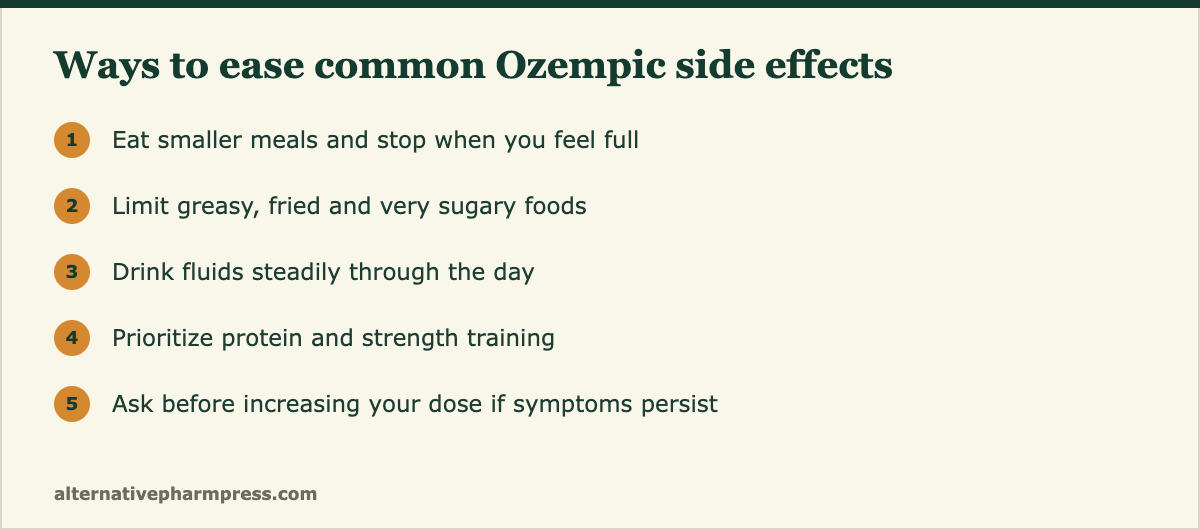
Other practical tips include eating slowly, avoiding lying down right after meals if you have reflux, and keeping a simple symptom diary to share with your prescriber. Don’t skip doses or change doses on your own; your doctor can slow the dose increase or keep you at a lower dose if side effects are hard to manage.
Compounded and counterfeit semaglutide
The FDA has warned about dosing errors with compounded semaglutide, especially when people measure doses with syringes in units rather than milligrams, leading to overdoses that cause severe vomiting and dehydration. It has also warned about counterfeit Ozempic pens. With the semaglutide shortage resolved, the FDA has restricted most compounding of copies. Buy only from licensed pharmacies, and check our guide to weight-loss drugs in 2026 for the latest on compounded versions.
Who should not use Ozempic
Ozempic isn’t appropriate for everyone. It shouldn’t be used by people with a personal or family history of medullary thyroid carcinoma or MEN 2, or by anyone with a known serious allergy to semaglutide. It’s not recommended during pregnancy, and the label advises stopping it at least two months before a planned pregnancy because of its long half-life. People with a history of pancreatitis, severe gastrointestinal disease such as gastroparesis, or diabetic eye disease need a careful discussion with their doctor first.
Ozempic vs other GLP-1 drugs
Side effect profiles are broadly similar across the class. Tirzepatide (Mounjaro and Zepbound), which acts on both GLP-1 and GIP receptors, causes comparable digestive side effects. Our semaglutide vs tirzepatide and semaglutide vs liraglutide comparisons go through the differences in effectiveness and tolerability.
Bottom line
Ozempic’s side effects are mostly digestive, most common early in treatment and after dose increases, and usually manageable. Serious problems such as pancreatitis, gallbladder disease, kidney injury and bowel obstruction are uncommon but important to recognize. The best protection is to use the drug under a prescriber’s supervision, increase the dose slowly, stay hydrated, protect muscle with protein and strength training, and report warning signs promptly.
FAQ
What is the most common side effect of Ozempic?
Nausea. It’s most common when starting or increasing the dose and often improves over several weeks.
How long do Ozempic side effects last?
For many people, digestive side effects ease within a few weeks of reaching a stable dose. Some have symptoms longer.
Can Ozempic cause pancreatitis?
Acute pancreatitis has been reported. Severe, persistent upper abdominal pain needs urgent medical attention.
Does Ozempic cause hair loss?
Hair shedding has been reported, likely related to rapid weight loss and lower calorie intake rather than the drug directly.
Is Ozempic safe long term?
Trials have followed people for several years, and semaglutide has shown cardiovascular benefits in people with heart disease. Long-term monitoring continues.
Should I stop Ozempic before surgery?
Tell your surgical and anesthesia team you take it. Because it slows stomach emptying, they’ll advise you on timing.
Sources
- FDA — Ozempic prescribing information (Drugs@FDA)
- FDA — Medications containing semaglutide marketed for weight loss
- European Medicines Agency — PRAC review of semaglutide and NAION
- PubMed — GLP-1 agonists gastrointestinal adverse events JAMA 2023
- PubMed — SUSTAIN-6 semaglutide cardiovascular outcomes
- MedlinePlus — Semaglutide injection