

Chaga (Inonotus obliquus) is a dark, crusty fungus that grows mainly on birch trees in cold northern forests. It has been used in Russian, Siberian and Northern European folk medicine for centuries, often as a tea. Today it’s marketed as an antioxidant-rich “superfood” in teas, coffees, tinctures and capsules, with claims about immunity, inflammation and even cancer.
This guide reviews what research shows about chaga mushroom benefits, its key compounds, how it’s used, the important oxalate concerns and kidney risks, drug interactions and sustainability issues.
Key takeaways
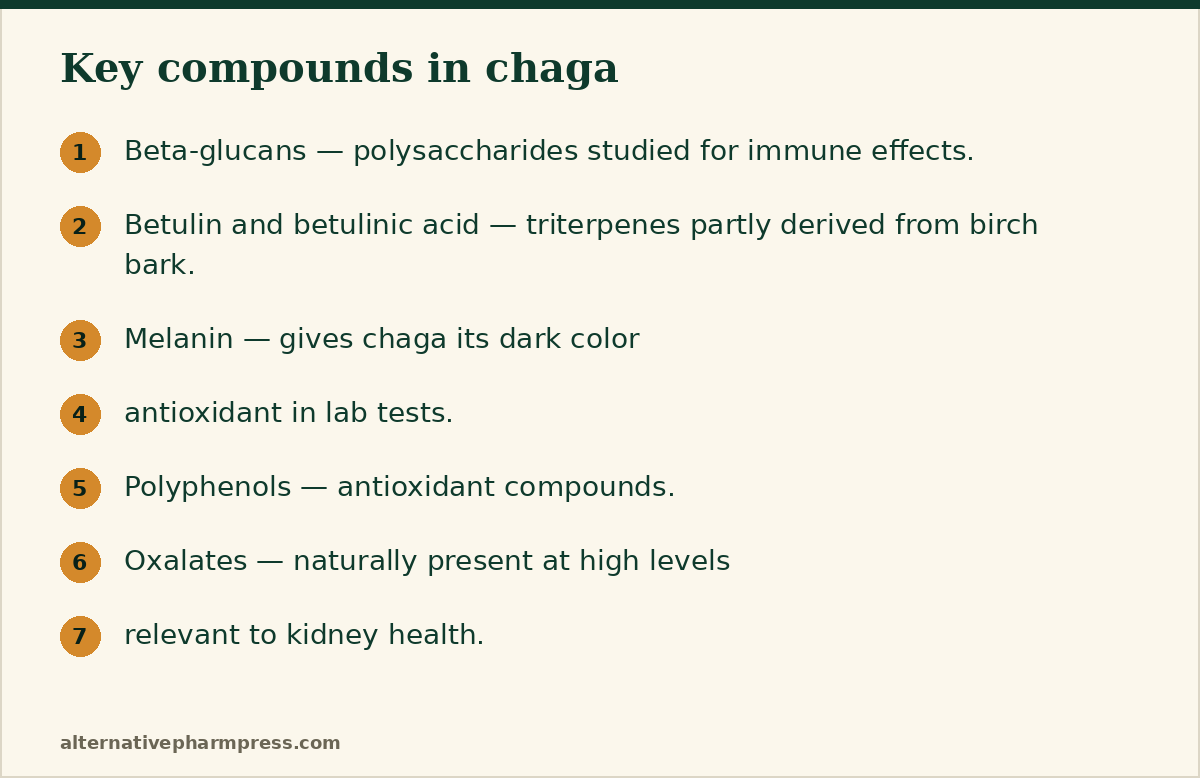
- Chaga contains polysaccharides (beta-glucans), triterpenes (including betulin and betulinic acid), melanin and polyphenols.
- Lab studies show antioxidant, anti-inflammatory and anti-tumor activity, but human clinical evidence is very limited.
- Chaga is very high in oxalates; case reports link heavy, long-term chaga use to kidney damage (oxalate nephropathy).
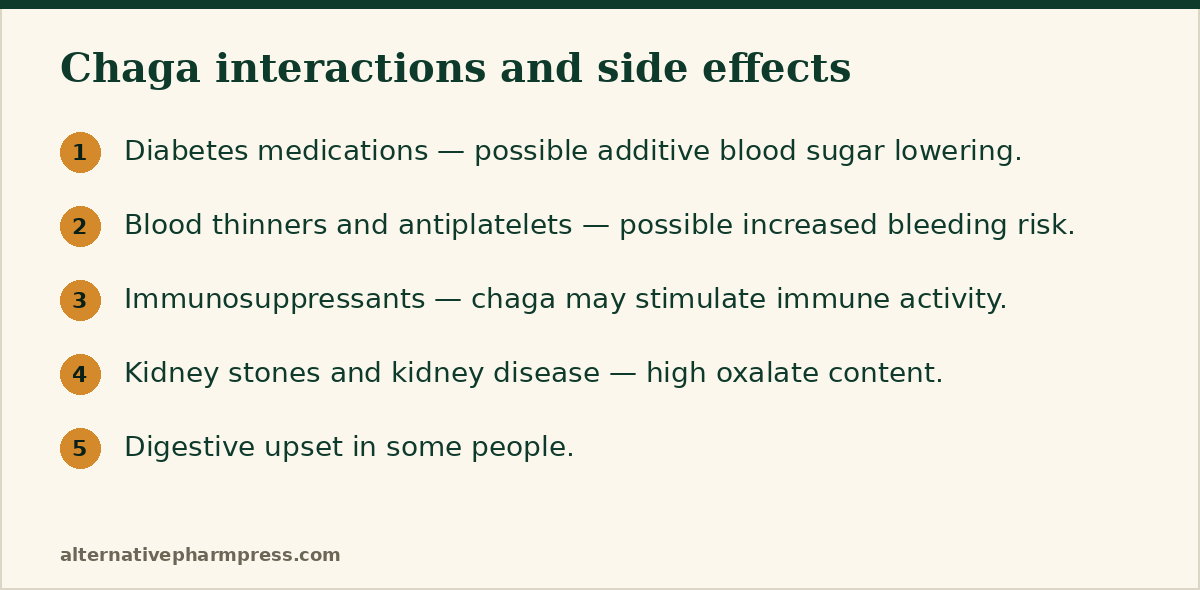
- Chaga may lower blood sugar and affect clotting, interacting with diabetes drugs and blood thinners.
- Wild chaga is slow-growing; sustainability and authenticity are concerns.
What is chaga?
Chaga isn’t a typical mushroom with a cap and stem. The part harvested is a sclerotium — a dense mass of mycelium that looks like burnt charcoal on the outside and has a rusty orange interior. It grows slowly on living birch trees in Russia, Scandinavia, Canada and the northern U.S. Traditional preparations involve simmering chunks in water to make a dark, earthy tea.
For context on other functional mushrooms, see functional mushrooms research and chaga vs reishi.
Key compounds
What the research shows
Antioxidant activity
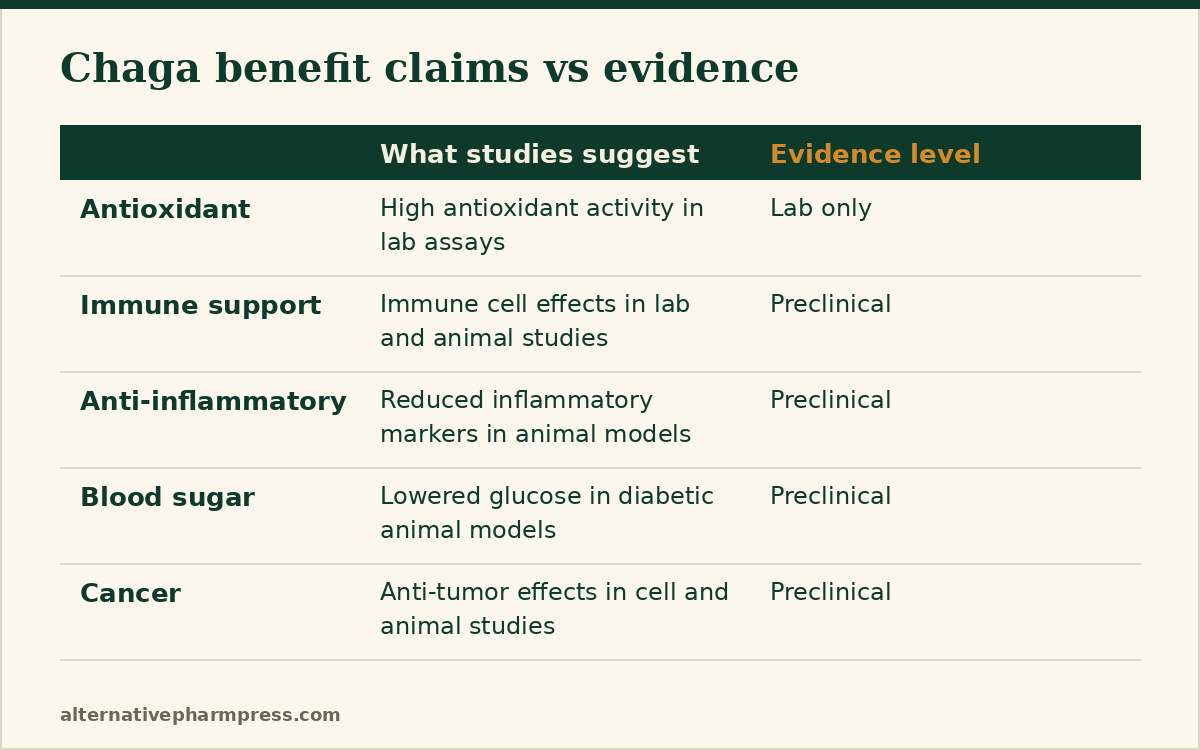
Chaga scores high on lab antioxidant tests. However, high antioxidant activity in a test tube doesn’t necessarily translate into health benefits in people.
Immune and anti-inflammatory effects
Cell and animal studies suggest chaga extracts may influence immune cells and reduce inflammatory markers. Human trials are lacking.
Blood sugar
Animal studies show chaga can lower blood sugar. This raises potential interaction concerns for people taking diabetes medications.
Cancer
Lab and animal studies have found anti-tumor effects of chaga extracts and betulinic acid. There are no reliable human clinical trials showing chaga prevents or treats cancer. Memorial Sloan Kettering lists chaga among herbs that lack clinical evidence for cancer.
The oxalate concern
Chaga contains very high levels of oxalates — compounds that can bind calcium and form crystals. In the kidneys, high oxalate intake can contribute to kidney stones or oxalate nephropathy, a form of kidney damage.
Published case reports describe people who drank large amounts of chaga daily for months and developed kidney injury, sometimes requiring dialysis. One frequently cited case involved a woman who consumed chaga powder daily for several months and developed oxalate nephropathy.
Avoid chaga if you have kidney disease, a history of kidney stones or other risk factors for oxalate problems. Seek medical care if you notice reduced urination, swelling, fatigue or flank pain while using chaga.
How chaga is used
- Tea — chunks simmered in water for hours.
- Powders — added to coffee or smoothies. See mushroom coffee.
- Tinctures — alcohol or dual extracts.
- Capsules — extract or ground chaga.
Hot-water extraction pulls polysaccharides; alcohol extraction captures triterpenes like betulinic acid.
Side effects and interactions
People scheduled for surgery should stop chaga at least two weeks in advance. Pregnant or breastfeeding people should avoid chaga supplements due to limited safety data.
Quality and authenticity
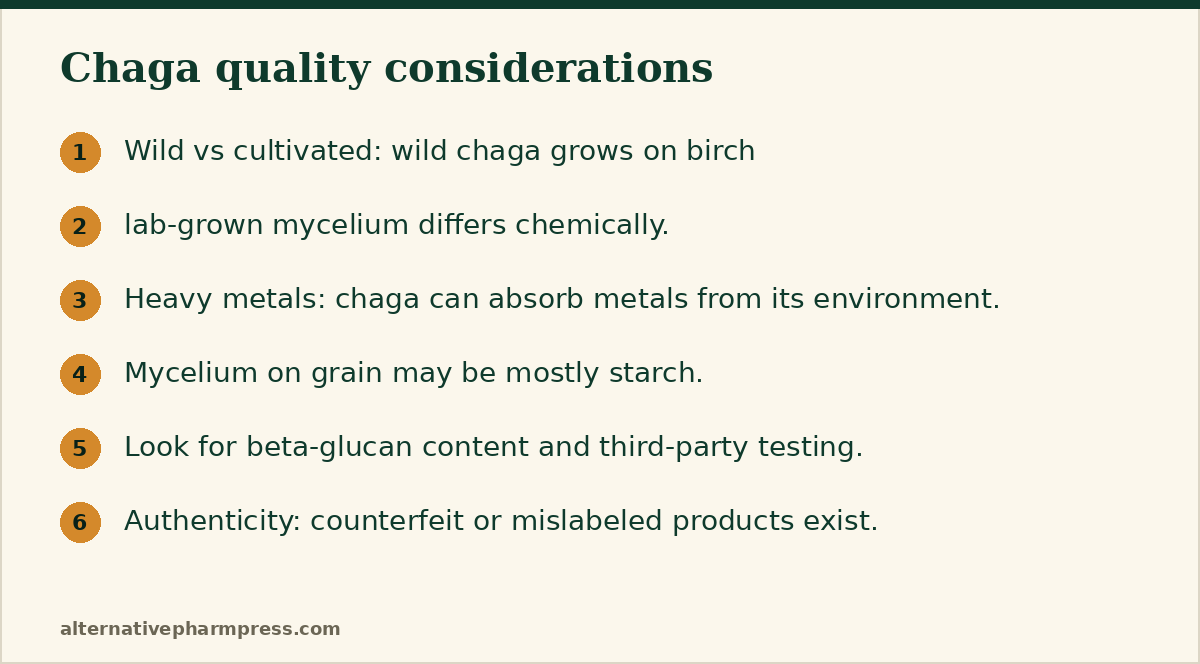
Cultivated chaga mycelium grown on grain doesn’t contain birch-derived compounds like betulin and may be mostly starch. Read functional mushrooms in 2026: label problems.
Sustainability
Wild chaga grows slowly, taking years to form a harvestable mass, and overharvesting is a concern in some regions. Responsible harvesters leave part of the sclerotium on the tree and avoid harvesting from young or stressed trees. Cultivated alternatives exist but differ chemically.
Reducing risk
- Use chaga occasionally, not daily in large amounts.
- Avoid if you have kidney issues or a history of kidney stones.
- Stay hydrated.
- Pair with calcium-containing foods, which may reduce oxalate absorption (discuss with a clinician).
- Check medications for interactions.
- Choose tested products with heavy metal screening.
Chaga vs other mushrooms
| Mushroom | Main marketed use | Evidence | Key concern |
|---|---|---|---|
| Chaga | Antioxidant, immune | Preclinical | High oxalates |
| Reishi | Calm, immune | Low; mixed | Rare liver injury |
| Lion’s mane | Focus, memory | Low to moderate | Rare allergies |
| Turkey tail | Immune (cancer adjunct) | Some clinical (PSK) | Few known |
| Cordyceps | Energy, endurance | Low; mixed | Interactions |
See reishi mushroom benefits, cordyceps benefits and turkey tail vs reishi.
Making chaga tea
Simmer a small handful of chaga chunks in water for one to several hours, then strain. Chunks can be reused a few times. Because tea concentrates oxalates as well as beneficial compounds, moderation matters.
Why antioxidant numbers can mislead
Chaga is often promoted with very high ORAC (oxygen radical absorbance capacity) scores. ORAC measures antioxidant activity in a test tube. The USDA withdrew its ORAC database in 2012, noting that these values don’t reliably reflect what happens in the body. Antioxidants are absorbed, metabolized and used differently in living systems, and taking more antioxidants doesn’t always improve health — in some studies, high-dose antioxidant supplements haven’t shown benefits or have caused harm. A high antioxidant score is not proof of health benefits.
Who might consider chaga — and who should avoid it
People who enjoy chaga tea occasionally, have healthy kidneys and don’t take interacting medications are unlikely to face major problems from modest use. Those who should avoid it include people with kidney disease or stones, people on blood thinners or diabetes medications without medical guidance, people with autoimmune conditions or on immunosuppressants, pregnant or breastfeeding people and anyone scheduled for surgery.
Signs of kidney problems to watch for
Kidney injury can develop quietly. Warning signs include reduced urine output, swelling in the legs or around the eyes, unusual fatigue, nausea, loss of appetite and pain in the side or back. A simple blood test (creatinine) and urine test can check kidney function. If you drink chaga regularly, especially in large amounts, consider discussing periodic kidney checks with your doctor.
Why case reports matter even when rare
Case reports describe individual patients rather than large groups, so they can’t tell us how common a side effect is. But they’re valuable for spotting patterns that trials might miss, especially for supplements that are rarely studied in large trials. Several published reports of chaga-related kidney injury share common features: daily use over weeks to months, often in powder form, sometimes in people with other risk factors such as existing kidney disease. That pattern supports moderation and caution, particularly for people with kidney concerns.
How much oxalate is in chaga?
Studies analyzing chaga have reported oxalate levels far higher than many common high-oxalate foods, such as spinach, on a per-gram basis. The exact amount in a cup of tea depends on how much chaga is used, how long it’s simmered and whether the chunks are reused. Because oxalate content isn’t usually listed on labels, it’s hard for consumers to estimate intake. If you’re on a low-oxalate diet for kidney stones, chaga is generally best avoided.
Chaga in coffee blends
Chaga often appears in mushroom coffee blends alongside lion’s mane, reishi and cordyceps. The amount per serving is usually small, which may limit both benefits and oxalate exposure. However, drinking several servings daily over long periods adds up. If you have kidney concerns, check whether your coffee or tea blend contains chaga.
Responsible harvesting practices
Ethical harvesters typically take only part of a chaga conk, leaving some to regrow, and avoid harvesting from trees that are dead or dying. Some regions regulate wild harvesting. Asking vendors how and where their chaga is sourced supports sustainable practices.
FAQ
What are the benefits of chaga?
Lab and animal studies suggest antioxidant, anti-inflammatory and immune effects, but human evidence is very limited.
Is chaga safe to drink every day?
Daily heavy use raises concerns about oxalate-related kidney damage. Occasional, moderate use is lower risk for people without kidney issues.
Can chaga cure cancer?
No. Lab studies show anti-tumor activity, but there’s no human evidence that chaga prevents or treats cancer.
Does chaga interact with medications?
It may interact with diabetes drugs, blood thinners and immunosuppressants. Check with a pharmacist.
Why is chaga high in oxalates?
Chaga naturally accumulates oxalates, which can contribute to kidney stones or kidney injury at high intake.
Does chaga cause kidney stones?
High oxalate intake can contribute to kidney stones in susceptible people. Chaga is very high in oxalates, so people prone to stones should avoid it.
What’s the best way to take chaga?
Traditionally as tea. If you use extracts, choose tested products and use them in moderation.