

Cordyceps is often called the “energy mushroom.” Traditionally used in Tibetan and Chinese medicine, it gained global fame in the 1990s when Chinese runners who set world records were reported to use it. Today, cordyceps appears in pre-workouts, mushroom coffees, gummies and capsules promising more energy, endurance and stamina.
This guide reviews what research shows about cordyceps benefits, the different species and forms sold, active compounds, side effects and interactions, and how to choose a quality product.
Key takeaways
- The two main species sold are Cordyceps sinensis (now Ophiocordyceps sinensis, rare and expensive) and Cordyceps militaris (cultivated and widely available).
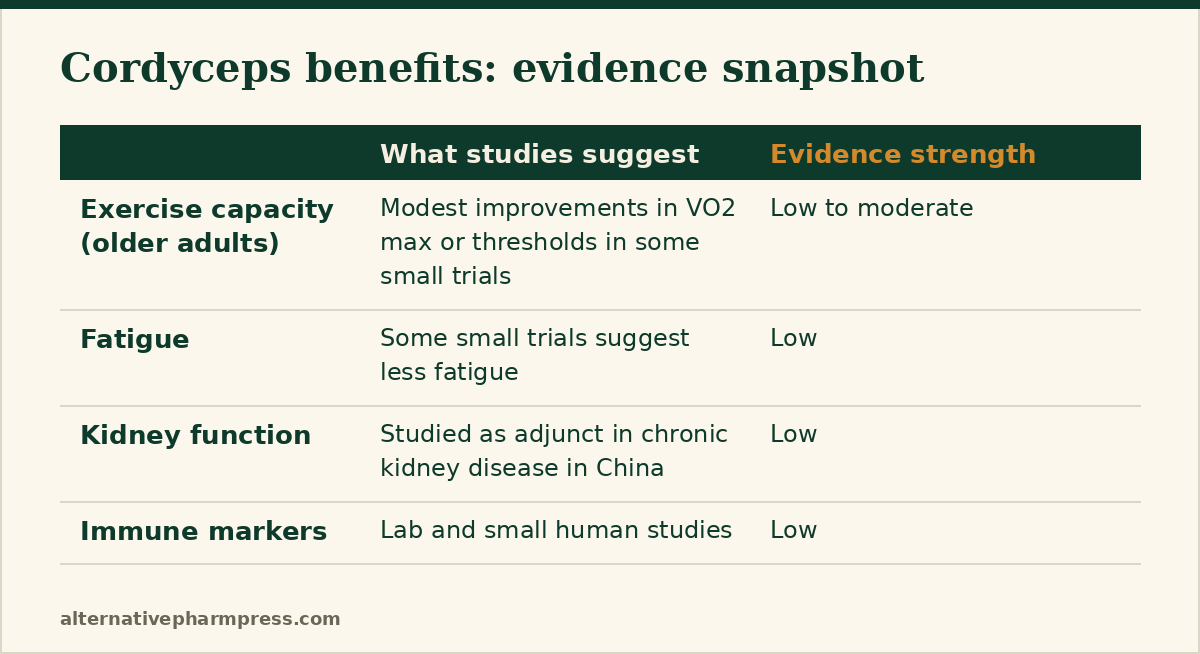
- Small human trials suggest possible modest improvements in exercise capacity in older adults, but results in trained athletes are mixed.
- Research has also explored fatigue, blood sugar, kidney function and immune markers, mostly in small or early studies.
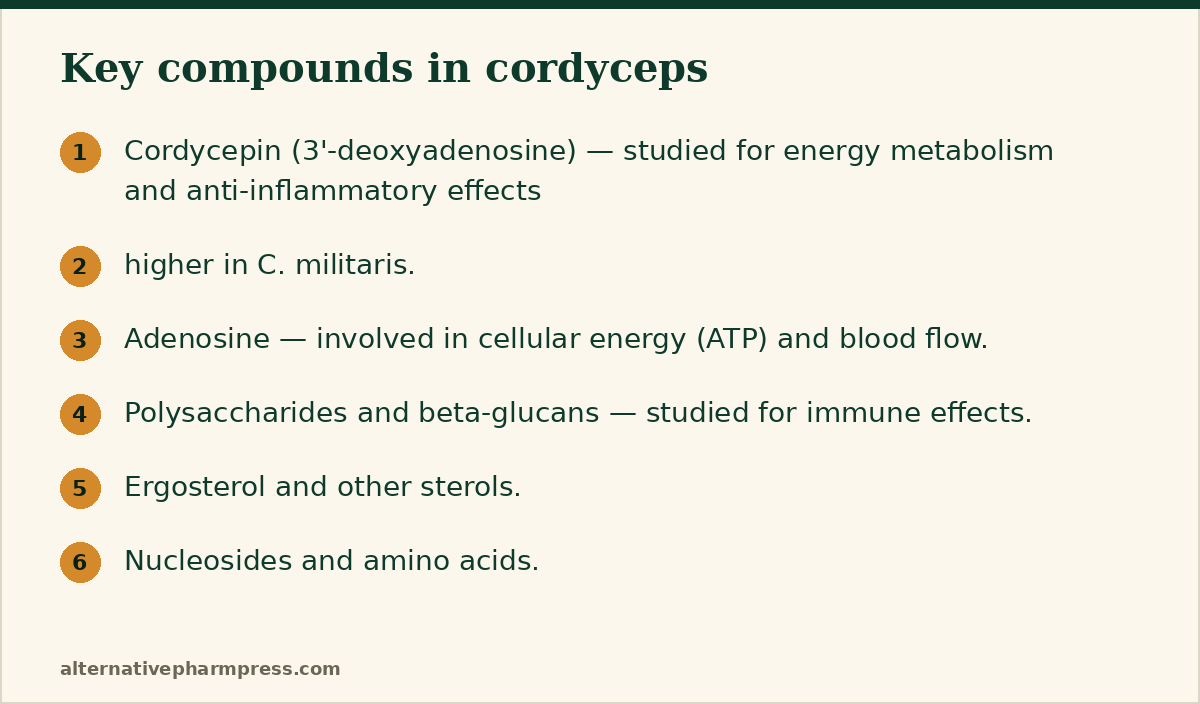
- Key compounds include cordycepin, adenosine and polysaccharides; content varies widely between products.
- Generally well tolerated, but cordyceps may interact with blood thinners, diabetes drugs and immunosuppressants.
What is cordyceps?
Cordyceps is a genus of fungi that, in nature, parasitizes insects. Wild Ophiocordyceps sinensis grows on caterpillar larvae in the high Himalayan plateau and is among the most expensive natural products in the world. Because wild harvesting is limited and costly, most supplements use:
- Cs-4 strain — a fermented mycelium originally derived from O. sinensis.
- Cordyceps militaris — grown on grain or other substrates, producing fruiting bodies rich in cordycepin.
For an overview of functional mushrooms, see functional mushrooms research.
Active compounds
What the research shows
Exercise and endurance
A small randomized trial in healthy older adults found that a Cs-4 cordyceps supplement for 12 weeks modestly improved metabolic threshold and ventilatory threshold compared with placebo. Other trials in young or trained athletes have often found no significant improvements in VO2 max or performance. Some studies of C. militaris found modest improvements in oxygen uptake after several weeks, but results aren’t consistent. Compare with other mushrooms in lion’s mane vs cordyceps.
Fatigue
A few small trials have examined cordyceps for fatigue in different populations, with some suggesting benefit. Evidence is limited and studies vary in quality.
Blood sugar
Animal studies suggest cordyceps may lower blood sugar and improve insulin sensitivity. Human evidence is sparse. People with diabetes should be cautious because cordyceps could add to the effects of glucose-lowering medications.
Kidney health
In China, cordyceps preparations have been studied as adjunct treatment in chronic kidney disease. Some meta-analyses suggest possible benefits on certain markers, but many included studies have methodological limitations.
Immune effects
Lab and small human studies suggest cordyceps polysaccharides may influence immune cell activity. Whether this translates into meaningful health benefits isn’t established.
Sinensis vs militaris
| Feature | O. sinensis (wild) | Cs-4 (fermented) | C. militaris |
|---|---|---|---|
| Source | Wild caterpillar fungus | Lab-fermented mycelium | Cultivated fruiting body |
| Cost | Extremely high | Moderate | Moderate |
| Cordycepin | Low | Low | Higher |
| Research | Traditional use; limited trials | Several human trials | Growing research |
| Availability | Rare; often counterfeited | Common | Very common |
Typical doses in studies
Human studies have used a wide range — commonly 1–3 grams daily of cordyceps extract or mycelium, sometimes more. Mushroom coffees and gummies may contain much less. Look for products that specify the species, part used and active compound content.
Side effects and interactions
Cordyceps is generally well tolerated. Reported side effects include:
- Mild digestive upset, such as nausea, diarrhea or dry mouth.
- Allergic reactions, especially in people sensitive to mold or fungi.
Potential interactions:
- Blood thinners — cordyceps may affect platelet function.
- Diabetes medications — possible additive blood sugar lowering.
- Immunosuppressants — cordyceps may stimulate immune activity.
- Testosterone or hormone therapies — some animal studies suggest hormonal effects.
Avoid cordyceps if pregnant or breastfeeding, and stop at least two weeks before surgery. People with autoimmune conditions or bleeding disorders should consult a clinician.
Quality concerns
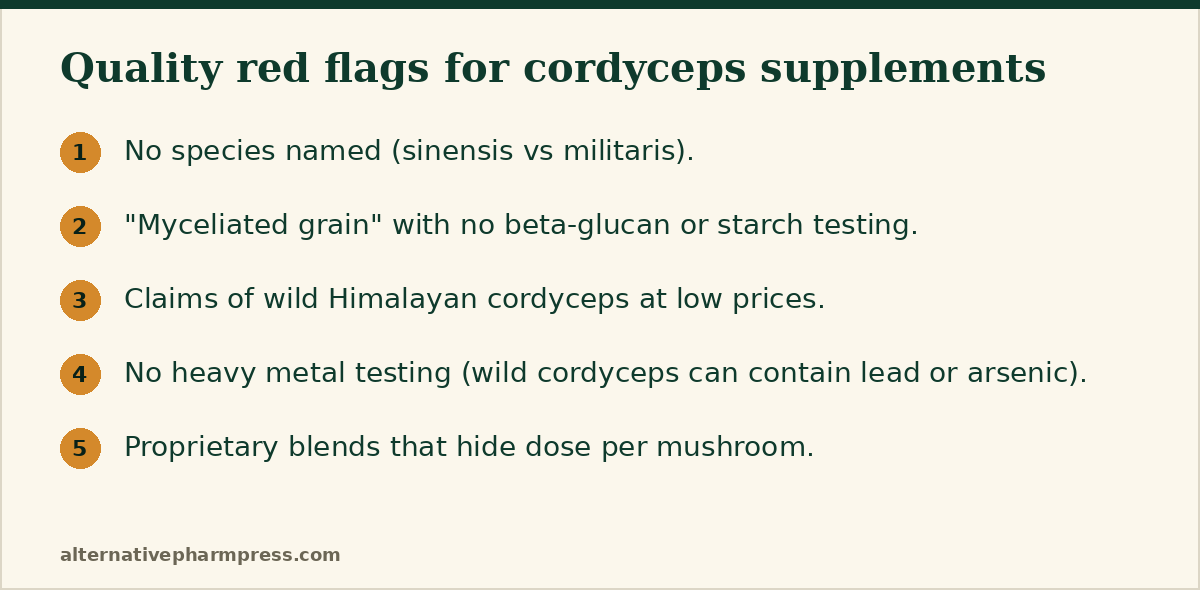
Counterfeit and adulterated wild cordyceps have been reported, and some products contain lead or arsenic. Mycelium grown on grain can contain mostly starch. See functional mushrooms in 2026: label problems and do mushroom gummies work?.
How to choose a cordyceps supplement
- Choose a named species — C. militaris or Cs-4 are common.
- Look for cordycepin and/or beta-glucan content.
- Prefer fruiting-body extracts or well-characterized mycelium.
- Check third-party testing for heavy metals, pesticides and microbes.
- Match the dose to studies (often 1–3 g/day).
- Avoid disease claims or exaggerated performance promises.
For brand overviews, see best nootropic brands 2026 and mushroom coffee.
Cordyceps in pre-workouts and coffee
Cordyceps is often added to pre-workout powders and mushroom coffees, where it’s combined with caffeine and other ingredients. In these products, doses are often low and any energy boost is more likely due to caffeine. If you want to test cordyceps itself, try a standalone supplement at a studied dose.
Cordyceps and athletic doping
Cordyceps isn’t on the World Anti-Doping Agency prohibited list, but supplements can be contaminated with banned substances. Athletes should choose products certified by programs like NSF Certified for Sport or Informed Sport.
Cordyceps for older adults
Some of the more encouraging results for cordyceps have come from studies in older adults, where modest improvements in exercise capacity were observed. Age-related declines in aerobic fitness are common, and even small improvements could matter for daily activities. However, regular aerobic exercise, strength training and adequate protein are far better supported for maintaining fitness with age. Cordyceps may be considered as a complement, not a replacement, ideally with a clinician’s input if you take medications.
How long does cordyceps take to work?
In studies showing benefits, participants typically took cordyceps for several weeks to three months. Expecting an immediate energy boost may lead to disappointment — any effects, if present, are likely gradual. Tracking your exercise performance, perceived energy and recovery for six to twelve weeks gives a fairer test.
Sustainability and ethics of wild cordyceps
Harvesting wild O. sinensis is an important source of income for communities in Tibet, Nepal and Bhutan, but overharvesting and climate change threaten wild populations. High demand has driven prices up and encouraged counterfeiting. Cultivated C. militaris and fermented mycelium strains offer more sustainable alternatives, though they differ chemically from wild cordyceps.
Cordyceps and sexual health claims
In traditional Chinese medicine, cordyceps was used as a tonic for vitality and libido, and some modern products market it for sexual performance or testosterone. Animal studies suggest cordyceps may influence hormone production, but human evidence is limited and inconsistent. Supplements marketed for sexual enhancement are also a category where the FDA frequently finds hidden prescription drugs. Be particularly cautious with cordyceps “male enhancement” products, and talk to a clinician about sexual health concerns.
Building a fair trial
If you want to see whether cordyceps helps your training, choose a measurable goal, such as time to exhaustion on a set run, heart rate at a given pace or perceived exertion during a standard workout. Record baseline results for two weeks, then take a quality cordyceps supplement at a studied dose for eight to twelve weeks while keeping training, sleep and nutrition as consistent as possible. Compare your results. Natural training progress will also improve performance, so a modest change doesn’t prove cordyceps was responsible.
Storage and shelf life
Keep cordyceps supplements sealed in a cool, dry place away from sunlight, since mushroom powders absorb moisture easily. Check the expiration date and discard products that clump, smell musty or change color.
Cordyceps forms: capsules, powders and tinctures
Capsules make dosing simple and avoid the earthy taste. Powders can be mixed into smoothies or coffee. Tinctures are usually alcohol- or water-based extracts and may vary in concentration. Whatever the format, look for clear labeling of species, part used, extraction method and active compound content.
FAQ
What are the main benefits of cordyceps?
It’s marketed for energy, endurance and immune support. Small studies suggest possible modest exercise benefits in older adults, but evidence is limited and mixed.
Does cordyceps really boost energy?
Some people report more energy, and a few small trials suggest benefits, but results are inconsistent. Caffeine in combination products often explains noticeable effects.
What’s the difference between Cordyceps sinensis and militaris?
Sinensis (wild) is rare and expensive; most supplements use fermented Cs-4 mycelium or cultivated C. militaris, which is higher in cordycepin.
How much cordyceps should I take?
Studies often used 1–3 grams daily. Follow product directions and consult a clinician if you take medications.
Is cordyceps safe?
It’s generally well tolerated, with occasional digestive upset. It may interact with blood thinners, diabetes drugs and immunosuppressants.
Can I take cordyceps with coffee?
Many people do, and cordyceps is common in mushroom coffee. Keep in mind that caffeine probably explains most of the immediate energy you feel.
Can cordyceps improve athletic performance?
Results are mixed. Some studies show modest improvements, while many in trained athletes find little effect.